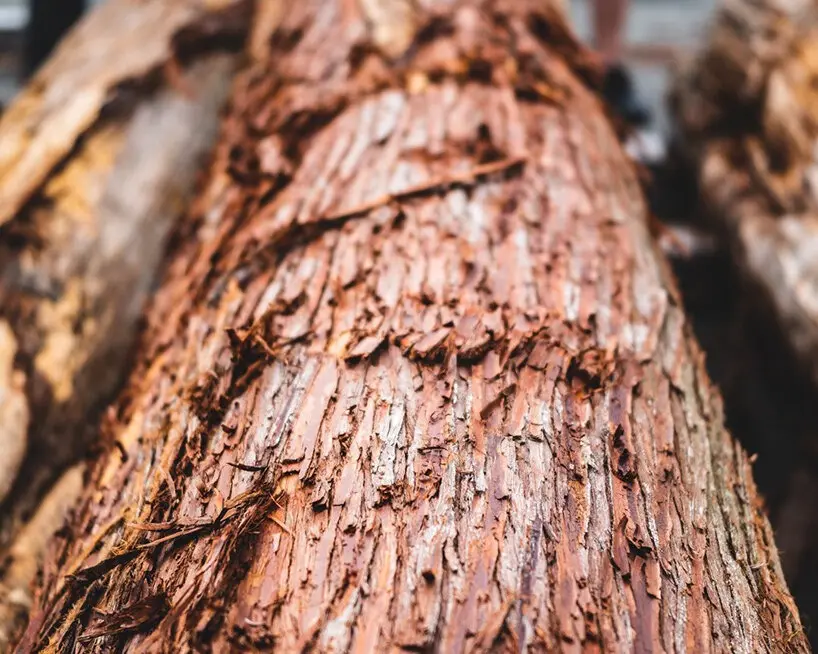
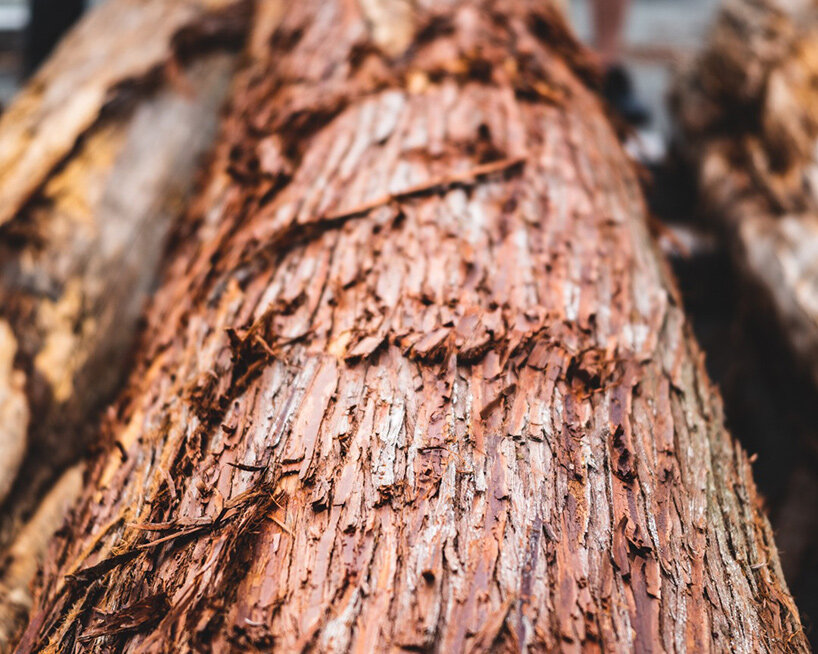
Deep within the lush forests of Keihoku, located just north of central Kyoto, Asian black bears leave a distinct mark on the landscape. Stripping away the rough outer bark from cedar and cypress trees to expose and bite into the nutrient-rich cambium layer beneath, these animals leave long, jagged vertical wounds across the trunks. In Japan, this natural phenomenon is known as kumahagi.
As the affected trees continue to live and grow over the subsequent years and decades, they fight to heal themselves. New vascular tissue forms around the damaged areas, creating swirling, irregular grain patterns and warped growth rings. While this biological resilience is a fascinating testament to nature’s adaptability, it presents a significant hurdle for the local forestry industry. For commercial timber producers, these extensive scars severely degrade the structural uniformity and aesthetic cleanliness required for standard building materials. Consequently, Kyoto City reports that severely damaged trees are frequently relegated to low-value uses, such as being chipped down for fuel or simply left to decay on the mountain slopes.
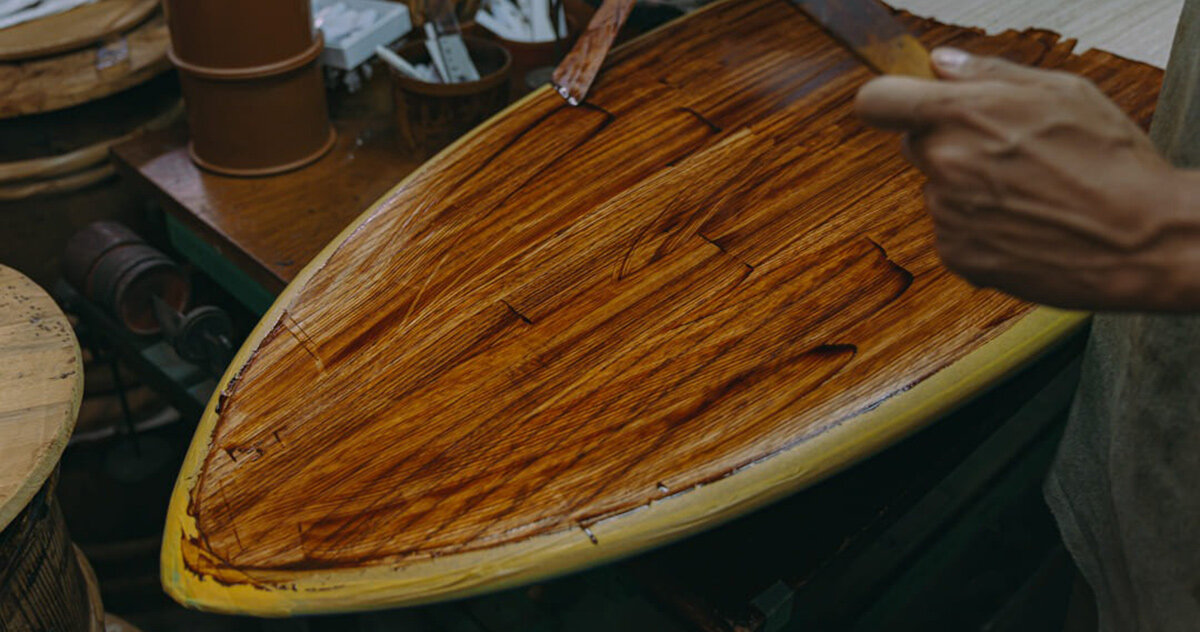
However, what conventional forestry views as a structural flaw and a commercial loss, a collaborative initiative sees as a unique creative opportunity. The BEARS WOOD PROJECT, launched in 2022 by the historic Kyoto lacquer shop Tsutsumi Asakichi Urushi alongside regional foresters and woodworkers in Keihoku, seeks to rescue this discarded and devalued timber. By channeling these marked logs into the creation of high-end, handcrafted wooden surfboards under their siita brand, the project transforms ecological friction and aesthetic imperfection into striking functional art. On these finished boards, the distorted, bear-scarred grain sweeps seamlessly across the surface, coated in a deep, glossy layer of traditional urushi lacquer that makes the history of the mountain forest even more vivid.
Takuya Tsutsumi Brings Centuries-Old Urushi Craft to Modern Surf Culture
At the heart of this unconventional union between wildlife behavior, forestry, and modern craft is Takuya Tsutsumi. As the fourth-generation head of Tsutsumi Asakichi Urushi, Tsutsumi carries forward a legacy established when his family founded their Kyoto lacquer shop in 1909. For more than a century, the business has dedicated itself to sourcing, refining, and working with urushi—the natural resin harvested from the sap of the Toxicodendron vernicifluum tree, which has served across centuries of Japanese artistic tradition as a durable coating, preservative, and adhesive.
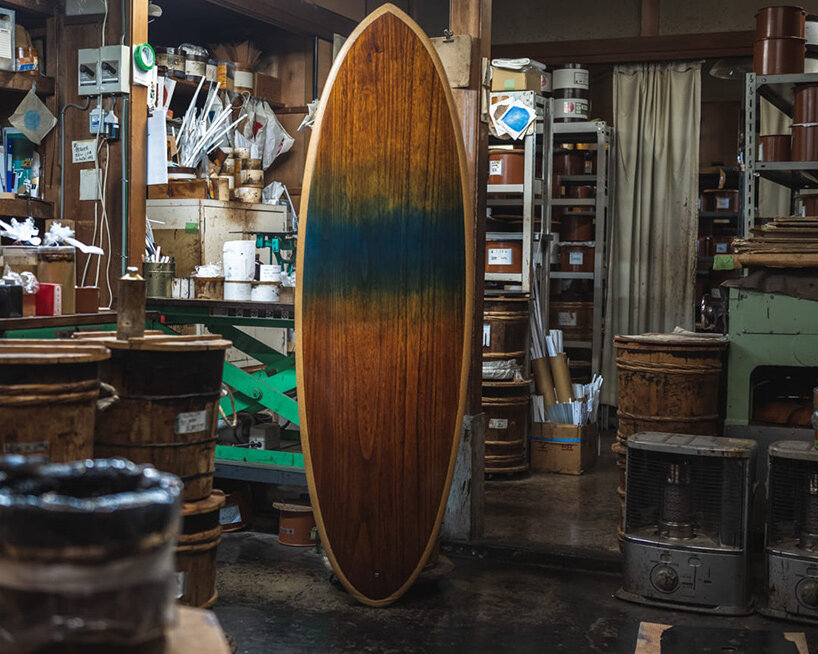
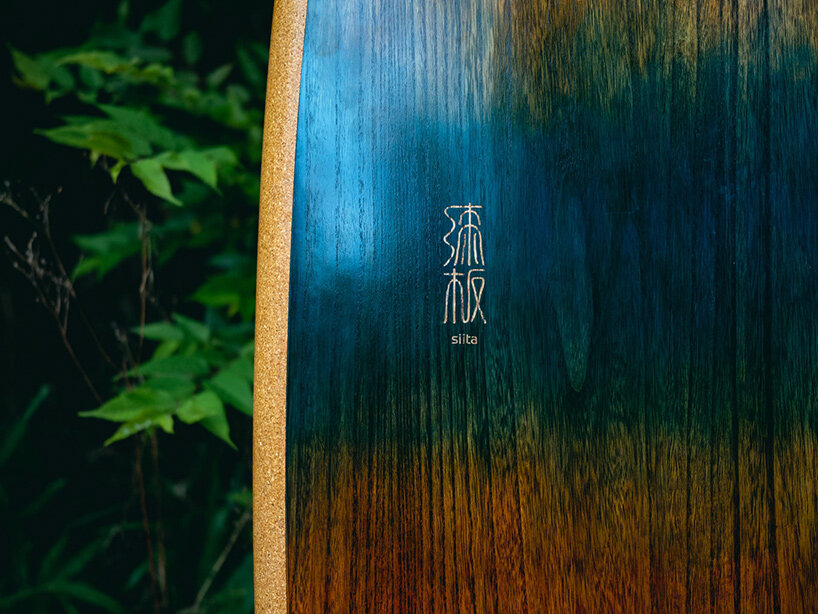
Since joining the family enterprise in 2004, Tsutsumi has consistently pushed the boundaries of where and how lacquer can be applied. While urushi is most commonly associated with fine tableware, architectural elements, and delicate decorative objects, Tsutsumi has progressively expanded its applications into contemporary domains, successfully coating bicycles, skateboards, and surfboards. These modern objects thrust a deeply traditional material into dynamic, high-impact environments that are miles away from the quiet museum display cases or tea ceremony rooms traditionally associated with the craft.
For the siita surfboard initiative, Tsutsumi collaborates closely with experienced wooden surfboard shaper Rodrigo Matsuda, an artisan who has spent nearly two decades perfecting the craft of building functional boards out of wood. Matsuda undertakes the initial shaping of the local timber right in Keihoku, harnessing his deep understanding of wood behavior to sculpt the raw logs into long, curved aquatic vessels. Once the wooden form is shaped, Tsutsumi takes over the finishing process, applying meticulous layers of urushi lacquer.
Their primary workspace sits alongside the banks of the Katsura River, housed inside a converted farm shed that has stood for over a century. This rustic environment is vital to the craft, as environmental factors play a profound role in how urushi cures. Temperature and humidity directly influence the viscosity, drying time, and ultimate sheen of the natural resin. Because urushi hardens through a chemical reaction driven by atmospheric moisture rather than simple evaporation, Tsutsumi must constantly read the room, adjusting his techniques and application methods according to the shifting atmospheric conditions of each working session.
Rethinking the Value of Bear-Damaged Timber in Kyoto’s Forests
The forestry challenge that inspired the BEARS WOOD PROJECT extends far beyond the visual curiosity of warped wood. According to Kyoto Prefecture, kumahagi represents a complex ecological issue. Bears peeling the bark off high-value commercial species like cedar and cypress disrupts standard timber management plans across the region. While prefectural authorities acknowledge that the exact motivations and precise triggers behind this seasonal peeling behavior remain partially unresolved, the economic fallout for local foresters is immediate and tangible.
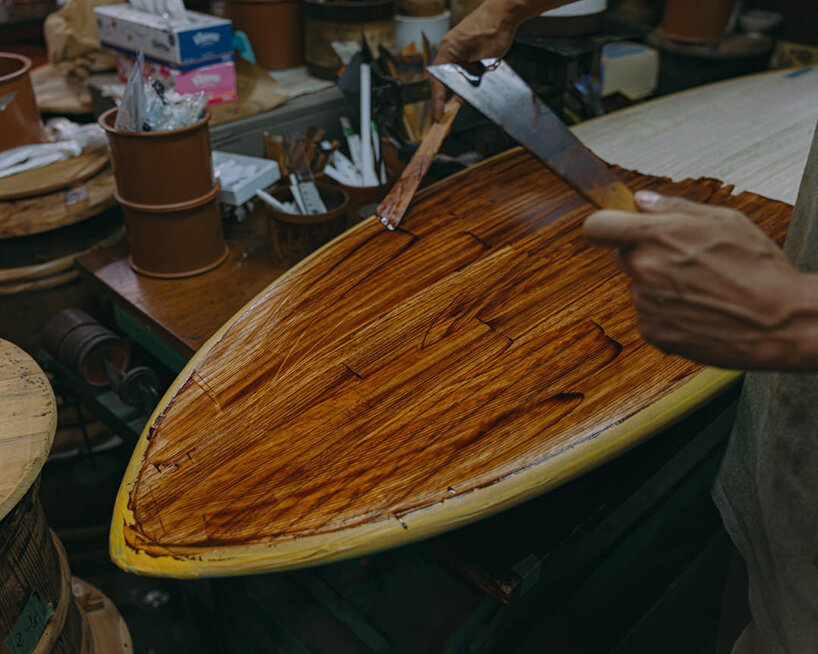
The BEARS WOOD PROJECT was conceived directly as an intervention to restore economic viability to this overlooked resource. Rather than cherry-picking only the pristine, unblemished sections of a harvested log, Tsutsumi and his collaborators actively seek out the sections that bear the distinct, undulating scars of wildlife interaction. Tsutsumi explains that the group explicitly urges local foresters to cut and harvest these affected trees with the guarantee that the timber will be purchased at a fair, proper market price.
Through this model, the bear scar ceases to be merely a liability and becomes an essential component of an ethical supply chain. It shifts the narrative from a purely financial loss to an aesthetic and philosophical asset. A characteristic that once drastically depreciated the value of the wood is reframed as the primary detail that grants each finished surfboard its singular identity, ensuring that no two pieces can ever look alike.
From the Ancient Mountains of Keihoku to the Open Water
The geographic lineage of the timber used in these boards runs deep. Keihoku has functioned as a vital cradle of forestry, supplying timber to the city of Kyoto since the establishment of the ancient capital, Heian-kyo, more than a thousand years ago. The siita workshop is firmly rooted within this ancient timber landscape, utilizing regional cedar alongside complementary woods such as paulownia to construct its watercraft.
Despite its deeply localized and historical material origins, the stylistic inspiration for the boards traces its lineage across the globe to ancient Hawaii. The project looks to the alaia, the traditional finless wooden surfboards ridden by native Hawaiians long before the advent of modern foam, fiberglass, and synthetic resin construction. Tsutsumi’s initial experiments involved lacquering traditional alaia shapes, explorations that gradually evolved into the formal establishment of the siita brand in 2023.
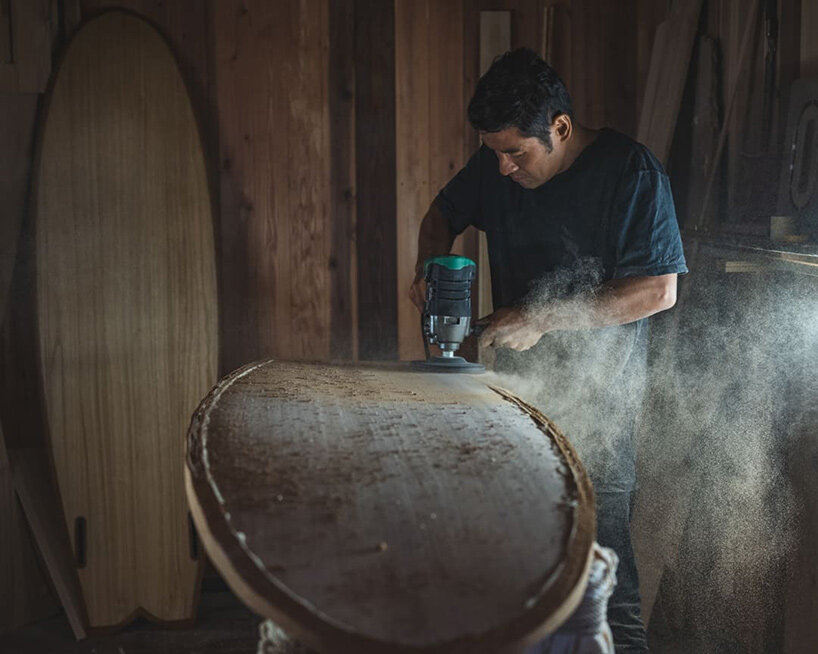
Examining one of these finished surfboards reveals a fascinating, multi-layered timeline embedded directly into the material. The narrative begins in the quiet depths of the Kyoto mountains, where an Asian black bear marks a growing cedar tree with its teeth and claws. The tree spends years mounting a biological defense, wrapping new woody tissue around the wound as it continues to rise toward the canopy. Eventually, the tree is harvested, brought to the workshop, shaped by Rodrigo Matsuda’s expert hands, and finally sealed beneath successive coats of deep, lustrous urushi lacquer applied by Takuya Tsutsumi.
Even beneath the glossy protective finish, the memory of the forest remains entirely legible. The lacquer acts as a transparent lens that locks the distorted grain in plain sight, successfully elevating an interruption in nature into the defining characteristic of a functional modern watercraft.