The Metropolitan Museum of Art has officially brokered the return of three historically significant sculptures to Nigeria, establishing a complex long-term loan agreement that will ensure the remarkable artworks remain on public display in New York. Under the terms of the arrangement, the culturally invaluable pieces are slated to go on view later this month within the newly reimagined Rockefeller Wing’s Arts of Africa galleries, where they will simultaneously be made accessible for advanced international scholarship and public appreciation.
The diplomatic and institutional breakthrough stems from a complicated set of circumstances involving art collector Ceil Pulitzer, who sought to gift the items directly to the prestigious museum last year. Pulitzer, an accomplished painter originally from Arkansas, married into the prominent family behind the Pulitzer Prizes and the Pulitzer Publishing Company in 1970. Shortly after her marriage, she developed a deep and lasting passion for collecting African art, quietly assembling a notable private collection over subsequent decades.
According to Max Hollein, the director and chief executive officer of The Met, Pulitzer approached the museum with the intention of permanently transferring ownership of one rare copper figure and two ancient terracotta busts to the institution. To support her proposed donation, Pulitzer provided what was described as a detailed provenance for the three pieces, documenting their ownership history and tracing their acquisition path between 2015 and 2018.

Despite the specificity of the provenance provided by the collector, the institution ultimately determined that the documentation still fell short of the museum’s rigorous, self-imposed prerequisites for accepting the direct transfer of unverified or sensitive cultural artifacts. In recent years, major Western museums have faced mounting ethical, legal, and public scrutiny regarding the acquisition of antiquities and works of art whose historical pathways out of their countries of origin involve colonial conquest, looting, illicit trade, or undocumented removal. Rather than outright rejecting the gesture or engaging in a protracted standoff, The Met chose an alternative diplomatic route that respects the ownership claims of the source country while still allowing New York museumgoers to experience the works firsthand. By returning the legal title of the sculptures to Nigeria while securing a long-term loan for their exhibition in Manhattan, the museum has carved out a cooperative pathway that addresses modern restitution debates.
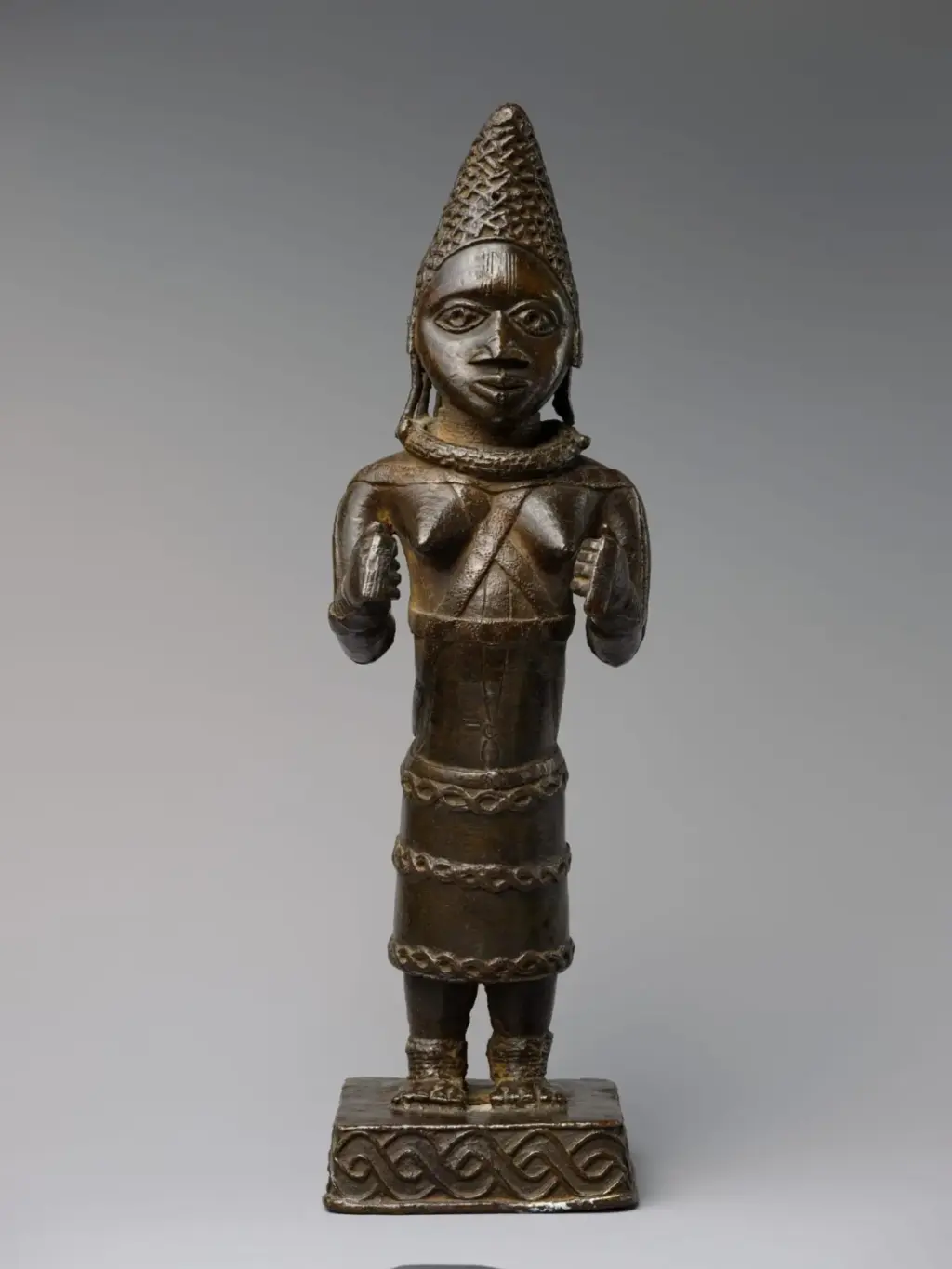
Spanning several centuries of rich artistic heritage from the 12th through the 18th centuries, the three repatriated works significantly enrich The Met’s existing display of Nigerian art, serving as pinnacle examples of the sophisticated Ife and Benin artistic traditions. Among the most notable items in the group is an Edo copper figure dating to approximately the 18th century, which represents an iyágbà—a queen mother—from the historical Kingdom of Benin. According to museum documentation, this particular piece embodies what curators describe as a rare and exceptional standalone depiction of a woman within the deeply structured courtly tradition of the kingdom.
In a comprehensive press release concerning the arrangement, the museum elaborated on the unique art-historical significance of the copper casting. Most historical queen mother castings identified in the archaeological and art-historical record were crafted to serve as the focal point of much larger, complex ensembles integrated within an ẹrhátẹ—an elaborate altar tableau dedicated to royal ancestors. The distinct nature of this newly highlighted figure, however, suggests a departure from standard court casting practices. Scholars believe its standalone design may indicate that it commemorated an especially prominent iyágbà who held the esteemed title sometime between the late 17th and 18th centuries, marking her distinct individual legacy rather than serving merely as a generalized component of a larger dynastic shrine.
Alongside the royal copper figure, the group of repatriated works includes two remarkable terracotta busts that further underscore the sophisticated modeling techniques and cultural depth of ancient Nigerian civilizations. These pieces, originating from the broader artistic traditions of the region, provide crucial visual and historical links to the classical period of Nigerian art, celebrated globally for its naturalistic precision, psychological intensity, and metallurgical mastery.

The decision to broker the return of the sculptures while keeping them accessible in New York reflects a broader shifting landscape within the international museum community. As cultural institutions worldwide grapple with the complex legacies of colonialism and the illicit trafficking of antiquities, collaborative frameworks such as long-term loans, shared stewardship, and cooperative educational initiatives are increasingly being utilized to resolve long-standing disputes over cultural property. By returning the ownership rights of the copper figure and terracotta busts to Nigeria, The Met acknowledges the fundamental right of source nations to govern their cultural patrimony, while the accompanying loan agreement ensures that audiences in New York will continue to have the opportunity to engage with the profound artistic achievements of the Ife and Benin traditions.
The works will officially debut in their new context when the Rockefeller Wing’s Arts of Africa galleries open to the public later this month, marking a new chapter in international museum cooperation and cultural diplomacy.