We have been surrounded by technology for decades, much of which has made our lives noticeably more comfortable, convenient, and efficient. From the earliest days of mainframe computers to the widespread adoption of hand-held personal devices, the rapid pace of technological change has rendered numerous positive impacts on our daily lives. More recently, consumers have been offered a variety of smart technology conveniences that transform how households operate. These modern innovations range from Wi-Fi-connected ovens that can be conveniently switched on from a cellular telephone during one’s evening commute to advanced refrigerators that actively assist with creating grocery lists via an interior camera designed to scan the contents on the shelves.
As smart home technology continues to make significant advancements, design professionals are finding that it is increasingly important to educate their clients on the broader implications these innovations hold. Specifically, designers must address the impact that modern technology has on the global environment, particularly with respect to material waste, energy consumption, water usage, and indoor air quality. Fortunately, forward-thinking designers are positioning themselves at the forefront of this wave. By doing so, they are helping clients significantly enhance their day-to-day lives while simultaneously reducing their overall environmental footprint.
Making the Greatest Sustainability Impact
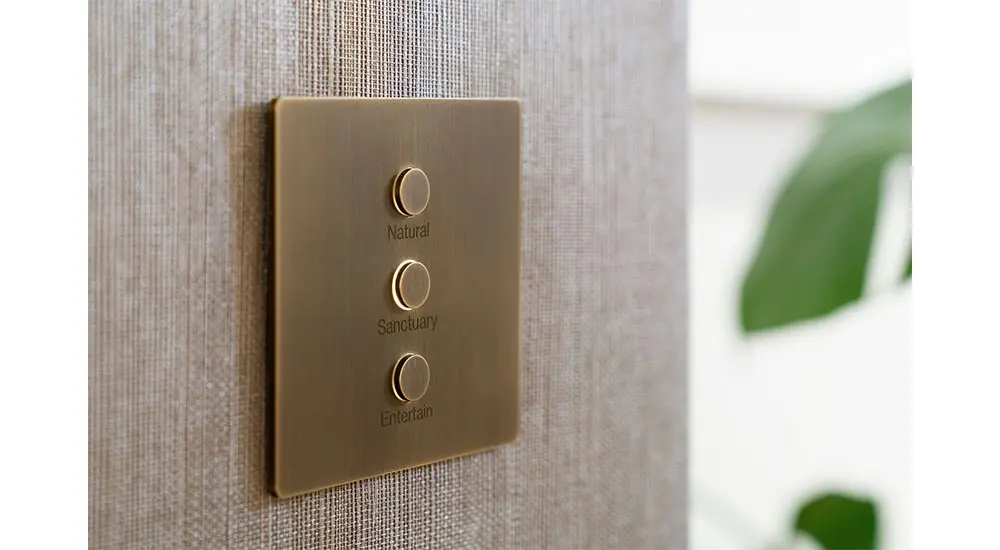
Integrating smart technology into a residential project can be a relatively simple endeavor or a comprehensive, whole-house undertaking, depending entirely on the specific needs, desires, and budget of the client. Furthermore, these systems can be implemented through a stepped approach designed carefully for future expansion as needs evolve or budgets allow. In essence, a home’s heating and cooling systems, lighting configurations, window coverings, water leak detection apparatuses, audio and visual equipment, and security frameworks can all be seamlessly combined into a unified smart home system. This integrated network can then be operated effortlessly from one or more wall-mounted interfaces or directly from mobile devices, giving homeowners unprecedented control over their living environments.
Industry experts emphasize that the key to a truly successful and cost-effective integration is to plan for smart technology at the absolute onset of the design process, rather than scrambling to incorporate it during the active construction phase. Proper early planning involves comprehensively laying out all system components on the electrical floor plan. This includes determining precisely where hardwired Cat6 cable will be installed to robustly support the mesh hubs, which play the vital role of connecting the local Wi-Fi system directly to the household modem.
The idea that everything in a modern smart home is entirely wireless is simply not accurate or realistic, according to Brian Scott, an experienced technology integrator with Illumina Inc. For a truly functional, dependable, and reliable system, a proper Wi-Fi access point is required for approximately every 1,500 square feet of living space. Achieving this optimal infrastructure is significantly easier and considerably less destructive when dealing with new construction projects rather than complex retrofits or remodels. Regardless of the project type, however, Scott notes that it is always far better to have an abundance of Cat6 cable installed within the walls than to fall short. Given the relatively low incremental cost of cabling during early construction phases, provisioning extra lines allows for effortless future expansion of the technological system down the line.
Features and Equipment to Consider
When designing an integrated smart technology system, incorporating specific features and equipment can drastically minimize a home’s environmental footprint and lower lifetime operating costs.
Energy Efficiency
Modern smart systems allow homeowners to monitor and regulate energy consumption with a precision that was previously impossible. Programmable and learning thermostats adapt to household routines, ensuring that heating and cooling units do not run unnecessarily while the home is empty. Automated lighting controls integrated with motorized window coverings can maximize natural daylighting while reducing artificial lighting demands and managing solar heat gain, thereby decreasing the overall load on HVAC systems.
Water Efficiency
Water conservation is another critical area where smart home technology delivers measurable environmental benefits. Advanced water management systems can include automated shut-off valves linked to strategically placed leak-detection sensors throughout the house. These sensors can immediately identify plumbing anomalies or appliance leaks, shutting off the main water supply before catastrophic water damage occurs and preventing the silent waste of thousands of gallons of water over time.
Safety
Safety and security frameworks have likewise evolved through smart integration. Connected surveillance systems, intelligent smoke and carbon monoxide detectors, and smart door locks provide real-time alerts to homeowners, enhancing physical security while optimizing power consumption. By ensuring that safety systems are reliably powered and integrated into the central network, homeowners can protect their families while maintaining energy-conscious operational standards.
Material Efficiency
Beyond energy and water conservation, material efficiency remains a critical consideration in the conversation about smart home sustainability. Discarded electronics, often referred to as e-waste, are a major and growing contributor to toxic waste globally. To ensure that residential design projects maintain a low environmental impact throughout their lifecycle, integrator Brian Scott emphasizes the importance of early planning for both current needs and future technological expansion.
Focusing heavily on equipment and installation reliability, alongside intuitive and user-friendly controls, is paramount. Doing so significantly reduces the chance of overwhelming homeowners with overly complex interfaces, which in turn helps avoid premature equipment obsolescence and unnecessary replacements that feed the global e-waste crisis.
Ultimately, smart home technology can substantially improve the quality of life for homeowners, reduce their ongoing operating costs with respect to utility bills and insurance premiums, and minimize their property’s overall environmental impact. Industry professionals advise designers to become closely acquainted with local technology integrators who hold a CEDIA certification, which focuses specifically on custom electronic design and installation, or ETA Smart Home Certification professionals. Collaborating with these certified experts helps ensure that any upcoming residential project will successfully provide comfort, convenience, safety, and security, alongside superior functionality and a beautiful aesthetic.