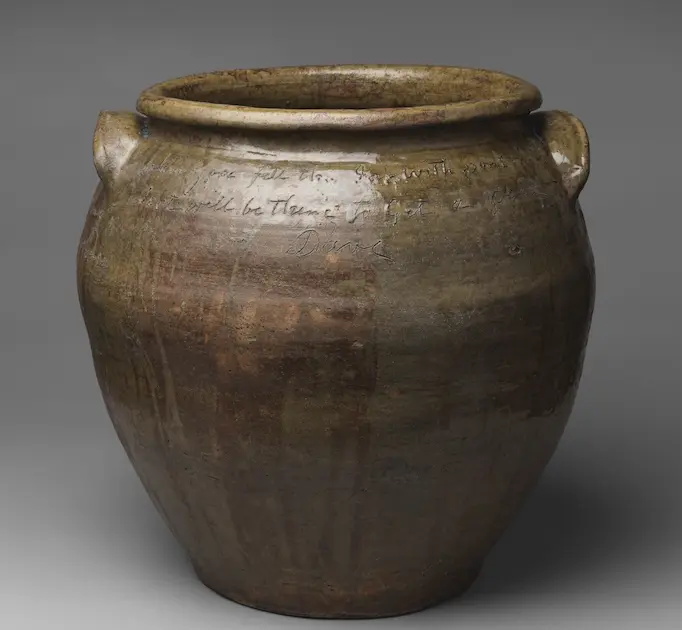
In a landmark agreement brokered by the Milwaukee Art Museum earlier this month, two historic stoneware pots created by the renowned enslaved artist David Drake—widely known as "Dave the Potter"—have been successfully returned to his living descendants through the Dave the Potter Legacy Trust. The repatriation marks a significant moment in the ongoing conversation surrounding cultural heritage, provenance, and the ethical stewardship of art created during the era of American slavery.
Following the formal transfer of ownership to the family, the narrative of these invaluable vessels took an inspiring turn toward public accessibility. One of the pots has been formally repurchased by the Milwaukee Art Museum, ensuring its permanent home within the institution’s esteemed collections. Meanwhile, the second vessel will remain on view for the public through a long-term loan arranged by the family and the trust, guaranteeing that both pieces of art will continue to educate, move, and inspire museum visitors for generations to come.
According to reporting by The Milwaukee Journal Sentinel, Drake’s extraordinary work first entered the institutional sphere of the Milwaukee museum back in 2010. At that time, the Chipstone Foundation—a Wisconsin-based enterprise dedicated to the study and appreciation of American material culture, with a primary emphasis on the decorative arts—mounted a groundbreaking exhibition. This showcase deliberately placed Drake’s historic vessels alongside contemporary works by Chicago-based sculptural artist Theaster Gates, creating a powerful dialogue across centuries.
The exhibition proved to be a watershed moment for the museum and its patrons. Visitors and scholars alike were deeply fascinated by Drake’s objects, which transcend mere utility through their remarkable craftsmanship, monumental scale, and the profound historical weight carried by the inscriptions Drake carved into the clay. This overwhelming public interest prompted the Chipstone Foundation to develop extensive community programming. These initiatives were designed to unearth and amplify the deeper meanings of Drake’s work, exploring his artistic legacy and its enduring resonance for communities across the city of Milwaukee and beyond.
The relationship between the institutions and the artwork deepened significantly three years later, in 2013, when the Chipstone Foundation officially acquired two pots crafted by Drake. Since that time, these vessels have been prominently displayed within the galleries of the Milwaukee Art Museum as a core component of the "Dave Project." This ongoing collaboration between the museum and the foundation has continually sought to contextualize Drake’s historical importance, shedding light on the life of an artist who created breathtaking works of fine art under the brutal constraints of human bondage in 19th-century Edgefield, South Carolina.
The recent agreement and subsequent repatriation represent a profound shift in how cultural institutions can honor the lineages of enslaved creators. Yaba Baker, who serves as Drake’s fourth-generation great-grandson, shared his perspective on the historic agreement with The Milwaukee Journal Sentinel.
"We believe it is important that people continue to be inspired by his unwavering perseverance in life and the brilliance that it took to create these amazing pieces of art," Baker said, reflecting on the emotional and historical weight of the moment. "By keeping both works on view in Milwaukee, we know that his legacy and lineage will remain accessible to the public for years to come."
The involvement of the Dave the Potter Legacy Trust has been central to facilitating these vital connections between the artwork, the descendants, and the public institutions that house them. Kantara Souffrant, the Milwaukee Art Museum’s curator of community dialogue, spoke eloquently about the trust’s mission and the deeply human impact of the repatriation process.
"[Their work] is so invested in the idea of what it means to be a person who’s descended from enslaved people, who is able to see these objects as a way of really, truly gathering your family, family you didn’t know," Souffrant noted to The Milwaukee Journal Sentinel. Through this lens, the stoneware pots function not only as masterpieces of American decorative arts and historical artifacts of immense value, but also as tangible tethers that unite living generations of descendants with an ancestor whose voice—preserved through his signatures, dates, and poetic couplets carved into the wet clay—defied the systemic silence imposed upon the enslaved.
As both vessels settle into their new chapter—one through museum acquisition and the other through a dedicated long-term loan—they continue to stand as testaments to David Drake’s undeniable genius, enduring strength, and the meticulous care of descendants and cultural workers dedicated to keeping his remarkable legacy alive in the public consciousness.