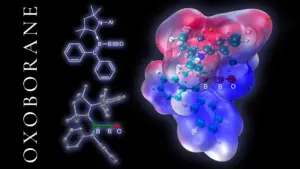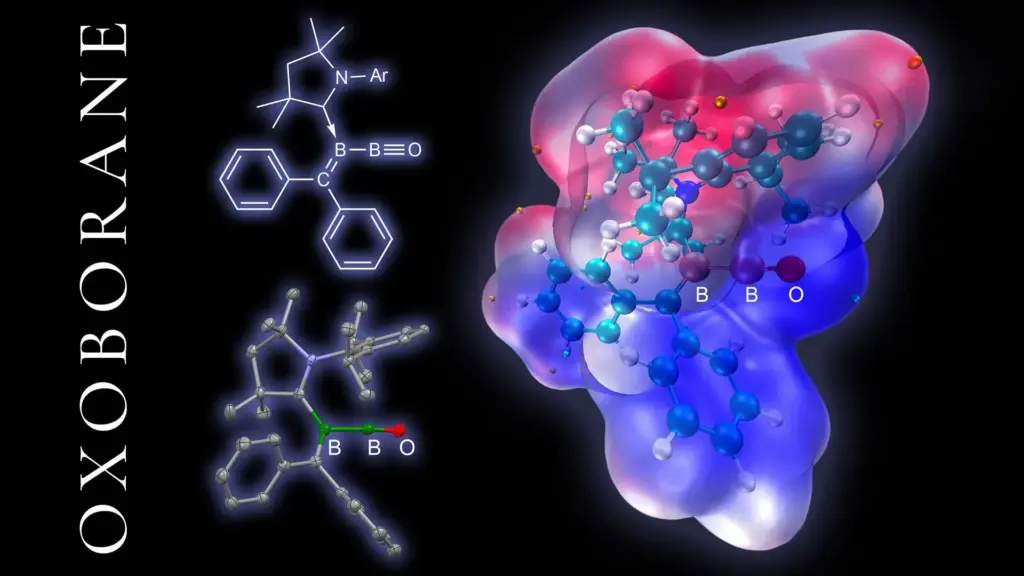
For more than six decades, a notoriously difficult challenge in fundamental chemistry has quietly frustrated researchers around the globe. The pursuit centered on a specific class of unusual molecules known as oxoboranes—compounds featuring a delicate and highly reactive triple bond between boron and oxygen. Long dismissed by the scientific community as inherently too unstable to survive under ordinary laboratory conditions, these elusive chemical structures seemed destined to remain theoretical curiosities, perpetually out of reach for hands-on study.
That long-standing barrier has finally fallen. In a breakthrough that is already generating significant interest across the chemical sciences, an international team of researchers based at the University of Würzburg in Germany has successfully discovered a reliable method to produce, isolate, and examine stable organic oxoboranes. The milestone achievement not only resolves a decades-old puzzle in inorganic and organic chemistry, but it also demonstrates how serendipity in the laboratory can sometimes overturn long-held assumptions about what is chemically possible.
The findings, which mark a major chapter in the ongoing exploration of unusual chemical bonding, were published in the prestigious journal Nature Chemistry. The successful isolation of these compounds was spearheaded by Professor Holger Braunschweig and his dedicated research team at the University of Würzburg. To help unravel the complex electronic structures and behaviors of the newly captured molecules, the German experimentalists partnered with computational chemists led by Professor Ashwini K. Phukan at Tezpur University in India. Together, the collaborative effort has provided a surprisingly straightforward pathway to creating compounds that generations of chemists had abandoned as impossible to contain.
Solving a 60-Year Chemistry Challenge
To understand the magnitude of the Würzburg team’s accomplishment, one must look closely at the unique chemical properties of boron. Situated in the first row of the periodic table’s p-block, boron is an element that notoriously resists forming multiple bonds—particularly triple bonds, a type of robust chemical connection in which two adjacent atoms share three distinct pairs of electrons. For over fifteen years, Professor Braunschweig has made it a primary focus of his academic career to push past these traditional bonding limitations, striving to synthesize and stabilize molecules featuring unconventional and highly strained bonds involving boron.
Over the years, Braunschweig’s laboratory at the University of Würzburg has steadily built a reputation for shattering conventional chemical boundaries through persistent experimentation. In 2012, the research group made global headlines by reporting the very first stable molecule containing a direct triple bond between two boron atoms—a feat that many previously deemed implausible due to the electronic repulsion between the identical atoms. Another major milestone followed in 2025, when the team successfully produced the first neutral molecule featuring a stable triple bond forged between boron and carbon.
Despite these successive triumphs, one glaring gap remained stubbornly open among the first-row p-block elements: researchers had yet to successfully isolate stable organic oxoboranes. Characterized by their signature triple bond between boron and oxygen, these molecules possess an extreme electronic polarization caused by the vast electronegativity difference between the two atoms. This intense polarization makes the bond exceptionally reactive, driving the molecules to instantly decompose, polymerize, or react with trace impurities in their environment.
Chemists around the world had been actively pursuing these elusive compounds since at least the early 1960s. Over the ensuing decades, countless researchers working across both organic and inorganic chemistry attempted to capture them. While some scientists managed to detect and temporarily trap oxoboranes under extreme, highly specialized conditions—such as cryogenic matrix isolation—and others gathered indirect spectroscopic evidence of their fleeting existence, obtaining stable, isolatable examples that could be placed in a standard laboratory vial and thoroughly examined remained an unsolved frontier. Eventually, the frustration wore down the broader scientific community. Most researchers working in the field simply concluded that true, stable oxoboranes were thermodynamically barred from existing long enough to be studied.
An Unexpected Reaction Produces Elusive Molecules
True to the history of great scientific discoveries, the breakthrough at the University of Würzburg did not come from a carefully planned attempt to directly synthesize oxoboranes. Instead, it emerged from a series of routine investigations that initially appeared to be steering the researchers in an entirely different direction.
Two doctoral students in Braunschweig’s laboratory, Lukas Lubczyk and Christian Markl, were independently studying the complex chemical reactivity of a specialized compound class known as diboracumulenes. Specifically, the students were investigating how these diboracumulenes interacted with various ketones—ubiquitous, everyday chemical reagents widely used across standard organic synthesis.
During the course of their separate experiments, both Lubczyk and Markl noticed an unusual visual and chemical cue. Instead of yielding the predictable reaction products they might have anticipated based on standard chemical textbooks, the mixtures consistently generated distinctive, brightly colored orange or yellow solids. In synthetic chemistry, a sudden color change of this nature often signals the formation of entirely new, complex molecular architectures.
Reflecting on the unexpected turn of events, Lukas Lubczyk noted the sheer unpredictability of the laboratory results. The discovery, he explained, was a thoroughly pleasant surprise. He admitted that he would never have anticipated the diboracumulene reacting in the manner it did, let alone exhibiting such reactivity across multiple different, relatively simple substrates. When Christian Markl independently approached him to show his own synthesized compound displaying the exact same characteristic properties, Lubczyk knew immediately that they had stumbled onto something significant.
What rendered these experimental results truly remarkable was the identity of the final products. Analysis revealed that oxoboranes had emerged as the primary, dominant products of these reactions. This outcome was doubly astonishing because several other chemical pathways had initially seemed far more thermodynamically and kinetically favorable. After more than sixty years of painstaking, largely unsuccessful efforts by the global chemical community to isolate such molecules, the Würzburg team had accidentally stumbled upon a pathway where oxoboranes formed spontaneously and cleanly from remarkably simple starting materials.
Professor Braunschweig expressed frank astonishment at how the long-standing challenge was finally resolved. He remarked that virtually everyone else in the specialized field of boron chemistry had effectively given up on oxoboranes, as decades of failure had cemented the belief that they were simply too unstable to ever be isolated and bottled. Consequently, the research team was utterly stunned to witness these delicate molecules spontaneously assembling right before their eyes in standard reaction vessels, and more importantly, persisting long enough for comprehensive analytical study.
A New Path to Rare Chemical Compounds
Armed with their newly discovered synthetic method, the scientists quickly set out to test its versatility. By varying their starting materials, the research team successfully prepared and isolated three distinct oxoboranes. The fact that the approach was not a one-off fluke, but instead proved successful across multiple different compounds, strongly suggests that the methodology is broadly applicable. It could potentially open the door to an entire library of previously inaccessible, highly reactive molecules that have long eluded synthetic chemists.
Looking ahead, Braunschweig’s group is actively investigating the full scope and boundaries of this novel technique. Beyond synthesizing additional variations of oxoboranes, the researchers hope to determine whether similar chemical strategies and reaction designs can be adapted to capture other notoriously elusive compounds involving various other stubborn elements scattered across the periodic table.
The successful isolation of oxoboranes represents much more than the closing of a sixty-year-old chapter in academic chemistry. It serves as a striking reminder of the inherent unpredictability of chemical research, demonstrating how seemingly routine investigations and unexpected laboratory observations can dismantle long-standing dogmas and reveal entirely new frontiers of molecular science that researchers once considered permanently beyond reach.
International Research Collaboration and Funding
The successful realization and publication of this landmark study were made possible through a robust international partnership. The experimental work conducted by the Würzburg research team was paired directly with advanced computational chemistry performed by the group led by Professor Ashwini K. Phukan at Tezpur University in India. By modeling the electronic structures and reaction pathways of the newly isolated compounds, the Tezpur research team provided critical theoretical backing that helped explain how and why these delicate triple bonds manage to remain stable.
Financial support for the extensive research endeavors was provided by several prominent scientific funding bodies, including the German Research Foundation, known as the DFG, the German Academic Exchange Service, commonly referred to as the DAAD, and the Department of Science and Technology of India.