When fine wine enthusiasts gather at top-tier restaurants and begin discussing their preferences with a sommelier, the conversation rarely starts with a request for a bottle from Provence. According to industry professionals, guests almost universally associate the sun-drenched coastal region of southeastern France with one specific style: world-class rosé. Yet beneath the surface of a multi-decade market boom that has made Provençal pink wine a global phenomenon lies a rich, deeply rooted, and surprisingly diverse tradition of crafting exceptional red and white wines.
While rosé currently dominates the landscape—accounting for roughly 90 percent of production in the sprawling AOC Côtes de Provence—a dedicated cadre of winemakers, multi-generational estates, and forward-thinking sommeliers are refusing to let the region’s historic reds and whites be forgotten. For these producers, turning away from rosé and committing to complex, age-worthy wines requires economic risk and unwavering patience, but the resulting bottles are increasingly capturing the attention of collectors and fine dining connoisseurs worldwide.
Tracy Latimer, lead sommelier at Fleurette, a Mediterranean-French restaurant in San Diego, notes that the discovery of these lesser-known styles usually happens through guidance from the floor. If a sommelier does not proactively recommend wines from off-the-beaten-path regions within Provence, guests simply do not purchase them. However, when presented with the right bottle, diner perceptions shift dramatically.
Out of more than 600 selections on her carefully curated list, Latimer proudly pours 30 non-rosé wines from Provençal AOCs. Among her standout offerings is the Domaine Hauvette Cornaline Rouge, an Alpilles IGP Grenache blend sourced from the rolling countryside nestled between Avignon and Arles. Describing its sensory profile, Latimer highlights what she calls its supreme "deliciousness factor." She notes that the wine takes all the captivating aromatic elements of southern Rhône wines—such as wild garrigue herbs, floral notes, and deep, ripe fruit—and layers them with touches of baked clay and the warm, dusty character of a gravel drive in summer.

Describing its structure as focused and precise like a violin solo, Latimer explains that the wine possesses enough substance to satisfy drinkers who crave big, bold reds, yet remains lithe and lifted enough to harmonize seamlessly with coastal cuisine.
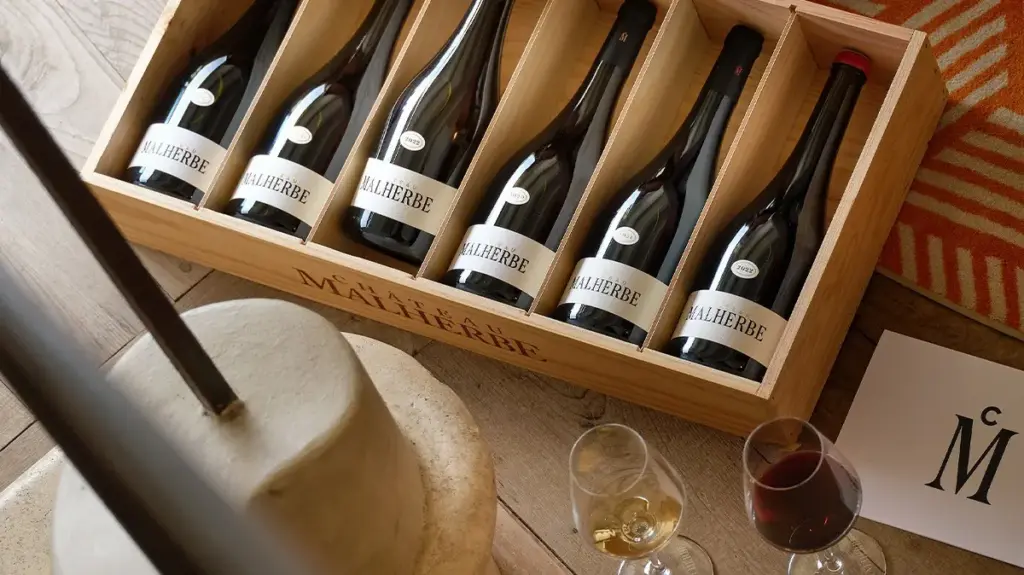
The economic pressures pushing estates toward homogenous rosé production are substantial. Adélie Ferrari, business development manager at Château Malherbe in Côtes de Provence, explains that abandoning reds and whites in favor of the region’s signature pink wine would certainly make sense from a purely financial standpoint. Rosé sells quickly and turns over within a single season, whereas the estate’s white and red wines demand months of aging in oak barrels, extended time maturing in the bottle, and a consumer base willing to embrace curiosity and patience. For a family-run wine estate, that kind of timeline represents a significant and genuine commitment.
At Château Malherbe, rosé accounts for 90 percent of the broader AOC’s output, but it makes up only 20 percent of the estate’s own production. The remaining 80 percent is divided evenly between whites crafted from Rolle (the local Provençal name for Vermentino), Sémillon, and Ugni Blanc, and reds produced from Grenache, Cinsault, Mourvèdre, and Syrah. Ferrari points out that when one particular style achieves such staggering commercial success, it inevitably ends up defining the entire identity of a region in the public consciousness. Nevertheless, she emphasizes that Provence has always produced white and red wines—particularly along the coastal stretches where these grape varieties have thrived for generations. These styles never truly disappeared; they were simply overshadowed by the immense global shadow of rosé.
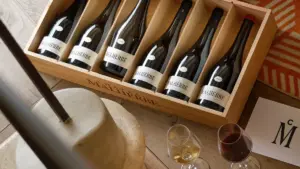
As a member of the fifth generation running Château Malherbe, Ferrari takes the greatest pride in the estate’s premier cuvées: Château Malherbe Louis Ferrari, a white wine named in honor of her grandfather, and Château Malherbe Madame Ferrari, a red named to commemorate her grandmother Mireille, who successfully transitioned the family enterprise from simple grape-growing into independent winemaking. The Louis Ferrari white is a harmonious blend of Rolle and Sémillon harvested from one of the château’s finest plots, where the two distinct varieties are cultivated side by side. Meanwhile, the Madame Ferrari red is born from remarkably old vines, including blocks of Grenache planted around 1940 and Mourvèdre vines that exceed 60 years of age.
These older vines naturally produce smaller yields and inherent structural balance, meaning the profound concentration found in the glass stems directly from the vineyard ecosystem rather than aggressive extraction techniques in the cellar. Rory Pugh, senior wine and beverage director for Jean-Georges Management—which oversees high-end culinary destinations around the world, including the iconic Jean-Georges in New York City—features both of these benchmark wines on his list. His broader program includes roughly a dozen red and white wines from Provence, a region he notes carries considerable weight with his clientele. While diners certainly arrive with strong associations tied to rosé, Pugh finds that they are consistently thrilled to explore the region’s alternative styles.

This sentiment is echoed further up the coast by Daniel Ravier, director and winemaker at the renowned Domaine Tempier in Bandol. Ravier asserts that producing exclusively rosé would be an uninspiring path, noting that both white and red wines have a tremendous amount of character to express. While nearly half of Domaine Tempier’s production is dedicated to rosé and a modest amount to white, the remainder is divided among three prestigious, high-end reds: La Migoua, La Tourtine, and Lulu & Lucien. The latter is named in honor of the estate’s late, legendary proprietors, Lulu and Lucien Peyraud, whose sons now own and operate the property.
Crafted from Mourvèdre, Grenache, Cinsault, Carignan, and Syrah cultivated across organically and biodynamically farmed vineyards, these reds stand among the most coveted and sought-after bottles in the entire region. Other notable producers championed by connoisseurs include Château Simone from AOC Palette, Château Pradeaux in Bandol, Domaine de Trévallon in IGP Alpilles, and its neighboring estate, Domaine Fontchâine, where winemaker René Milan is rapidly emerging as one of the most celebrated names in the south of France.
At Bavel, an upscale Middle Eastern restaurant in Los Angeles, wine director Claudia Rosellini curates an adventurous selection of Provençal whites and reds, featuring bottles such as Domaine Hauvette Clairette, a white wine produced from an ancient, historically significant grape variety. A passionate admirer of winemaker Dominique Hauvette’s strict biodynamic farming methods and profound dedication to land stewardship, Rosellini notes that these wines are deeply rooted in the wild garrigue and limestone terrain of the Alpilles mountains. She feels this terroir creates an organic connection to the restaurant’s culinary style, which heavily features aromatic seeds, spices, and fresh green herbs. For Rosellini, the synergy is clear: the wine and the food speak the exact same Mediterranean language. She observes that given the pervasive market emphasis on Provençal rosé, guests are frequently caught off guard when introduced to a serious, complex white wine from the same geography, a delightful discovery that invariably sparks a wider curiosity about the full breadth of what Provence has to offer.
Ultimately, the most compelling argument for these wines is not merely their novelty, but their exceptional quality. No wine enthusiast needs convincing that the red and white expressions of the neighboring Rhône Valley rank among the finest in the world, yet moving just a short distance south often requires shifting the paradigm of what consumers expect. While Adélie Ferrari and her family certainly appreciate a glass of rosé, she notes that when it comes to their personal preferences, devoting their lives to wines they do not regularly open themselves would feel fundamentally disconnected. On most evenings at home, the family reaches for a white or a red. In the eyes of producers and sommeliers alike, it is high time for wine lovers everywhere to do the same.