Two things are fundamentally true about the Pegu Club. First, there is more history, more influence, and more foundational force shaping the modern cocktail world embedded in that name than in almost any other drink you could possibly imagine. Second, despite its massive historical footprint, you have probably never actually ordered or tasted one. In this way, the drink resembles a forgotten great-grandfather sitting quietly in the corner during a bustling family event. But if you pull up a chair, pour a glass, and listen closely, you quickly realize that it has quite a remarkable story to tell.
From British Colonial Outpost to Private Sanctuary
The narrative begins in 1871 in Rangoon, the capital of British-controlled Lower Burma. Today, the city is known as Yangon and the country is called Myanmar, but in the 19th century, British colonialism operated under a distinct set of rules driven by administrative hubris and an insistence on replicating Victorian domesticity anywhere in the world. At the heart of this colonial establishment was the Pegu Club, an exclusive private gentleman’s club.
The sprawling grounds featured extensive manicured lawns, tennis courts, billiards rooms, and card rooms, complemented by a handsome banquet hall and an impressive bar. It was housed within a magnificent two-story palace of teak, meticulously maintained and serviced by the local indigenous population—the very people who were strictly barred from holding membership due to the color of their skin. For decades, the Pegu Club functioned as the private social and administrative headquarters for the British colonial establishment in the region, a world of privilege insulated from the realities of the surrounding country.
The Birth and Global Spread of the Cocktail
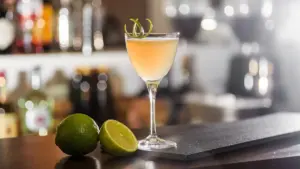
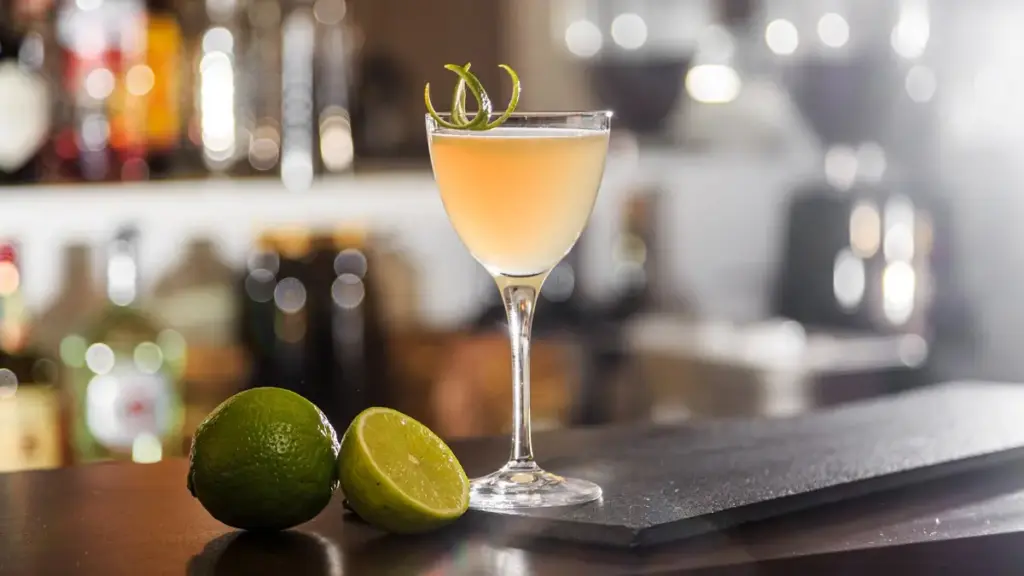
Fast forward to 1923, and the Pegu Club had transitioned from a physical institution of empire into a glass. The drink made its first documented appearance in print within the pages of Harry of Ciro’s ABC of Mixing Cocktails, authored by Harry of Ciro’s. The recipe presented a sophisticated combination of gin, orange curaçao, and sweetened lime juice, accented with dashes of both Angostura and orange bitters.
Who actually created this drink, and at what precise moment, remains shrouded in mystery. Cocktails almost invariably exist in drinkable, popular form long before bartenders or writers ever codify them in print, making it impossible to pinpoint exact origins. Did it genuinely take 52 years for members of the original gentleman’s club to invent an eponymous cocktail? One tends to doubt it, but historical documentation only takes us so far.

Regardless of its exact genesis, the drink caught on with astonishing speed. By 1930, it was ubiquitous across the international bar scene. No less of an authority than Harry Craddock wrote in his legendary Savoy Cocktail Book that the Pegu Club Cocktail had traveled extensively and was actively requested by patrons round the world.
Decolonization and the Fading of an Era
By 1948, however, both the physical club and its liquid namesake were facing significant headwinds, though for entirely different reasons. That pivotal year brought two major developments. First, David Embury published his highly influential volume, The Fine Art of Mixing Drinks, which featured several hundred cocktail recipes. While Embury included similar classic templates like the White Lady and the Gimlet, the Pegu Club was conspicuously absent from his compendium.
More significantly on a geopolitical scale, 1948 marked the year Burma declared its independence from Great Britain. The Pegu Club as an institution managed to limp along for another 14 years, with local staff dutifully polishing the brass on a fading titanic monument to a bygone colonial era. But its days were numbered. Following a military coup in 1962, the building was seized outright by the army, and the historic club finally ceased to exist.
The New York Revival and the Rise of Modern Mixology
By 2005, the Pegu Club existed primarily as a fading memory and a bartender’s dream—specifically, the vision of a talented and pioneering mixologist named Audrey Saunders. At a time when the broader cocktail landscape remained trapped in an over-reliance on vodka, Saunders saw the future of mixology with remarkable clarity.
She planned to open her own cocktail bar on the edge of SoHo in Manhattan, establishing a sanctuary entirely devoted to gin, which she recognized as vodka’s more flavorful cousin capable of producing vastly superior cocktails. Bucking the conventional wisdom of the era, she designed a back bar that barely carried any vodka at all. Seeking a name that embodied this bold, fresh direction, she chose an old, nearly forgotten drink that she later described as bracing and sophisticated—everything she wanted in a gin cocktail. She called her new venture the Pegu Club.

It is difficult to overstate the profound influence that the Pegu Club bar ultimately exerted on the contemporary drinking world. Many of the most celebrated bartenders of the modern era got their first real foothold behind its stick, and an impressive roster of modern classic cocktails was born within its walls, including the Old Cuban, the Earl Grey MarTEAni, the Little Italy, and the Intro to Aperol, among many others.
The bar thrived for 15 years as a beacon of modern mixology. Ultimately, however, it fell victim to the COVID-19 pandemic, succumbing to an unsurvivable economic blow compounded by the myriad challenges of operating an independent hospitality venue in New York City. It shut its doors permanently in March 2020.
The Enduring Legacy of a Classic Drink
As for the cocktail itself, the Pegu Club outlived both its namesake physical institution in Burma and the legendary New York bar that rehabilitated its reputation. Today, it remains an aged, noble, and fiercely respected drink. It is tart, strong, and structured with a balance that evokes an earlier era of bartending. From the very first sip, the Pegu Club announces itself as a serious cocktail. It carries the structural DNA of a White Lady but possesses a deeper, more seductive edge, functioning essentially as a gin-based Sidecar touched with spice. It stands ready to be revisited whenever a guest decides to pull up a chair.
Crafting the drink requires precision, as ingredient selection matters immensely. The consensus recommendation points toward a sturdy, juniper-forward London Dry gin to punch through the citrus and modifiers effectively, with Fords Gin and Tanqueray emerging as top-tier choices that avoid the excess heat or overly soft charm of more delicate botanical expressions.
Historically and per Saunders’ preference, the recipe calls for a brandy-based orange curaçao rather than vodka-based triple secs or Cointreau, lending a round, supple oak characteristic that defines the drink’s charm. While contemporary bartenders often debate the inclusion of simple syrup—arguing whether lower-proof liqueurs or a scant quarter-ounce of simple sugar is necessary to curb the drink’s natural austerity—the final composition relies on a careful balance of citrus, spirit, and bitters. Finished with a dash of orange bitters and the essential spice of Angostura, the Pegu Club remains a towering monument in cocktail history, ready to be discovered anew.