Documenta, staged every five years in Kassel, Germany, stands as one of the most prominent, influential, and recurring contemporary art exhibitions in the global cultural calendar. However, the exhibition has faced unprecedented turmoil and bitter controversy following its previous iteration in 2022. That edition was heavily marred by fierce criticism, public outcry, and severe allegations of antisemitism regarding featured artworks. Critics and cultural commentators have since argued that subsequent government scrutiny and political interventions represented a broader attempt by German authorities to suppress pro-Palestinian artistic expression and limit free speech within the arts sector.
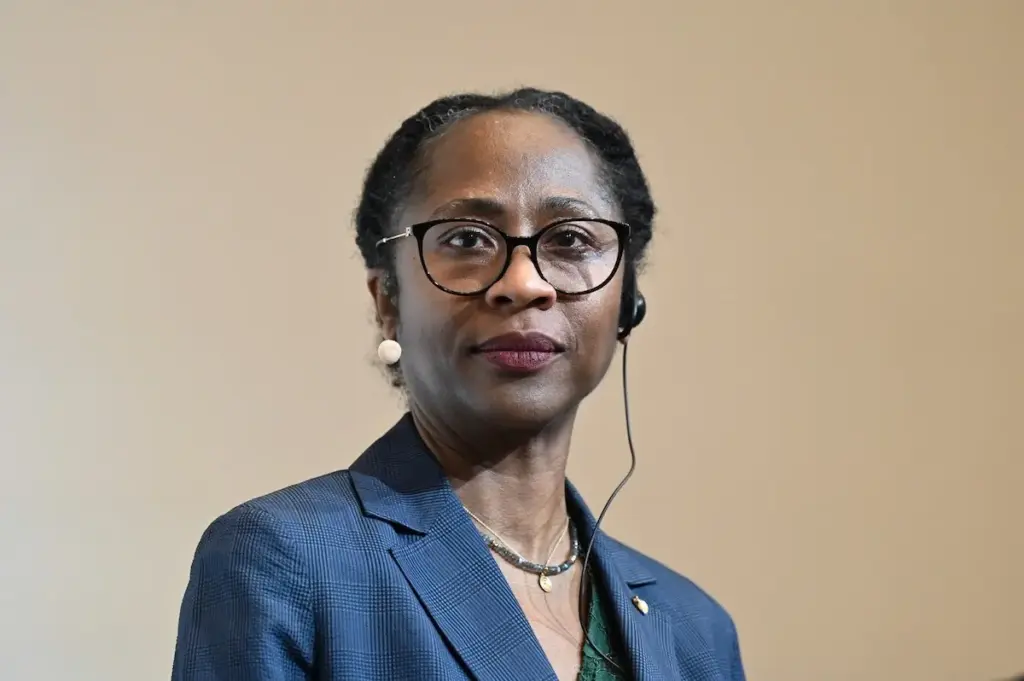
The deepening controversy has fundamentally reshaped the administrative and institutional landscape of Documenta 16. The turbulence reached a critical juncture in 2023 when the exhibition’s entire curatorial selection committee resigned en masse, citing an untenable political climate and profound disagreements over governance. Following the fallout, Naomi Beckwith—who serves as the deputy director and chief curator of the Solomon R. Guggenheim Museum in New York—was appointed in 2024 to steer the monumental task of organizing Documenta 16.
In an expansive, wide-ranging interview with the German publication Die Zeit, Beckwith spoke extensively about the complex challenges involved in shaping her upcoming edition of Documenta, the overarching theme of which has not yet been publicly disclosed. During the interview, Beckwith addressed the growing reluctance among international artists to engage with cultural institutions in Germany under the current political climate.
When asked about the recruitment process, Beckwith confirmed that "a few" artists had formally rejected her invitations to participate in the exhibition. When pressed on their reasoning, she explained, "Some have the impression that they are not free in Germany to show what they want to show. Others criticize the stance that Germany has taken on the Gaza war."
Asked directly to clarify her own personal stance on the devastating conflict in Gaza, Beckwith deliberately pivoted away from taking a singular political position, emphasizing instead the role of contemporary art as a medium for dialogue. "Far more important than my personal stance is the question of how we can overcome this divisive way of thinking," she said. "How can we get the conversation going again?" She further elaborated on the social dynamics surrounding the conflict, adding, "I understand the need for solidarity and support, but we won’t get anywhere with entrenched positions."
Beckwith also directly addressed the historical shadow cast by Documenta 15, which featured a deeply controversial artwork by the Indonesian artist collective Taring Padi. The collective had exhibited a large-scale mural that incorporated an antisemitic caricature of a Mossad agent, sparking immediate national and international outrage. The mural, which was one of the most prominent and visible works in that exhibition cycle, was initially covered with black cloth before being permanently removed from view amid mounting public pressure.
Reflecting on that incident and the institutional failures that allowed it to occur, Beckwith expressed confidence that safeguards were now in place. "I’m sure something like that won’t happen again. We’ve learned a lot since then," Beckwith said. She contextualized the collective’s oversight, noting, "Taring Padi didn’t understand the importance of protecting the Jewish community in this country. And the curators of ruangrupa, whose openness I greatly admire, may not have been prepared for that either."
In the wake of the 2022 controversy, Documenta has implemented strict institutional measures aimed at preventing similar controversies in future editions. Among these measures is the adoption of a formal code of conduct containing explicit language regarding antisemitism. However, this policy has itself become a source of intense debate within the cultural sector. Documenta’s official operational definition of antisemitism relies heavily on the guidelines established by the International Holocaust Remembrance Alliance (IHRA). This definition is frequently contested by critics and various human rights organizations because it classifies certain forms of criticism directed at the State of Israel as a manifestation of antisemitism, raising concerns about potential censorship of political speech.
During her interview with Die Zeit, it was noted that Beckwith herself had never formally signed the organization’s newly instituted code of conduct. When questioned about this omission by the publication, Beckwith responded simply and directly: "I wasn’t asked to do it."