What becomes possible when every material is considered a resource rather than refuse? This is the central question driving the work of designer Jan-Micha Gamer, whose latest circular design study challenges conventional paradigms of mass consumption, waste management, and furniture production. Titled Raw Material: Armchair, or Armchair as Resource, the project explores the profound potential hidden within municipal bulky waste. Instead of allowing a single discarded leather armchair to meet its end in a landfill or undergo energy-intensive downcycling, Gamer meticulously deconstructed the bulky piece of furniture, extracting its core material fractions and transforming them into an entire ensemble of nine distinct, functional domestic objects.
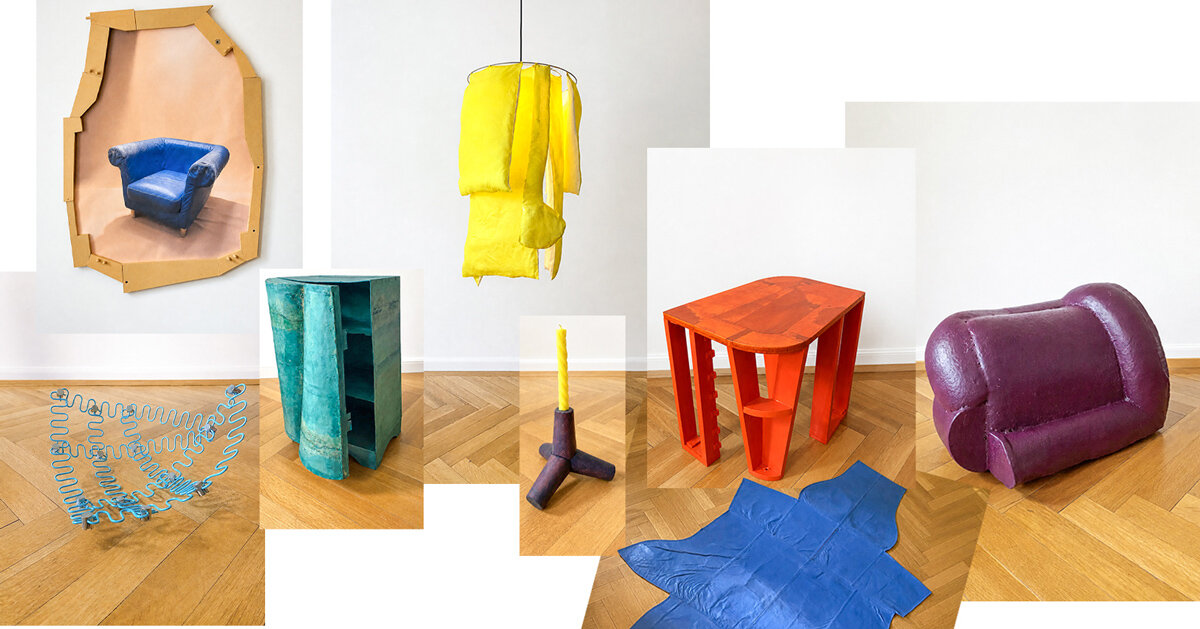
The project serves as a rigorous material test case, investigating how complex, heterogeneous consumer goods can be comprehensively repurposed. Modern furniture is frequently manufactured using a complex blend of bonded materials, permanent adhesives, hidden fasteners, and mixed textiles, making efficient recycling notoriously difficult. By taking a methodical, hands-on approach to a single abandoned armchair, Gamer’s study demonstrates how everyday discarded items can be reimagined as decentralized raw material reserves, capable of replacing virgin resources entirely within a domestic setting.
Armchair as Resource Project Explores Circular Furniture Reuse
At the heart of Jan-Micha Gamer’s design philosophy is a commitment to material-driven detailing, mechanical separability, and circular cascades. The process began with the careful, non-destructive disassembly of the chair’s structural core, interior upholstery layers, and exterior envelope. Gamer systematically sorted the recovered components, separating the timber frame, metal fasteners, synthetic and natural foam, textile webbing, and worn leather hides into discrete material streams.
Rather than attempting to mask the history, flaws, and imperfections of the salvaged components, the design actively embraces them. Production processes were deliberately adapted to work around the irregular dimensions, weathered patinas, and distinctive traces of use embedded within the recovered feedstock. In keeping with circular design principles, the joinery solutions prioritize dry, reversible connections over permanent adhesives. This ensures that every resulting object maintains monomaterial purity, allowing for future disassembly and subsequent material recovery cycles.
Rather than relying on industrial-scale recycling plants, which often process materials by reducing their quality, Gamer’s project demonstrates the viability of small-scale, decentralized fabrication methods. By processing a non-standardized waste stream directly into functional domestic products, the designer bridges the gap between conceptual sustainability and practical application. The resulting nine objects span a wide spectrum of domestic utility, ranging from small tables and storage vessels to adapted everyday items lined with reclaimed textiles.
Deconstructing the Armchair into Nine Domestic Objects
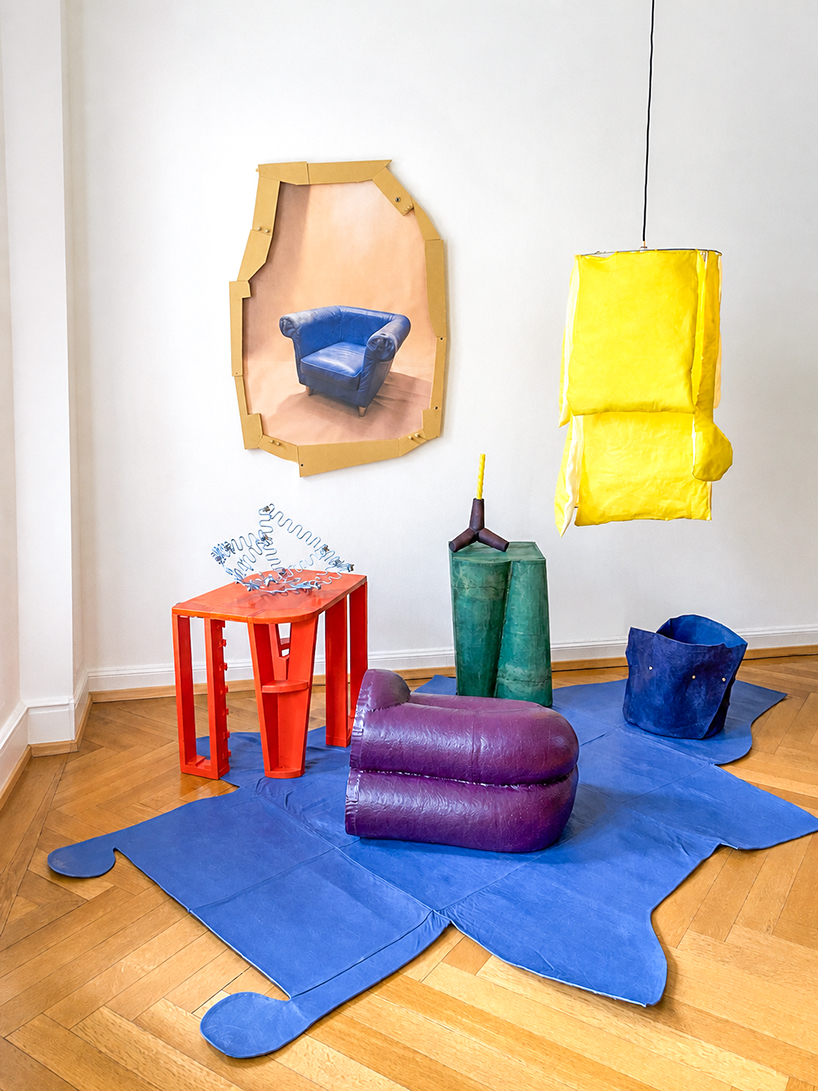
The resulting domestic ensemble showcases the vast material versatility hidden inside a single piece of upholstered furniture. Each of the nine objects highlights a specific material fraction of the original armchair, turning industrial waste into thoughtful, expressive design pieces.
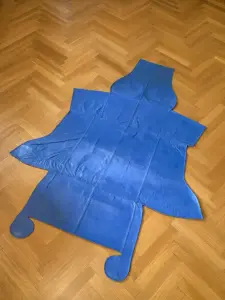
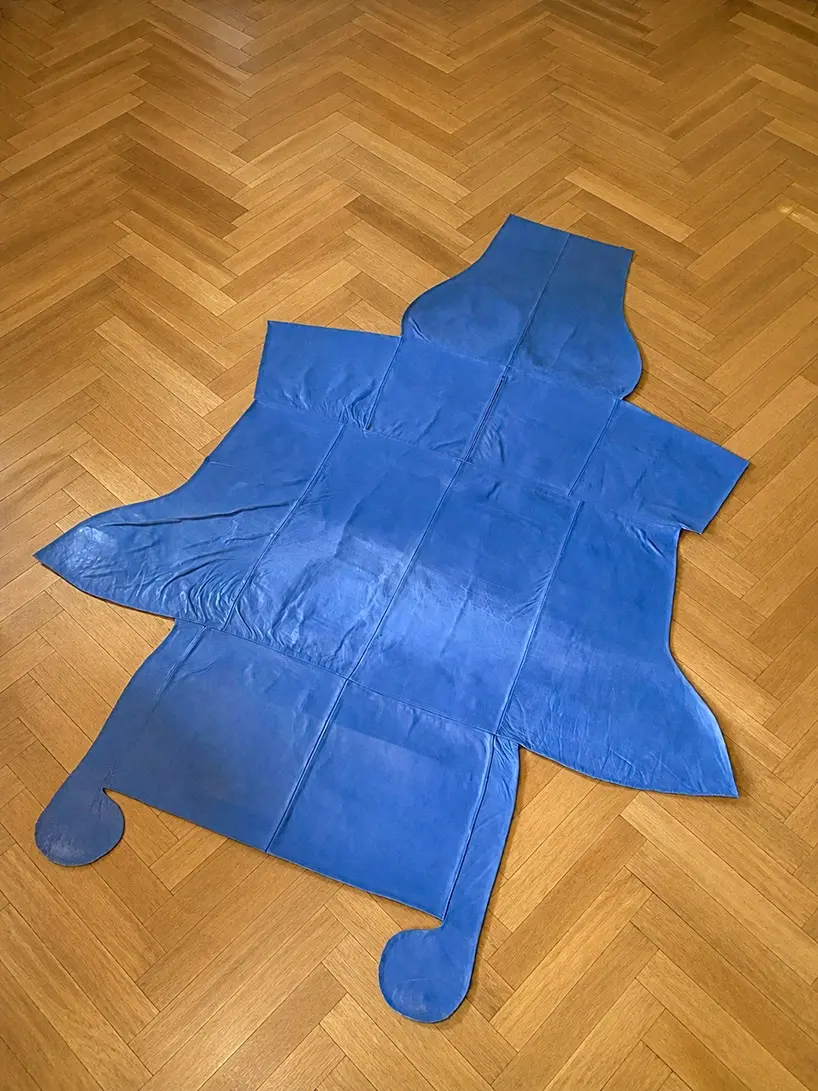
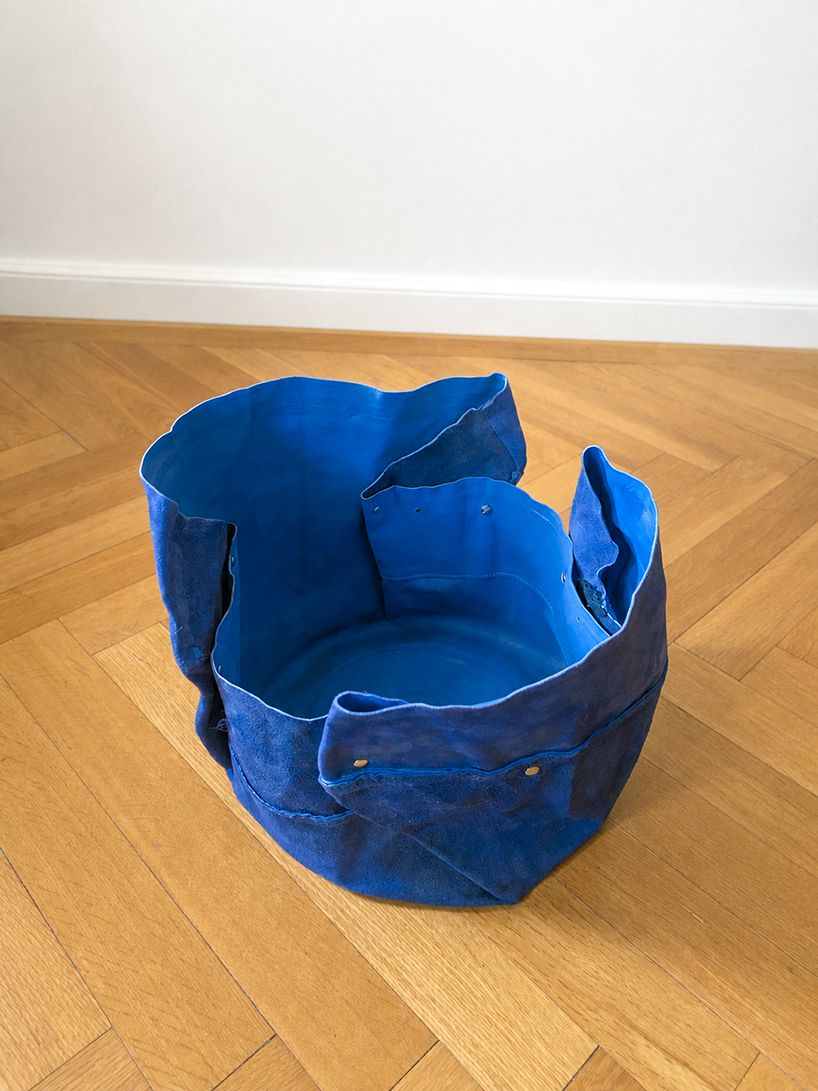
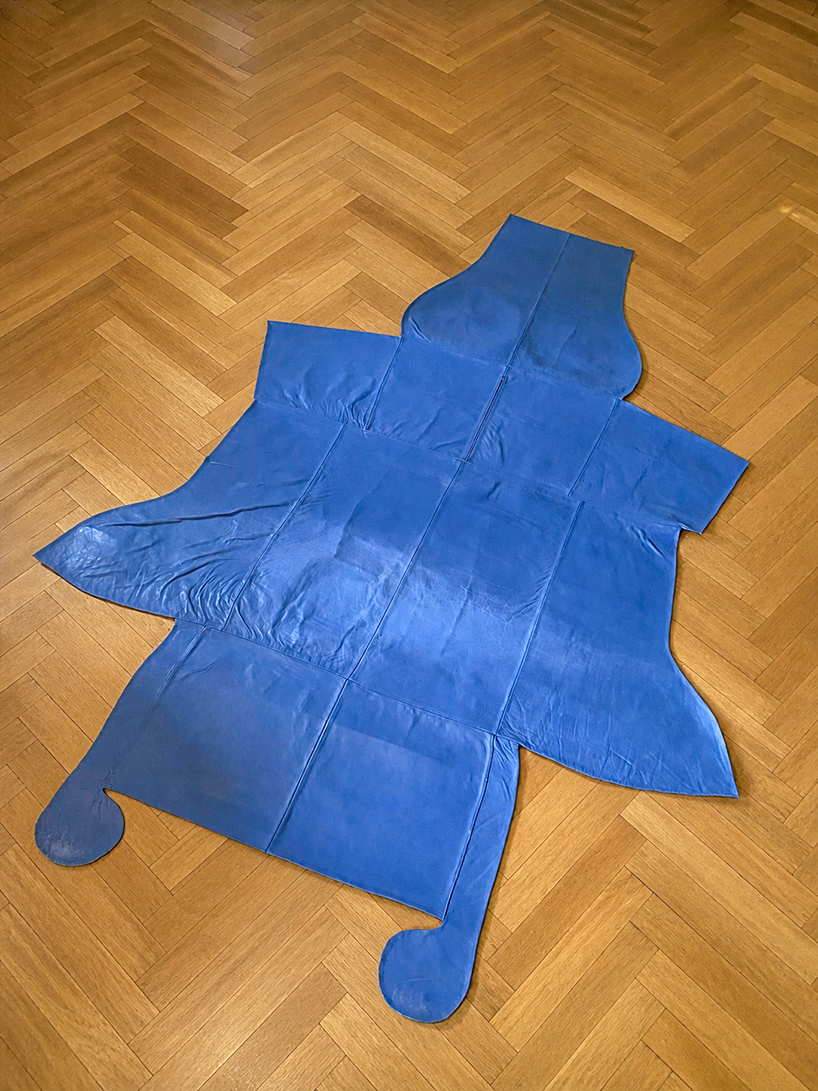
The exterior leather envelope, bearing the creases and visible traces of its past life, was reshaped into a robust floor basket. By carrying these historical marks into a new everyday object, the design celebrates the patina of aging rather than discarding it. In a similar vein, irregular scraps of the recovered leather were pieced together to form a carpet reminiscent of an animal hide, transforming the material’s history of wear and tear into a primary aesthetic quality.
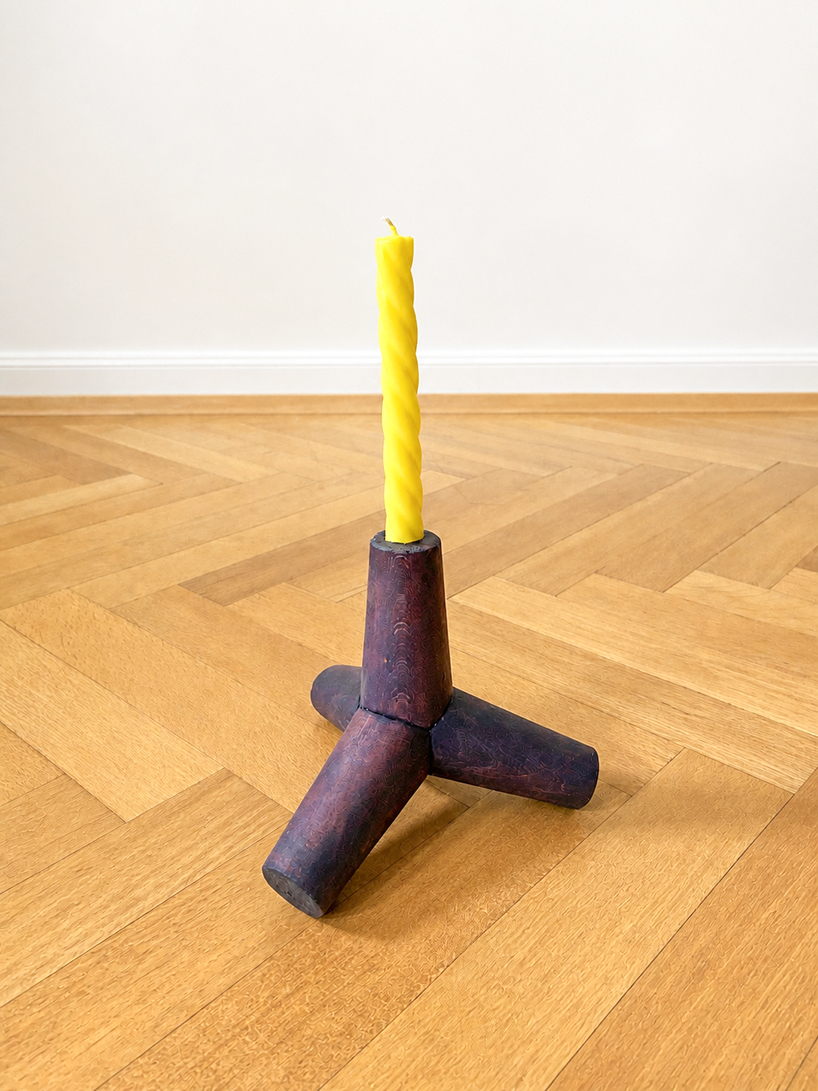
Structural elements of the chair were similarly reimagined. The geometric form of the original beechwood feet was directly translated into a solid candleholder, retaining the exact character and finish of the original components. Meanwhile, the chair’s low-grade frame timber was given new life as a functional table. By applying a translucent, hard-wearing protective coating, Gamer highlighted the unusual grain of the overlooked wood, turning what was once a hidden structural skeleton into a defining visual feature of the furniture piece.
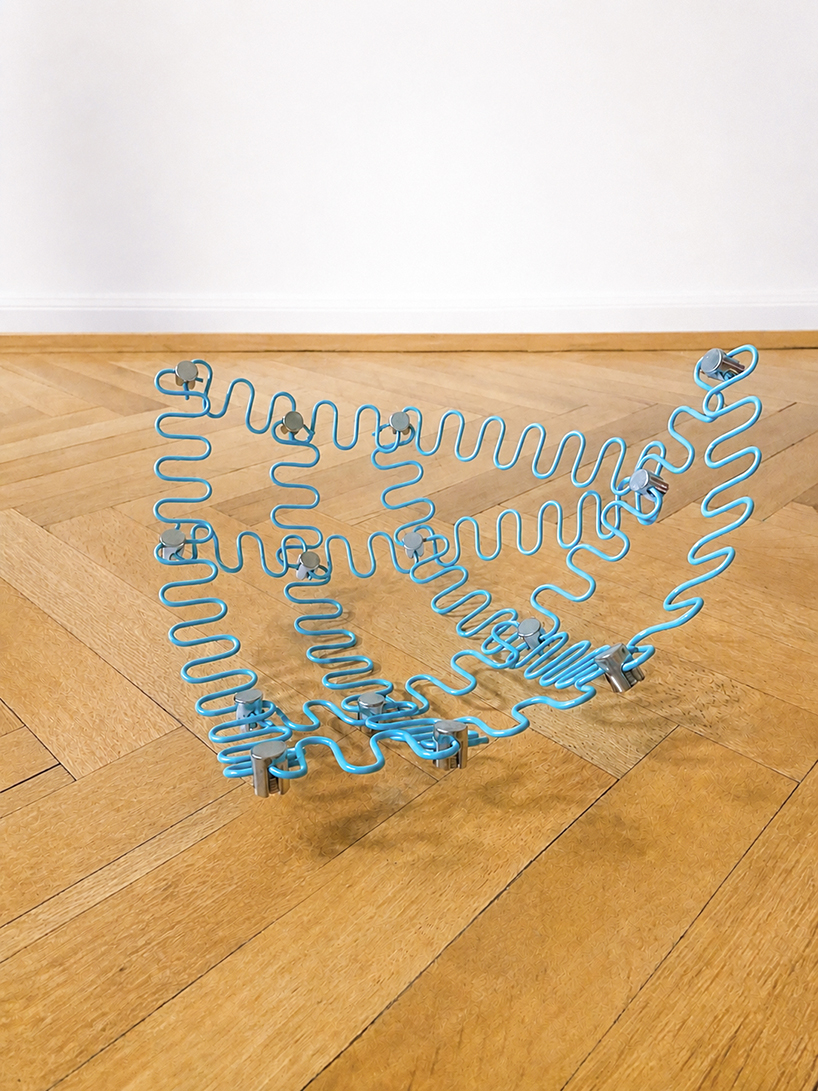
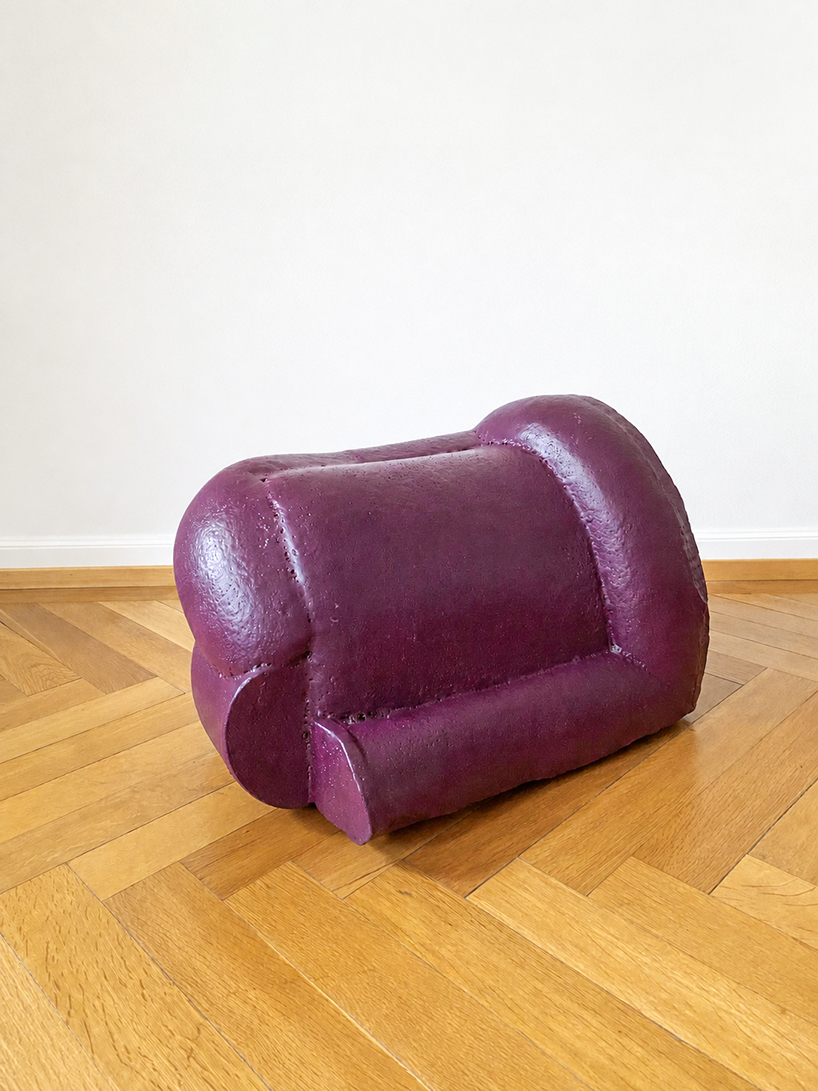
Other components found entirely new applications through creative reinterpretation. The distinctive spring geometry and inherent tension of the armchair’s wave springs were translated into a sculptural fruit basket, held together securely with screwable stainless-steel connectors. Foam layers of varying densities, once hidden deep within the upholstery, converged to form a compact, architectural pouf, where the physical properties and geometry of the foam directly dictate the final form of the seating piece.
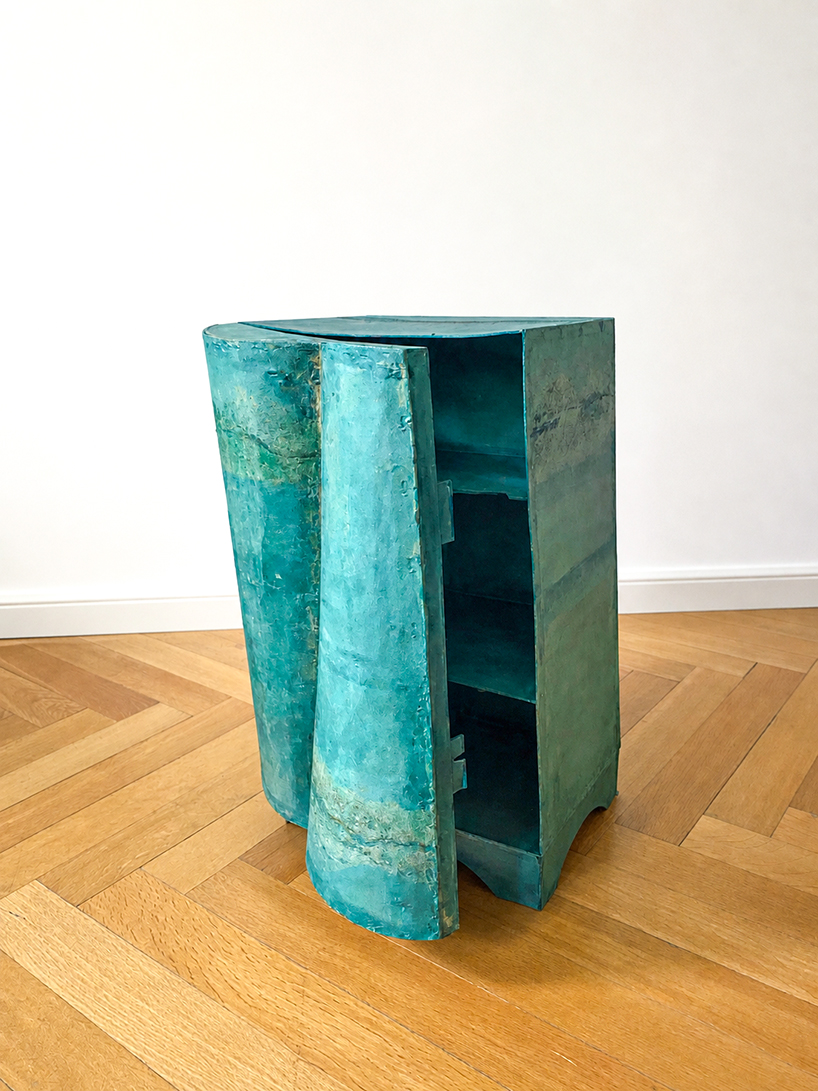
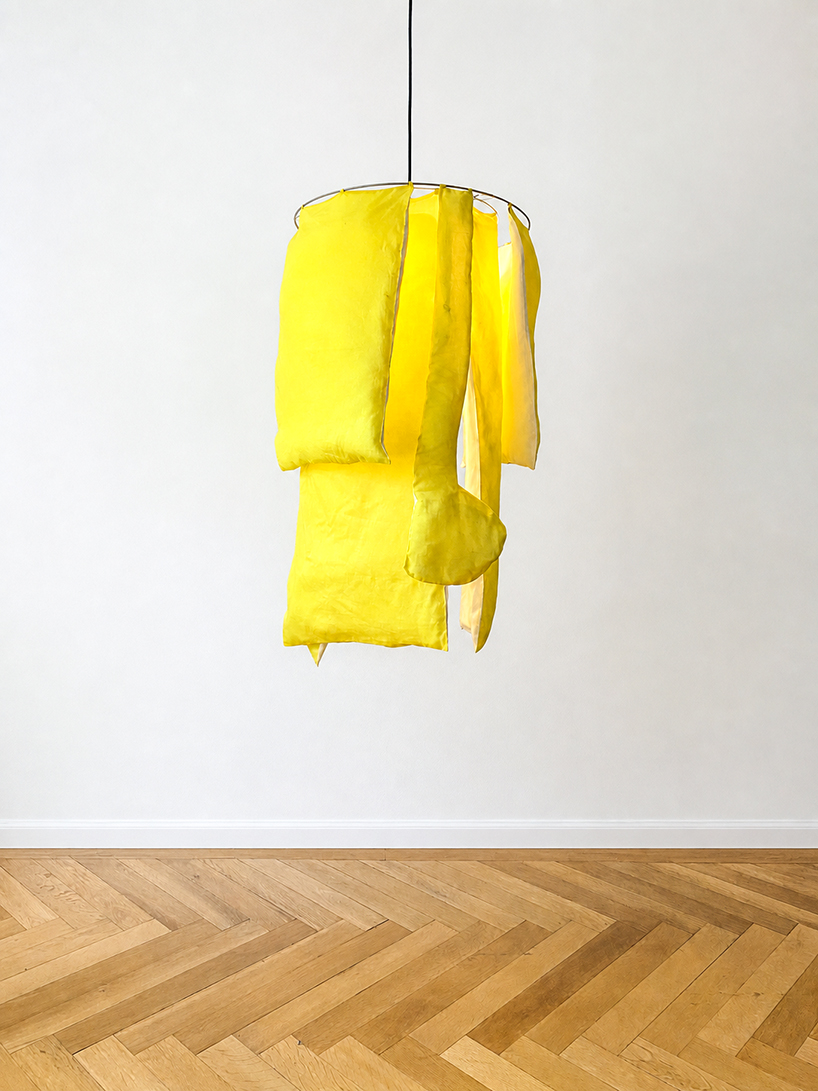
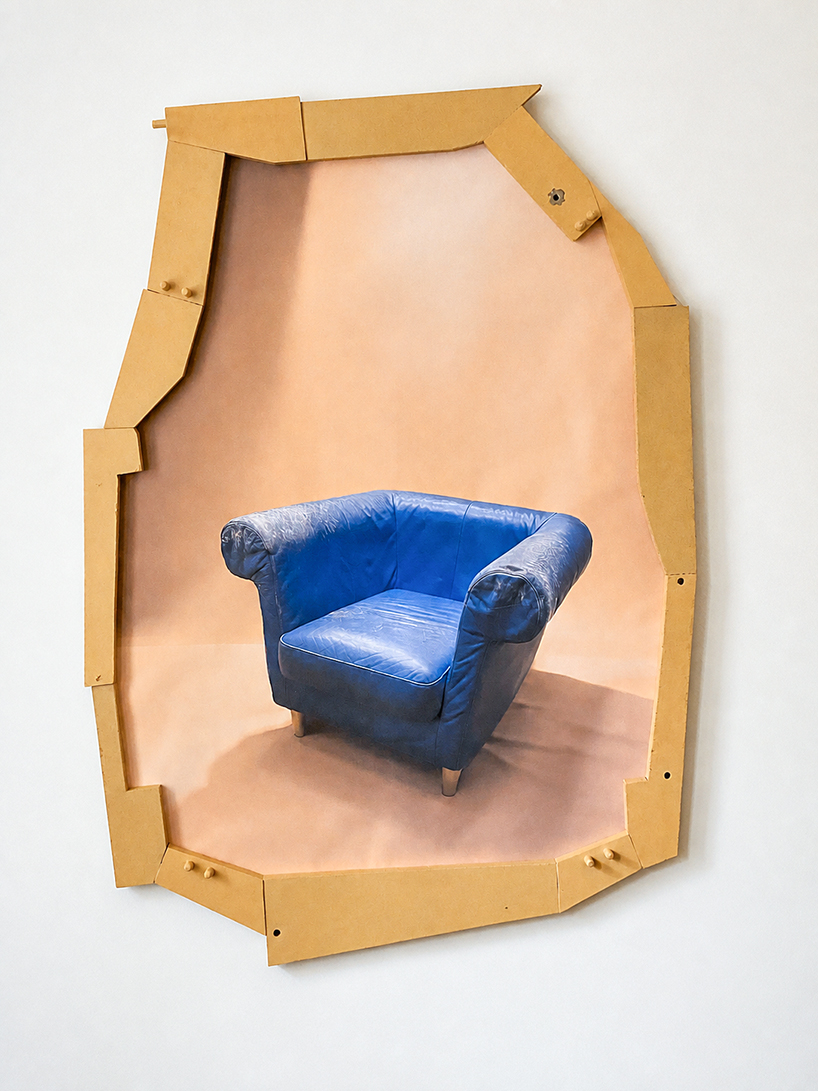
Lighting and storage also emerged from the exhaustive material audit. A new lamp was constructed by layering geometric forms to create a unique lampshade, finished with a thin fabric covering that subtly reveals the texture of the repurposed upholstery batting beneath. For storage, a cabinet was constructed entirely from greyboard surfaces that had previously been covered with foam; deliberately left visible are the original adhesive residues and staples, honoring the honest reality of the source material’s industrial past. Finally, wood offcuts from the frame construction were fashioned into a picture frame holding a photographic print of the original armchair, capturing the closed-loop narrative of the entire project.
Through Raw Material: Armchair, Jan-Micha Gamer presents a compelling vision for the future of domestic design, proving that waste is merely a failure of imagination and that our existing material culture holds all the resources we need for tomorrow.