REPURPOSING MUNICIPAL WASTE INTO STREET FURNITURE
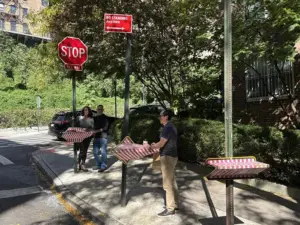
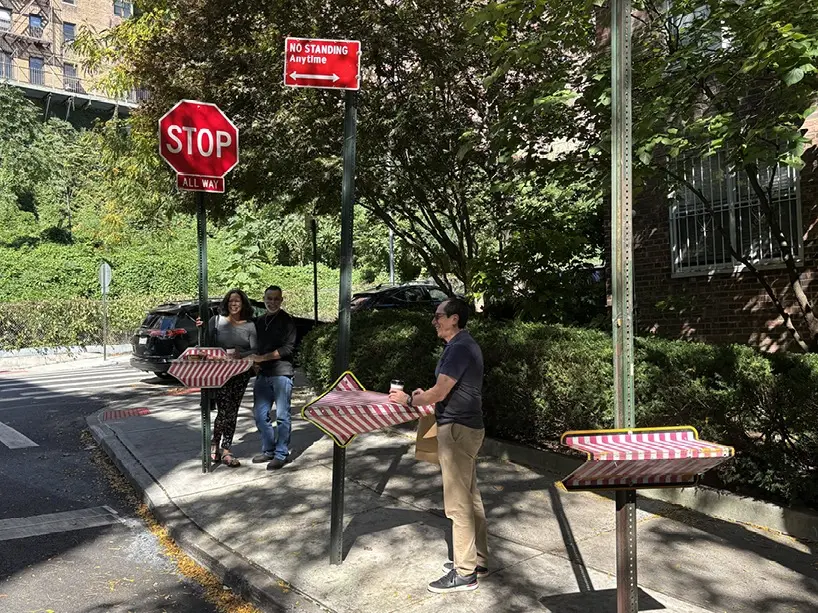
In the bustling landscape of New York City, where public space is at an absolute premium and every square foot of sidewalk real estate is fiercely contested, a novel design intervention is rethinking how urban infrastructure can serve the daily lives of citizens. Conceived by architect Juan Fernández González, the "Traffic Sign Urban Tables" project offers a brilliant, resourceful solution to a hidden municipal problem. This ingenious urban furniture initiative takes decommissioned, obsolete aluminum traffic signs and expertly repurposes them into functional standing tables. These compact, stylish dining surfaces are ingeniously mounted directly onto existing street signposts, seamlessly integrating into the urban fabric of New York City without requiring any additional floor footprint or obstructing the flow of pedestrians.
The scale of the raw material available for such a project is staggering. Across the five boroughs of New York City, more than one million traffic signs are regularly removed, replaced, or discarded due to routine wear and tear, accumulated graffiti, fading, or the loss of legal legibility. Traditionally, these retired metal plates enter municipal waste streams, adding to the city’s massive refuse burden. Fernández González’s project brilliantly intercepts these municipal waste streams at the source. By redirecting discarded aluminum away from landfills and recycling centers, the initiative transforms an overlooked byproduct of municipal bureaucracy into much-needed civic infrastructure.
The primary beneficiaries of this creative recycling effort are farmers’ markets and mobile food vendors. Throughout the city, open-air greenmarkets and street food trucks play a vital role in urban nutrition, culture, and community life. However, these vital mobile operations typically operate entirely without seating, counters, or surface amenities. Patrons purchasing fresh produce, artisanal foods, or hot meals from food trucks are usually left with no choice but to eat while standing on the curb, walk back to an office, or seek out distant public benches. The Traffic Sign Urban Tables provide an immediate, elegant, and highly practical dining surface right where it is needed most, enriching the street-side culinary experience for thousands of New Yorkers and visitors every day.
PINK-AND-WHITE ALUMINUM SIGNS BEND INTO STRUCTURAL TABLE FORMS
The physical transformation of a rigid, authoritative traffic sign into a welcoming hospitality surface is a feat of precise industrial design and local craftsmanship. The journey of these materials begins with the sourcing of retired road signs. For this phase of the project, raw aluminum sheets are obtained from the Mercer County Department of Transportation and Infrastructure in neighboring New Jersey, capturing structural metal that has completed its primary duty of guiding vehicular traffic.
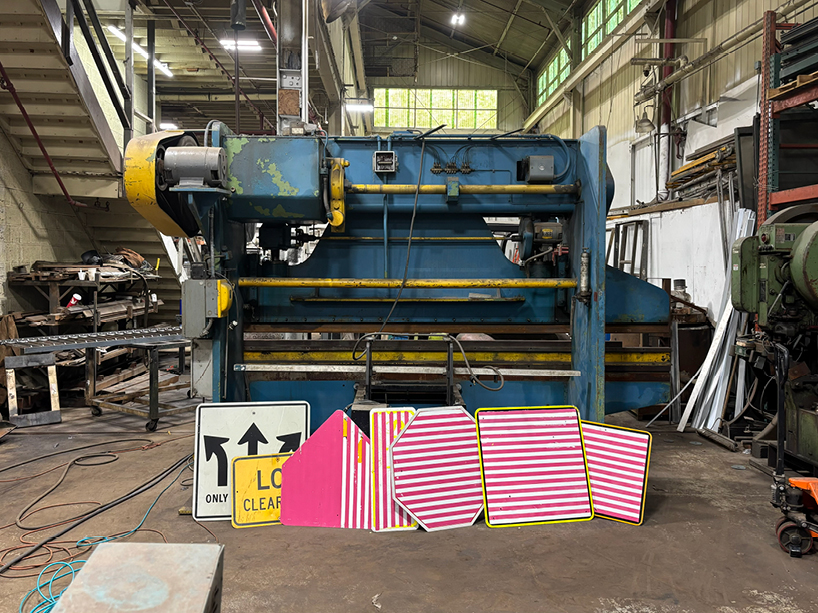
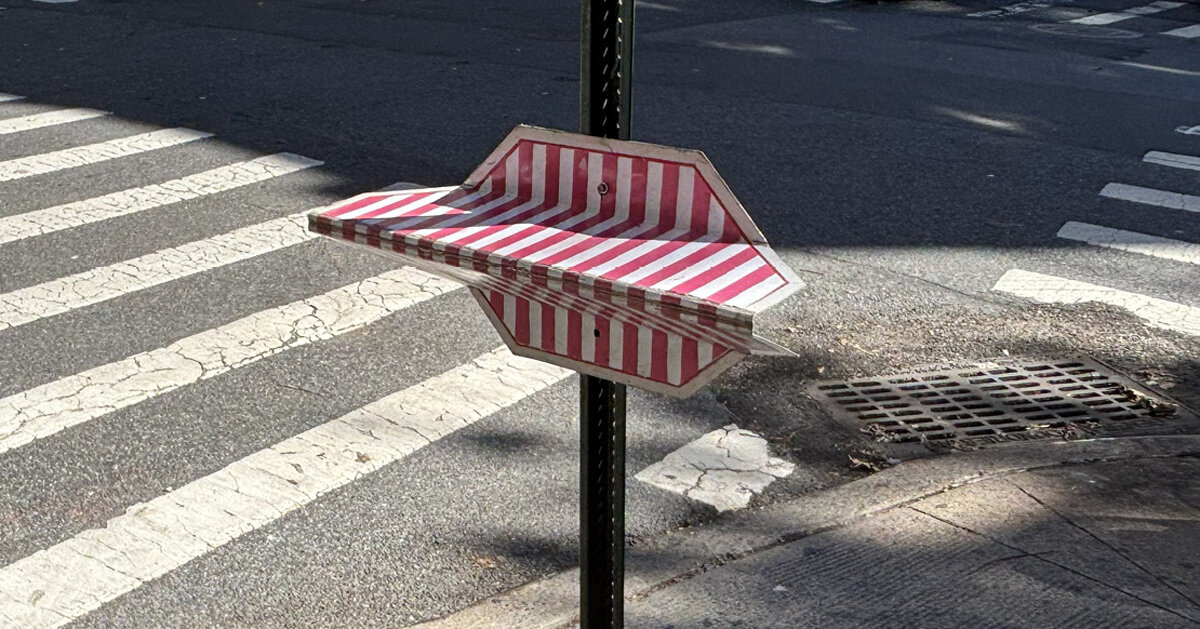
Once acquired, the heavy aluminum sheets are transported to Serett Corp., a fabrication facility located in Jersey City. Here, the metal undergoes a dramatic metamorphosis. Using a heavy-duty industrial press brake—a specialized machine designed for bending sheet and plate metal—skilled fabricators fold the retired road signs into narrow, sturdy cantilevered shelves. This precise folding process maximizes the structural integrity of the lightweight aluminum, allowing it to support the weight of food containers, drinks, and leaning diners without buckling or requiring complex internal bracing frameworks.
Following the structural fabrication, the designer applies a distinctive aesthetic treatment by hand-painting the newly formed tables in a playful yet recognizable pink-and-white checkered motif. This visual choice is far from arbitrary; the checkered pattern directly references traditional disposable street-food tablecloths, establishing an immediate psychological link between the rigid municipal metal and the casual, comforting experience of outdoor dining. The juxtaposition of official urban signage transformed into a cozy, domestic picnic pattern adds a layer of witty urban commentary to the functionality of the design.
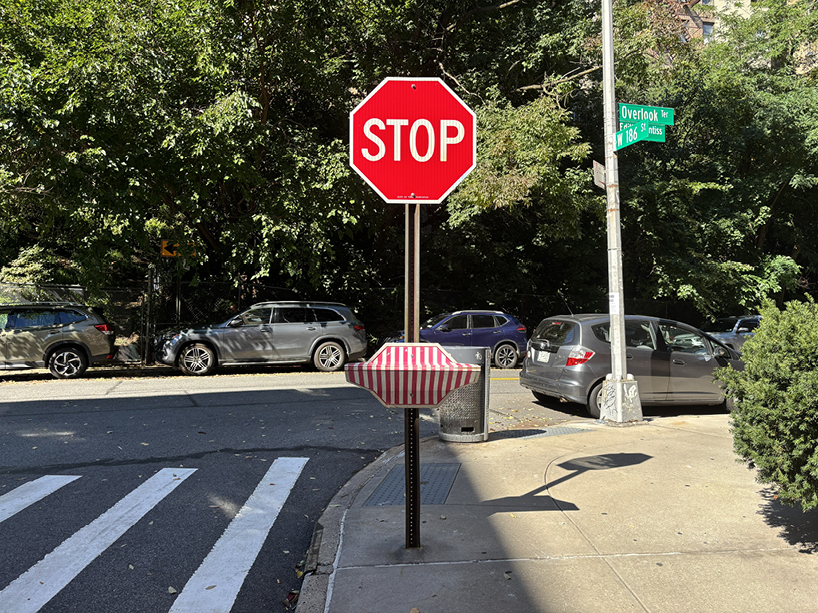
The genius of the Traffic Sign Urban Tables extends far beyond their fabrication and visual appeal; it is equally evident in their remarkably clever installation methodology. The mounting system relies entirely on pre-existing U-channel signposts. These vertical metal posts are a Federal Highway Administration standard fixture across North America, characterized by their distinct profile and pre-punched mounting holes spaced precisely one inch center-to-center.
By designing the table brackets to interface directly with this standardized hole pattern, Fernández González has created a universally adaptable attachment system. The tables are secured quickly and securely using standard bolts, nuts, and washers, requiring no permanent alterations to the sidewalk infrastructure or the signposts themselves. Because the units are lightweight and modular, they offer immense operational flexibility. The tables can be easily height-adjusted to accommodate different users, mounted at positions that ensure zero obstruction to pedestrian circulation, and deployed on a strictly temporary basis during street closures, neighborhood festivals, or weekend markets.
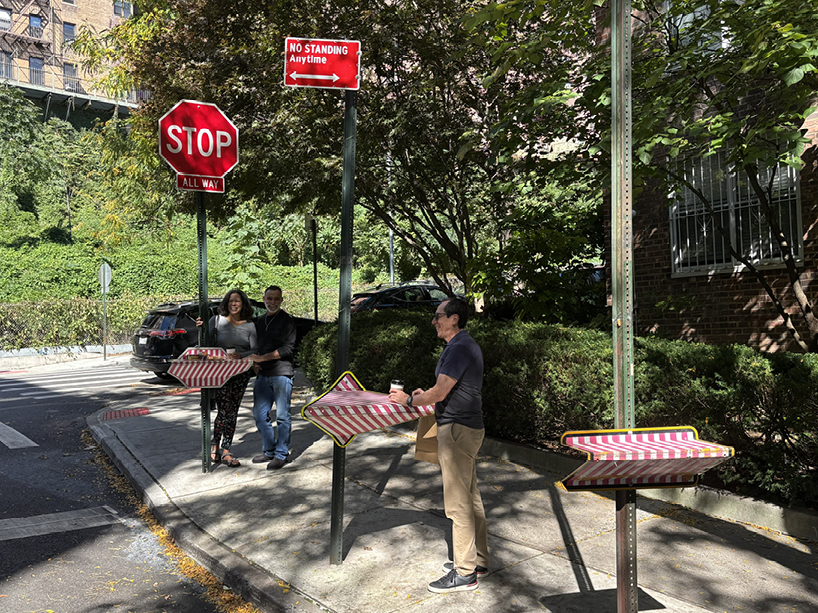
The practical viability of the project has already been demonstrated through a series of successful initial installations across vibrant urban settings. The modular tables made their debut at the Carnaval de la Cultura Latina in Queens, providing instant gathering spaces for festival-goers. Subsequently, they were deployed at GrowNYC’s bustling Inwood and Union Square Greenmarkets in Manhattan, where shoppers eagerly utilized the compact counters to sample local produce or enjoy quick snacks. Additional installations have popped up near major cultural hubs, such as alongside food trucks operating near Lincoln Center in Manhattan, as well as neighborhood street corners in Washington Heights.
Because the attachment system is engineered around standardized U-channel posts, the project holds profound potential for scalability far beyond the borders of New York City. The modular concept can be readily deployed in municipalities across North America wherever standard traffic signposts are found, turning overlooked regulatory infrastructure into a vast, decentralized network of public hospitality surfaces.