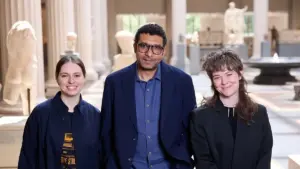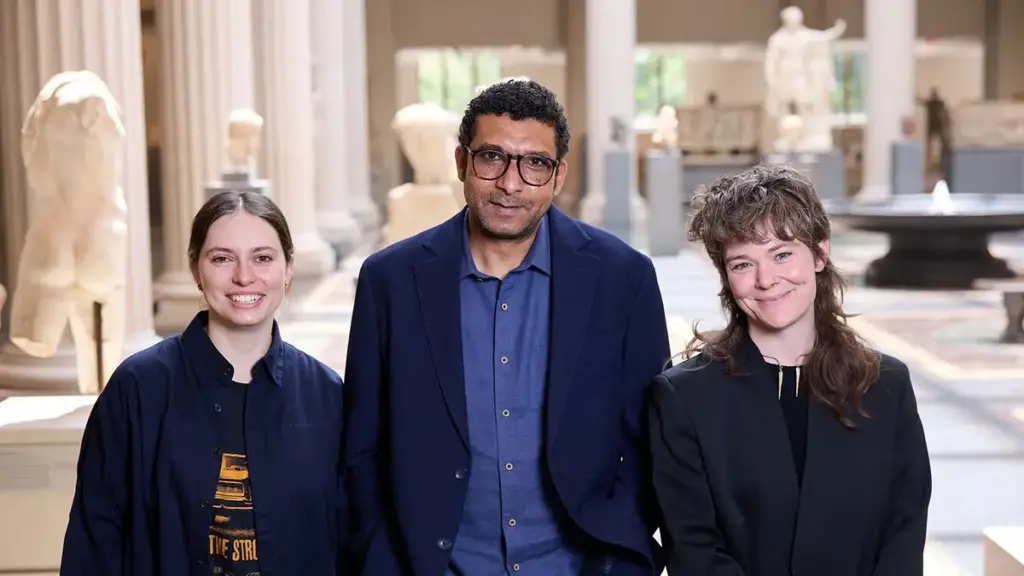
Earlier this month at the Metropolitan Museum of Art in New York City, the three exceptional artists chosen for the prestigious Artisan Residency Programme officially unveiled the remarkable works they created through the unique partnership. The showcase marked a significant milestone in the ongoing collaboration between the world-renowned cultural institution and the esteemed Swiss luxury watchmaker Vacheron Constantin, celebrating a shared dedication to preserving time-honored craftsmanship while encouraging contemporary artistic innovation and cross-cultural dialogue.
The residency program, which was officially launched by the Swiss manufacture and the Met in May 2025, represents the third major institutional partnership of its kind for the historic watch company. Vacheron Constantin has long cultivated deep ties with the world’s most prominent guardians of art and history, having previously established a landmark partnership with the Louvre in Paris dating back to 2019, followed by an equally prestigious collaboration with the Palace Museum in Beijing, which was established in 2024. Through these high-profile alliances, the luxury watchmaker seeks to bridge the gap between centuries-old decorative arts and modern horological mastery, fostering an environment where traditional techniques can be studied, reinterpreted, and passed down to new generations of creators.
At its core, the Artisan Residency Programme is designed to ensure that traditional craft techniques are not merely preserved behind glass cases, but actively reinterpreted through fresh, contemporary lenses. The immersive program offered the selected artists an extraordinary level of access, beginning with a considerable period of independent research and inspiration drawing within the vast curatorial departments of the Met. Following their deep dives into the museum’s historic collections, the artists traveled across the Atlantic to the historic Vacheron Constantin Manufacture in Geneva, Switzerland. There, they worked side by side with the master artisans, watchmakers, and craftspeople of the house, absorbing specialized techniques in metalwork, enameling, engraving, and decoration. They then used these cross-disciplinary experiences as the ultimate launching points to conceive and fabricate their final showcase pieces.
The three visionary artists selected for this inaugural cohort—Aspen Golann, Ibrahim Said, and Joy Harvey—each brought entirely distinct material practices and conceptual frameworks to the residency, resulting in a diverse trio of unveiled works that bridge the worlds of fine art, decorative history, and horological craftsmanship.
For her contribution to the residency, Aspen Golann produced a monumental wooden vessel adorned with intricate nature motifs carved meticulously in bas-relief. Titled simply Vessel, the striking creation drew its primary inspiration from a series of historic wooden chests dating from the 17th to the 19th century originating in Connecticut and Pennsylvania. These historical domestic objects, along with various similar works preserved within the Met’s expansive American wing and decorative arts collection, exemplified a distinct neoclassical New England style that deeply informed Golann’s design choices and structural approach.
However, the journey of Vessel extended far beyond traditional American woodworking. During her immersive time at the Vacheron Constantin Manufacture in Geneva, Golann stepped outside her primary medium to collaborate directly with the brand’s resident craftspeople, engaging deeply with specialized miniature arts such as enameling and delicate metal engraving. The cross-pollination of these disciplines allowed her to infuse the wooden sculpture with a level of decorative refinement and surface nuance that mirrors the intricate detailing found on fine watch dials and historic luxury timepieces.
Ibrahim Said approached the residency through the lens of sculptural form and architectural presence, presenting a work titled Shaping Time. Said’s piece is a sophisticated three-tiered vertical sculpture that immediately commands attention through its sophisticated silhouette. The sculpture is heavily adorned with elaborate relief carvings, precise piercings, and luminous glazed surfaces that directly draw upon ancient Egyptian and Islamic objects housed within the Met’s renowned antiquities and Near Eastern collections.
In developing Shaping Time, Said sought to explore the complex relationship between materiality, light, and the passage of eras—themes that resonate deeply with the philosophy of a luxury watchmaker. During his residency phase at the Vacheron Constantin Manufacture, Said expanded his artistic vocabulary by working closely with the company’s master artisans. He immersed himself in the exacting worlds of enameling, hand-engraving, and specialized lacquer painting, translating the rich textures and chromatic depths of ancient artifacts into a contemporary sculptural idiom that honors both historical roots and technical precision.
The third participating artist, Joy Harvey, turned her focus toward the realm of wearable history and metallurgical artistry with a piece titled Ruined splendour. Harvey’s creation is an arresting bronze diadem composed of forged rhomboid bronze elements that are intricately interlaced with delicate panels. The visual language of the diadem was directly inspired by the fine filigree work seen on ancient Greek necklaces preserved in the Met’s classical collections.
To achieve the striking tension at the heart of Ruined splendour, Harvey employed a deliberate conceptual and physical process: after fashioning the core structure of the diadem, the work was deliberately pierced with metal rods in order to create its evocative sense of "ruination," suggesting the romantic patina and dignified weathering of archaeological treasures recovered from antiquity. For this project, Harvey drew broadly on ancient jewelry traditions represented in the Met’s collections from Greece, India, and China. She then traveled to the Geneva Manufacture to study and master guillochage, a highly specialized and demanding technique used by horological artisans to engrave exceptionally intricate, repetitive geometric patterns—such as delicate leaves, waves, and floral motifs—onto metal surfaces. The fusion of ancient goldsmithing aesthetics with the razor-sharp precision of watchmaking guillochage resulted in a headpiece that feels both timeless and startlingly modern.
The unveiling ceremony at the Metropolitan Museum of Art brought together curators, horological experts, art critics, and cultural figures to celebrate the culmination of the intensive 18-month journey. Speaking on the significance of the event and the ongoing collaboration, Max Hollein, the CEO of the Metropolitan Museum of Art, shared his perspective in an official statement. Hollein praised the initiative as a deeply collaborative endeavor that powerfully embodies a mutual commitment between the museum and the luxury watchmaker to supporting contemporary artistic innovation and fostering rich, meaningful cultural dialogue across international boundaries.