The international art world is currently navigating a complex landscape defined by shifting legal precedents, the evolving legacy of 20th-century movements, and the ongoing stewardship of historical masterpieces. From the high-stakes auction block to the halls of the world’s most prestigious museums, recent developments highlight a sector increasingly focused on provenance, historical reconciliation, and the recognition of artistic influence.
In the Spotlight: High-Stakes Provenance and Market Movements
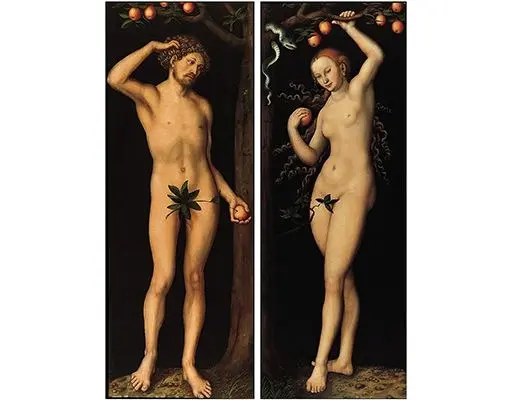
The legal landscape surrounding Nazi-looted art continues to evolve as plaintiffs leverage new legislative tools. A significant case has emerged involving the Norton Simon Museum in Pasadena, California, which finds itself at the center of a renewed bid to claim two paintings by Lucas Cranach the Elder, Adam and Eve (c. 1530). While previous court rulings have upheld the museum’s title to these panels, a fresh lawsuit is attempting to bypass these precedents by invoking new California legislation designed to assist heirs in the recovery of cultural property seized during the Nazi era. This case underscores the persistent friction between public institutions holding collections and the families seeking justice for losses incurred during the Holocaust.
Simultaneously, the market for blue-chip art is bracing for a major infusion of works from the Herbert Lust Collection, which is slated for auction at Christie’s. The collection, which features a monumental Alberto Giacometti sculpture estimated at $30 million, represents a diverse cross-section of 20th-century creativity. According to Max Lust, the collection is a testament to his grandfather’s lifelong dedication to the arts; the elder Lust remained an active and discerning collector well into his early 90s. Beyond the expected high-value works by Alexander Calder and Frank Stella, the collection is noted for its inclusion of artists who have historically been sidelined or overlooked, including Hans Bellmer, Mary Bauermeister, and the photographer Carlotta Corpron.
The industry also mourns the loss of Peter Max, the iconic artist who defined the visual language of the 1960s counterculture. Passing away at age 88, Max became a global phenomenon, his work—characterized by vibrant, Day-Glo colors and psychedelic imagery—permeating the popular consciousness through extensive licensing deals. His career, which spanned decades beyond the height of the flower-power era, cemented his reputation as one of the most recognizable, albeit polarizing, figures in American pop culture.
Museums and Galleries: Acquisitions and Incidents
The Getty Museum in Los Angeles has achieved a significant milestone for West Coast institutions with the acquisition of a recently rediscovered painting by Diego Velázquez. The work, a portrait of the Count-Duke of Olivares, was only recently attributed to the Spanish master. Its arrival at the Getty marks a rare coup for a museum outside the traditional Eastern Seaboard or European art hubs, signaling the growing capacity of Los Angeles institutions to compete for top-tier historical acquisitions.
However, the tranquility of the gallery environment has been disrupted elsewhere. In Paris, the Louvre was the site of an unusual protest on September 19, when two German artists were arrested after attempting to install their own canvases on the wall of the Salle des États, the high-security room that houses Leonardo da Vinci’s Mona Lisa. The incident raises questions regarding museum security and the boundaries of artistic expression within sacred cultural spaces.
In Italy, a different kind of threat emerged at the Uffizi Gallery in Florence. During a bout of inclement weather, a leak in the ceiling allowed rainwater to drip directly onto the protective case housing Caravaggio’s Bacchus (c. 1598). While the masterpiece remained unharmed, the incident sparked immediate concern regarding the maintenance of historic buildings and the vulnerability of priceless artifacts to environmental hazards, renewing calls for intensified infrastructure preservation within the world’s aging museums.
Legal and Restitution Developments
The movement toward ethical restitution continues to make strides. The Art Institute of Chicago recently finalized the return of Jean Metzinger’s 1913 painting, Woman With a Fan, to the heirs of the original owners. The work had been part of the prominent Lewenstein collection before it was sold in Nazi-occupied Amsterdam in 1940. The circumstances surrounding the sale had long been flagged as unclear, and the museum’s decision to restitute the work reflects a broader industry trend toward acknowledging the forced nature of such transactions during the war years.
Furthermore, the United Kingdom has taken a decisive step to retain a significant piece of its cultural heritage by placing an export bar on a rare early 16th-century sculpture. The piece, titled Seated Nymph, was created by the Italian sculptor Antico, an artist renowned for his bronzes inspired by Classical antiquity. With a valuation of £4.6 million, the work is considered a national treasure, and the UK government’s move aims to provide domestic institutions time to raise the necessary funds to keep the sculpture in the country.
Awards, Recognition, and Legacy
The influence of artists in contemporary society is being quantified in new ways, most notably with the release of Time magazine’s inaugural "Art 100" list. The list is a diverse index of the industry’s most impactful figures, blending the roles of artists like Amy Sherald with those of market-makers and institutional leaders, including gallerist David Zwirner and cultural figures such as Alicia Keys. The list serves as a snapshot of how art currently intersects with broader celebrity culture, social activism, and the global economy.
In the realm of professional recognition, photographer and artist Tyler Mitchell has been named the recipient of the 2026 Don Tyson Prize for the Advancement of American Art. Awarded by the Crystal Bridges Museum of American Art, the prize carries a $250,000 unrestricted grant. The award is intended to celebrate artists whose work pushes the boundaries of American visual culture, and Mitchell’s selection highlights the increasing importance of lens-based media in the canon of fine art.
Finally, the art community reflects on the passing of three significant figures whose work shaped their respective national landscapes. The deaths of Brazilian painters Lucia Laguna and Rodrigo Cass, as well as Venezuelan photographer Nelson Garrido, have prompted a period of mourning. Laguna was celebrated for her intricate, nature-inspired compositions, while Cass’s work was noted for its deep engagement with Catholic iconography and spiritual themes. Garrido, a pioneer of the photographic medium in Venezuela, was widely respected for his courageous imagery that frequently challenged the power structures of his home country. Their contributions remain a vital part of the global artistic discourse, reminding observers of the power of art to both document reality and imagine new possibilities.