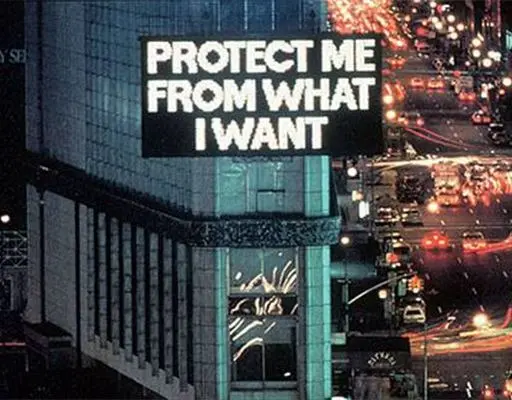
The past seven days in the global art world have been defined by a striking contrast between the celebration of lifetime achievement and the sobering realities of historical restitution and physical security. From the announcement of the prestigious Praemium Imperiale laureates to the tragic passing of influential figures, the cultural sector continues to grapple with the complexities of legacy, ownership, and public stewardship.
In the Spotlight: Global Honors and High-Stakes Crimes
The week began with a significant moment of international recognition as the Japan Art Association announced the recipients of the 2026 Praemium Imperiale awards. Often referred to as the "Nobel Prizes of the art world," these accolades honor artists who have made profound contributions to their respective fields. This year’s list features conceptual icon Jenny Holzer, whose text-based installations have long challenged the boundaries between public space and political discourse, and land artist Andy Goldsworthy, celebrated for his ephemeral works crafted from natural materials. Joining them in the winner’s circle is the acclaimed architect Daniel Libeskind. Known for his evocative approach to design—most notably demonstrated in the structure of the Jewish Museum in Berlin—Libeskind’s inclusion underscores the intersection of memory, history, and structural form that defines this year’s cohort.
However, while some celebrate the heights of creative achievement, others are dealing with the stark vulnerability of cultural heritage. Security remains a top concern following a brazen heist on the French Riviera, where thieves successfully infiltrated the Renoir Museum in the early hours of the morning. Authorities are currently engaged in an urgent manhunt for the suspects, who managed to escape with two valuable paintings. The theft has sent shockwaves through the regional museum community, renewing debates regarding the security protocols necessary to protect Impressionist masterpieces in smaller, more accessible institutions.
In a move toward justice regarding the darker chapters of 20th-century history, an Argentinian court has issued a landmark ruling regarding a Nazi-looted painting. The work, titled Portrait of a Lady, had been missing since 1940, effectively scrubbed from the historical record during the chaos of the Second World War. The painting’s path to recovery was long and circuitous, eventually surfacing in 2025 when it was discovered hanging in the Argentinian home of a Nazi officer’s daughter. The court’s decision to return the work to the heirs of the original Jewish art dealer marks a critical step in ongoing global efforts to identify and repatriate cultural assets stolen during the Nazi era.
Museums, Galleries, and Acts of Generosity
The vulnerability of cultural institutions was further highlighted this week in Los Angeles, where the Getty Center was forced to close its doors prematurely on Wednesday. The closure was a precautionary measure necessitated by a brush fire that ignited along the nearby 405 Freeway. While the museum’s sophisticated fire suppression systems and remote location are designed to handle such environmental threats, the incident served as a stark reminder of the precarious relationship between world-class cultural repositories and the volatile climate of Southern California.
Amidst these operational challenges, the art world also witnessed a profound act of institutional support. On September 4, global superstar Beyoncé Knowles celebrated her 45th birthday with a philanthropic gesture that diverged significantly from traditional celebrity gifting. Rather than marking the milestone with personal acquisition, she announced a $2 million gift to the Studio Museum in Harlem. This contribution provides a substantial boost to the institution, which has long served as a vital anchor for Black art and artists. The gift highlights the increasing role of private cultural patronage in sustaining museums that serve as both community hubs and critical centers for scholarly research.
The Market and Curatorial Shifts
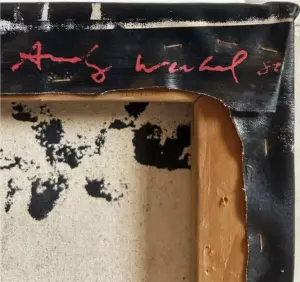
The secondary art market is currently preparing for a major infusion of high-profile works, as the private collection of the late music industry titan Clive Davis heads to the auction block at Christie’s. The collection, valued at approximately $35 million, is expected to draw significant international interest. Among the pieces slated for sale are notable works by Andy Warhol and David Hockney, artists whose market performance remains a bellwether for the health of the high-end contemporary and modern art sectors. The auction promises to be a focal point for collectors looking to acquire works from a provenance associated with one of the most influential figures in modern music history.
In the sphere of biennials and large-scale exhibitions, the Fundación Paiz para la Educación y la Cultura has announced a significant appointment for its 2027 calendar. Cuauhtémoc Medina, a Mexican-born curator and one of the most respected critics and art historians in Latin America, has been named as the curator for the twenty-fifth edition of the Bienal de Arte Paiz. Medina’s appointment is widely viewed as a major development for the biennial, as he brings a career-long focus on political engagement and historical critique to one of the region’s most enduring art events. His leadership is expected to steer the biennial toward a more rigorous investigation of contemporary issues, further cementing its position as a key forum for artistic exchange in the Americas.
Remembering Influential Legacies
The art world also spent the week mourning the loss of two distinct, yet equally influential, figures who left indelible marks on the creative landscape. The death of Lucien Smith at age 37 has sparked a period of reflection on the rapid cycles of the contemporary market. Once considered a "phenom" in his 20s, Smith became the face of the "Zombie Formalism" movement—a period characterized by high-octane market hype and rapid-fire production. His eventual departure from the intense, gallery-driven frenzy of the art world for a quieter life in Montauk remains a poignant narrative of an artist grappling with the unsustainable pressures of early fame.
Contrasting this modern trajectory is the passing of Geles Cabrera, who died at the age of 100. As Mexico’s first professional female sculptor, Cabrera occupied a foundational role in the country’s modern art history. Her career spanned a century of evolution in Mexican artistic identity, and she is remembered not only for her significant body of sculptural work but for her role as a trailblazer who paved the way for generations of women in the arts. Her long life serves as a testament to the endurance of artistic practice, standing as a quiet counterpoint to the volatility that often characterizes the contemporary art scene.
As the week concludes, these events collectively highlight the multifaceted nature of the art world. Whether through the correction of historical wrongs, the preservation of institutions in the face of environmental threats, or the mourning of a century-long career, the industry continues to navigate a complex path between the past and the future. From the auction block to the courtroom, and from the museum gallery to the wildfire-prone hills of Los Angeles, the headlines of the last seven days serve as a reminder that art is never static; it is always in motion, constantly being defined, protected, and rediscovered.