Microorganisms are capable of some of the most extraordinary chemistry on the planet, executing molecular transformations that human engineering struggles to replicate efficiently. One of the most fascinating examples of this biological wizardry is nitrogen fixation, a vital natural process that converts inert nitrogen gas into a bioavailable form that living organisms can actually use to build proteins, DNA, and other essential molecules.
Nitrogen is an abundant element, making up about 78 percent of Earth’s atmosphere. Yet, despite floating in a literal ocean of air, plants and animals cannot use this atmospheric nitrogen directly. This is because the two nitrogen atoms in a nitrogen gas molecule are joined together by an exceptionally strong chemical triple bond—one of the toughest bonds in nature to break. To make use of atmospheric nitrogen, organisms must find a way to tear this triple bond apart, a feat that requires an immense amount of energy and specialized biochemical machinery.
Certain microorganisms, however, have evolved a remarkable way around this evolutionary roadblock. These specialized microbes possess the biochemical tools required to break that stubborn bond and transform nitrogen gas into ammonia, which can then be seamlessly incorporated into biological molecules to sustain life. One of these extraordinary organisms is Methanocaldococcus infernus, a deep-sea archaeon that calls extreme volcanic marine environments home. Living in hydrothermal vents where surrounding vent fluids can easily reach temperatures well above the boiling point of water, this resilient microbe thrives in conditions that would instantly kill most known forms of life.
A team of researchers working in Tristan Wagner’s laboratory at the Max Planck Institute for Marine Microbiology in Bremen, Germany, set out to understand how this unique organism manages to perform nitrogen fixation under such extreme conditions. To solve this biological puzzle, the scientists managed to successfully "tame" the elusive microbe in the laboratory, coaxing it to fix nitrogen gas at blistering temperatures exceeding 90 degrees Celsius.
For the researchers, the behavioral and biochemical resilience of the organism raised profound questions about the limits of life and enzymes. "How do they do it, in such heat? And how can the enzyme splitting the nitrogen triple bond work under these conditions?" Tristan Wagner asked himself as the research project commenced.
The Enzyme That Makes Nitrogen Fixation Possible
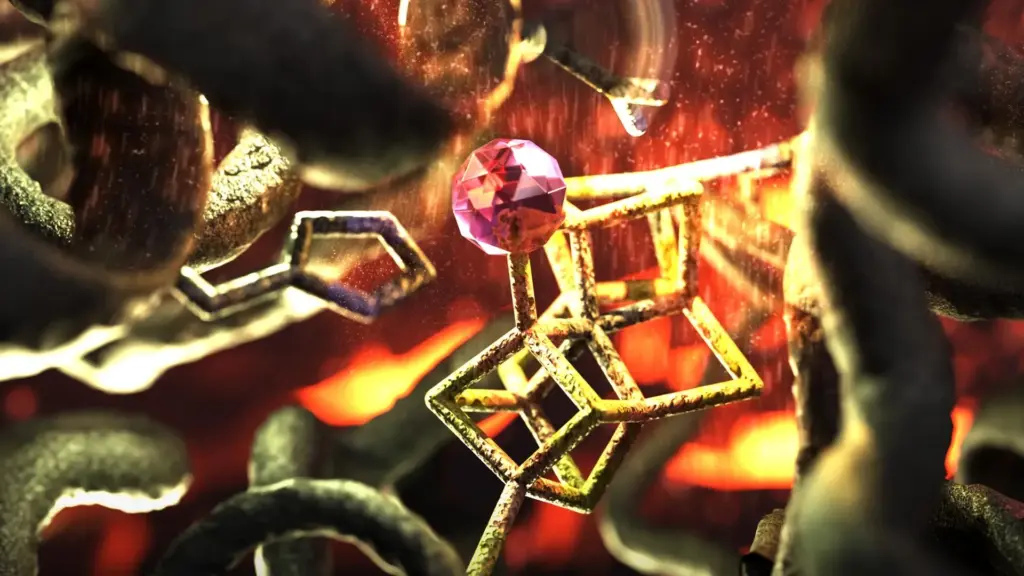
The key biological engine behind this remarkable capability is an enzyme known as nitrogenase. Inside this enzyme lies what is widely considered to be the most complex metallocofactor known in biology. Metallocofactors are specialized, metal-containing helper molecules that bind tightly to enzymes and are fundamentally essential for their catalytic activity. Without these intricate metallic clusters, the enzyme would be entirely powerless to perform its chemistry.
Historically, the most extensively studied and highest-performing nitrogenases found in nature contain a molybdenum-based metallocofactor. However, scientists have also discovered other versions of the enzyme that instead utilize vanadium, or rely exclusively on iron atoms at their core. Despite decades of intensive biochemical research, scientists are still trying to determine precisely how these different families of nitrogenases are related to one another on an evolutionary tree, and exactly how their respective metal centers manage to accomplish the monumental task of breaking the extremely strong nitrogen-nitrogen triple bond.
A Nitrogenase Built for Extreme Heat
The discovery of the enzyme inside Methanocaldococcus infernus opened up a brand new window into this ancient biochemical machinery. According to Wagner, the nitrogenase found in this deep-sea archaeon is truly remarkable because it appears to share distinct traits of the molybdenum, vanadium, and iron-only forms all at once. Because it bridges these categories, this unique type of nitrogenase could very well be similar to a common nitrogenase ancestor—the ancient, ancestral system from which all modern forms eventually evolved. Consequently, studying it could deliver fundamental insights into the common principles governing the nitrogenase reaction across all life.
To test these hypotheses, the research team successfully isolated the nitrogenase enzyme directly from the microorganism and subjected it to rigorous biochemical testing. To their astonishment, they found that the protein was unusually resistant to heat. The robust protein only began to structurally break apart at a scorching 90 degrees Celsius, and remarkably, portions of it remained fully intact even when exposed to temperatures as high as 98 degrees Celsius.
"This proves that this enzyme is designed to function under conditions in which most proteins would rapidly decay, like egg white cooked in hot water," says first author Nevena Maslać from the Max Planck Institute for Marine Microbiology. "It is not active at room temperature. Rather, we show that it only produces ammonia at high temperatures. Its extreme stability allowed us to study states of the nitrogenase that are usually difficult to capture."
A Near-Atomic Look at Nitrogenase
Examining an enzyme of this caliber required extraordinary experimental precision. The researchers did not need to return to the abyssal depths of the ocean to examine the protein in detail; instead, they combined advanced microbial physiology, native enzyme purification, biochemistry, and structural biology in their land-based laboratories. However, every single step of the process had to be performed under strictly oxygen-free conditions, because trace amounts of oxygen can permanently and irreversibly damage the delicate nitrogenase metallocofactors.
With pure, stable protein samples prepared, the team crystallized the enzyme and transported the samples to the Institut de Biologie Structurale in Grenoble, France. There, they utilized the facility’s synchrotron—a massive circular particle accelerator that generates exceptionally powerful X-ray beams—to probe the internal architecture of the molecule.
This sophisticated imaging allowed them to determine the molecular structure of the enzyme down to a near-atomic resolution. The structural analysis revealed that the archaeal nitrogenase turned out to be the simplest known example of the enzyme yet studied by science, while simultaneously combining structural features from all three major nitrogenase families: the molybdenum, vanadium, and iron-only forms. That striking structural combination strongly supports the possibility that ancient nitrogenases more closely resembled this archaeal enzyme than the specialized nitrogenases found in modern bacteria today.
Following the structural determination, the researchers set out to definitively confirm whether the enzyme contained a molybdenum-based metallocofactor, given its hybrid structural characteristics.
"Our search for the molybdenum was technically extremely challenging and required the experts at the synchrotron to push their instrument to its absolute limits," Wagner notes, highlighting the painstaking technical hurdles involved in the measurement process.
Scientists Capture an Unexpected Molecular State
When the advanced measurements were finally completed, they successfully confirmed the expected molybdenum signal, but they also produced a major scientific surprise that the team did not anticipate.
"We were stunned to look at a so-called turnover state that had never been observed before in a molybdenum-containing nitrogenase!" the researchers report.
Prior to this discovery, scientists had only ever observed this specific "turnover" state in vanadium and iron-only nitrogenases. In the context of biochemistry, this state represents a critical intermediate stage in the complex reaction cycle that physically breaks down the stubborn nitrogen molecule.
Finding the exact same intermediate state in a molybdenum-containing enzyme suggests that despite structural variations across species, all forms of nitrogenase may actually rely on a single, universal underlying mechanism to crack open the nitrogen molecule.
From Deep-Sea Microbes to Future Biotechnology
The implications of understanding nitrogen fixation reach far beyond the hydrothermal vents of the deep sea. Nitrogen-fixing microorganisms such as Methanocaldococcus infernus do not just convert atmospheric nitrogen into usable ammonia; they also play an integral, active role in Earth’s broader global carbon cycle. In fact, such deep-sea and environmental microorganisms are responsible for producing a significant portion of the methane found in the planet’s atmosphere.
Looking toward the future, researchers suggest that these resilient organisms could potentially be explored as biological systems for converting simple gases into useful industrial products, including methane and ammonia, using green hydrogen to serve as a sustainable energy source.
Beyond industrial biotechnology, the ultimate blue-sky implications extend directly into global agriculture. "And what if crops could one day obtain nitrogen directly from atmospheric nitrogen gas?" Wagner speculates, posing a question that has long captivated plant biologists and agricultural scientists alike.
If realized, such a monumental scientific advance could drastically reduce modern agriculture’s heavy reliance on industrially produced synthetic fertilizers. Currently, producing nitrogen fertilizer requires the Haber-Bosch process, an industrial method that consumes massive amounts of energy and is directly linked to substantial greenhouse gas emissions. Furthermore, the widespread overuse and runoff of excess agricultural fertilizers frequently contributes to severe environmental problems, including aquatic eutrophication and coastal dead zones.
While agricultural applications remain a distant goal, the immediate contribution of the new study lies in basic science. For now, the research provides something much more fundamental: an updated, near-atomic molecular view of one of biology’s most remarkable and complex chemical reactions.