As the art market navigates the increasingly digitized landscape of 2026, a profound shift in collector behavior has emerged. High-net-worth individuals, private foundations, and institutional acquisitions committees are moving away from the ephemeral, screen-based, or purely speculative assets that characterized previous market cycles. Instead, there is a marked, structural pivot toward the physical, the labor-intensive, and the high-tactility. This movement—a "tactile turn"—seeks to celebrate the organic assemblage and the undeniable authority of handcraft, offering a tangible hedge against the perceived instability of a digital-first world.
This aesthetic and economic realignment is not merely a fleeting trend but a fundamental recalibration of value. Galleries across North America, Europe, and Latin America report that sell-through rates for material-focused practices remain exceptionally robust. Pricing dynamics, meanwhile, have shown consistent strength, validating the work of both historical masters whose innovations paved the way for current practices and mid-career artists who are pushing the boundaries of what fine art can be. By bridging the gap between industrial textiles, organic biological forms, dynamic optical abstraction, and subverted artisanal methodologies, these artists are providing collectors with diverse entry points into a market that prizes substance as much as style.
The Rise of Physicality and Craft
At the heart of this shift is a rejection of "digital flattening." In an era where images of art are consumed predominantly through high-resolution screens, the physical object has regained a premium status. Collectors are increasingly drawn to works that demand presence—those that cannot be fully captured or understood through a smartphone display. Whether it is the intricate, rhythmic embroidery of hair or the raw, sculptural weight of treated papier-mâché, the works currently commanding attention are those that invite, and often demand, a haptic engagement.
This return to the physical has been bolstered by institutional validation. Major museums are dedicating more wall space to post-minimalist fiber art, textile-based installations, and material-heavy sculpture, effectively signaling to the market that these practices are central to the contemporary canon. For the discerning collector, this presents an opportunity to acquire works that possess deep intellectual roots and significant historical weight.
Featured Profiles in Material Innovation
The current market landscape is best exemplified by a select group of artists whose practices prioritize the physical evolution of their chosen mediums.
Anne Wilson (browngrotta arts)
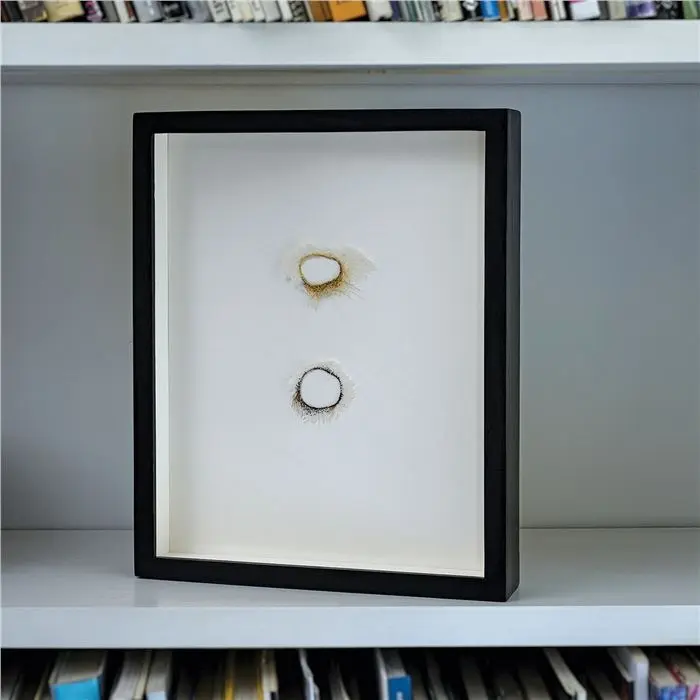
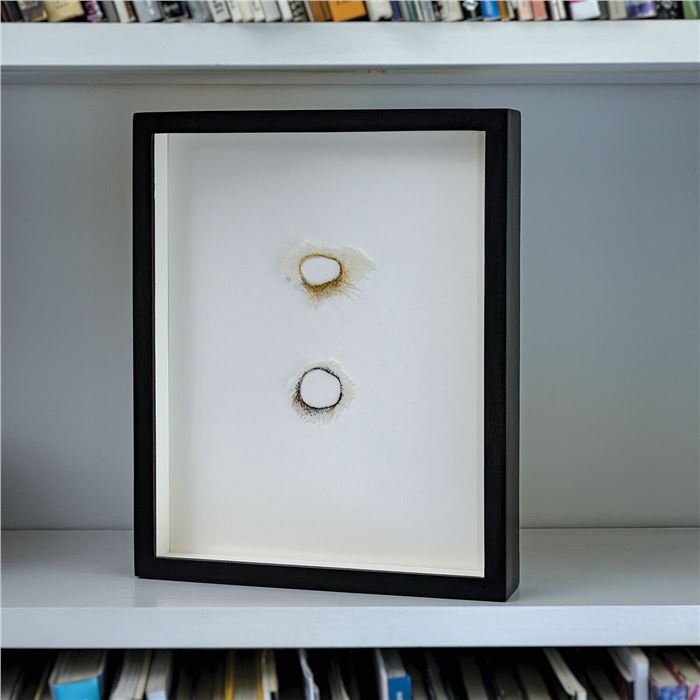
American artist Anne Wilson has long held a formidable reputation within the realm of conceptual fiber arts. Her work, which is held in the permanent collections of the Metropolitan Museum of Art, the Art Institute of Chicago, and the Museum of Contemporary Art Chicago, stands as a testament to the power of domestic labor and ritual. Represented by browngrotta arts, Wilson investigates the themes of fragility and time. Her 1997 piece, Areas of Disrepair, is a quintessential example of her approach. Priced at $4,000, the work utilizes found cloth, thread, and, notably, human hair. By weaving these delicate, organic strands into vintage textiles, Wilson interrogates the boundaries between bodily identity and structural decay. For collectors, her work offers a uniquely accessible entry point into a practice that has already achieved museum-level prestige.
Sigalit Landau (Gallery Har-El)
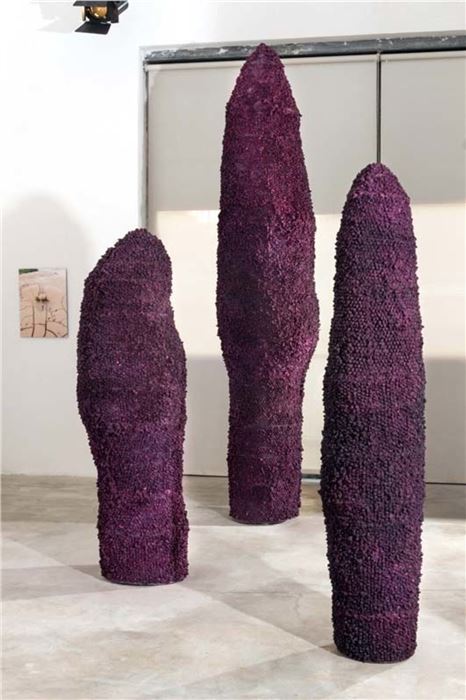
Israeli sculptor and video artist Sigalit Landau is a central figure in international contemporary sculpture, perhaps best known for her ambitious, site-specific projects involving Dead Sea salt-crystallization. Landau’s career is defined by high-level institutional recognition, including her representation of Israel at the 2011 Venice Biennale and exhibitions at the Centre Pompidou and MoMA. Her featured work, Zbib El Ard (2015), demonstrates her ability to draw beauty from the organic world. Inspired by the rare parasitic Mediterranean plant Cynomorium coccineum, the sculpture is constructed from dark purple papier-mâché and chicken wire. Offered through Gallery Har-El at a range of €12,000 to €15,000 ($13,923–$17,403 USD), the piece provides a centerpiece-quality work that touches upon themes of survival, landscape, and the transformative power of the sculptural process.
Karolina Wysocka (HOS Gallery)
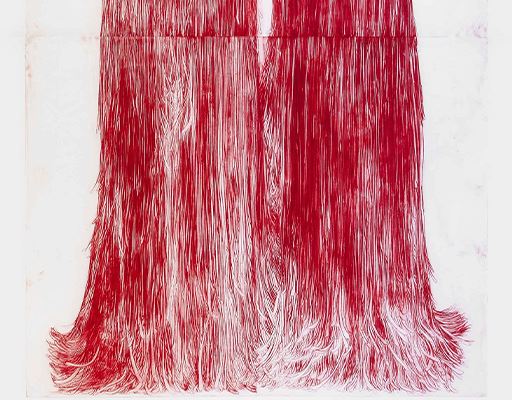
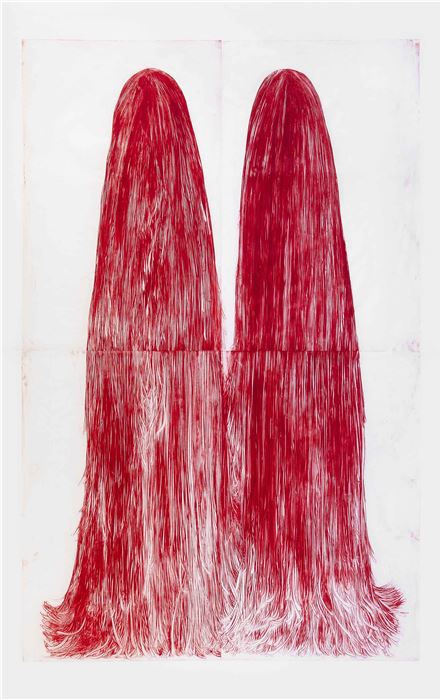
Polish artist Karolina Wysocka is at the forefront of the trend toward fusing fine art printmaking with non-traditional industrial materials. Represented by HOS Gallery, Wysocka’s monumental drypoint work Othering (2023) exemplifies this synthesis. By utilizing industrial non-woven fabric as a substrate for traditional drypoint techniques, she creates expansive, abstract surfaces that explore concepts of vulnerability and social norms. As an emerging European talent whose focus on the materiality of industry aligns with contemporary institutional trends, Wysocka offers primary-market collectors an early-stage opportunity to acquire work that is both intellectually rigorous and visually arresting.
Brooke Major (Art & Horse Racing Gallery)
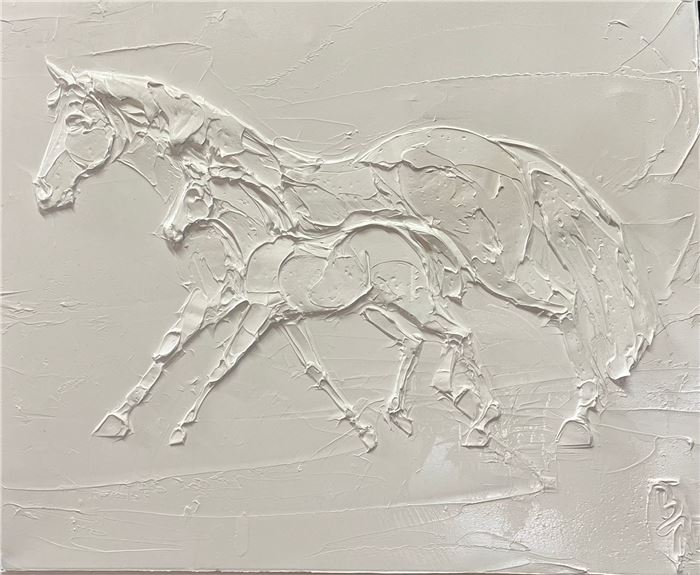
American painter Brooke Major, represented by Art & Horse Racing Gallery, brings a distinct tactile energy to the figurative tradition. Her work, Vega and Prince (2026), priced at £3,200 ($4,000), showcases her signature technique of applying dense, relief-like layers of white and beige oil paint with palette knives. This heavy, monochrome impasto transforms the classical equestrian subject matter into a dramatic study of light and texture. By bridging the divide between traditional figurative painting and contemporary textural abstraction, Major’s practice appeals to collectors looking for a visceral, three-dimensional experience on the canvas.
Alejandro Otero (MLA Gallery)
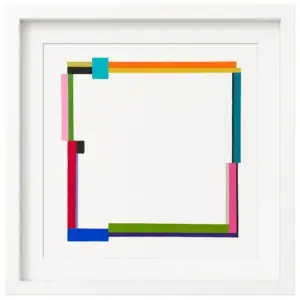
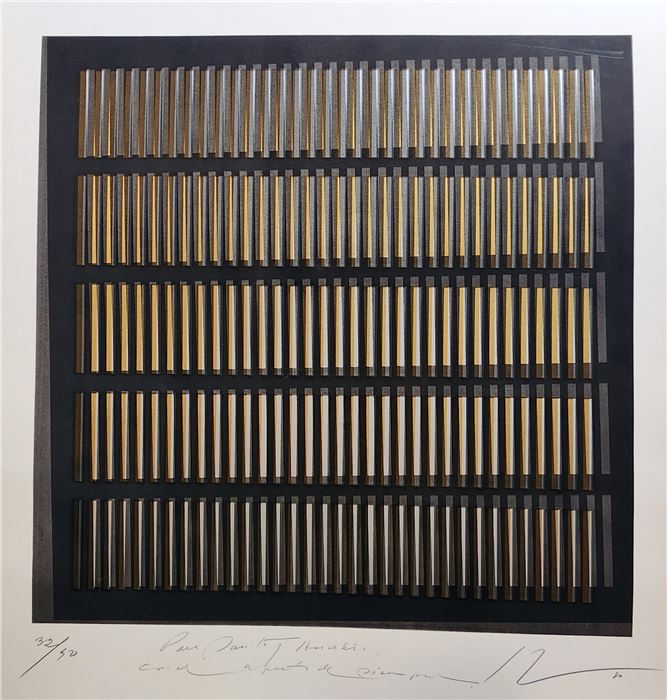
The enduring influence of Latin American Kinetic Art is represented by the late Venezuelan master Alejandro Otero (1921–1990). Otero, a pioneer of geometric abstraction, maintains a firm place in art history, with works held by the Museum of Modern Art in New York and the Museum of Fine Arts, Houston. His Serigraph in Black and Yellow (1980), offered through MLA Gallery for $2,700, provides a rare, high-conviction opportunity for collectors. The work features sharp, geometric bands that create a sense of optical vibration and rhythm. It serves as a reminder that the desire for "tactile" and "dynamic" art is not limited to sculpture; even within the graphic arts, the interplay of spatial rhythm and visual perception offers a depth that remains highly valued in today’s market.
Olivier Polmanss (Art Gallery PDC)
French artist Olivier Polmanss explores the philosophy of structural transformation through his modern interpretations of traditional Japanese craft. His piece, Kintsugi K01, priced at €2,800 ($3,250), is a striking example of the kintsugi aesthetic—the art of repairing broken pottery with lacquer mixed with powdered gold. Polmanss intentionally fractures a sleek composite panel before mending the fault lines, transforming damage into a feature of beauty and resilience. Represented by Art Gallery PDC, his growing collector base underscores the steady momentum behind European artists who are successfully recontextualizing historical techniques for a contemporary audience.
The Evolving Market Outlook
The collective momentum of these artists and their galleries points toward a clear, long-term evolution in the art market. As both institutions and private collectors continue to recalibrate their focus toward physical handcraft and structural depth, the works of master figures and innovative contemporary voices alike are poised to maintain their value. This is a market that is increasingly demanding that art offer more than just a visual aesthetic; it must offer a physical experience and a testament to the labor of its creation.
For those active in the market, the current climate presents a unique window of opportunity. The focus on tactile, material-based art is not a temporary distraction, but rather a reflection of a deeper societal desire for authenticity in an era of rapid technological acceleration. Collectors are encouraged to engage directly with representing galleries through MutualArt to inquire about available works, review condition reports, and obtain further details on these significant pieces. As the market continues to favor works that bridge the classical and the contemporary through the lens of material integrity, the potential for long-term growth remains robust for those who invest in the tangible.