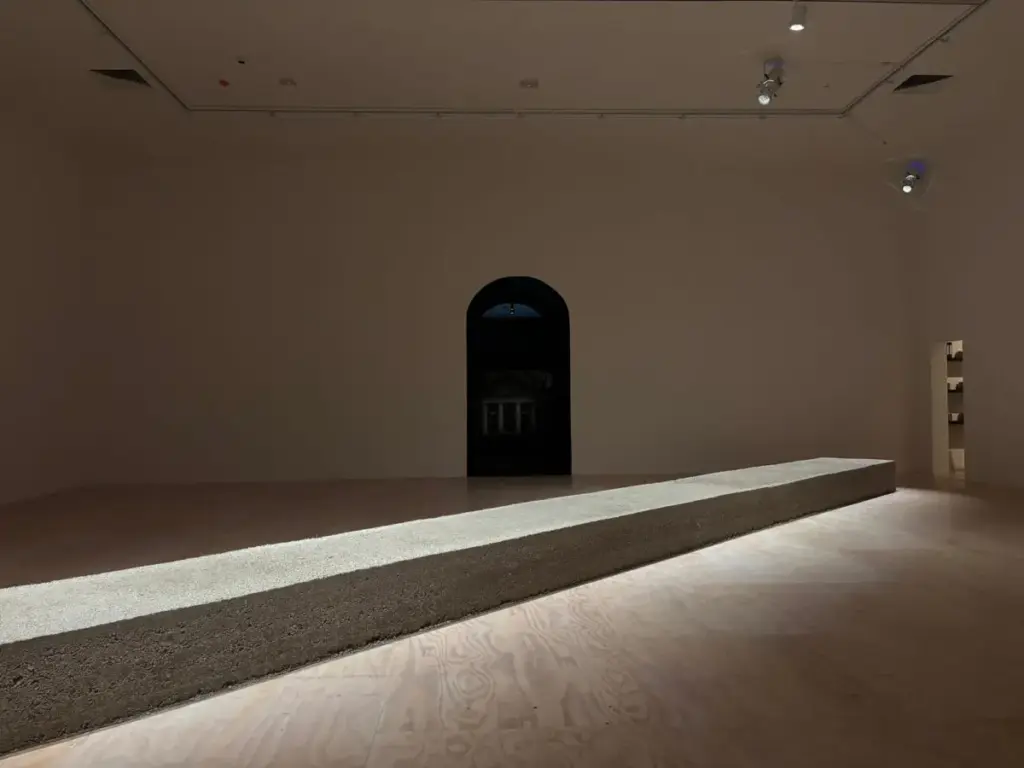
Minimalism’s enduring potential has always relied on a paradoxical promise: the ability to compress a vast, overwhelmingly complex idea or feeling into a visually simple gesture. By cutting away decorative excess, minimalist art distills an essence into a singular, concentrated experience. Yet when applied to the realities of trauma and loss, this unsparing structural trim does something far more unsettling. In the hands of multidisciplinary artist Teresa Margolles, formal restraint attempts to show us something uncomfortable about ourselves—namely, a sprawling system of systemic violence so thoroughly destructive that it continuously reinforces and codifies notions of "us" and "them" across artificial borders, all quietly operating in the name of capital.
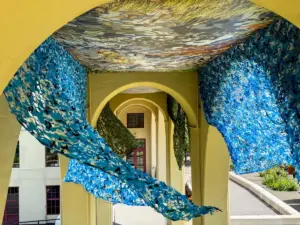
This profound investigation forms the core of En el lugar de los hechos (At the Scene), Margolles’s first large-scale museum exhibition in the United States. Spanning both MoMA PS1 and the main buildings of the Museum of Modern Art in New York, the comprehensive survey showcases more than 30 years of work by the artist. Born in Culiacán and currently based in Mexico City, Margolles has spent decades interrogating the heightened cycles of violence at specific, volatile geopolitical sites—most notably along the US-Mexico border near Ciudad Juárez and El Paso, Texas. However, her sweeping examinations extend far beyond those specific coordinates, serving as a chilling mirror for other sites of urban brutality, state sanction, and institutional indifference across the globe.
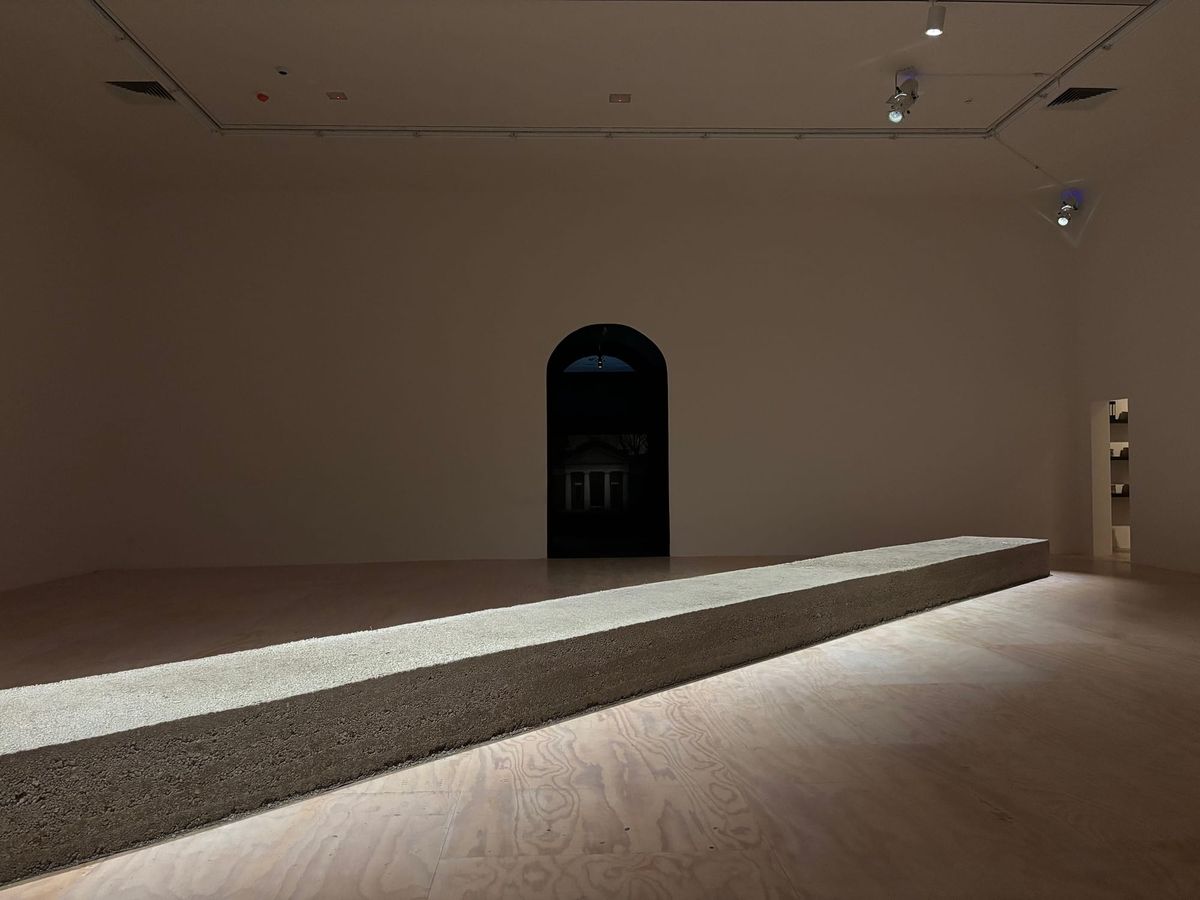
Entering the third-floor galleries at MoMA PS1, visitors are immediately met with an opening room marked by profound absence, haunting repetition, and an overwhelming sense of futility. Projected across a large, dominating wall is El agua de la ciudad, Dallas (The Water of the City, Dallas) (2016), a sprawling video compilation documenting people methodically scrubbing the ground at various sites across the Texan city where someone has been shot and killed. Each grim scene is meticulously introduced with a title card detailing the victim’s name, age, date of death, and address. The video itself runs for an agonizing 296 minutes, an intentional duration that feels practically infinite. This unbroken expanse of time underscores both the sheer magnitude of the bloodshed and its senseless, daily routine. One brief title card flashes a detail that hangs heavily in the air: a victim shot while accidentally trying to enter the wrong apartment.
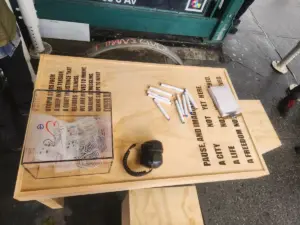
Nearby, a smaller screen displays La nieve (The Snow) (2015), a video capturing a man in Staten Island shoveling snow directly in front of the makeshift altar memorializing Eric Garner, who was killed by police officers in 2014. In both of these video works, a remarkably small, isolated rectangle of surface area on the street is carefully demarcated and addressed through active cleaning or snow-shoveling. These are traces of labor that the artist refers to as “señalizaciones,” or signalizations. By contrast, the surrounding landscape in the footage always feels unruly, chaotic, and completely uncontained, visually reflecting the vast unknown and the collective trauma that simply cannot be contained within the tidy, controlled environment of the artist’s carved-out rectangle.
Viewing these works prompts a deeper reflection on human coping mechanisms in the face of tragedy. It raises a pressing question for an era defined by violent excess: What exactly does formal restraint accomplish? Before encountering this exhibition, it was easy to overlook how Margolles deploys control as a psychological mechanism to manage the inevitable, numbing shock of death, even as that reality remains an absolute universality of the human condition.

This tension between sterile control and organic grief is further manifested in works like Aire (Air) (2003). In this installation, two industrial humidifiers quietly release water that has been collected directly from sites of violence in New York City into an enclosed room via hidden ventilation ducts. This subdued, atmospheric piece follows in the lineage of Margolles’s widely recognized installation Vaporization (2001), a room heavily saturated with vaporized water originally gathered from morgues, which was famously exhibited at MoMA PS1 back in 2002.
Discussing the evolution of these atmospheric works during the exhibition’s press preview, Inés Katzenstein, one of the curators of the show, offered a sobering perspective on the artist’s trajectory. As Katzenstein explained, contemporary audiences "don’t need the beauty of the steam anymore"—because, in truth, we are already breathing it every single day, all the time, enveloped in the quiet aftermath of a society that has normalized its own devastation.