“America received its official invitation to flirt this week,” read the press release dated March 21, 2006, “with the arrival of Aperol, Italy’s most popular light spirit. At last, after nearly 100 years, the social drink of Italy has arrived.”
Looking back from the comfort of the modern cocktail era, the language feels delightfully archaic, capturing a moment when public relations professionals were visibly struggling to figure out how to market a vivid orange, bittersweet Italian import to a public accustomed to vastly different drinking habits. Today, the idea that Aperol needs an introduction seems entirely absurd. The vibrant liqueur has become an irreplaceable fixture in contemporary cocktail culture, anchoring neo-classic recipes like the Naked & Famous and the Paper Plane.
Walk into any well-regarded bar anywhere in the world—whether in Raleigh, Reno, or Reykjavik—and you will almost certainly find a bottle sitting proudly on the back bar. This ubiquity is precisely what makes that 2006 press release read like an authentic time capsule. In a world before those famous modern drinks cemented its place in the global palate, the fundamental challenge facing the industry was a simple one: how do you introduce the complex, unusual flavors of Aperol to a country that had never tasted anything quite like it?
The answer, as was so often the case during the craft cocktail renaissance, was to turn to a visionary bartender. When Audrey Saunders, the owner of New York’s legendary Pegu Club, first tasted Aperol shortly following its U.S. release, she immediately recognized the immense potential hidden within the lurid orange liquid. Rather than treating it as a background accent or a minor modifier, Saunders set to work inventing a liquid vehicle specifically designed to introduce the liqueur to her guests.
Because the entire point of her exercise was to showcase the liqueur itself, Saunders made the bold choice to use a full two ounces of Aperol in her creation. She constructed what she termed an “inverted drink,” utilizing the traditional modifier as the base spirit, and employing a conventional base spirit—in this case, gin—as the modifier. To balance the inherent sweetness of the liqueur, she added fresh lemon juice, followed by a dash of Angostura Bitters to deepen and shade in the exuberance of the citrus notes.

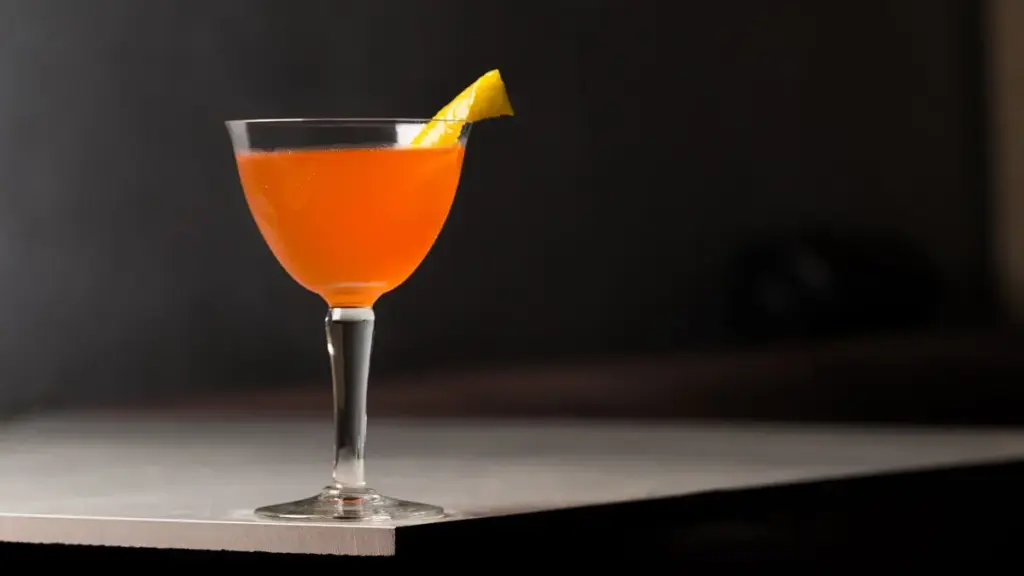
Saunders ultimately named the creation the Intro to Aperol. Admittedly, the nomenclature sounds like something a Vulcan might devise, but it possessed the undeniable benefit of strict accuracy because that is precisely what the drink was—a true showcase of the distinct flavor and character of the liqueur.
The tasting experience of the Intro to Aperol begins cleanly with the bright pop of lemon, before the midpalate dramatically blossoms into Aperol’s full, juicy profile of sweet orange and earthy rhubarb. That richness gradually fades into the liqueur’s more bitter, herbal notes on the finish, ultimately rounding out with the warm baking spices of the Angostura Bitters and a lingering, dry lemon zing.
Despite its brilliance, people rarely discuss the Intro to Aperol anymore. The decade that followed its creation brought forth the cultural phenomenon of the Aperol Spritz, which proved to be all the introduction most of the general public would ever need. Yet, the Spritz and the Intro to Aperol serve fundamentally different moods and drinking occasions.
The Spritz, much like the vast majority of mainstream Aperol drinks, leans heavily into the liqueur’s bright, summery qualities, effectively pushing its inherent bitterness into the background. The Intro to Aperol, by stark contrast, embraces the full spectrum of Aperol’s flavor profile, including its darker, more textured, bitter, and spice-friendly dimensions. It is a profile far better suited to the early days of autumn, when the exuberant sunshine of summer begins to take on a chilly, brisk edge.
Recreating the drink requires the classic technique of adding all the ingredients to a cocktail shaker filled with ice, shaking hard for eight to ten seconds, and straining the liquid up into a chilled cocktail glass before garnishing with a fresh lemon peel. Behind the recipe, however, lie specific considerations regarding the components that make the drink work.

When it comes to the starring ingredient, Aperol, bartenders are advised to accept no substitutes. While the market features numerous competitors such as Select or Cappalletti—which might yield interesting results—it is likely no accident that Aperol has risen to the top of a crowded field, much like its bitter big brother, Campari. Certain products simply translate to mixed drinks with a higher degree of success than others.
For the gin component, Saunders explicitly specified Beefeater Gin. Even though the producers subsequently reduced the proof twice—dropping from the historical 47 percent down to 44 percent, and eventually to 40 percent—it remains the correct choice for this specific application.
As for the sweetener, the original recipe called for a quarter ounce of simple syrup, a detail widely viewed as an artifact of a palate that was generally sweeter two decades ago than it is today. Contemporary tastes often lean drier, making it entirely reasonable to skip the simple syrup altogether and let the natural balance of the core ingredients shine through.