In her ambitious exhibition at the Solomon R. Guggenheim Museum in New York, artist Taryn Simon presents a world where injustice appears purely systemic, stripped of the comforting illusion that bad actors are solely to blame. Titled Father Country I Do Love You, the sprawling show dives deep into the labyrinth of global intelligence, historical trauma, and bureaucratic mechanics, blurring the line between far-fetched conspiracy theories and documented reality.
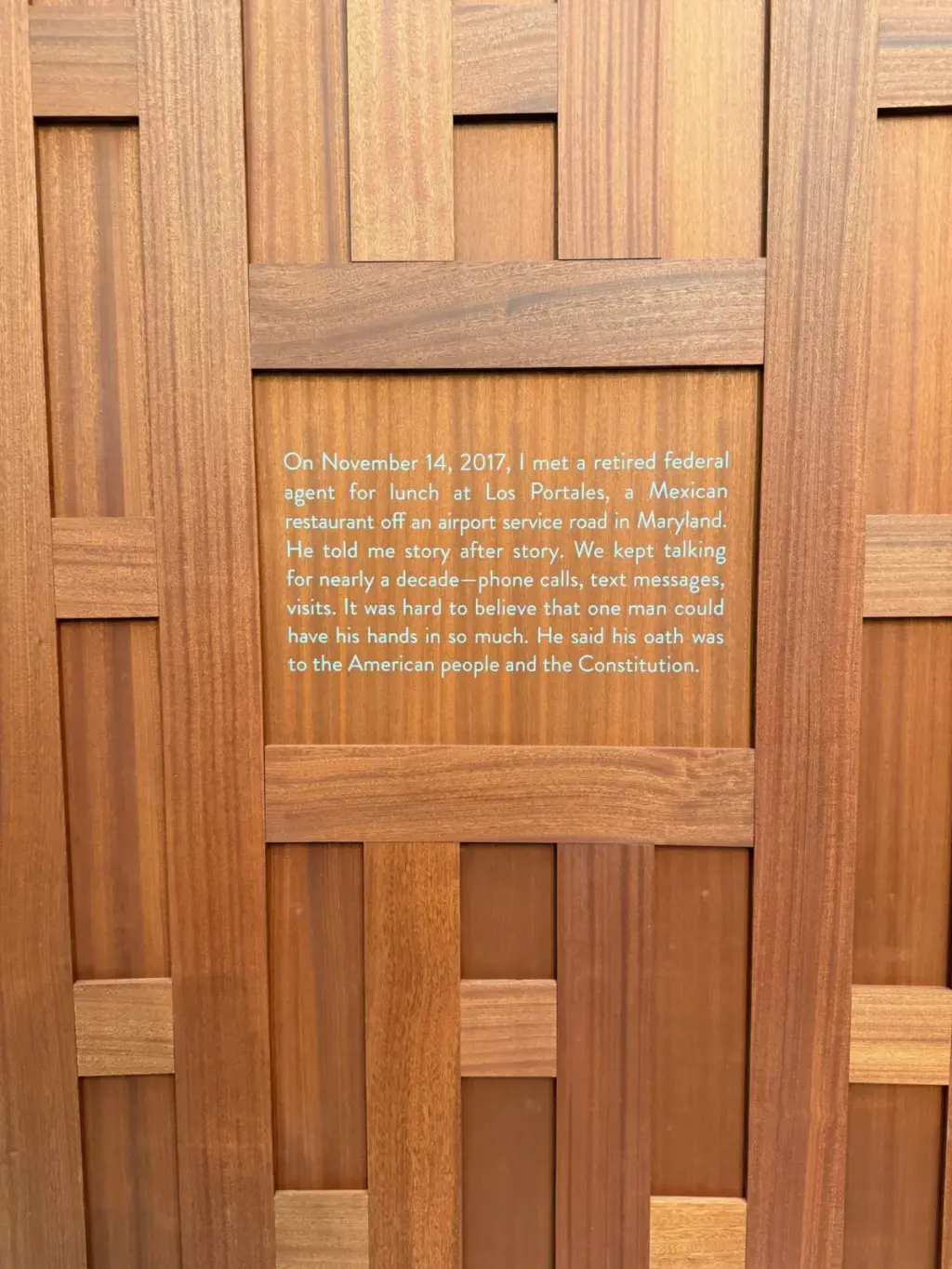
The exhibition opens with a deliberate confrontation with memory, myth, and verification. Visitors are greeted by two text panels set against rich teak paneling—a physical replica of a replica of a Bangkok living room that Simon helped her father construct in their family home when she was a child. The first panel recounts a story told to her by her father regarding an intelligence officer he met in Bangkok who met a mysterious demise, reportedly either eaten by a tiger or kidnapped by Chinese operatives.
This initial narrative transitions into recollections of her father’s eccentric habit of framing and preserving his prized photographs in heavy plexiglass boxes, each accompanied by an extraordinary tale. As the introductory text explains, these included delivering suitcases of cash to generals in Cambodia, enduring threats from yakuza members who promised to break his arm in a door, sharing tea with his kidnappers in Lebanon, and participating in the foundational creation of the Thai stock exchange. Yet, as Simon notes with lingering ambiguity, she never managed to get the full story.
The second introductory panel shifts the focus to Simon’s own extensive investigative journey, detailing how she met a retired FBI agent a decade ago and began listening to his accounts. Delivered through a fragmented stream of phone calls, text messages, and in-person meetings, these recollections ultimately served as the foundational impetus for the ambitious research project that defines the Guggenheim exhibition.
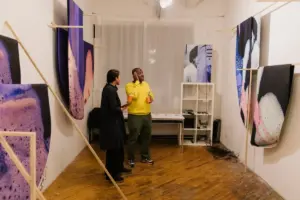
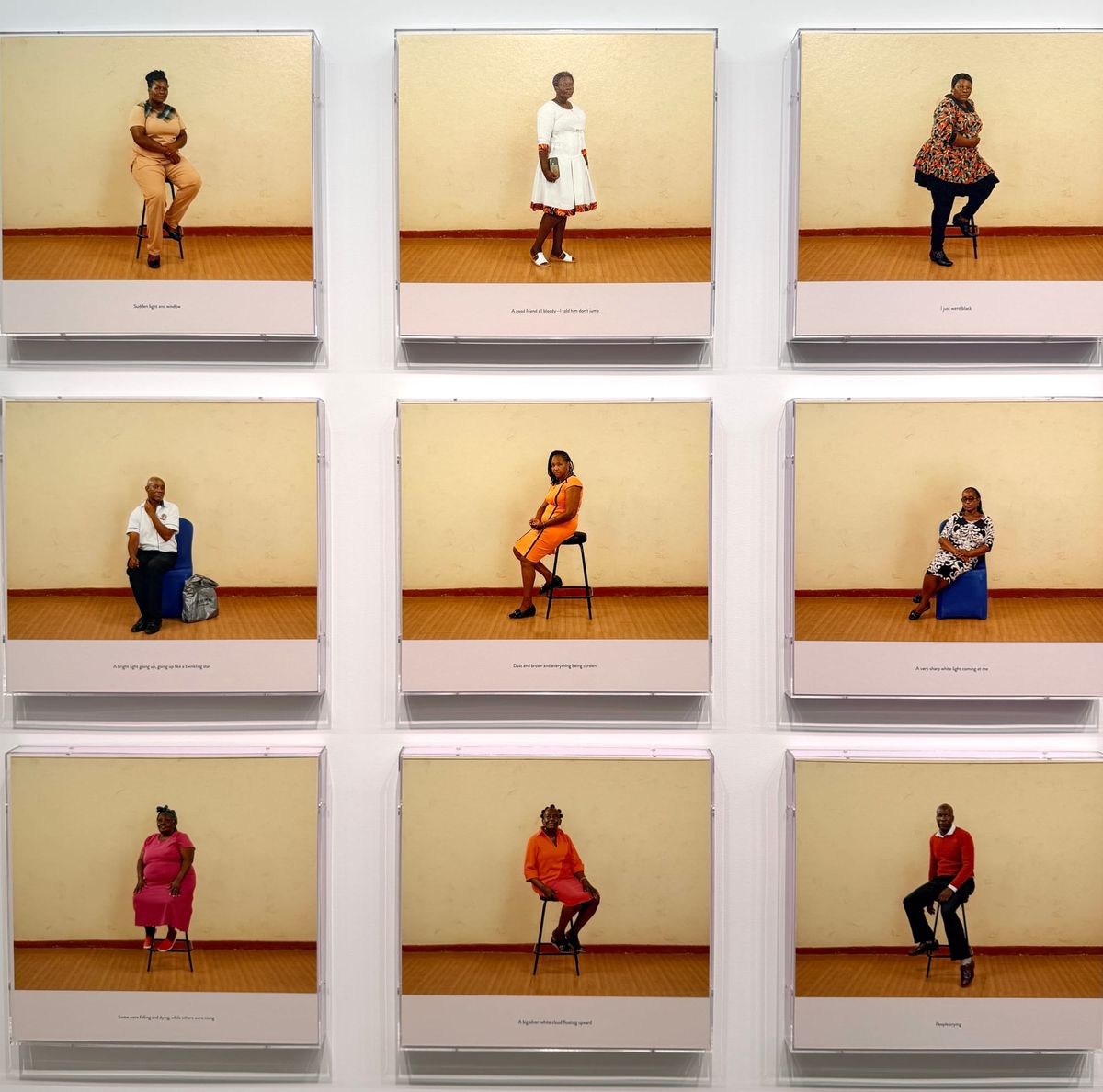
Through hundreds—perhaps thousands—of photographs, alongside sculptures, video installations, and an immersive exhibition design featuring brightly colored walls and heavy drapery evocative of that childhood replica living room, Simon presents a staggering archive. The material she uncovers often sounds like the stuff of paranoid fiction, yet every component is rooted in verifiable fact. The exhibition expertly connects disparate stories, individuals, historical turning points, and bureaucratic structures in ways that feel simultaneously improbable and utterly realistic. However, by intentionally prefacing the entire enterprise with her father’s unconfirmed and unconfirmable tales, Simon ensures that a persistent thread of doubt remains active throughout the visitor’s experience.
The retired FBI agent whose life and career anchor the exhibition spent decades operating within the orbit of some of the most consequential, high-stakes events of late-20th and early-21st-century American history. His professional trajectory placed him directly at the intersection of monumental tragedies and political upheavals. Among these historic events was the catastrophic explosion of TWA Flight 800 in 1996, an incident that shook the aviation world and required meticulous forensic analysis from teams of agents, of whom he was one.

His assignments also included being deployed to the Pentagon to sift through the devastating debris following the terrorist attacks of September 11, 2001. Years earlier, in 1998, he was dispatched to Nairobi alongside 900 other agents in the immediate aftermath of the al-Qaeda bombing of the United States embassy, a pivotal moment in the escalation of modern global conflicts.
Beyond international terrorism and national security crises, the agent’s orbit touched upon high-profile domestic scandals and law enforcement operations. His career included babysitting the children of the model recruited by federal authorities to entrap then-District of Columbia Mayor Marion Barry during his infamous 1990 drug arrest. Later, he was tasked with setting up the secure evidence room during the impeachment proceedings of President Bill Clinton.
By grounding her monumental exhibition in the testimony of a man who witnessed these structural nodes of power from the inside, Simon constructs a profound meditation on how history is recorded, institutionalized, and obscured. In Father Country I Do Love You, individual culpability dissolves into a vast, impersonal machinery of statecraft, leaving viewers to confront the unsettling reality of a world where accountability is systematically diffused and true answers remain perpetually out of reach.