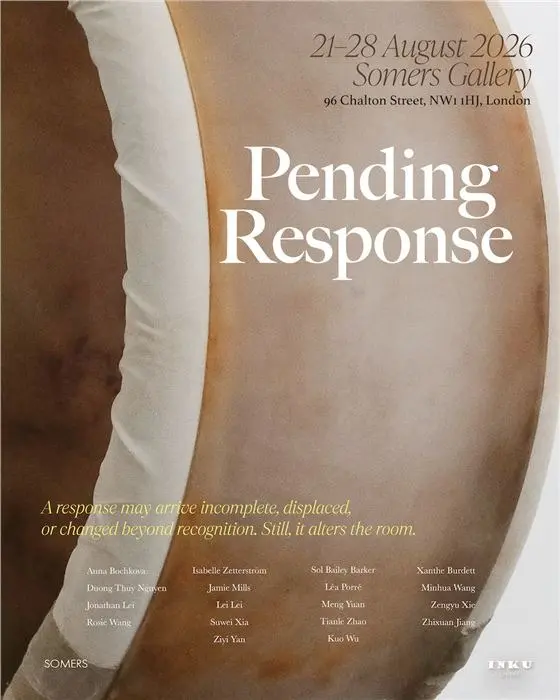
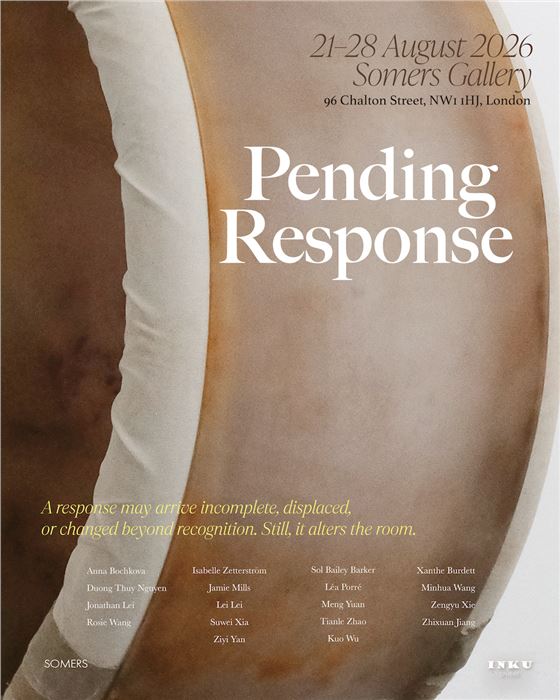
In the heat of a sweltering London summer, a profound quiet descended upon the Somers Gallery. Pending Response, a compelling multimedia exhibition curated by Shuning Liu in collaboration with the contemporary arts platform INKU Sphere, offered a sanctuary from the relentless pace of modern life. Featuring the works of 18 international artists, the exhibition functioned as a collective meditation on the nature of time, the gravity of the present moment, and the often-overlooked emotional landscape of waiting.
The exhibition, which ran from August 21 to August 28, 2026, challenged visitors to confront their relationship with urgency. By gathering a diverse cohort of creators from across Europe and Asia, Liu successfully transformed the intimate, white-cube environment of the Somers Gallery into a space where silence was not merely an absence of sound, but a tangible, structural element of the artwork.
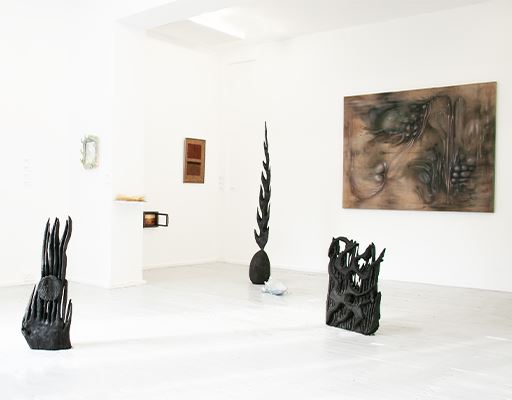
Materializing Time: Sculpture and Tactile Stillness
Upon entering the gallery, the visitor is immediately struck by the cohesive, hushed atmosphere of the space. The curation favors an intimate viewing experience, allowing the minimalist architecture of the Somers Gallery to amplify the stillness inherent in the selected works.
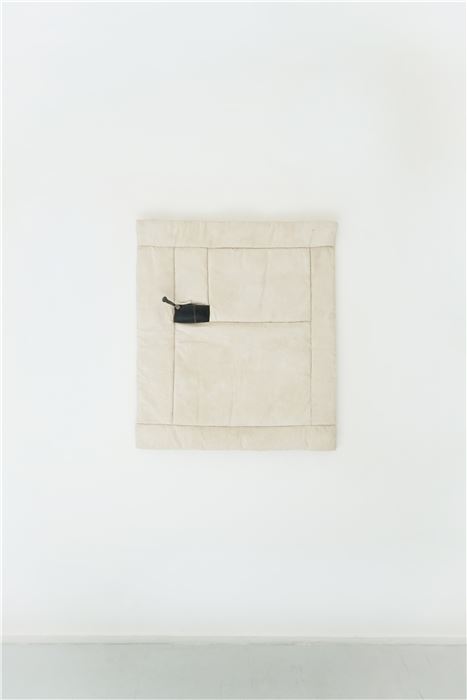
Among the standout pieces is Jamie Mills’ The Runner (2026). At first glance, the object appears to be a simple textile construction—a blanket with a curious blue rubber stencil protruding from its surface. However, a closer inspection reveals a complex assembly of wood, copper, cotton, wool, chalk distemper, rubber, thread, beeswax, and plant resin. The work integrates a mechanical pump sealed by a valve, with bone fragments strategically placed to obstruct airflow. The result is a sculptural paradox: a device designed for fluid motion that has been physically forced into a state of compression. Through this obstruction, Mills masterfully illustrates the friction of time and the physical toll of stagnant energy.
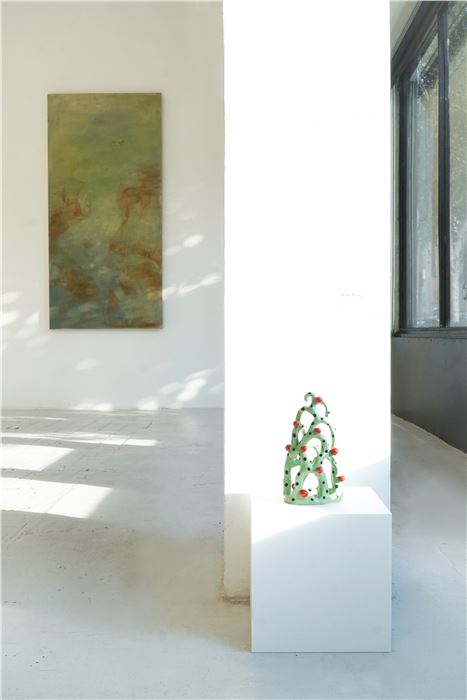
This thematic interest in arrested motion continues with Rosie Wang’s Staying Still 08 – Cactus (2026). The Edinburgh-based ceramicist, known for her ability to infuse mundane objects with deep narrative resonance, presents a vibrant yet melancholic green ceramic form. Adorned with delicate black dots and red accents that mimic floral blooms, the piece rests on a low pedestal, appearing to lean precariously. By rendering a desert succulent in a state of suspended animation, Wang invites the viewer to consider the object’s "meantime"—the period of endurance while waiting for an inevitable, potentially harsh, future.
Mills further explores these concepts with The Hermit (2026). Utilizing a discarded industrial conveyor belt, the work reconfigures a machine built for ceaseless productivity into a medical-looking apparatus. By layering soft materials like wool and cotton over rigid wire and industrial rubber, Mills emphasizes the exhaustion of the "machine" when it is denied its purpose. Together, the works of Mills and Wang create an environment where stillness is not a failure of action, but a deliberate, powerful choice.
Sound, Spatial Image-Making, and Performance
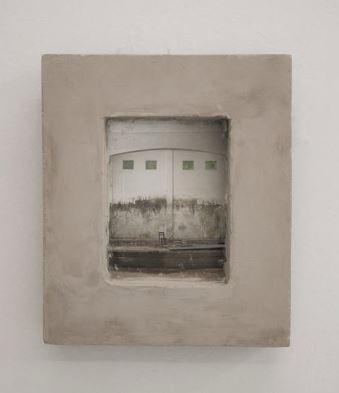
The exhibition extends its reach beyond the sculptural, incorporating photography and multimedia installations that ground the theme of "pending" in real-world contexts. Jonathan Lei’s photograph Awaiting (2026) captures a monochromatic scene featuring a solitary wooden chair positioned outside a weathered concrete building. The composition is defined by the building’s vaulted, curved roof and a series of fixed, perfectly spaced windows. The presence of debris against the peeling paint, contrasted with the empty seat, creates a poignant narrative void. The viewer is left to wonder: is the chair a marker of a recent departure, or is it a signifier of an arrival yet to happen?
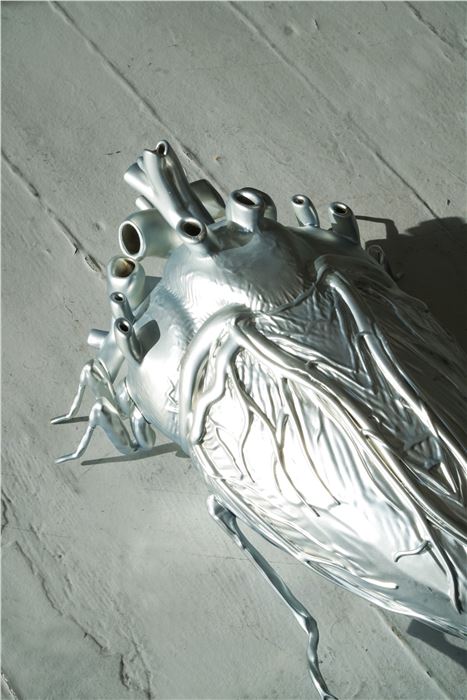
Zhengyu Xie takes a more futuristic approach with Pending Organ: Heart Cicada (2026). Crafted from electroplated resin, the sculpture draws visual inspiration from the cicada, an insect synonymous with dormant periods and sudden emergence. The silver-hued, technological appearance of the piece suggests an evolution where the biological and the mechanical merge, leaving the viewer to contemplate a future that remains perpetually "pending."
The exhibition’s temporal focus reached its peak on August 22, when artist Kuo Wu performed Infinite Forms, Woven by the Waves of the Heart. The performance turned the gallery into a resonant chamber, utilizing sound bowls, a se kong, and gongs to create a meditative soundscape. As the sun began to set, casting long shadows across the room, participants sat cross-legged on the floor, engaging in a collective act of listening. In this context, sound became a medium for "holding" time, providing a tangible way for the audience to inhabit the present moment rather than simply letting it pass by.
Curatorial Curation and Spatial Dynamics at Somers Gallery
The exhibition also featured critical inquiries into the socio-political aspects of waiting. Zhixuan Jiang, a London-based interdisciplinary artist, presented Pending Review (2026), a work incorporating iron and 35mm film photography. By creating physical doors that lead nowhere, Jiang comments on the nature of public housing, displacement, and the invisible barriers faced by those in bureaucratic limbo.
Similarly, Ziyi Yan’s Enfolding (2026) explores the body as a membrane. The delicate wooden enclosure, filled with gauze, cotton, and paper pulp, serves as a metaphor for the thin, often fragile barrier between our internal identities and the external world. These displays were rounded out by Duong Thuy Nguyen’s Family Homes (2023), an aluminum-bound book printed on rice paper. By reconfiguring her own academic thesis through Dadaist methods, Nguyen highlights the ways in which personal history is often subject to constant re-evaluation and revision.
The decision to feature works with the word "pending" in their titles suggests a deliberate curatorial choice. Rather than selecting existing works from previous bodies of research, the exhibition appears to have challenged the artists to create pieces specifically for this dialogue. While this could have potentially narrowed the scope, it instead pushed the artists to explore the limits of their own practices, resulting in a show that felt cohesive and intentionally constructed.
Pending Response ultimately functions as a mirror for the contemporary viewer. In a world defined by the "fear of missing out," the pressure of constant productivity, and the anxiety of an unpredictable future, the exhibition offers a vital counter-narrative. It proposes that waiting is not a deficit, but a destination in itself. By utilizing the Somers Gallery—a venue with over a decade of history in fostering cross-regional connections, particularly between Latin America and Asia—the exhibition successfully created a refuge for those looking to recalibrate their own pace.
As the exhibition concluded, it left behind a lingering question for all who attended: what would it take for you to stop rushing, lessen your stride, and observe the world as it unfolds in real-time? Pending Response did not provide a definitive answer, but it provided the necessary space to begin the inquiry. The exhibition stands as a testament to the power of the gallery space to foster cross-regional dialogue, proving that even in a bustling city like London, there is always room for a moment of quiet contemplation.