Gardening in the American Southwest comes with a distinct set of environmental challenges, chief among them being intense summer heat, unrelenting sun, and unpredictable drought conditions. To help regional gardeners navigate these hurdles while maintaining vibrant, visually appealing landscapes, garden author and Austin resident Pam Penick has shared four of her expert plant recommendations. Ranging from the delicately fragrant blooms of a lesser-known deciduous tree to the cheerful magenta flowers of an adaptable shrub, these selections offer resilient solutions for those looking to refresh their outdoor spaces.
Penick, known for her work as the author of Gardens of Texas and Lawn Gone! as well as the publisher of the gardening blog Digging, focuses on plants that can withstand harsh climates while providing high aesthetic value and supporting local pollinators. Her latest recommendations provide viable alternatives to overused landscape staples, offering fresh textures, vibrant colors, and dependable drought tolerance for gardens across the region.
Arroyo Sweetwood
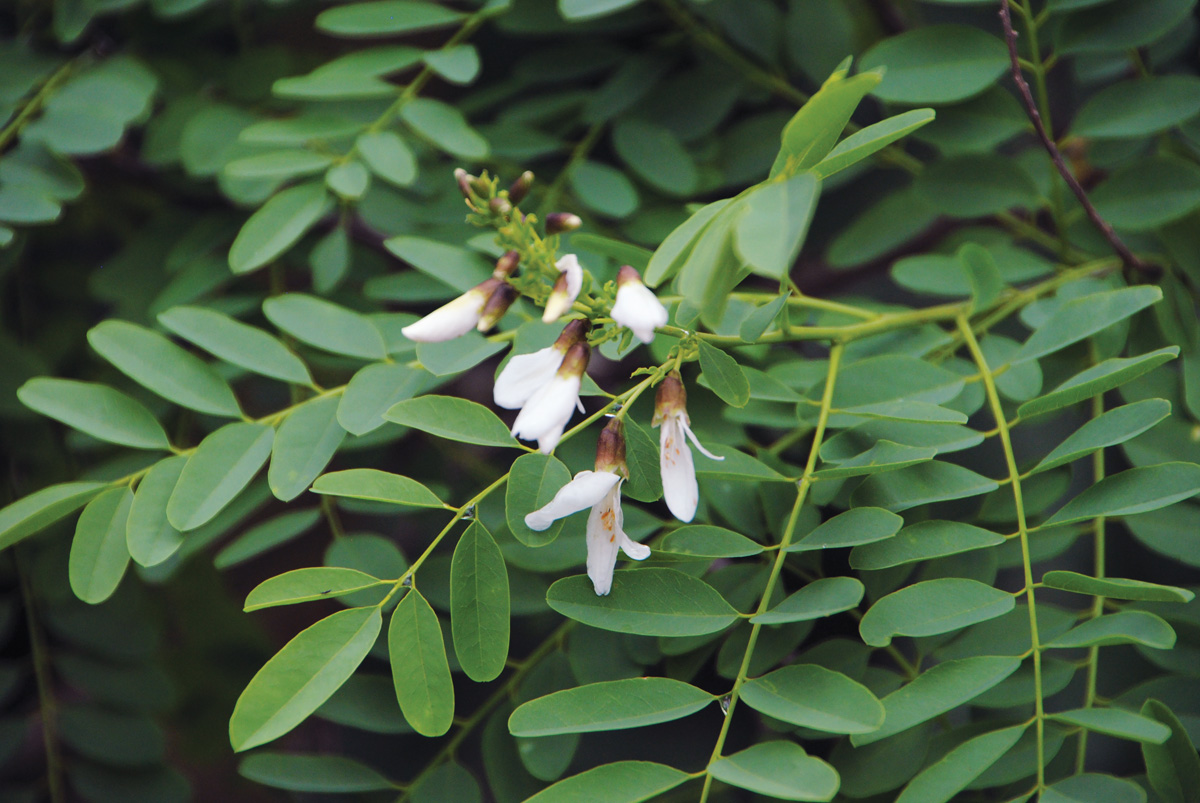
Among the standout recommendations is the arroyo sweetwood, a deciduous tree that remains relatively unfamiliar to many gardeners but deserves a much broader presence in Southwest landscapes. Featuring a compact size and a multi-trunk habit, the tree serves as a worthy and refreshing alternative to the ubiquitous crape myrtle (Lagerstroemia species and cultivars, Zones 6–10), which is frequently plagued by scale insects in many southern environments.
The arroyo sweetwood is both fast-growing and extremely drought-tolerant, making it an exceptional candidate for water-wise gardens. In the spring, the tree produces loose clusters of small white flowers that draw a multitude of pollinators. Beyond their appeal to bees and butterflies, the blossoms emit a distinct vanilla scent that routinely captivates human visitors, often prompting questions from admirers discovering the tree for the first time.
Once the spring flowering period concludes, apple-green seedpods begin to dangle from the arching branches, resembling deflated party balloons. The tree’s compound leaves are held in drooping sprays and eventually transition to a rich yellow in the autumn, extending the plant’s seasonal interest well beyond the warmer months.
‘Labuffarosa’ Rain Lily
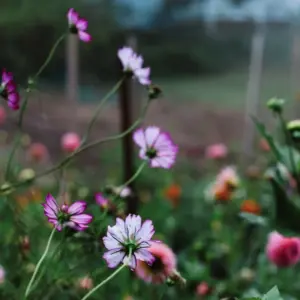
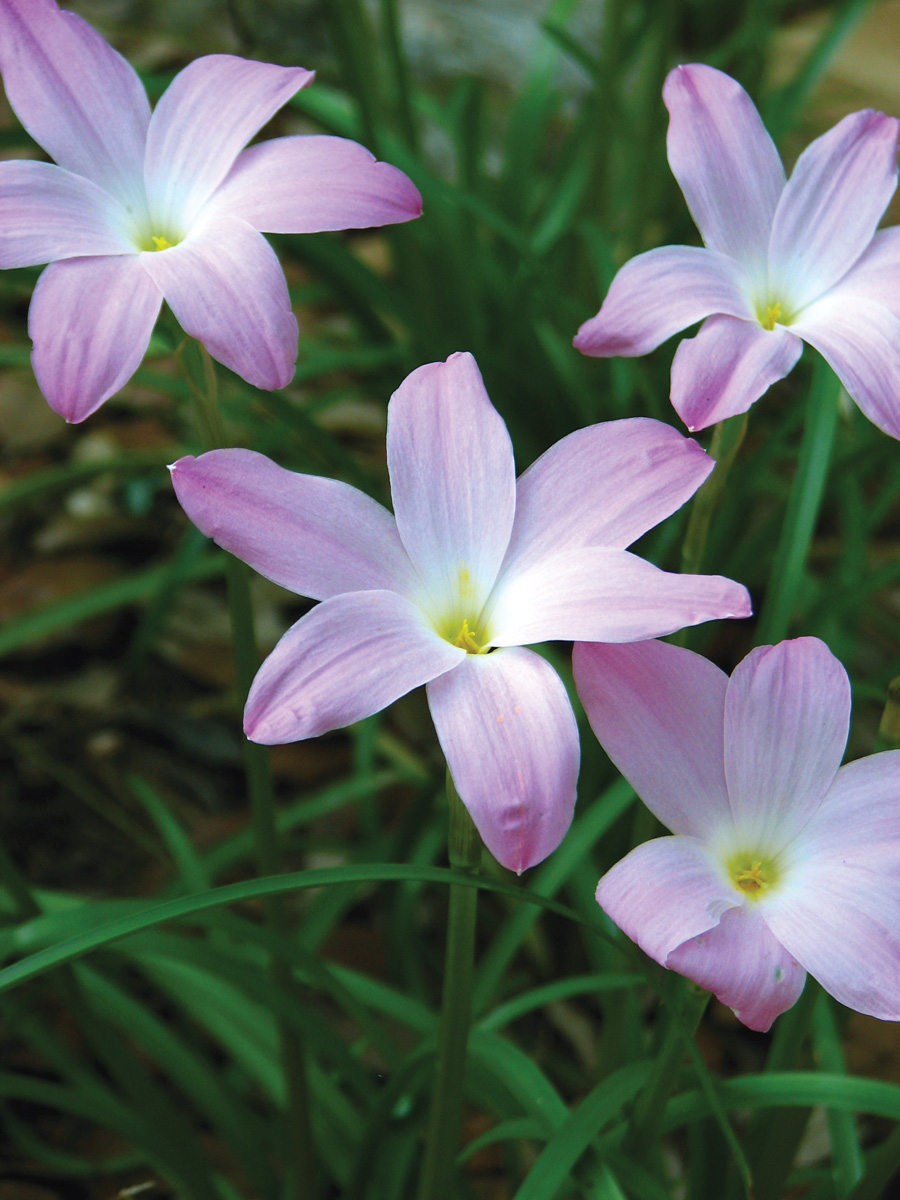
For gardeners seeking a splash of color during the most punishing stretches of summer, the ‘Labuffarosa’ rain lily offers a dramatic seasonal surprise. These starry flowers have a unique knack for leaping out of the ground shortly after a heavy summer rain, providing a welcome burst of life when other plants are struggling under heat stress.
The pink and white petals of the rain lily sparkle as though dusted with fine particles, while their strappy green foliage forms a clumping ground cover that bears a visual resemblance to liriope (Liriope muscari, Zones 5–10). Gardeners will find that rain lily bulbs are exceptionally long-lived and straightforward to establish, requiring only a simple covering of two to three inches of soil.
To create a striking visual combination within a landscape, Penick suggests pairing the ‘Labuffarosa’ rain lily with the fall-flowering oxblood lily (Rhodophiala bifida, Zones 7–10), which yields a vibrant interplay of pink and red tones. Although these lilies are ephemeral by nature and require a passing storm to entice them into bloom, witnessing their blushing faces turned toward the sky offers a rewarding spectacle for regional gardeners.
Darcy’s Mexican Sage
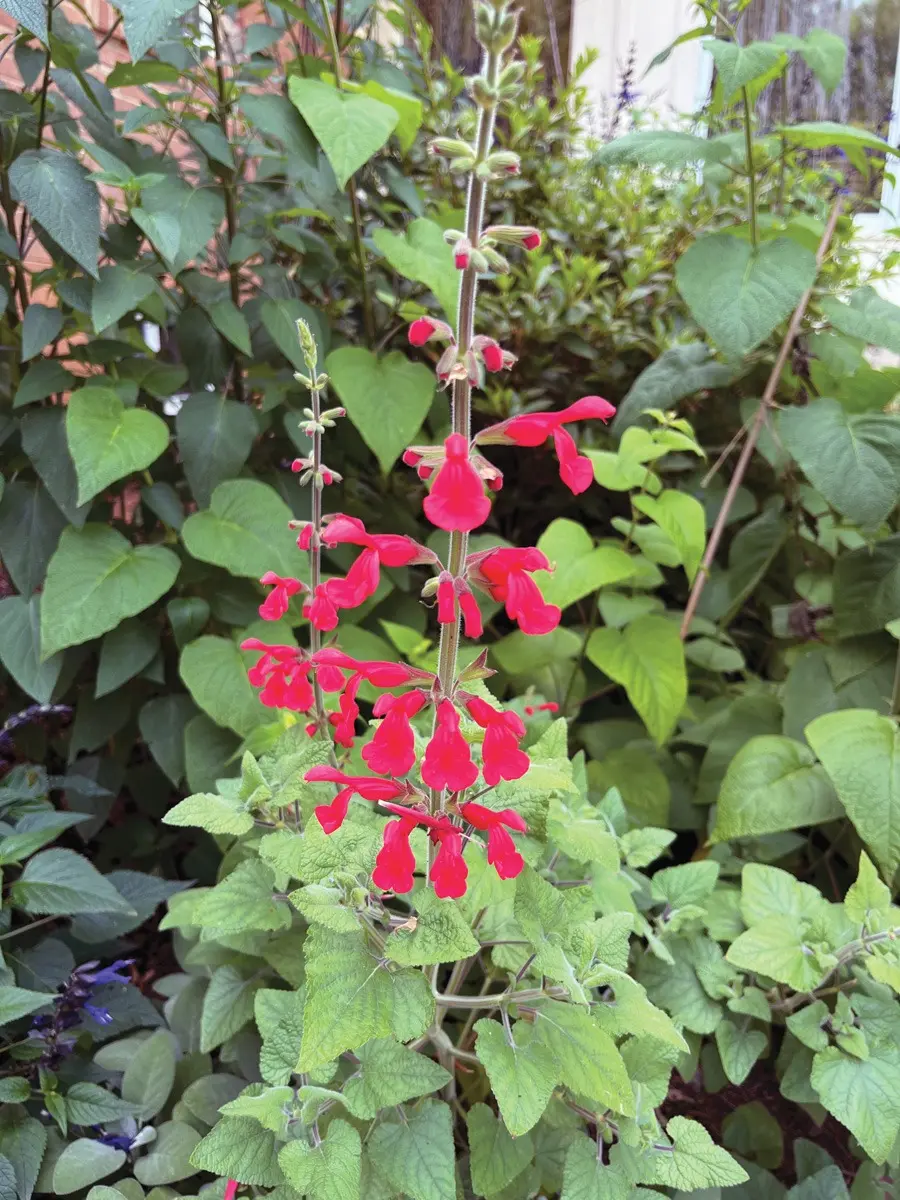
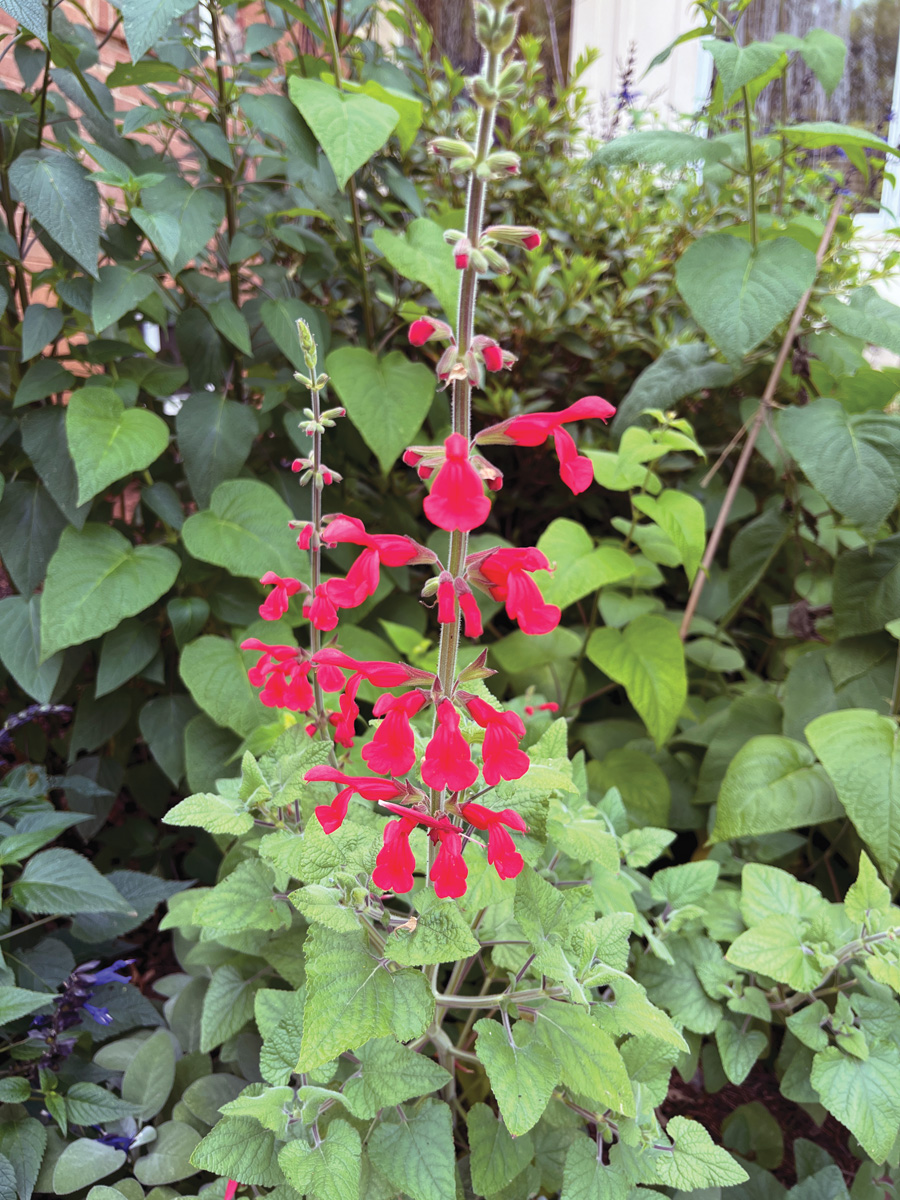
Another compelling option for prolonged seasonal color is Darcy’s Mexican sage, a well-behaved and slow-spreading perennial that thrives as a summer sizzler. The plant produces cardinal red flowers that immediately attract bumblebees and hummingbirds, beginning their display as the weather warms in April, burning steadily through the summer months, and continuing deep into November.
Beneath the prominent flower spikes, triangular, light-green leaves form an attractive, dense mound. While the species originates from high-altitude environments in the mountains of northern Mexico—where it can be found growing at elevations of 9,000 feet—Darcy’s Mexican sage adapts remarkably well to the flatlands of the Southwest.
The plant is notably forgiving for gardeners who may occasionally forget to water, though it responds with enhanced vigor when given an occasional deep soak. As winter approaches, the foliage dies back to the roots, requiring a hard prune just before spring growth resumes. For a bold autumn display, Penick recommends pairing the sage with bird pepper, also known as chile pequin (Capsicum annuum cultivars, Zones 9–11).
Pyramid Bush
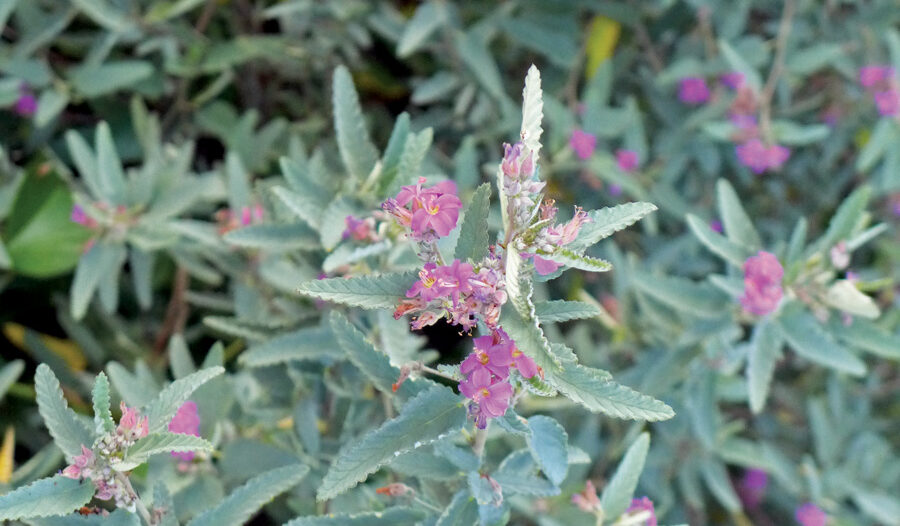
Rounding out the expert selections is the pyramid bush (Melochia tomentosa), a silvery-green shrub that brings continuous cheer to the garden landscape. Dainty magenta flowers cluster along the upright stems of the shrub throughout the entire growing season, blooming reliably through the height of summer heat and drought conditions.
The cheerful flowers serve as a powerful magnet for local butterflies and bees, cementing the pyramid bush as an ideal addition to dedicated pollinator gardens. In the southern portions of its growing range, the lance-shaped, silver-fuzzed foliage remains evergreen throughout the year. For those gardening near the northern boundaries of its hardiness range, any winter freezing that claims the above-ground foliage is typically temporary, with the shrub reliably returning from the roots in the spring.
Penick notes that adding these adaptable shrubs to hot, sunny areas, such as a driveway bed, can dramatically elevate the welcoming atmosphere of an outdoor space. Through these four distinct plant selections, Southwest gardeners are equipped with resilient, pollinator-friendly choices designed to thrive in demanding climates while delivering lasting aesthetic appeal.