Deciding where to install a new radiator in a room is a choice that ultimately rests with the homeowner, and there are often compelling aesthetic or practical reasons for wanting to place a heating unit opposite a window or along a wall designated for a sofa. However, heating specialists and plumbing professionals note that if circumstances allow, it is usually best to adhere to a few foundational rules regarding the positioning of radiators. By following these simple guidelines, households can allow their heating systems to provide maximum warmth while potentially shaving a little off their monthly energy bills.
It can be remarkably easy to assume that a radiator installed anywhere within the confines of a room will heat the space uniformly, regardless of its exact location. Yet, positioning the primary source of room heat in an suboptimal spot can have a drastic effect on how efficiently the entire system operates. While property owners do not need to be masters of thermodynamics, gaining a basic understanding of how hot air behaves and how it naturally interacts with cold air can go a long way toward optimizing home comfort.
Of course, poor heat distribution is not always a consequence of bad placement. If a radiator fails to produce the expected level of warmth, the issue may simply be trapped air requiring the system to be bled. Maintaining the efficiency of central heating systems relies on knowing how to bleed a radiator quickly and effectively when cold spots emerge at the top of the panels.
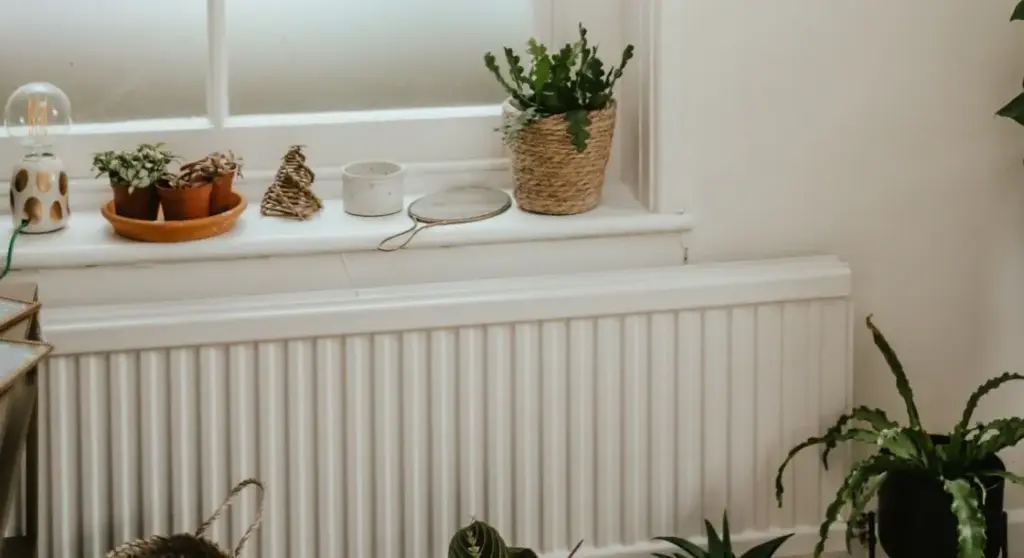
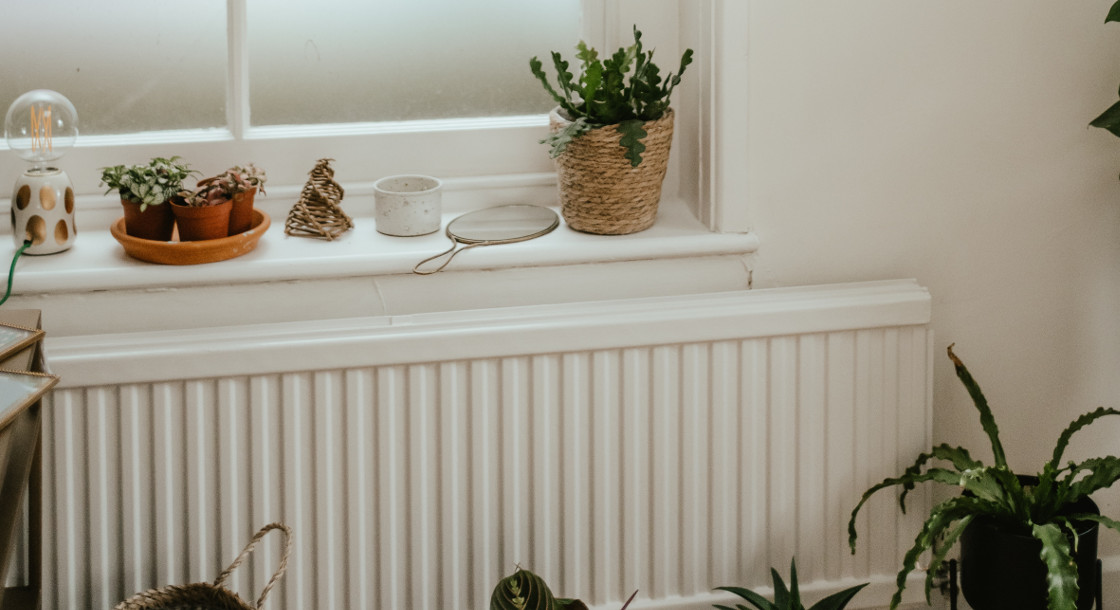
For generations, the standard practice in British architecture and interior design has been to place radiators directly beneath windows. Although this is a widespread convention in UK homes, a common misconception persists that this positioning merely wastes thermal energy as heat rises directly against cold panes of glass. In reality, placing the heating unit underneath a window yields the most effective results in the vast majority of cases, even within modern structures outfitted with high-efficiency double or triple-glazed windows.

The underlying physics involve thermal dynamics: warm air rising upward from the radiator acts as a physical barrier, actively counteracting the cold air cascading downward from the cold glass surface of the window. This thermal curtain significantly reduces the chance for chilled air to spread across the living space. While modern window installations make this descending cold draft far less obvious, the impact is even more pronounced for residents living in older period properties featuring traditional, single-glazed windows.
An additional, highly practical advantage of positioning radiators beneath windows is that this specific wall space is traditionally left free of large furniture, thereby optimizing the room’s available layout. Even if a particular wall appears entirely unobstructed at present, homeowners frequently decide to rearrange their living spaces in the future. While placing a large piece of furniture in front of a radiator is certainly not a catastrophic error, any bulky obstruction will inherently act as a physical barrier, hindering the free circulation of heat throughout the room.
Conversely, the exact placement of a new radiator becomes somewhat less critical if a home features modern double-glazed windows, simply because there is far less cold air seeping into the interior and considerably less thermal loss. Nevertheless, for properties lacking double-glazed protection, professionals generally advise against positioning a radiator directly opposite a large window. The combination of warm air rising on one side of the room and cold air falling on the opposite side can occasionally exaggerate the natural convection currents within the space, creating a noticeable and uncomfortable draught.
When structural limitations leave no alternative but to position a radiator directly opposite a window, homeowners can mitigate this rotating air current by installing a shelf slightly above the top of the radiator. This architectural intervention serves to force rising hot air outward into the center of the room rather than allowing it to be immediately drawn into the descending flow of cold air from the window.
Alongside placement, the market for domestic heating units has evolved significantly. Not too long ago, residential radiators were almost universally uniform in size and shape—consisting primarily of flat, rectangular steel panels that consumed substantial amounts of wall space. Today, consumers can select from a dramatically wider variety of architectural configurations and dimensions.
Industry experts emphasize that there is no single universal “best” size or style to recommend. The ideal choice depends heavily on the specific dimensions, architectural style, and spatial layout of the room, alongside the desired interior aesthetic and the overall thermal insulation quality of the house. In a contemporary, well-insulated home, an upright vertical radiator might be highly desirable because it occupies minimal wall space while offering a striking visual feature. Meanwhile, a Victorian terraced house might be better complemented by an imitation cast-iron column radiator that respects the heritage of the building.
Despite the vast array of styles now available, all domestic radiators operate on the same fundamental principles of heat transfer. Consequently, certain locations and environmental surroundings can consistently prevent any radiator from efficiently heating a space.
One of the most frequent problem areas is behind a sofa or other large piece of furniture. While it can be tempting to tuck an unsightly radiator away out of sight, doing so severely compromises its thermal efficiency. Although heat will inevitably continue to rise from the top of the unit, the majority of the radiant heat emitting from the front will be absorbed by the upholstered furniture, leaving the remainder of the room feeling chilly.
Similarly, full-length curtains that hang to the floor directly in front of a radiator produce a comparable obstruction. Rather than allowing thermal waves to push out into the living space, these heavy fabrics trap the rising heat and channel the bulk of it upward toward the window recess. Naturally, the thicker the curtain material, the more pronounced this blocking effect becomes, leading to wasted energy and a colder room.
A third location to avoid whenever possible is directly behind a door. Smaller rooms in modern or older properties alike may present limited wall space, sometimes leaving the area behind the door as the only seemingly viable option. While placing a radiator here is not an absolute disaster for ambient room temperature, mounting it on an exterior wall or a partition facing an unheated hallway means a significant portion of the heat will be lost directly through the structure. Furthermore, if the door remains open and rests directly in front of the operational radiator, it can physically block the outward flow of heat into the room entirely, undermining the entire heating apparatus.