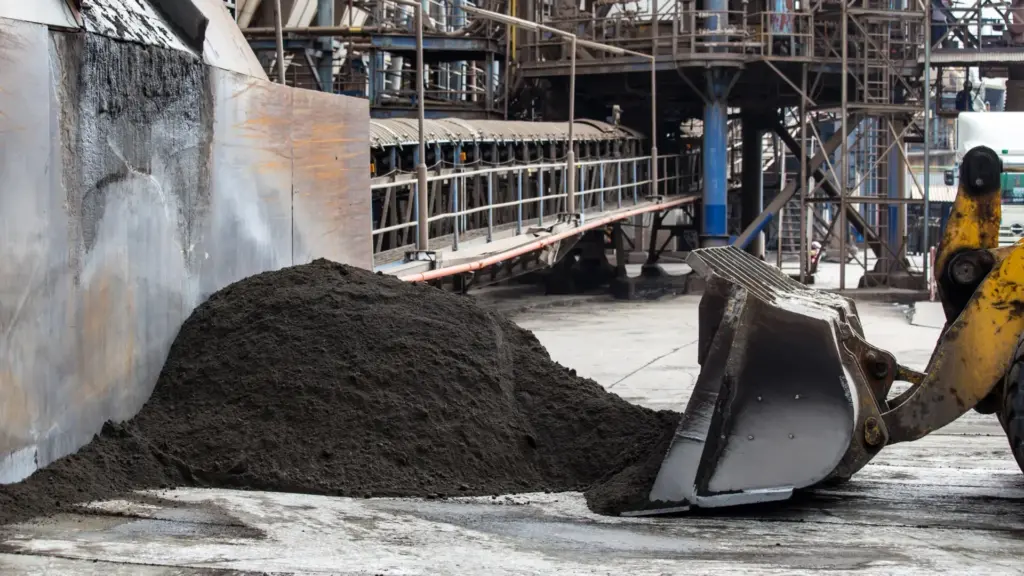
The project addresses a paradox in modern manufacturing and resource management. While immense quantities of industrial waste such as coal ash, red mud, mine tailings, concrete debris, waste glass, and metallurgical slag are continuously generated and relegated to landfills, ponds, and impoundments, these materials are far from worthless. They contain substantial concentrations of silica, rare earth elements (REEs), and other critical minerals that are foundational to the contemporary global economy.
Leading the effort is Mingjiang Tao, an associate professor in the WPI Department of Civil, Environmental, and Architectural Engineering. He is joined by professors Carrick Eggleston and Yan Wang serving as co-principal investigators. The ambitious research initiative also features contributions from academic partners at George Mason University, the University of California San Diego, the University of Massachusetts Amherst, and the University at Buffalo, bringing together a vast breadth of expertise spanning biology, geochemistry, materials science, metallurgy, engineering, computational chemistry, and artificial intelligence.
According to Tao, the initiative is designed to move beyond traditional, single-target recycling frameworks by embracing a comprehensive, whole-material philosophy. "Recovering critical minerals is only part of the opportunity," Tao explained regarding the broader vision of the project. "We want to process a process that uses as much of each waste stream as possible, separating strategically important elements while converting the remaining material into useful products. That whole-material approach could fundamentally change how industries manage waste and obtain essential resources."
Valuable Minerals Hidden in Waste
The economic and strategic stakes of the research are remarkably high. Many essential silicon-derived products—ranging from concrete, glass, and ceramics to advanced semiconductors and silicones—demand intensive industrial processing characterized by high temperatures, massive energy consumption, and aggressive chemical inputs. Ironically, these same production cycles generate millions of tons of silicon-rich waste that is routinely discarded.
Rather than being safely or productively managed, much of this material accumulates in vast surface impoundments and disposal sites. However, geochemical analyses reveal that these waste streams harbor immense economic and strategic potential. One striking estimate suggests that approximately 11 million tons of rare earth elements are currently trapped within U.S. coal ash landfills alone. Valued at an estimated $8.4 billion, this sequestered wealth is nearly eight times larger than the nation’s entire current base of raw domestic reserves.
Because rare earth elements and critical minerals are indispensable for the manufacturing of modern electronics, clean-energy infrastructure, advanced transportation systems, and national security applications, finding domestic, sustainable, and economically viable ways to access these resources has become an urgent national priority. The WPI-led team aims to bridge this gap by transforming a persistent environmental liability into a secure, domestic supply chain for critical technologies.
Looking to Nature for a Cleaner Approach
To overcome the immense energy barriers and environmental degradation traditionally associated with mineral extraction and silicon processing, the research team is looking directly to the natural world for inspiration. Over millions of years of evolution, certain organisms have developed highly sophisticated mechanisms for manipulating minerals under ambient conditions.
Diatoms, sea sponges, and specific types of plants possess the ability to utilize biological molecules and organic scaffolds to capture dissolved silicon from their environments and construct intricate, highly ordered silica structures. These biological processes occur under relatively mild, low-temperature conditions that stand in stark contrast to the energy-intensive smelting and chemical refining techniques utilized by modern industry.
The research team hopes to adapt these biological strategies to engineer low-energy methods for breaking down silica-rich industrial byproducts. By successfully mimicking or deploying these bio-enabled pathways, the researchers aim to achieve a dual objective: releasing the valuable rare earth elements and critical minerals tightly bound within the mineral matrix, while simultaneously transforming the residual silica into high-value commercial products.
AI and Biomolecules Could Speed Discovery
To translate complex biological phenomena into scalable industrial applications, the project relies heavily on cutting-edge computational tools and artificial intelligence. By integrating expertise across disparate scientific domains, the team intends to accelerate the discovery and optimization of bio-inspired extraction techniques.
Researchers plan to deploy advanced computational modeling and machine learning algorithms to design specialized biomolecules. These computational tools will allow the team to predict with high precision how engineered biomolecules will interact with complex silicon-rich waste matrices, drastically reducing the time required to identify the most promising approaches for mineral recovery and materials manufacturing.
As the lead principal investigator, Mingjiang Tao will oversee the overall coordination of the multi-institution project while directly steering research into biosilicification—the biological process by which organisms form intricate silica structures—and bio-enabled metallurgy aimed at extracting rare earth elements from industrial byproducts.
Carrick Eggleston, a professor in the Department of Civil, Environmental, and Architectural Engineering with deep expertise in geochemistry, will spearhead investigations into the fundamental chemical reactions governing the breakdown and reconstruction of silicate materials. His specific research focus will center on analyzing reaction pathways, kinetics, and mechanisms associated with silicate dissolution, repolymerization, carbonation, glass formation, and silicone synthesis.
Meanwhile, Yan Wang, the William B. Smith Professor of Mechanical and Materials Engineering and a recognized pioneer in sustainable manufacturing and battery recycling, will direct the creation of bioengineered methodologies designed to efficiently recover rare earth elements and other critical industrial minerals from complex waste streams.
Turning Industrial Waste Into Marketable Products
Beyond the fundamental scientific breakthroughs required at the molecular and geochemical levels, the multiyear project places a strong emphasis on practical application and economic scalability. For any bio-inspired extraction method to truly alter the industrial landscape, it must prove viable on a commercial scale.
If successful, the technologies developed through this initiative could fundamentally reshape industrial manufacturing by creating reliable pathways to convert massive volumes of troublesome waste into high-demand marketable products. Such an outcome would simultaneously reduce modern society’s dependence on newly mined virgin resources, shrink the overall environmental footprint of materials production, and significantly bolster domestic supplies of critical minerals.
Education and workforce development are also deeply embedded in the initiative. Graduate and undergraduate students at WPI will be integrated into the research framework, participating directly in the multiyear effort through the university’s immersive STEM programs.
By bridging sustainability, biotechnology, materials science, data science, and artificial intelligence, the project aspires to lay the groundwork for a broader, bioengineered silicon-based materials ecosystem. Ultimately, the collaborative endeavor seeks to unite researchers, industry stakeholders, policymakers, educators, and the next generation of innovators across multiple disciplines to rethink the relationship between industrial waste, environmental stewardship, and resource security.