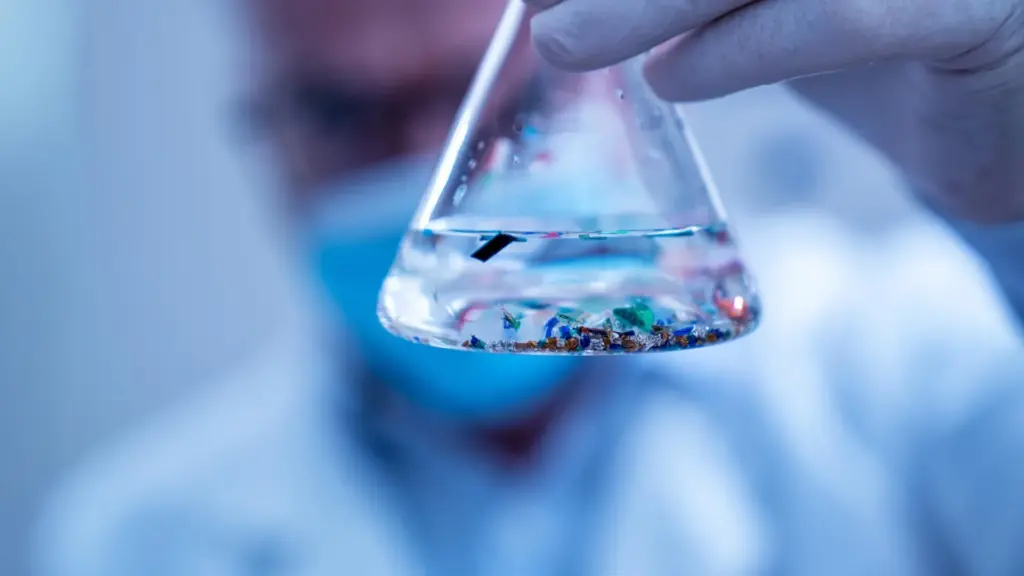
Polyethylene is deeply embedded in modern daily life, used extensively in products ranging from common single-use shopping bags to durable white plastic cutting boards. Because of its exceptional durability and the sheer volume of its production, massive quantities of polyethylene ultimately find their way into the municipal waste stream, where they persist for centuries. The newly engineered method developed by the Oak Ridge National Laboratory (ORNL) team tackles this environmental challenge by combining waste plastic with molten salts containing aluminum chloride. These specialized salts perform a dual function within the reaction vessel, acting simultaneously as the fluid reaction medium and as the active catalyst that drives the chemical conversion process.
The research team has already applied for a patent to protect the intellectual property surrounding the technology, and their detailed scientific findings have been published in the prestigious Journal of the American Chemical Society.
How Molten Salts Break Plastic Into Fuel
To understand precisely why and how the process works, the multi-disciplinary team of scientists closely tracked the complex chemical reactions that successfully sever the stubborn polymer chains and convert them into valuable fuel molecules.
Using a combination of soft X-ray spectroscopy and advanced nuclear magnetic resonance, the research team discovered that charged aluminum atoms within the salt mixture bind tightly with three other atoms, creating highly reactive and acidic catalytic sites. These newly formed sites possess the chemical capability to launch an attack on the exceptionally long molecular chains that make up polyethylene, cleanly splitting them apart into smaller, more manageable hydrocarbon molecules.
Additional investigative experiments, which utilized isotopic labeling and neutron scattering techniques, illuminated how the precise structural characteristics of the starting polymer heavily influence the composition of the resulting fuel. Simpler polymer chains within the waste material tended to produce lighter compounds resembling commercial gasoline, while more complex and branched chains generated heavier hydrocarbons suited for diesel-like fuels.
If the method can eventually scale beyond controlled laboratory experiments, the researchers note that it could meaningfully contribute to domestic energy security and strengthen industrial manufacturing capabilities.
"We developed an efficient and selective polyethylene-to-gasoline conversion," said Liqi Qiu, a postdoctoral researcher at the University of Tennessee, Knoxville, who performed the majority of the study’s intricate experiments inside the ORNL laboratory of Sheng Dai. Dai serves as an ORNL Corporate Fellow and section head for separations and polymer chemistry at both ORNL and UTK, and he is a co-corresponding author of the published research paper.
Under relatively mild reaction conditions, the team’s experimental procedures achieved a remarkable gasoline yield of approximately 60 percent.
Plastic-to-Gasoline Conversion Below 200 Degrees Celsius
One of the most striking and notable features of the newly developed method is how few external inputs it requires compared to more conventional, legacy plastic-to-fuel technologies.
"We converted polymer waste to value-added fuels by using commercially available inorganic salts as the reaction media to provide the catalytic sites," said Zhenzhen Yang, an ORNL staff scientist who also acted as a co-corresponding author of the paper. "Unlike traditional techniques for converting polymer to fuel, the new process did not require noble-metal catalysts, organic solvents or external hydrogen. This is the first time molten salts were used as media to produce high-value-added chemicals from waste without any catalytic initiator or solvent and at a temperature below 200 degrees Celsius."
Operating at temperatures below 200 degrees Celsius places the thermal requirement in a range comparable to the gentle heat found inside a conventional kitchen oven. By contrast, earlier approaches aimed at converting polyethylene into usable gasoline have typically relied heavily on pyrolysis, an energy-intensive process that uses extreme heat to break down large polymer molecules into smaller hydrocarbons. Those traditional methods have historically required punishing operating temperatures ranging from roughly 450 to 500 degrees Celsius.
This exceptionally lower temperature threshold, combined with the complete absence of costly noble-metal catalysts, external hydrogen supplies, organic solvents, and chemical initiators, could dramatically simplify the engineering and operational requirements of the process.
"The ORNL system solves two fundamental issues," Dai explained. "One, for a stable system, the process can be radically easier to scale up. Two, the previous system needed an initiator to kick off catalytic reactions. However, the ORNL system does not need one."
Decades of Molten Salt Research
The breakthrough did not happen in a vacuum; rather, it stands on the shoulders of decades of dedicated molten salt research at ORNL. During the 1960s, the laboratory’s historic Molten Salt Reactor Experiment successfully demonstrated that specialized mixtures of molten salts could effectively function as both a nuclear fuel carrier and a reactor coolant simultaneously.
Building directly upon this rich institutional history, Dai proposed pivoting the use of molten salts toward an entirely different industrial application: transforming discarded consumer polymers into useful, high-value fuels. Molten salts are inorganic compounds uniquely characterized by their ability to remain chemically stable even under demanding and harsh reaction conditions.
ORNL’s Tomonori Saito managed the broader project and contributed essential expertise in the field of polymer science.
"In this case we tackled polyethylene, a widely available commodity polymer, using molten salt," Saito noted. "We’re trying to understand fundamental science that will lead to discoveries and new economic opportunities."
Unraveling the exact microscopic mechanisms at play during the reaction required a coordinated effort involving researchers from several distinct scientific disciplines, alongside the deployment of multiple advanced analytical techniques.
Tracking the Chemistry Atom by Atom
At ORNL, scientist Luke Daemen utilized neutron scattering instrumentation to help identify the specific hydrocarbon products created when different polymer structures reacted with the molten salt medium. Meanwhile, Felipe Polo-Garzon analyzed the resulting chemical products using gas chromatography-mass spectrometry, a powerful analytical technique used to separate, identify, and quantify individual chemical compounds within a complex mixture.
When polyethylene molecules interacted directly with an aluminum catalytic site, the reaction generated a positively charged carbon ion. To track this fleeting species, Qiu, Yang, and Dai tagged the specific carbon ion with deuterium, a stable isotope of hydrogen. This isotopic labeling allowed the scientists to visually follow what happened to the carbon as the chemical reaction progressed through its various stages.
The research team also leveraged the intense neutron beams at ORNL’s Spallation Neutron Source to monitor the behavior and location of hydrogen atoms throughout the entire system.
"The polymer contains a lot of hydrogen," Dai observed. "Neutrons are ideal at discerning light elements including hydrogen and its isotopes, such as deuterium."
Simultaneously, the researchers needed to determine how the aluminum catalytic sites themselves transformed and behaved during the course of the chemical conversion.
To answer this, Yang traveled to the Advanced Light Source at Lawrence Berkeley National Laboratory, where she collaborated with Min-Jae Kim and Jinhua Guo. Using soft X-ray spectroscopy, the researchers closely examined the subtle interactions occurring between aluminum and polyethylene at both the atomic and electronic levels. Soft X-rays are particularly well-suited for studying relatively lightweight elements like aluminum.
"The aluminum edge shifted to the low-electron-density edge, which means some electron-rich intermediates formed," Yang stated. "We compared the findings with other techniques and confirmed an aromatic ring intermediate can coordinate with aluminum and cause a binding-energy change."
This distinct spectral shift provided concrete chemical evidence that the aluminum sites were actively driving and catalyzing the reaction rather than merely acting as an inert bystander.
Simulations and Advanced Imaging Reveal the Mechanism
Back at the main ORNL campus, Bobby Sumpter of the Center for Nanophase Materials Sciences employed sophisticated computer simulations to study the energy shifts taking place during the reaction, mapping out how stable carbon ions formed and subsequently transferred into finished hydrocarbon products.
At the University of Tennessee, Knoxville, Michael Koehler used in situ X-ray diffraction to track changes in the physical phases of the reaction mixture as the chemistry unfolded in real time. Carlos Alberto Steren applied nuclear magnetic resonance spectroscopy to investigate the structural properties of the aluminum catalytic sites.
Additionally, ORNL’s Tao Wang contributed his deep expertise in molten salt chemistry, while ORNL’s Logan Kearney supplied high-density polymers and provided expert guidance regarding potential chemical pathways for converting them into higher-value commercial products.
A Remaining Challenge: Keeping the Salts Stable
Despite the clear advantages of the aluminum-based catalytic system—including its low cost and high chemical activity—the technology still faces an important technical hurdle that must be overcome before commercial deployment. The material is hygroscopic, meaning it has a strong natural tendency to absorb ambient water moisture, which can compromise its long-term stability.
Looking ahead, the research team aims to investigate various methods to safely confine the molten salts, potentially utilizing halogens or advanced carbon-based support materials. Such confinement strategies could make the salts significantly easier to separate and process while simultaneously improving their operational stability over repeated reaction cycles.
Ultimately, this scientific advance could substantially broaden the portfolio of available methods for producing vital transportation and industrial fuels directly from abundant municipal waste streams.
"Polymer source material is abundantly available from consumer waste, and our catalyst system, aluminum molten salts, is very cheap," Qiu concluded. "This advance may be promising for industry."
The research was primarily supported by the Department of Energy’s Office of Science, specifically through the Materials Sciences and Engineering Division, with additional backing for gas chromatography-mass spectrometry work provided by the Chemical Sciences, Geosciences and Biosciences Division’s Catalysis Science program. The project also utilized DOE Office of Science user facilities, including the Spallation Neutron Source at ORNL—specifically the VISION beamline for neutron scattering—the Center for Nanophase Materials Sciences for quantum chemistry calculations, and Lawrence Berkeley National Laboratory’s Advanced Light Source for soft X-ray spectra analysis.