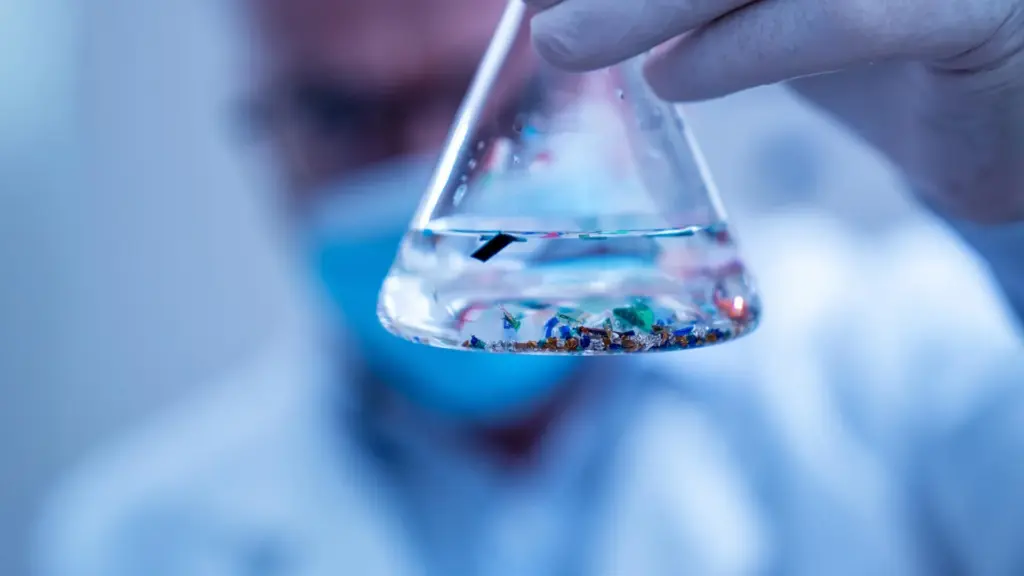
Polyethylene is ubiquitous in modern consumer and industrial life, heavily utilized in items ranging from single-use shopping bags to durable white plastic cutting boards. Because of its durability and widespread use, massive quantities of polyethylene ultimately end up as discarded waste, posing a significant environmental challenge. To address this, the multidisciplinary team at ORNL devised a chemical process that combines waste plastic with molten salts containing aluminum chloride. In this innovative setup, the molten salts perform a dual role, acting simultaneously as both the reaction medium and the active catalyst that drives the chemical conversion forward.
The research team has already applied for a patent to protect the technology, and their detailed findings have been published in the Journal of the American Chemical Society. By unlocking a lower-energy pathway to transform waste polymers into liquid hydrocarbons, the discovery could eventually bolster industrial competitiveness and contribute to broader U.S. energy security objectives if successfully scaled beyond the laboratory environment.
How Molten Salts Break Plastic Into Fuel
To understand the mechanics behind this chemical transformation, the scientists closely tracked the complex reactions that break down the polymer into usable fuel molecules. Using a combination of soft X-ray spectroscopy and nuclear magnetic resonance, the team discovered that charged aluminum atoms bind with three other atoms to create highly acidic catalytic sites. These specialized sites possess the chemical capacity to attack the long, stubborn molecular chains that make up polyethylene, splitting them into smaller, more manageable hydrocarbon molecules.
Further validation came from additional experiments utilizing isotopic labeling and neutron scattering. These tests revealed how the initial structure of the starting polymer directly influences the characteristics of the resulting fuel. Simpler polymer chains tended to generate gasoline-like compounds, whereas more complex chains produced diesel-like fuels.
According to the researchers, the experiments successfully achieved a gasoline yield of approximately 60 percent while operating under relatively mild reaction conditions. Liqi Qiu, a postdoctoral researcher at the University of Tennessee, Knoxville, who performed the majority of the study’s experiments within the ORNL laboratory of Sheng Dai, noted the efficiency of the discovery. "We developed an efficient and selective polyethylene-to-gasoline conversion," Qiu said. Sheng Dai, an ORNL Corporate Fellow and section head for separations and polymer chemistry at both ORNL and UTK, served as a co-corresponding author on the published research paper.
Plastic-to-Gasoline Conversion Below 200 Degrees Celsius
One of the most notable and disruptive features of the new method is its low energy requirement compared with conventional plastic-to-fuel technologies. Traditional approaches for converting polyethylene into hydrocarbons have typically relied on pyrolysis, a thermal decomposition process that requires intense heat to shatter large polymer molecules. Those legacy methods generally demand operating temperatures ranging from roughly 450 to 500 degrees Celsius.
In stark contrast, the ORNL process achieves its chemical conversion at temperatures below 200 degrees Celsius—levels comparable to the ambient heat found inside a conventional kitchen oven.
"We converted polymer waste to value-added fuels by using commercially available inorganic salts as the reaction media to provide the catalytic sites," said Zhenzhen Yang, an ORNL staff scientist and co-corresponding author of the research paper. "Unlike traditional techniques for converting polymer to fuel, the new process did not require noble-metal catalysts, organic solvents or external hydrogen. This is the first time molten salts were used as media to produce high-value-added chemicals from waste without any catalytic initiator or solvent and at a temperature below 200 degrees Celsius."
By eliminating the need for costly noble-metal catalysts, external hydrogen supplies, organic organic solvents, and chemical initiators, the streamlined process offers a potentially more economical route for industrial implementation. The lower operational temperature further reduces energy demands and mechanical complexity, solving key scaling barriers that have historically plagued plastic recycling technologies.
Decades of Molten Salt Research
The breakthrough builds upon decades of deep scientific expertise at ORNL concerning molten salts. During the 1960s, the laboratory’s historic Molten Salt Reactor Experiment famously demonstrated that mixtures of molten salts could effectively function as both nuclear fuel and reactor coolant. Building on this rich institutional history, Dai proposed leveraging molten salts for an entirely different application: breaking down discarded commercial polymers into useful, high-value liquid fuels.
Molten salts are inorganic compounds distinguished by their ability to remain remarkably stable even under demanding and aggressive chemical reaction conditions. This inherent stability provided the foundation for the new catalytic system.
"The ORNL system solves two fundamental issues," Dai explained. "One, for a stable system, the process can be radically easier to scale up. Two, the previous system needed an initiator to kick off catalytic reactions. However, the ORNL system does not need one."
Tomonori Saito, who managed the project at ORNL, contributed crucial expertise in polymer science. "In this case we tackled polyethylene, a widely available commodity polymer, using molten salt," Saito said. "Estamos trying to understand fundamental science that will lead to discoveries and new economic opportunities."
Unraveling the precise atomic-level mechanics of the reaction required contributions from a diverse cohort of scientific disciplines, utilizing a wide array of advanced analytical instruments and facilities.
Tracking the Chemistry Atom by Atom
At ORNL, Luke Daemen utilized advanced neutron scattering to help identify the various hydrocarbon products created when different polymer chains reacted within the salt medium. Meanwhile, Felipe Polo-Garzon analyzed the resulting compounds using gas chromatography-mass spectrometry, an analytical technique designed to separate and identify individual chemical components within complex mixtures.
When polyethylene molecules interacted with the aluminum catalytic sites, the interaction generated a positively charged carbon ion. To track its trajectory, researchers Qiu, Yang, and Dai tagged the carbon ion with deuterium, a stable isotope of hydrogen, allowing them to precisely follow its evolution as the reaction progressed.
The team also leveraged the high-flux neutrons generated at ORNL’s Spallation Neutron Source to monitor the behavior of hydrogen within the system. "The polymer contains a lot of hydrogen," Dai noted. "Neutrons are ideal at discerning light elements including hydrogen and its isotopes, such as deuterium."
To understand how the aluminum catalytic sites themselves evolved throughout the process, Yang traveled to the Advanced Light Source at Lawrence Berkeley National Laboratory, collaborating with researchers Min-Jae Kim and Jinhua Guo. By employing soft X-rays, the team examined the subtle interactions occurring between aluminum and polyethylene at both atomic and electronic levels. Soft X-rays are particularly well-suited for studying lightweight elements such as aluminum.
"The aluminum edge shifted to the low-electron-density edge, which means some electron-rich intermediates formed," Yang explained. "We compared the findings with other techniques and confirmed an aromatic ring intermediate can coordinate with aluminum and cause a binding-energy change." This distinct shift provided definitive empirical evidence that the aluminum sites were actively driving the chemical reaction.
Simulations and Advanced Imaging Reveal the Mechanism
To complement the empirical data, Bobby Sumpter of the Center for Nanophase Materials Sciences at ORNL employed high-performance computer simulations to study the energy changes taking place during the reaction. These simulations mapped out how stable carbon ions formed and subsequently transferred into hydrocarbon products.
At the University of Tennessee, Knoxville, Michael Koehler used in situ X-ray diffraction to monitor phase changes within the reaction mixture as the chemistry unfolded in real time. Carlos Alberto Steren applied nuclear magnetic resonance spectroscopy to investigate the local environment of the aluminum catalytic sites. Additional contributions came from ORNL’s Tao Wang, who provided expertise in molten salt chemistry, and Logan Kearney, who supplied high-density polymers and offered guidance on viable pathways for upgrading them into valuable commercial products.
Despite the successes achieved in the laboratory, the researchers acknowledge that operational challenges remain. The primary limitation of the aluminum-based catalytic system lies in its hygroscopic nature, meaning it readily absorbs ambient moisture. This sensitivity to water can undermine the long-term stability of the salts.
Looking ahead, the research team aims to investigate various methods to safely confine the molten salts—potentially utilizing halogens or carbon-based materials—which could make the compounds easier to handle, separate, and process while simultaneously enhancing their stability.
If these hurdles are successfully overcome, the technology could significantly broaden the suite of available strategies for converting municipal and industrial waste into vital transportation and chemical feedstocks.
"Polymer source material is abundantly available from consumer waste, and our catalyst system, aluminum molten salts, is very cheap," Qiu concluded. "This advance may be promising for industry."
The primary financial support for the research was provided by the Department of Energy Office of Science, specifically through the Materials Sciences and Engineering Division. Additional support for the gas chromatography-mass spectrometry work was furnished by the Chemical Sciences, Geosciences and Biosciences Division under the Catalysis Science program. The project also made extensive use of DOE Office of Science user facilities, including the Spallation Neutron Source and the Center for Nanophase Materials Sciences at ORNL, as well as the Advanced Light Source at Lawrence Berkeley National Laboratory.