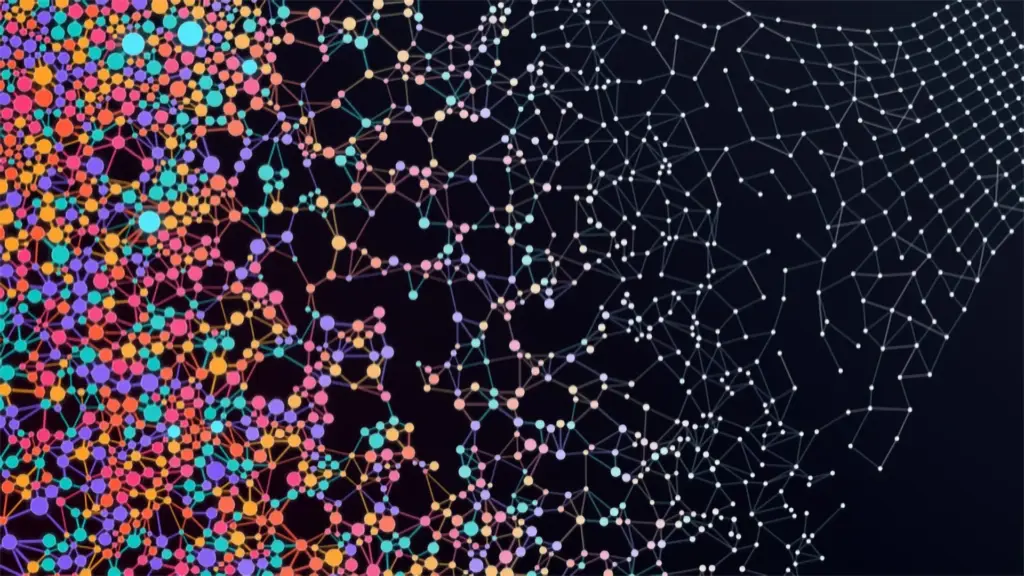
Perfection may not always be the best recipe for stability, especially in complex, interconnected systems such as electrical grids, biological ecosystems, and advanced engineered materials. For decades, researchers, engineers, and scientists frequently operated from the fundamental assumption that large networks should perform more reliably and predictably when their individual parts behave as similarly as possible. Yet, real-world systems rarely look that tidy. Power generators operate at different capacities and speeds, individual neurons vary widely in form and behavioral response, species occupy vastly different roles in complex ecosystems, and the components inside advanced engineered materials are almost never entirely uniform.
Now, a team of physicists at Northwestern University has demonstrated that these differences may actually serve as a vital advantage rather than a structural defect. In a study published September 17 in the journal Science, the researchers introduced a groundbreaking mathematical framework designed to determine precisely when variation—a characteristic scientists frequently describe as disorder or heterogeneity—can make a network substantially more stable. Their findings challenge the long-held dogma that uniformity should always be the ultimate design goal for complex technologies. Instead, carefully introducing controlled differences into a system could help engineers design far more resilient power grids, next-generation architected materials, and other interconnected technologies. Furthermore, this new work helps demystify why irregularity is so overwhelmingly common in natural systems, ranging from neural pathways to ecological food webs.
Why Disorder Can Improve Stability
To make these discoveries accessible, the research team also developed an interactive companion website that allows users to explore the mathematical framework visually. By adjusting different parameters in real time, users can watch network components interact, synchronize, and form organized, stable patterns before their eyes.
"Previous studies found a growing number of cases in which disorder—also called heterogeneity, irregularity, or asymmetry—across a network’s nodes can actually improve stability and desirable behavior," said Adilson Motter, who led the research effort at Northwestern. "We have seen this in important real-world systems, including power grids, metamaterials, and brain computation. But we didn’t know how widespread this effect was or which kinds of systems could benefit from it. Our new study answers those questions, explains why these differences can improve stability, and even reveals why scientists overlooked this effect for so long."
Motter holds the title of the Charles E. and Emma H. Morrison Professor of Physics and Astronomy at Northwestern’s Weinberg College of Arts and Sciences, in addition to serving as director of the Center for Network Dynamics. The study’s co-first authors are Arthur Montanari, a Northwestern postdoctoral researcher, and Pietro Zanin, a graduate student, both of whom are active members of the Motter research group.
Why Older Network Models Missed the Effect
Many interconnected systems in both nature and technology can only survive if they possess the capacity to recover from unexpected disturbances. A strong gust of wind can break apart a tightly flying flock of birds. A sudden, massive spike in electricity demand can severely strain a regional power grid. A physical impact can deform and fracture a solid material. To study these phenomena, scientists routinely represent such systems as networks made up of individual components, known as nodes, which are connected by links.
In the context of an electrical grid, individual power generators act as the nodes, while transmission lines form the electrical links between them. In an ecological network, individual species represent the nodes, while their complex relationships—such as competition, cooperation, and predation—form the links. Traditionally, researchers have focused heavily on how those nodes are connected to one another structurally. Many studies have also relied heavily on simplified mathematical models, such as the widely adopted Kuramoto model, which represents each individual node using only a single mathematical variable.
While those simplified approaches have produced immensely valuable insights over the years, they can inadvertently leave out critical behavioral dynamics found in real-world systems, where individual components and their interactions can be infinitely more complicated.
"Real systems are rarely uniform," Montanari explained. "Birds differ in personalities, neurons vary in shape, and even our social relationships can be asymmetric. These differences might appear random, but they can profoundly affect how the whole system behaves."
Earlier research from the same group had already hinted that such differences could sometimes be beneficial. In a study published in Nature Physics in 2020, Motter’s team demonstrated that electrical power generators could synchronize more successfully when they operated somewhat differently from one another rather than in lockstep uniformity. A subsequent study published in 2025 in Nature Communications, led by Montanari, found highly comparable effects in mathematical models involving flocking behavior and coordinated drone swarms.
Despite these breakthroughs, what remained entirely unclear was whether these isolated examples represented rare exceptions to the rule or pointed toward a much broader, universal principle governing complex networks.
"Disorder can stabilize networks, but only when the node dynamics are rich enough," Motter noted. "Simplified models can inadvertently strip away the very stabilizing effect we want to capture."
Finding the Right Amount of Disorder
To investigate this fundamental question on a much broader scale, the researchers set out to develop a robust mathematical framework capable of accounting for far more realistic network behaviors. They began by examining systems operating close to a stable condition. Next, they calculated mathematically what would happen after small disturbances were introduced into the network. If those disturbances gradually dissipated, the system would successfully return to stability. Conversely, if the disturbances grew larger over time, the system would inevitably move toward instability and potential collapse.
The team then compared networks whose components were entirely identical with networks containing varying degrees of differences among their components or their connections. This methodological approach allowed the researchers to identify the general circumstances in which heterogeneity can consistently outperform uniformity. Motter and his colleagues rigorously tested the new framework using comprehensive models of power grids, biological neurons, animal flocks, architected materials, and ecological food webs.
Their analysis revealed that disorder can improve system stability in two primary ways. First, differences can exist inherently among the nodes themselves. Second, variations can appear within the links connecting those nodes. Furthermore, the magnitude of the stabilizing effect depends heavily on both the precise location and the overall amount of variation present in the system.
While a moderate level of disorder might render a network significantly more stable, excessive variation could eventually push that exact same system in the opposite direction, triggering instability.
"If you make the system more homogeneous, you lose stability," Montanari said. "But if you increase disorder too much, you also lose stability. Our framework can help pinpoint the level of disorder that helps the system achieve optimal stability."
Random Variation Can Sometimes Be Enough
Intrigued by these patterns, the researchers also discovered that beneficial differences do not always need to be meticulously and carefully designed in advance by human engineers. In many of their computational models, randomly introduced variation produced substantially greater stability than the absolute best completely uniform configuration. This suggests that simply allowing a healthy degree of natural diversity within a system can often provide a distinct operational advantage.
There was, however, one important exception noted during the study: when the variation occurred within the links connecting nodes rather than internally within the nodes themselves. In those specific cases, even networks possessing relatively simple node dynamics could reap significant stability benefits purely from structural disorder.
Why Nature May Favor Imperfect Networks
These new insights could help researchers vastly improve their understanding of existing complex systems, particularly ecological networks, while simultaneously equipping engineers with entirely novel strategies for designing technological systems entirely from the ground up. One longstanding ecological puzzle has been that older mathematical models consistently predicted that large, highly complicated ecosystems should be inherently unstable and prone to cascading collapse. Yet, the natural world contains countless ecosystems that are simultaneously exceptionally diverse and remarkably persistent over long spans of time.
"Since the 1970s, mathematical models have predicted that large, complex ecosystems should destabilize and collapse," Montanari said. "Yet very large and highly diverse ecosystems persist in nature. Our findings suggest that variation among mutually beneficial interactions, such as those between pollinators and flowers, could help explain this paradox."
The same underlying mathematical principle could eventually influence the manufacturing and design of advanced engineering materials. Architected materials are frequently constructed from repeating, nearly identical structural units. The new findings suggest that engineers might soon be able to unlock entirely new or drastically improved mechanical behaviors simply by deliberately varying the shapes, sizes, physical orientations, and material properties of those repeating units.
To accomplish this effectively, researchers will need to treat these advanced materials as mechanical networks and employ mathematical models detailed enough to preserve the system’s true underlying dynamics. Sophisticated computational techniques could then be leveraged to search for optimal combinations of variation that yield the greatest structural benefit.
"When disorder enhances stability, the next challenge is figuring out how best to design it," Motter concluded.
The study, titled "Disorder-promoted stability," received core research support from the Army Research Office and the National Science Foundation. The research also benefited from the stimulating academic environment provided by the NSF-Simons National Institute for Theory and Mathematics in Biology.