Birds have long been resourceful builders, routinely incorporating wire, plastic, fabric, and other discarded urban scraps into their traditional nesting habits to give everyday human waste a second life. In recent years, however, these manifestations of material adaptation have taken on a much stranger and more striking character. Across the globe, species ranging from magpies and crows to urban coots and barn swallows are interacting with human infrastructure in ways that challenge conventional ideas about who builds our cities and landscapes. From nests constructed out of hostile architectural deterrents to those woven from military debris, these avian structures point toward a literal model of posthuman architecture—one whose authorship is shared directly across species.
This emerging paradigm of interspecies design sits at the center of the "POSTHUMAN UTOPIAS" chapter by designboom, presented in partnership with INDX|GLOBAL. Rather than treating the built environment as an exclusively human domain, these occurrences reveal a world where human consumption, manufacturing, and waste continuously entwine with animal construction, offering a vivid snapshot of our changing relationship with the planet during the Anthropocene.
Architecture Across Species and the Materiality of the Anthropocene
The phenomenon of birds building with human debris is deeply tied to the shifting material realities of our world. Historian Matthew Holmes explores this dynamic in his 2026 research paper, Feathered Architects: Collecting Histories of Anthropogenic Material in Birds’ Nests. Holmes argues that looking closely at birds’ nests and the items woven within them offers a direct reflection of the contemporary state of the Anthropocene, capturing technological shifts and industrial traces embedded inside organic architecture.
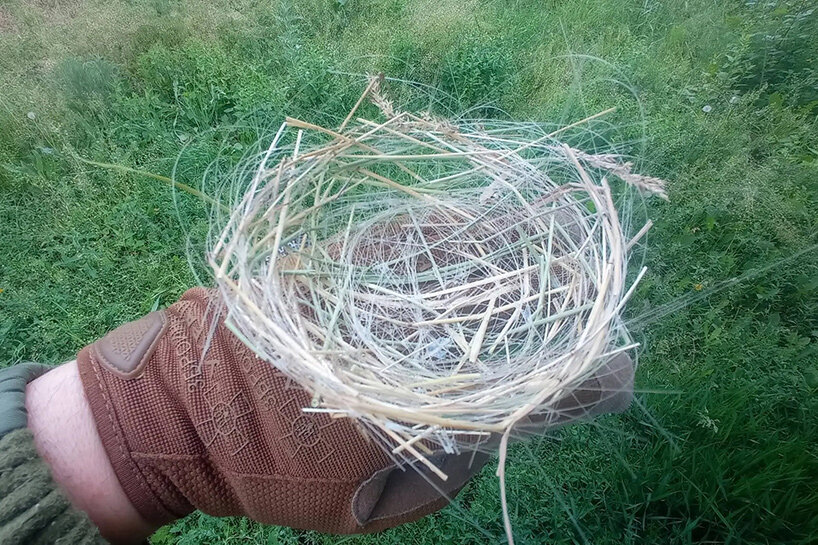
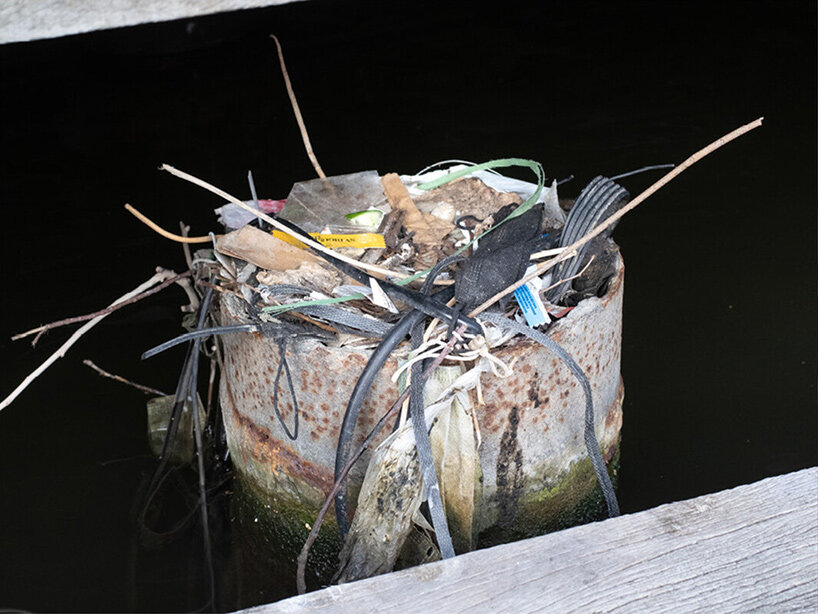
This interaction is by no means entirely new. During the historic Dust Bowl era in the United States, for instance, American crows frequently built nests out of barbed wire, reflecting an agricultural landscape stripped of its natural, usable vegetation. Yet, as contemporary materials evolve, so too do the choices made by avian builders. In some urban ecosystems, synthetic materials have paradoxically become more desirable or enduring than natural alternatives. Researchers studying Eurasian coots in Amsterdam canals have documented nests made of accumulated layers of plastic waste that persist across multiple seasons. While traditional vegetation decomposes quickly between breeding cycles, these plastic stratigraphies extend the building and habitation cycle across decades, creating long-lasting urban artifacts born from municipal waste.
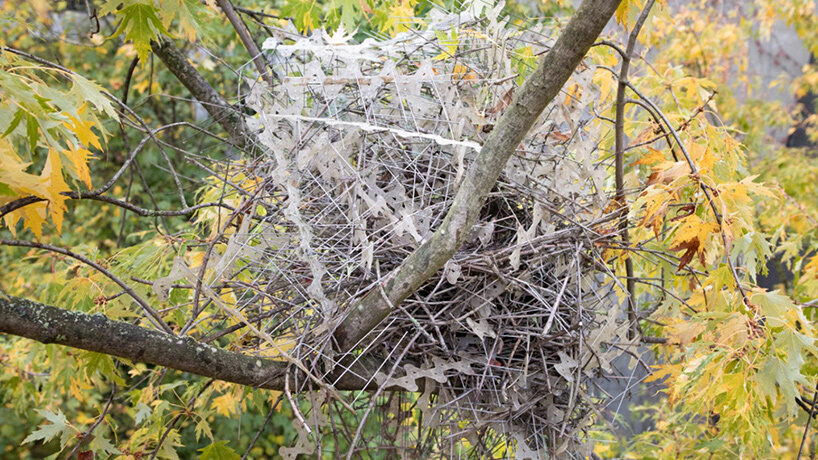
Perhaps the most poetic and ironic reversal of human intent, however, can be found in European cities where carrion crows and Eurasian magpies have begun systematically dismantling anti-bird spikes from building facades to incorporate them into their nests. In Antwerp, researchers discovered a magpie nest featuring hundreds of metal spikes woven into its outer structure, with the sharp points facing outward. Ornithologists and urban ecologists suggest that these metallic elements serve much the same protective purpose as thorny branches, defending eggs and chicks from predators. In a striking twist, objects specifically manufactured to exclude wildlife from human architecture have been repurposed to become bird architecture itself.
When Architects Begin Studying the Bird
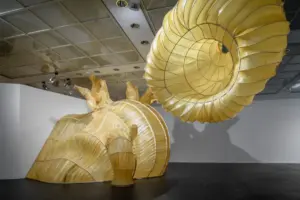
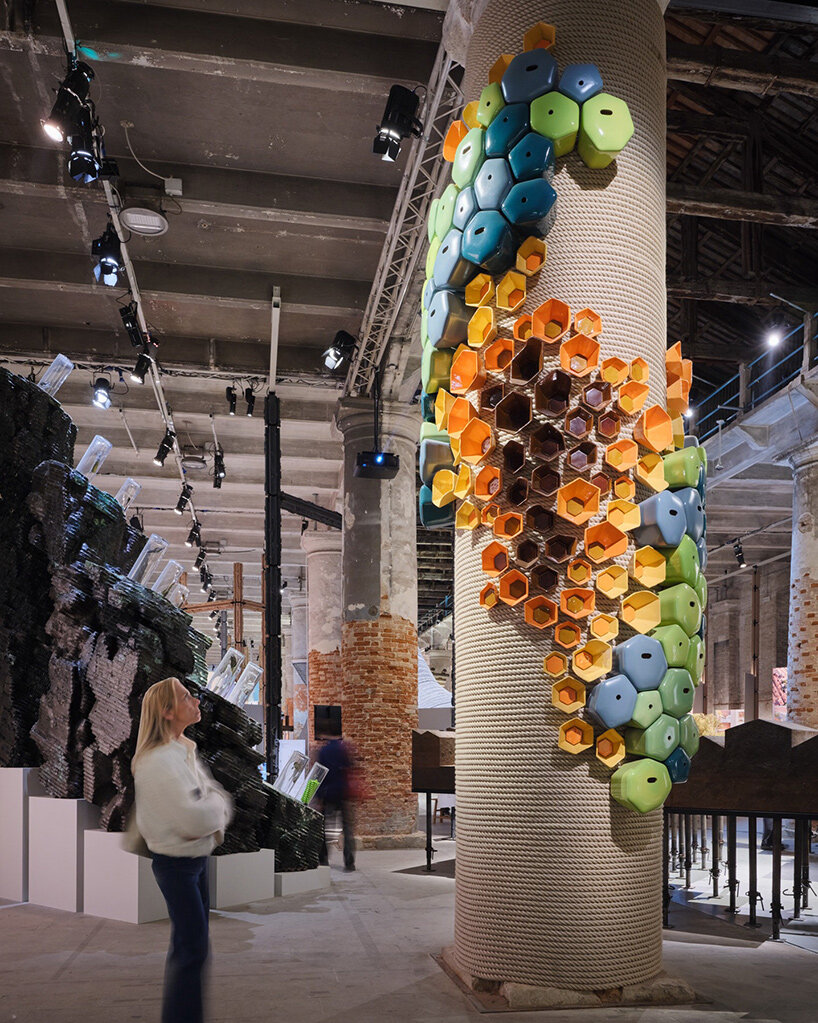
As animals adapt to human-made environments, human architects are increasingly looking back to the animal kingdom to rethink their own design processes. In Chicago, the exhibition Best Nest: Design for Nature and Culture examines how avian construction has informed the methodology of architect Jeanne Gang and her studio, Studio Gang. The exhibition brings together architectural drawings, material models, and more than seventy ceramic nesting vessels originally developed for The Living Orders of Venice at the 2025 Venice Architecture Biennale.
By approaching the nest as a sophisticated form of architectural intelligence, Studio Gang explores how different species build according to their specific bodily requirements and environmental pressures. These natural structures yield geometries that respond directly to the demands of inhabitation, a lesson the studio carries forward into human-scale buildings and specialized avian habitats. Running alongside Best Nest at the Chicago Architecture Center is the exhibition Flyway City, which turns attention toward urban centers shaped by seasonal migration, avian vision, and the ecological hazards posed by glass architecture. Together, these exhibitions place birds on both sides of the modern architectural equation, prompting designers to study what animals build while simultaneously reconsidering how human buildings impact the migratory pathways overhead.
Leaving the Architecture Unfinished
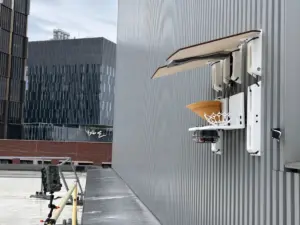
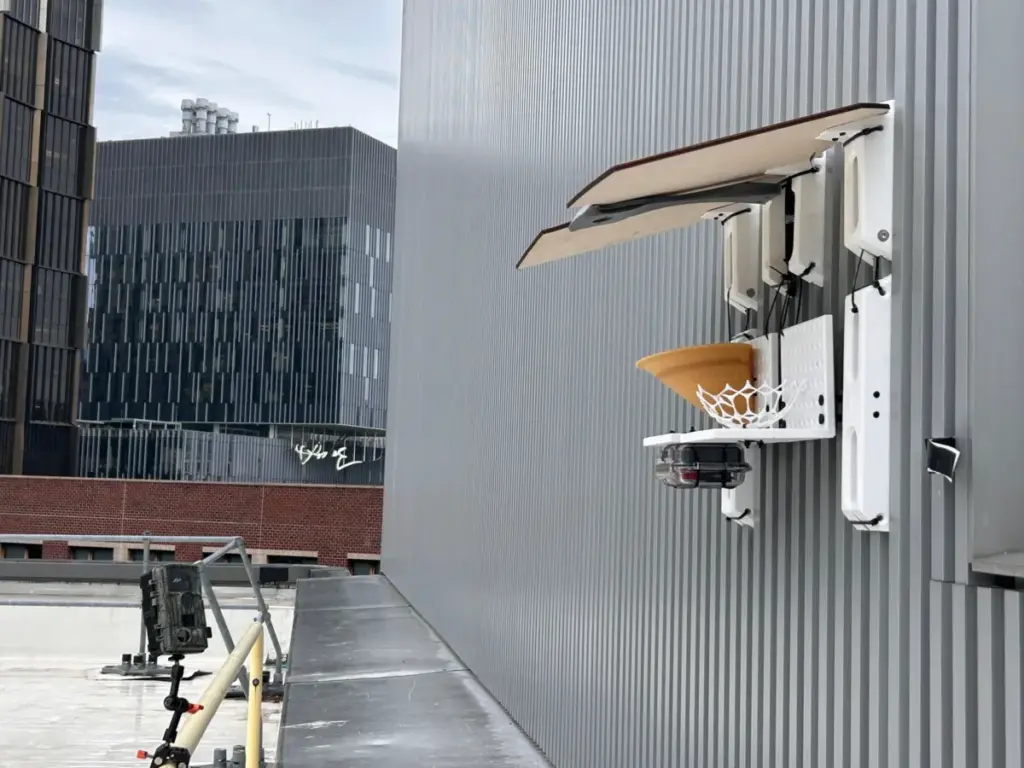
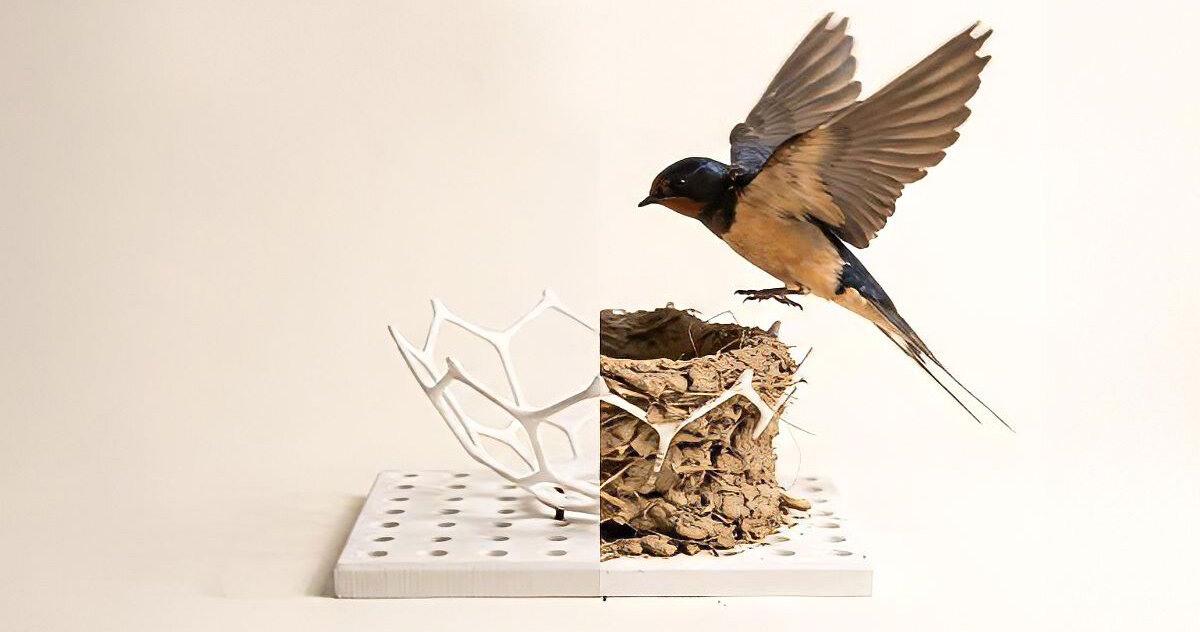
This collaborative approach to design is also taking physical shape through experimental research labs. The MIT-LUMA Lab project Bird+House, developed by Hiroshi Ishii, Lucy Li, and Hye Jun Youn in collaboration with the Cornell Lab of Ornithology, addresses the declining availability of traditional nesting sites for barn swallows, whose historical habitats in barns and agricultural outbuildings are rapidly disappearing.
To combat this habitat loss, the research team began by 3D-scanning existing barn swallow nests and analyzing their exact dimensions before printing open structural scaffolds from locally sourced biomaterials. Crucially, the team discovered through observation that barn swallows routinely reject artificial birdhouses that arrive fully completed by human hands. To overcome this, Bird+House provides only an incomplete framework, leaving the final stage of construction entirely to the bird. The swallow chooses how the structure is finished by adapting the scaffold and adding its own mud, straw, and organic material.
This deliberate restraint shifts the traditional dynamic between human and feathered builders. Instead of a manufactured object awaiting passive occupation, the process of inhabitation becomes a continuation of construction. The human architect determines just enough structure to make coexistence possible, and the non-species inhabitant takes over to complete the vision.
The Nest as a Model for Posthuman Architecture
When viewed collectively, these developments suggest that the significance of the bird’s nest extends far beyond its physical form or material composition. From urban coots utilizing decades of plastic waste to magpies turning defensive security hardware into fortifications, and from Studio Gang’s biomimetic investigations to the open-ended 3D-printed scaffolds of the MIT-LUMA Lab, the boundaries between human and animal design are increasingly porous.
True posthuman architecture, as demonstrated through these feathered builders, has very little to do with simply mimicking organic curves or borrowing the visual language of nature. Its more radical implication concerns authorship. Buildings exist within ecosystems already occupied, manipulated, and continually altered by other organisms—whether human architects choose to acknowledge those relationships or leave them out of their blueprints. The birds tearing down anti-nesting spikes and weaving them into protective homes make that shared reality impossible to ignore, reminding us that the built environment is a collaborative, cross-species endeavor.