The global art market cycle spanning late 2025 and early 2026 has revealed a striking dichotomy in collector behavior. While the secondary market for blue-chip works continues to serve as a bellwether for institutional strength, consistently delivering record-breaking headlines that grab the attention of the global press, a more nuanced shift is occurring beneath the surface. Mid-market collectors, often deterred by the unpredictable bidding wars and premium-heavy environment of major auction houses, are increasingly pivoting toward the primary market. This migration represents a strategic search for accessible, vetted entry points into high-pedigree artistic movements, allowing collectors to bypass the frenetic volatility of public auctions in favor of the stability and long-term relationships fostered by gallery programs.
The current landscape, characterized by robust demand for foundational postwar movements—specifically South Asian Modernism and European Informalism—suggests that collectors are prioritizing historical weight over speculative fads. However, the escalation of prices at auction often leaves both seasoned advisors and emerging collectors struggling to find viable channels through which to acquire work that is not only historically aligned with these movements but also reasonably priced. Bridging the gap between the high-decibel "signals" emitted by the auction circuit and the quiet, controlled environment of retail gallery availability is no longer just a preference; it has become a necessary strategic advantage for those looking to build a collection with enduring institutional rigor.
The Rise of South Asian Modernism
The secondary market for South Asian Modernism has reached historic benchmarks, fueled by a series of high-profile auction results that have fundamentally altered the perception of the movement’s value. The momentum is undeniable, anchored by the iconic status of artists associated with the Bombay Progressive Artists’ Group. Among them, Francis Newton Souza has emerged as a powerhouse of the current cycle. In late September 2025, Souza shattered previous estimates when his 1962 landscape, Houses in Hampstead, realized an astonishing $7.5 million at Sotheby’s London. This was followed closely by the sale of his 1955 drawing suite, Six Gentlemen of Our Times, which achieved $2.3 million at Saffronart, setting a new global record for a South Asian work on paper.
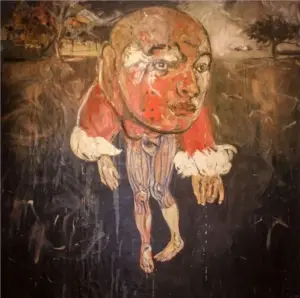
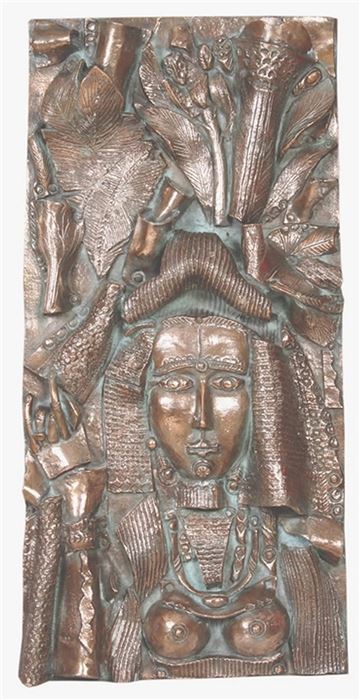
These results are more than just isolated data points; they represent a broadening of collector focus across the entire canon of modern Indian masters. As interest in these foundational figures intensifies, collectors are beginning to look toward artists who, while perhaps less globally "market-hyped" than Souza, possess deep roots in the same cultural and aesthetic soil. K. Laxma Goud is a prime example of this transition. An artist whose career has spanned decades of dedicated practice, Goud’s work—which includes intricate drawings, detailed etchings, and masterful bronze castings—is deeply rooted in the pastoral traditions and local storytelling of his native Andhra Pradesh.
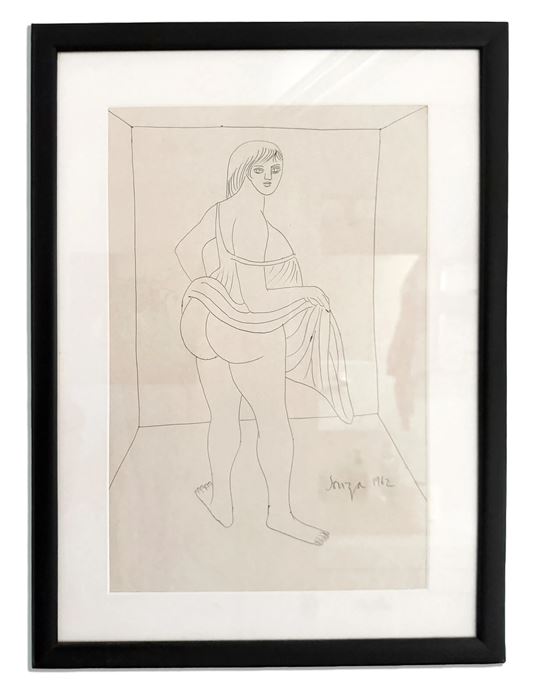
Goud’s ability to weave narrative-driven compositions with a tactile, almost raw material sensibility has placed his work in direct aesthetic conversation with the mid-century pioneers of the subcontinent. For collectors who find the current auction prices for the "top tier" of the Progressives prohibitive, galleries like Sanchit Art offer a sophisticated alternative. By focusing on the preservation and promotion of these modern masters, Sanchit Art provides a primary-market entryway that maintains institutional integrity. The accessibility is significant: current inventory for Goud’s works on paper begins at approximately $1,500, while his bronze sculptures, which showcase the height of his technical evolution, are available for roughly $18,000. This access allows collectors to enter a historically vital movement at a level that is both financially sustainable and aesthetically rewarding.
The Endurance of European Informalism
While the South Asian market captures the headlines, European Informalism remains an immovable pillar of postwar art history. The movement’s focus on the raw, gestural, and often violent application of paint continues to resonate with contemporary audiences and collectors alike. At the heart of this legacy is the Spanish master Antoni Tàpies. His influence is currently being underscored by a major retrospective at MACBA in Barcelona, which has served to re-contextualize his materiality-driven approach for a new generation of viewers.
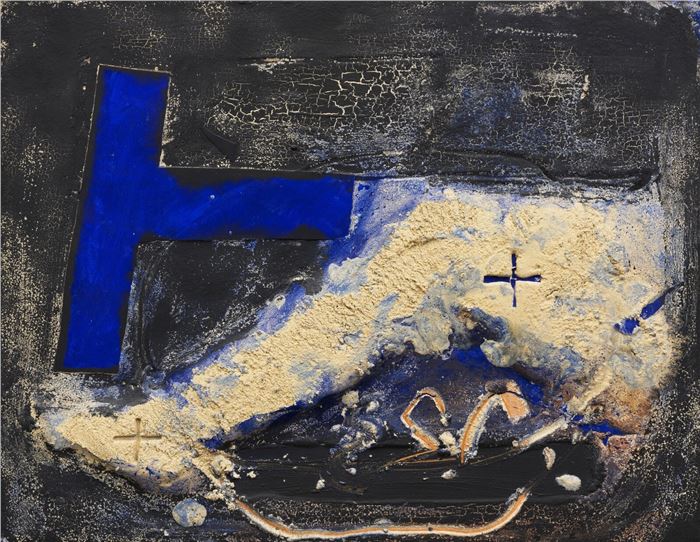
Tàpies’s market performance is robust, anchored by his record sale of Gran ocra amb incisions (1961), which achieved $2.8 million at auction. Since 1998, Tàpies has recorded a staggering $69.4 million in cumulative turnover, a testament to his sustained institutional footprint in collections ranging from the Guggenheim Bilbao to major museums across the globe. This hunger for "gesture-first" abstraction has not waned; rather, it has created a desire for contemporary artists who can carry that process-driven tradition into the 21st century.
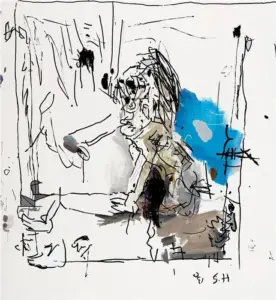
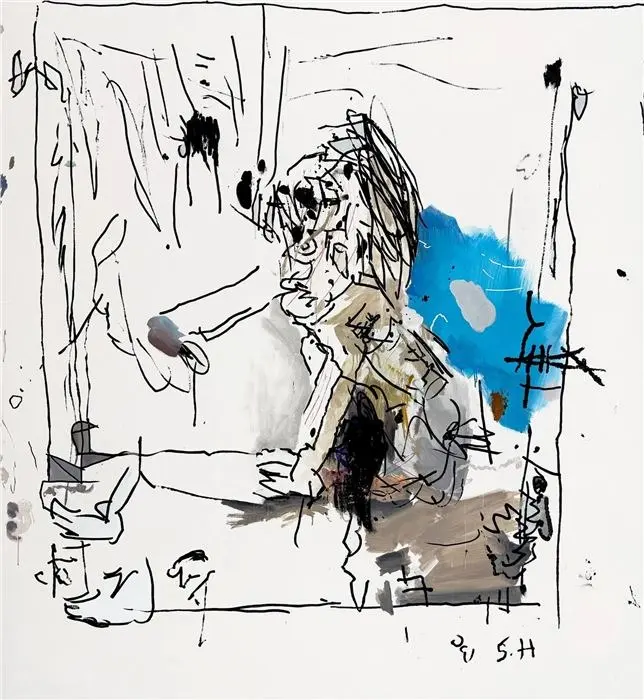
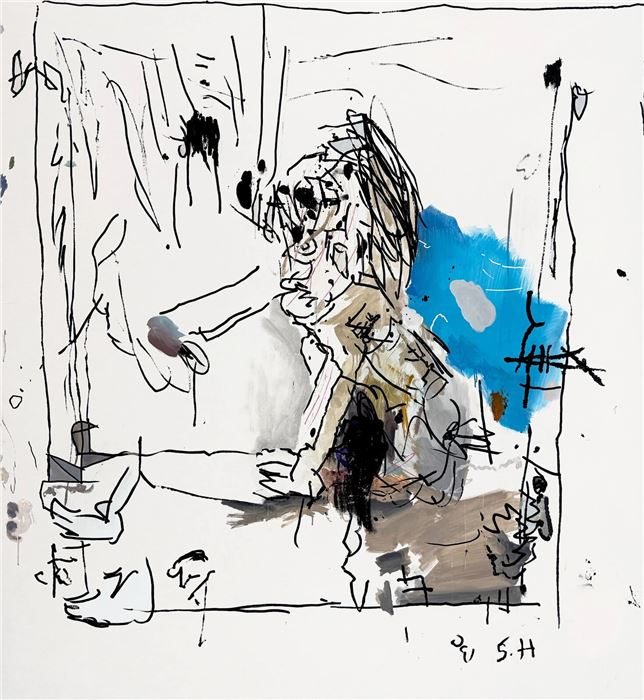
Secundino Hernández stands out as a clear successor to this lineage. A Madrid-trained painter whose work has gained international recognition across art hubs like Berlin and New York, Hernández utilizes a process of intense layering, physical abrasion, and the visible trace of the painterly act to create surfaces that feel both ancient and entirely contemporary. His practice explores the tension between linear drafting and explosive color, creating a generational bridge back to the material heritage defined by Tàpies. Through representation at Galeria Jordi Pascual, Hernández offers a primary-market alternative for collectors who value the physical labor of painting. With works currently ranging from $12,000 to $60,000, collectors have a rare opportunity to acquire high-caliber contemporary art that is deeply informed by the postwar masters who first redefined the possibilities of the canvas.
Navigating Volatility in the Editions Market
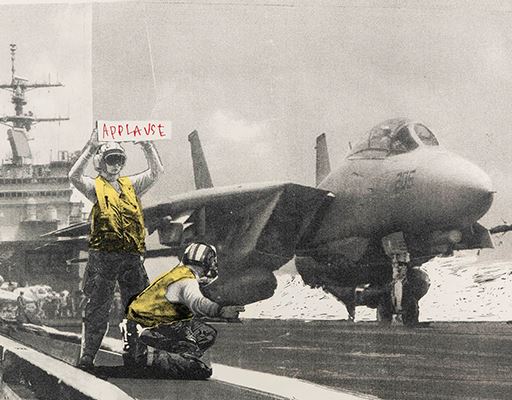
If South Asian Modernism and European Informalism represent the "steady" side of the current market, the realm of street art and limited editions represents the "volatility" sector. The print market is notorious for sharp, short-term momentum signals, and the spring of 2026 was no exception. Sotheby’s March 2026 Prints & Multiples sale served as a case study in market unpredictability. The screenprint Applause by Banksy realized £96,000 (roughly $127,885), a figure that sat three to four times higher than its historical trading range of £20,000 to £30,000. Similarly, a Girl With Balloon screenprint reached £115,200, well above its typical valuation of £50,000 to £65,000.
While these results suggest a feverish collector appetite for iconographic street-art editions, market analysts are quick to caution that these figures are likely "momentum signals" rather than confirmed, long-term revaluations. For a collector, attempting to navigate such public sales during a peak of volatility is fraught with risk. The premiums involved, combined with the uncertainty of whether these prices will hold, can turn a potential investment into a liability.
In this specific segment of the market, the role of the gallery becomes paramount. Institutions such as Andipa—a gallery that has been a long-established authenticator of Banksy prints—provide a necessary buffer against the chaos of the auction room. By working directly with an established partner, collectors can secure works with bulletproof provenance and expert verification, avoiding the risks inherent in anonymous, high-pressure bidding. With inventory that spans a wide price spectrum—starting at roughly $15,000 and reaching upwards of £500,000 depending on the rarity, signing, and historical context of the edition—Andipa provides a transparent, stable, and highly vetted pathway for acquiring significant works.
Ultimately, the structural connection between secondary market momentum and primary gallery availability is the most essential tool for the modern collector. Whether one is drawn to the pastoral modernism of K. Laxma Goud, the raw, gestural abstraction of Secundino Hernández, or the iconic, authenticated print editions of Banksy, the strategy remains the same: leverage the data provided by the auction houses to understand the market, but look to the galleries to make the acquisition. By engaging directly with representing partner galleries through platforms like MutualArt, collectors can secure the pricing, provenance, and long-term value required to build a truly rigorous and enduring contemporary collection. The art world remains a space of constant change, but for those who know how to bridge the gap between the auction floor and the gallery wall, the opportunities for meaningful acquisition are as strong as they have ever been.