As nationwide protests continue to loom across France, with the next major action planned for Saturday, October 31, at least one critical social grievance has finally been addressed at the country’s premier cultural institution. On Thursday, representatives from the Louvre in Paris signed a historic agreement with a broad coalition of museum unions that had threatened to strike for months, bringing a temporary halt to a bitter labor dispute that had severely disrupted operations at the world-renowned museum, according to reports from Le Figaro and AFP.
“The signature of the agreement amounts to a positive step for the Louvre,” a museum representative told AFP, acknowledging the breakthrough after a prolonged period of intense negotiations and internal friction.
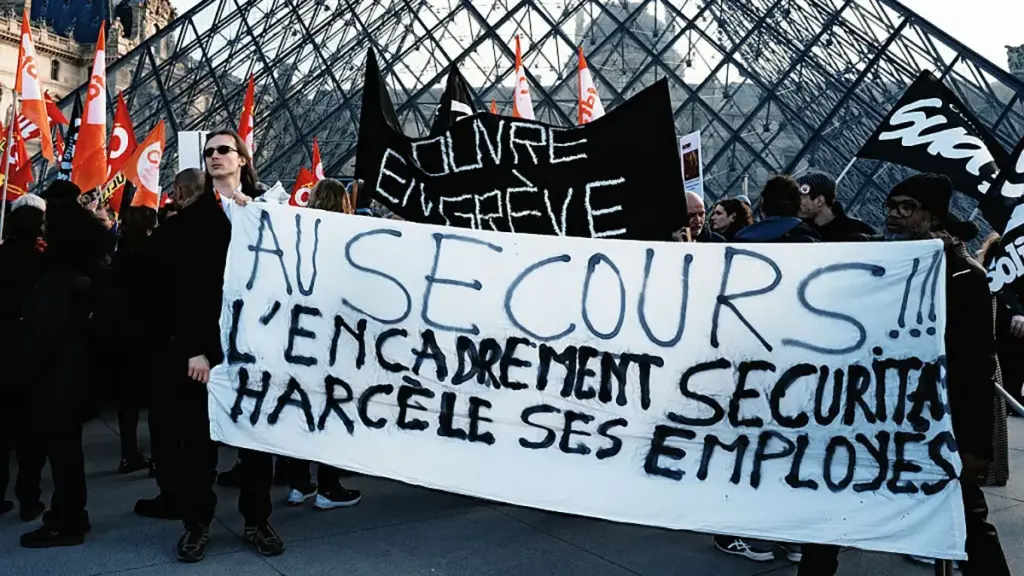
The breakthrough comes a little over a year after a stunning daytime robbery at the Louvre emptied the institution of more than $100 million worth of its historic crown jewels, an event that sent shockwaves through the global art community and triggered intense scrutiny over the museum’s operational security. In the wake of that unprecedented heist, a broad coalition of French unions went on strike, demanding urgent improvements to worsening working conditions, severely depleted personnel levels, and what they characterized as mismanaged museum renovations. Until this week’s deal, union leaders had pledged to continue protesting indefinitely.
The resulting strikes, which originally began in December, forced the museum to close its doors entirely to the public for a total of four days. Additionally, partial closures were implemented for another four days as staff walked off the job or staged coordinated demonstrations. Throughout the standoff, unions maintained an official strike notice to continue protests as needed, signaling to museum administration that they were not backing down and possessed the capacity to block access to the institution at any given moment. All told, this turbulent dispute with workers stands as one of the longest and most contentious face-offs of its kind in the modern history of the Louvre, testing the patience of international tourists, art historians, and cultural authorities alike.
As part of the newly minted agreement, the Louvre has formally pledged to hire 50 new security personnel in 2027, with plans to scale up to approximately 100 new hires in total by the year 2028, according to Le Quotidien de l’Art and other French media outlets. Furthermore, the museum administration has agreed to implement targeted pay improvements for specific categories of workers. This includes a notable €50, equivalent to roughly $56, monthly raise specifically designated for security staff, addressing long-standing grievances regarding inadequate compensation in high-risk, high-responsibility roles.
The inclusion of additional security personnel has been heralded by labor advocates as a vital measure for safeguarding both the staff and the priceless cultural artifacts housed within the sprawling Parisian palace. Christian Galani, a representative of the French union CGT, emphasized the strategic importance of these staffing increases in statements provided to AFP.
“The more of us there are carrying out our surveillance duties, the more we will deter criminals from targeting our institution,” Galani told AFP, highlighting the direct link between adequate staffing levels and the physical security of the museum’s vast collections.
The resolution of the labor dispute arrives at a critical juncture for the Louvre, which is currently in the throes of a massive fundraising campaign for an ambitious renovation project estimated to cost over one billion dollars. This comprehensive overhaul is slated to encompass critical security upgrades, the preservation of an aging and deteriorating infrastructure that has suffered from decades of wear and tear, and a separate, newly designed entry and gallery space specifically dedicated to housing Leonardo da Vinci’s masterpiece, the Mona Lisa.
Despite the universally acknowledged need for modernization, significant disagreements have persisted among stakeholders regarding the precise cost, overarching scope, and execution of these major renovations. Union representatives have consistently maintained that employees, who bear the daily burden of the museum’s operational realities, deserve a meaningful voice in how these monumental construction projects are handled.
Expressing cautious optimism tempered by lingering questions, Alexis Fritche, leader of the CFDT-Culture union, outlined the union’s immediate priorities moving forward in an interview with Le Quotidien de l’Art.
“We will quickly ask for a meeting on the management and prioritization of the construction works,” Fritche told the publication. “We still have very little visibility on the safety and security plan announced in November 2025.”
The internal turmoil at the Louvre also led to profound leadership changes at the highest levels of the institution. Following the high-profile crown jewel theft a year ago, Louvre president Laurence des Cars stepped down from her position amid intense staff criticism. Critics within the union ranks had accused her of employing a top-down management style and ignoring repeated warnings regarding the building’s structural disrepair and chronic staff shortages, while simultaneously allocating funds toward projects that workers viewed as lavish or misdirected.
The subsequent arrival of the museum’s newly appointed president, Christophe Leribault, appears to have shifted the institutional dynamic, creating an atmosphere more conducive to dialogue and helping to calm many of the deep-seated tensions that had defined the previous year of labor relations. With the ink now dry on the new agreement, both administration and union representatives hope the accord will establish a stable foundation for the Louvre as it prepares to navigate its billion-dollar transformation and the myriad challenges ahead.