Over the past few months, several artist friends who have received invitations to participate in the upcoming documenta 16 have reached out for guidance. They find themselves caught in a difficult dilemma, torn between whether they should accept the invitation outright, refuse it early on, or accept for now and withdraw at a later, more strategic stage. As two artists who participated in documenta 15, we deeply understand this complex predicament. An invitation to exhibit at documenta is historically not something one receives thoughtlessly; it remains a monumental milestone in the contemporary art world. However, in the current climate, it has become increasingly difficult to turn down, yet simultaneously fraught with peril to accept.
A mere few years ago, exhibiting at documenta was widely considered a defining lifetime achievement for any serious contemporary artist. But that foundational assumption has been thoroughly shattered. This shift follows the multi-faceted attacks on Palestinian artists and works of pro-Palestinian art during documenta 15, coupled with the profound collapse of the German state’s moral standing through its staunch support for the war in Gaza and its adherence to Israel as its Staatsräson, or "reason of state." Today, there is virtually no meaningful institutional distance between the German state and its arts infrastructure. Almost every museum, Kunsthalle, and cultural festival in the country—documenta included—is heavily funded by federal, regional, or municipal governments, and is consequently steered directly by the political conditions those state funders establish. As a result, contemporary artists must now seriously weigh whether participating in documenta 16 will inflict lasting damage on their professional careers, public reputations, and personal well-being.
Our peers frequently turn to us for advice because of the harrowing ordeal that the two of us, alongside many other participants, endured during documenta 15. During that exhibition, we were subjected to severe, relentless, and vicious attacks orchestrated by the German mainstream media, political activists, politicians, and the broader cultural establishment. These campaigns were built upon unfounded, fabricated, and deeply destructive accusations of antisemitism. Ultimately, this climate of hostility escalated into physical attacks, harassment, and the vandalism of our exhibition venues, as well as those belonging to fellow artists whose work or political expression displeased the establishment.
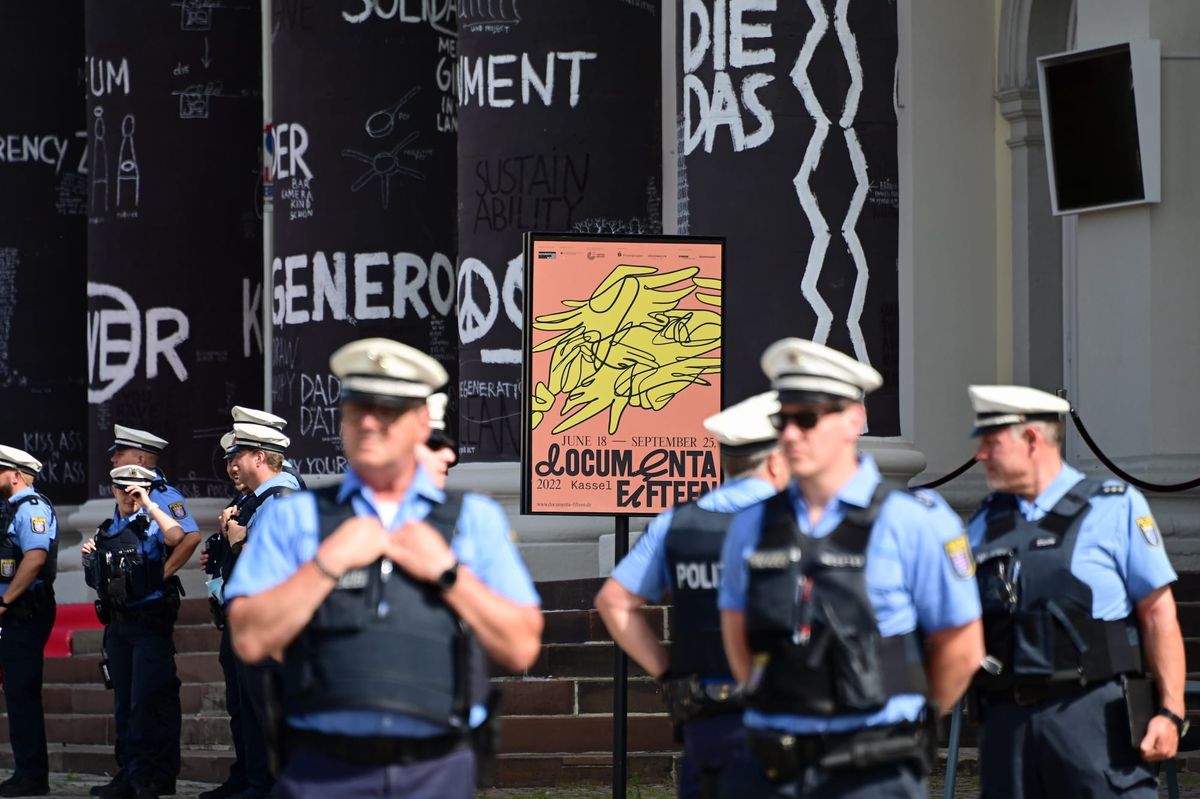
The personal fallout from this experience left deep, enduring scars on our lives and professional trajectories. In the years since, we have faced systemic hurdles when applying for jobs, institutional funding, or future exhibition opportunities. The psychological stress, anxiety, and eventual burnout we had to endure as a direct consequence of these coordinated attacks were enormous. The sheer amount of emotional energy required to survive the onslaught was completely drained from our creative work and personal lives—a toll that simply cannot be overstated. It is precisely because of this lingering trauma that we have chosen to remain anonymous in publishing this piece: we must protect ourselves from any potential return to the acute stress and public fear that we had to navigate, and which still quietly haunts us nearly five years later.
To those trusted friends who have reached out to us, and to the broader community of artists currently wondering what path to take, we will not offer a definitive instruction on whether or not they should participate in documenta 16. Ultimately, this remains a deeply personal decision regarding what an artist wishes to lend their voice to—personally, politically, and creatively. However, what we can do is share the critical insights we wish we had known beforehand, and outline the vital realities that every invited artist must carefully consider before making their final choice.
Since the beginning of the ongoing violence and humanitarian catastrophe in Palestine, the broader German cultural scene has found itself plunged into a profound, systemic crisis. The sector has largely lost its international credibility, laying bare the uncomfortable truth of how closely it functions as the soft hand of state power. Mainstream German arts institutions have demonstrated a striking lack of independence from state politics, proving utterly incapable of standing up against official government positions due to the rigid mechanics of how arts and culture are financed across the country.
This institutional compliance is deeply rooted in legislative maneuvers over recent years. In 2019, the German Bundestag passed a prominent non-binding resolution calling for federal public funding to be categorically withheld from any organization, group, or project that supported the Boycott, Divestment, Sanctions (BDS) movement. Although formally non-binding, this resolution was swiftly weaponized as a powerful political tool designed to suppress any institutional support, sympathy, or platform for the Palestinian cause.

The pressure intensified further with another resolution passed in November 2024, which went a step further by explicitly tying public cultural funding to the International Holocaust Remembrance Alliance’s highly controversial working definition of antisemitism—a framework that documenta itself officially adopted in early 2025. Following these political directives, the vast majority of Germany’s major cultural institutions, with only a handful of independent exceptions, bent to the political will with remarkably little resistance.
Because documenta fundamentally relies on a steady stream of state and federal funding, it shares the same structural vulnerabilities and, much like the rest of the German arts establishment, has shown a profound lack of institutional spine. Today, German cultural institutions are struggling desperately to emerge from this credibility crisis and restore their international reputations without ever genuinely revising their political positions or finding the courage to stand up to state pressure. At this crucial juncture, and under these deeply compromised conditions, documenta as an institution will almost certainly benefit far more from an artist’s participation than the artist will ever benefit from lending their name to the exhibition.