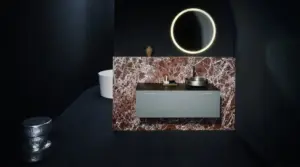
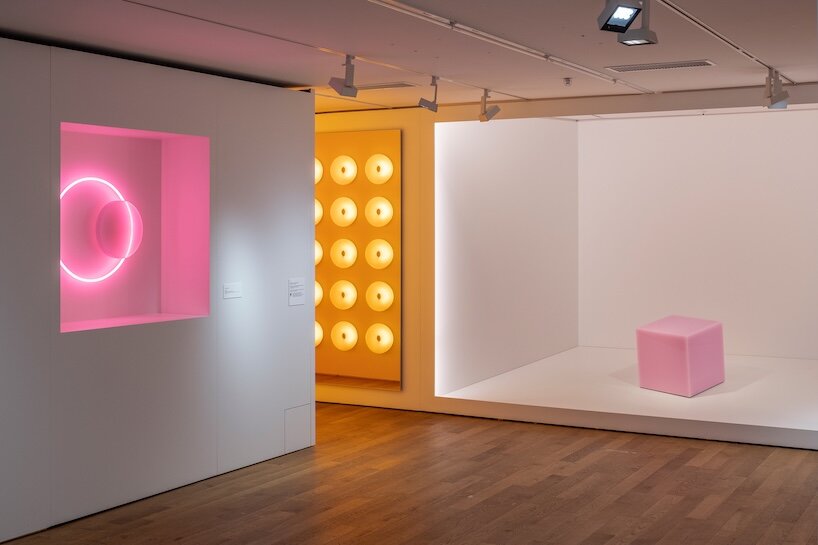
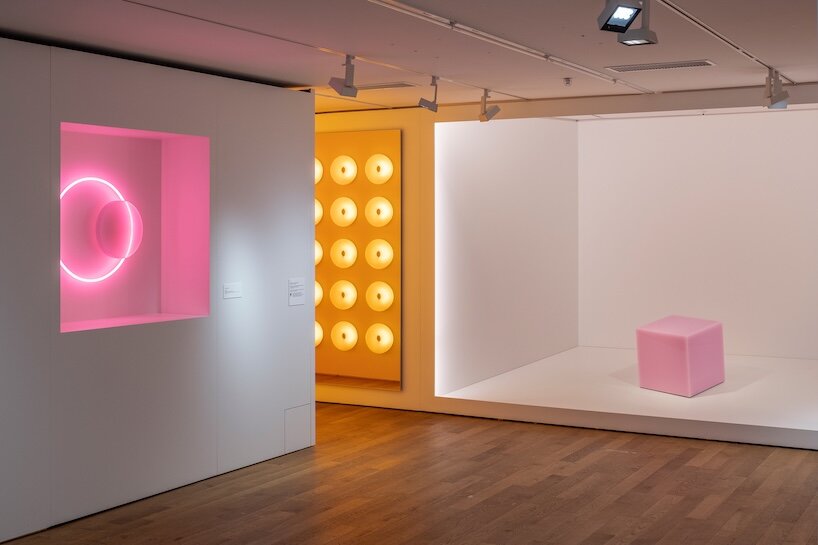
Renowned Dutch designer Sabine Marcelis is taking over the Museum für Gestaltung Zürich with Light and Color, a landmark exhibition that marks her very first institutional museum showcase. Running from October 30, 2026, through April 4, 2027, at the museum’s prominent Toni-Areal venue, the exhibition brings together a comprehensive selection of key works from recent years alongside ambitious, large-scale installations developed specifically for the gallery spaces. Spanning furniture, lighting, mirrors, and sweeping spatial interventions, the showcase explores how materials such as glass, resin, and stone can capture, bend, and utterly transform light, endowing otherwise heavy, substantial objects with an unexpectedly elusive, ethereal presence.
The exhibition carefully curates a journey that moves fluidly between individual design objects and all-encompassing environments that completely surround the visitor. To ground the artistic experience, the gallery also features material samples and meticulous studio studies, offering audiences a rare, behind-the-scenes look at the rigorous technical and optical experiments that precede Marcelis’s finished pieces.
Rather than adopting the format of a traditional retrospective, the designer has sought to construct a dynamic sequence of spatial experiences. The overarching goal is to demonstrate precisely how light and color behave when applied across vastly different scales and material densities.
A deliberately restrained exhibition design provides these optical effects with the necessary breathing room to fully unfold. By keeping structural distractions to a minimum, shifts in transparency, surface reflection, and chromatic graduation are allowed to guide the visitor’s journey through the rooms. Some works are presented individually, enabling viewers to closely inspect their distinct material and optical properties, while others are arranged as expansive, room-sized installations where light and color saturate the entire architectural volume.
Mathmos Lava Columns Multiply in a Mirrored Landscape
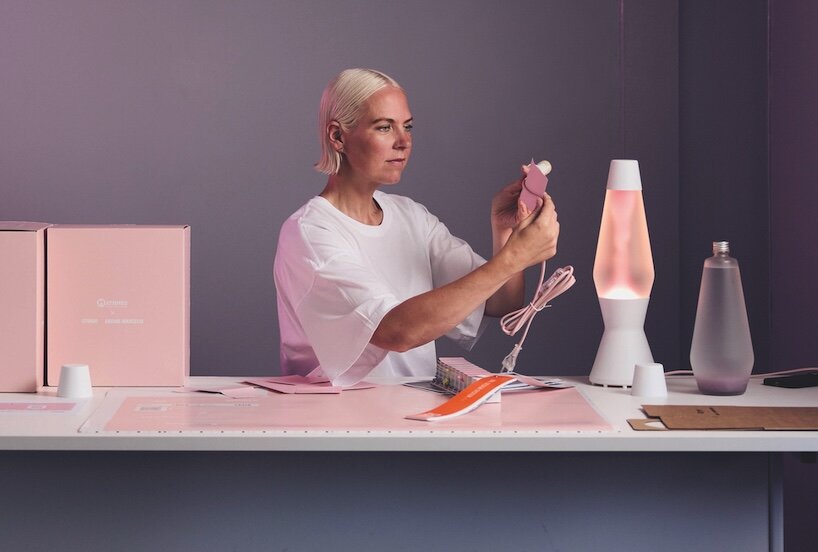
One of the exhibition’s most striking centerpieces stems from Marcelis’s ongoing, highly anticipated collaboration with iconic British manufacturer Mathmos. Titled Mathmos Lava Columns, the project takes the familiar form of the classic lava lamp and scales it up dramatically, giving the historic invention ample room to perform in a new architectural context.
The installation features eight monumental columns, each standing an impressive 2.56 meters tall, positioned within a custom-built mirrored environment designed exclusively for the exhibition. The strategic placement of the mirrors multiplies the physical columns, extending the installation into an optical illusion of an apparently infinite field of glowing light.
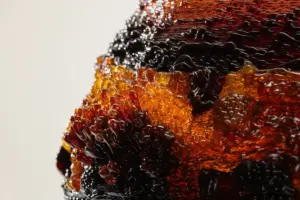
Within the frosted glass bottles of each column, pastel Bubblegum pink lava continuously forms, rises, slowly merges, and falls back down in a hypnotic rhythm. Clean white aluminum bases and caps frame the setup, keeping the surrounding structure visually quiet and understated so that the visitor’s attention remains entirely focused on the softly diffused, organic movement within.
For Marcelis, the project fulfills a long-held ambition. The concept of designing a giant lava lamp was the very first idea that crossed her mind during her initial introductory meeting with the Mathmos team.
The partnership is rooted in a deeply shared fascination with light, color, and translucency. The collaboration draws heavily upon the specialized manufacturing expertise housed at Mathmos’s historic factory in Poole, Dorset, where Marcelis traveled in person to review and approve the final prototypes.
The lava lamp holds a unique place in industrial design history as one of the few objects that successfully combines light, color, and translucency into a single entity. In many ways, it achieves the exact optical qualities that Marcelis constantly strives to evoke through her signature experiments with resin and glass, but with the added, dynamic dimension of time and fluid movement.
In Zurich, that internal movement breaks free from the confines of the object itself, spilling out into the surrounding gallery through the framing power of the mirrored walls. Furthermore, the distinctive Bubblegum color palette developed for the columns will soon cross over into a new, limited-edition Astro lamp launching in November, successfully translating the grand museum collaboration back into an accessible domestic scale.
IKEA’s VARMBLIXT Tunnel Meets Sunbeam Captured
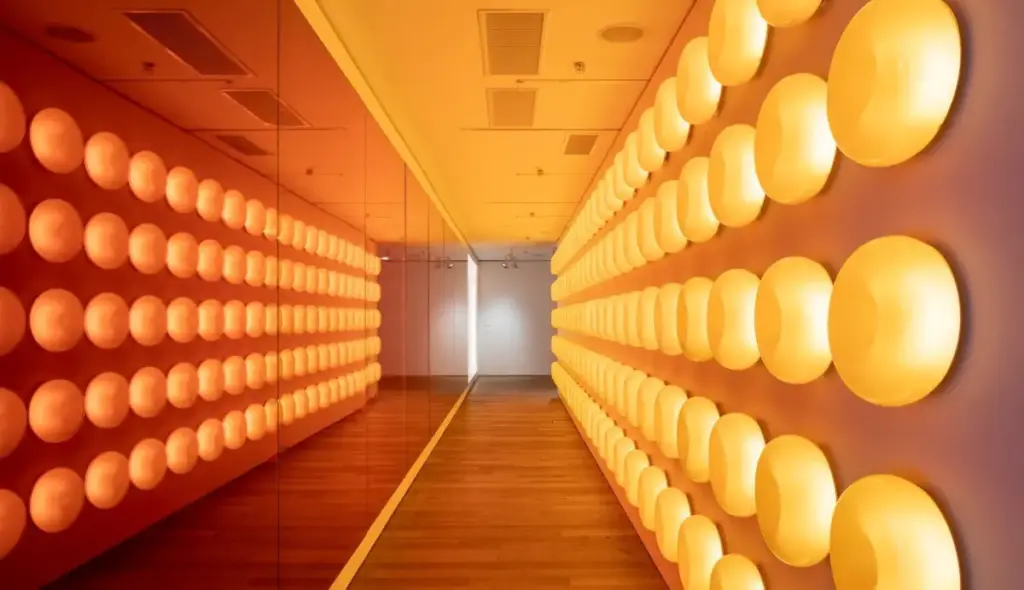
Elsewhere in the galleries, Marcelis cleverly repositions another widely recognized lighting design, transforming a familiar consumer product into a structural architectural element. Developed in collaboration with retail giant IKEA, the extensive VARMBLIXT collection comprises roughly twenty distinct objects, among which the circular, ring-shaped lamp has become an international design icon.
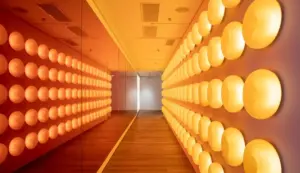
For the Zurich exhibition, 125 of these lamps are brought together alongside a sweeping gradient mirror wall to construct an eleven-meter-long, walk-through light tunnel. Through sheer repetition, a mass-produced consumer object is elevated into an immersive architectural environment equipped with its own unique spatial depth and visual rhythm. Much like the Mathmos lava columns, the mirrored surfaces actively manipulate and expand the perceived boundaries of the gallery, allowing a familiar commercial product to far exceed the physical limitations of its everyday domestic setting.
In a separate yet complementary gesture, Marcelis has joined forces with artist Boris Acket to create Sunbeam Captured, an installation that investigates the fleeting, delicate interaction between natural sunlight and moving water. Within the gallery space, mechanically generated waves ripple constantly across a thin layer of water, while a synchronized, moving light source traces the daily passage of the sun.
Vibrant colored reflections ripple across the room, amplified significantly by a large mirror that gradually shifts from deep blue to warm orange in a chromatic gradient directly inspired by the natural evolution of light’s color temperatures throughout the day.
Alongside the glowing walk-through tunnel and the towering lava columns, this collaborative installation places kinetic movement at the very heart of Marcelis’s material investigations. Visitors are continually confronted by objects whose visual appearance refuses to remain static, proving that the passage of time is just as integral to the exhibition’s material vocabulary as glass, color, or artificial light.