As the curtains closed on the 2026 editions of Frieze Seoul and Kiaf, the prevailing sentiment across the COEX convention center was one of quiet, disciplined confidence. Now in its fifth year, Frieze Seoul has firmly established itself as a critical anchor in the Asian art calendar, while Kiaf, celebrating its 25th anniversary, continues to demonstrate the enduring strength of the domestic collecting base. Together, these events have signaled a shift in the Korean art ecosystem: a transition from a speculative, high-growth market to a more mature, institutionally-backed, and domestically-driven landscape.
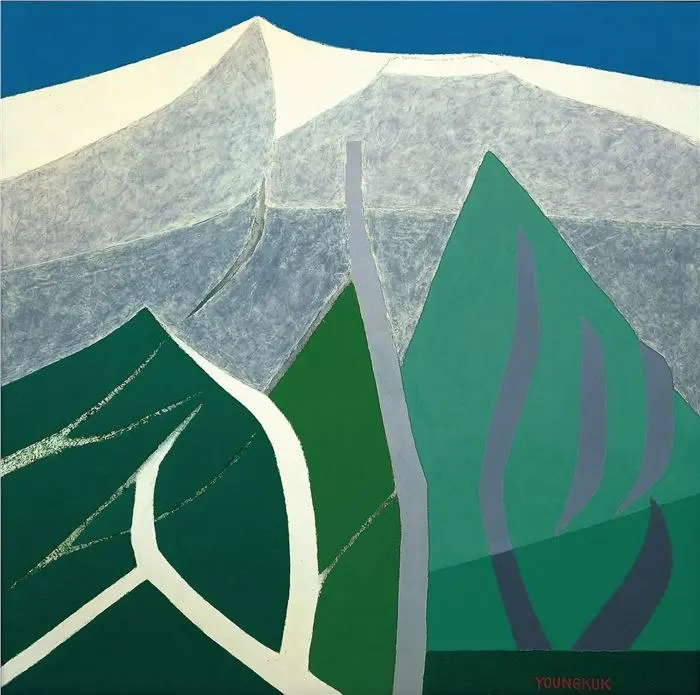
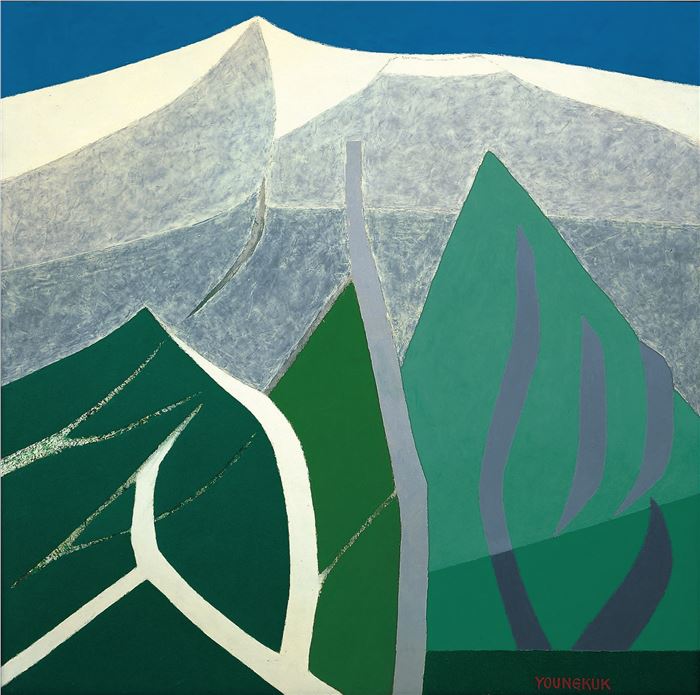
The sales data from early September suggests that Korean artists are increasingly commanding the attention of collectors at all price points. Perhaps the most striking example of this domestic ascent is the performance of Yoo Youngkuk (1916–2002). The pioneering abstract artist, currently the subject of a major retrospective at the Seoul Museum of Art (SeMA), saw his market reach new heights. Kukje Gallery reported the sale of a significant 1971 painting for between KRW 2.2 and 2.5 billion—roughly $1.6 to $1.8 million—marking the highest price achieved by a Korean artist at Frieze Seoul since the fair’s inception. Further underscoring this momentum, the gallery successfully placed a 1979 work by the artist at Kiaf for between KRW 600 and 720 million ($450,000 to $530,000), proving that the appetite for canonical Korean modernism remains insatiable.

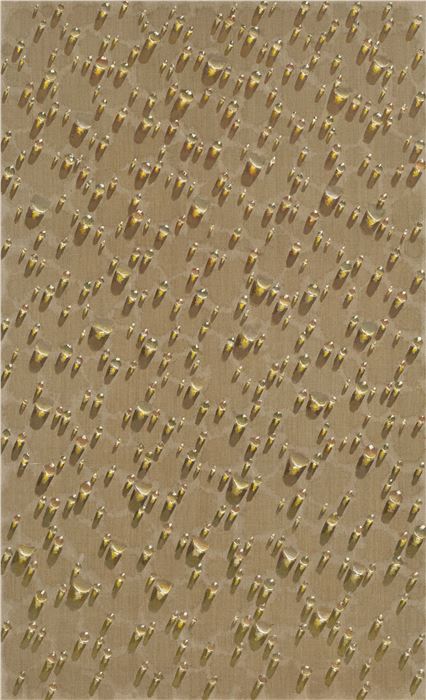
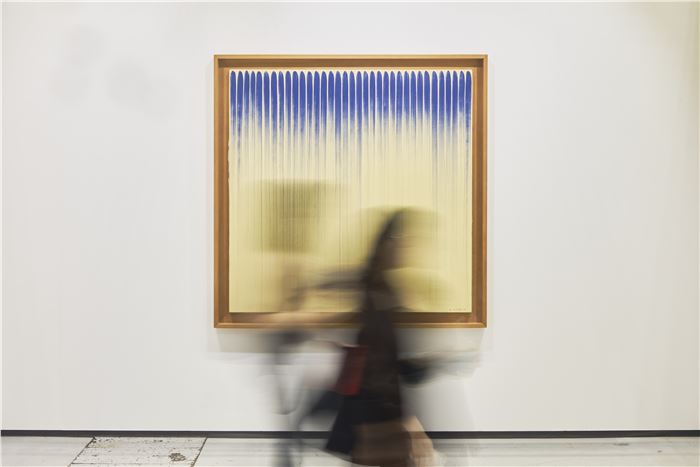
This trend extends to the beloved Dansaekhwa movement, which continues to provide a foundation for market stability. Gallery Hyundai saw sustained interest in the works of Kim Tschang-yeul, reporting the sale of five pieces ranging from $180,000 to $1.1 million. The gallery’s performance was mirrored by Almine Rech, which saw a Lee Ufan painting fetch between $1.25 and $1.5 million, highlighting the persistent global and local demand for the artist’s minimalist aesthetic.
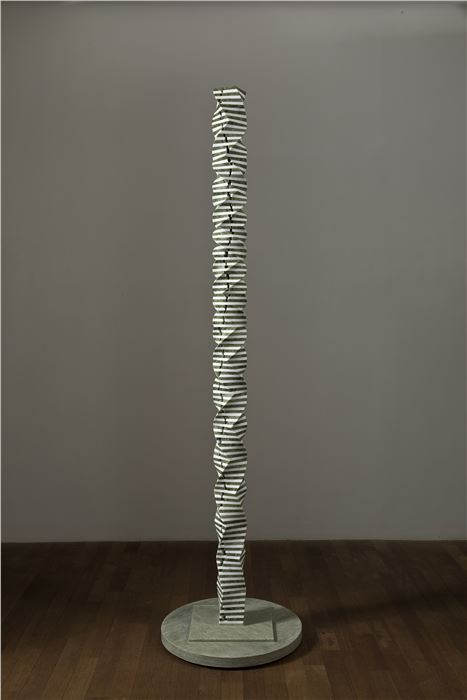
The mid-market segment also showed remarkable vibrancy. Leeahn Gallery reported the sale of an acrylic on canvas by Lee Kang-So for KRW 320 million ($235,000), a figure bolstered by the artist’s current high-profile exhibition at the Lotte Museum of Art. Meanwhile, Johyun Gallery saw strong movement in the works of Lee Bae, selling six bronze sculptures—priced between $40,000 and $140,000—alongside two charcoal works that commanded $75,000 and $125,000 respectively. This steady demand for established figures like Park Seo-Bo and Ha Chong-Hyun reinforces the perception that the Korean market is prioritizing blue-chip quality and artistic legacy over short-term trends.
Contemporary voices are also finding strong footing. BB&M reported a sell-out success for works by Lee Bul, with pieces priced between $195,000 and $290,000, while Jason Haam facilitated the placement of a work by the younger painter Moka Lee for $200,000. These results, taken as a whole, paint a picture of a market that is not merely relying on international imports but is actively cultivating its own domestic stars, successfully bridging the gap between national prestige and international investment.
While domestic artists were the clear protagonists of the week, international galleries continued to find success by catering to the sophisticated tastes of the Korean collector base. Hauser & Wirth, for instance, placed a $1.2 million painting by Rashid Johnson with a major Korean institution, a testament to the growing role of local museums as active market participants. The gallery also saw interest in Louise Bourgeois, with works ranging from $185,000 to $600,000. Other major international players saw similar results: Ropac sold a 2026 work by Adrian Ghenie for €1.1 million ($1.28 million) and an Antony Gormley cast-iron sculpture for £750,000 ($1 million). White Cube also reported a sale of a Gormley for £250,000 ($337,000), alongside a Gerhard Richter painting for €625,000 ($727,000).
The fair landscape also reflected shifting regional dynamics. While Japanese artists, spearheaded by the perennial popularity of Yayoi Kusama, maintained a strong presence, the representation of Chinese artists remained comparatively subdued. In contrast, the market is beginning to show a more inquisitive approach toward Southeast Asian talent, with artists such as Korakrit Arunanondchai, Gonkan, and Chelsea Theodossis gaining visibility.
A Distinctive and Evolving Art Fair Identity
The unique character of Seoul Art Week lies in the synergy between its two main pillars. Frieze Seoul Director Patrick Lee has consistently highlighted that the city’s art scene possesses an inherent, irreplicable momentum. "Frieze Seoul is increasingly international, but its character comes from Korea," Lee noted, identifying this as the key to the fair’s long-term sustainability. The complementary nature of the two fairs—with Frieze hosting roughly two-thirds international exhibitors and Kiaf maintaining a 70% domestic roster—has created a balanced environment that serves both the global art elite and the deeply rooted Korean collector base.
This year, the distinction between the two fairs felt more fluid, as both events leaned into the "Koreanness" of their programming. This was evidenced by the high-profile presentations at Kiaf, such as Gana Art’s focused, mono-artist booth dedicated to the sculpture and painting of Park Eun Sun. At Frieze, the growing influence of Korean curators—including Seolhui Lee in the Focus section, Wonseok Koh in Spotlight, and Hyeyoung Cho in Material Practice—brought a more curated, intellectual depth to the fair’s commercial offerings. Their presence was complemented by the attendance of influential Korean curators working globally, such as Doryun Chong at M+, Clara Kim at MOCA, and Sook-Kyung Lee at the Whitworth, all of whom underscored the growing global authority of the Korean art intelligentsia.
Attendance figures provided a picture of stability, with Frieze Seoul drawing 70,000 visitors and Kiaf attracting over 80,000 over its extended run. While feedback regarding the volume of international buyers was mixed, the overall energy suggested a market that has found a steady equilibrium. Outside the main fair halls, the ecosystem continued to experiment. Design Miami Seoul, now in its second year, remained on a smaller, more intimate scale. With only six international galleries, it functioned more as a laboratory for design-focused collection, though the move to the DDP venue next year suggests an intention to integrate design more fully into the broader cultural conversation. Similarly, the arrival of the "Pavilion" format offered a lower-cost, exhibition-style alternative to the traditional booth, providing a necessary layer of diversity to the week, even if its long-term viability remains a point of observation for industry watchers.
A Supportive Economic and Institutional Context
The success of Seoul Art Week is inextricably linked to the broader institutional health of the city. Museum attendance in South Korea has reached historic peaks, with the National Museum of Korea now ranking among the top three most-visited museums globally, trailing only the Louvre and the Vatican Museums. This public engagement is feeding directly into the market; the record-breaking attendance for the Damien Hirst exhibition at the MMCA—which welcomed over 540,000 visitors—directly correlates to the Gagosian gallery’s decision to dedicate a solo booth to the artist at Frieze.
This relationship between institutional validation and market demand is further exemplified by the career of Do Ho Suh. Following a major presentation at the Tate Modern in 2025, his ongoing show at the MMCA has reinforced his position as a blue-chip staple, illustrating how national institutions are successfully cultivating the next generation of global art icons.
.Jpeg)
Economically, South Korea remains a resilient environment. Despite ongoing geopolitical headwinds, the country’s semiconductor-led export boom has kept economic growth estimates in the 3.0–3.5% range. This macro-economic strength provides a buffer for the art market, which, while cautious, has avoided the pitfalls of speculative overheating that have plagued other global centers. Instead, the focus has remained on established, high-quality assets.
While the South Korean art market, with a 2025 turnover of KRW 638.2 billion, remains small compared to the scale of the national economy—and even smaller when compared to the intensive, high-velocity market of Hong Kong—it possesses significant, untapped potential. With the government moving toward improved data collection and more transparent registration processes, the market is poised for more structured growth. When compared to the economic impact of the nation’s K-pop industry, which generates nearly 0.3% of the country’s GDP, the art market’s current size reveals a vast runway for expansion. As Seoul continues to internationalize its cultural infrastructure, the convergence of museum prestige, robust economic fundamentals, and a maturing collector base suggests that the city’s rise as an art world hub is far from a temporary phenomenon.