Next year, the art world will turn its attention to the vibrant, luminous landscapes of the late abstract painter Wolf Kahn as a coalition of seven museums across the United States and Germany prepares to launch a synchronized series of exhibitions honoring what would have been his 100th birthday.
The sweeping centennial program, spanning throughout 2027, has been organized in collaboration with the Wolf Kahn Foundation. The milestone follows closely on the heels of the foundation’s recent expansion, which included the opening of a permanent home for its extensive archives in New York City this past summer. The multi-institution tribute aims to reintroduce audiences to Kahn’s distinct visual vocabulary, bringing together a carefully curated selection of his celebrated masterpieces alongside lesser-known works and pieces that have never before been exhibited publicly.
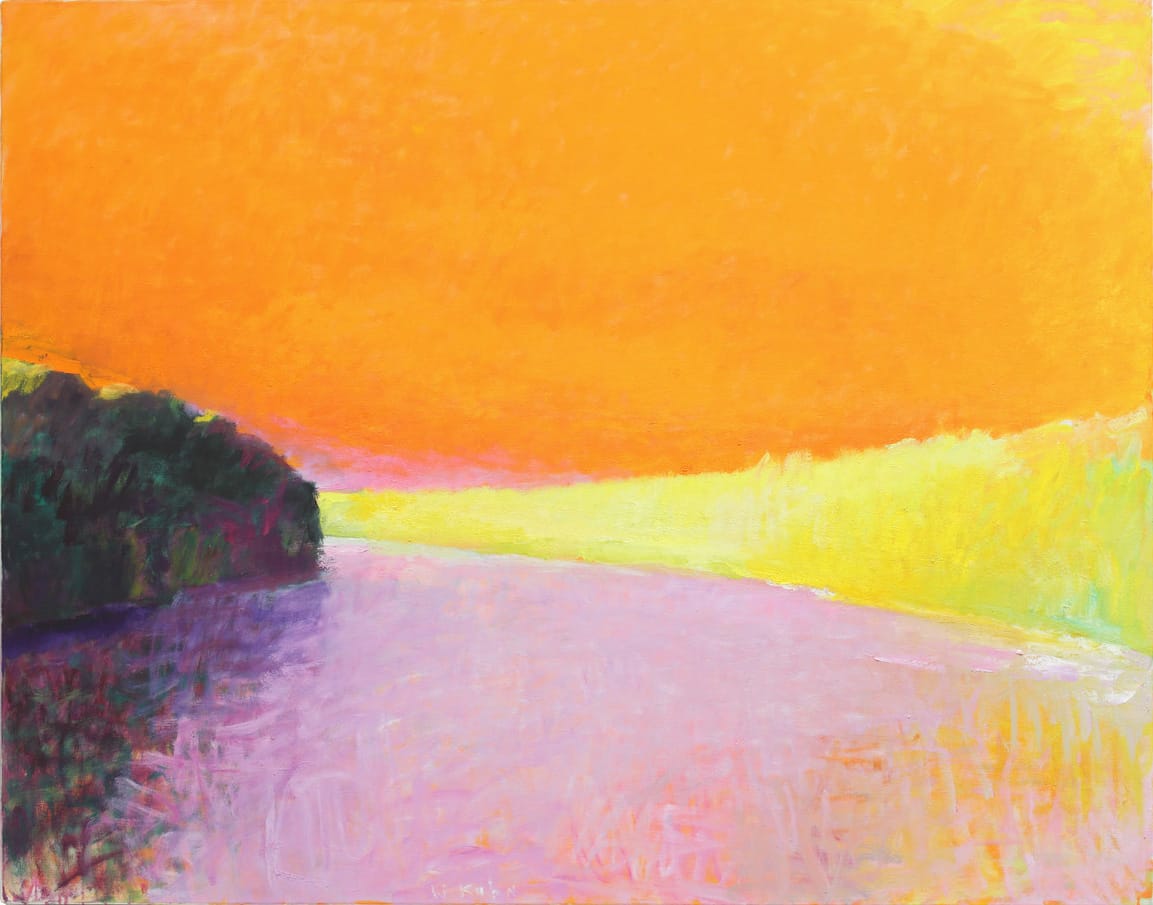
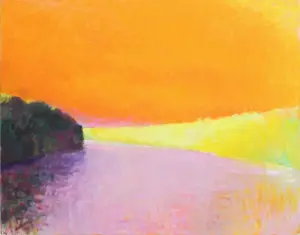
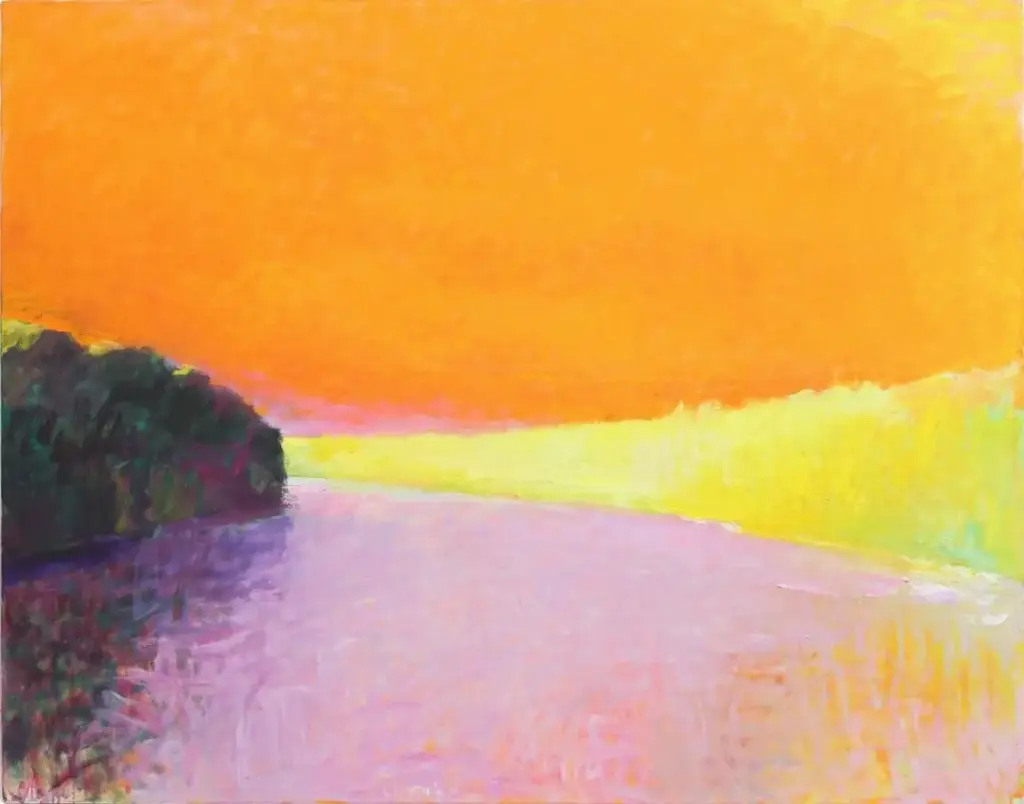
Kahn, who passed away in 2020 at the age of 93, carved out a singular space in 20th- and 21st-century American art by bridging the gap between representational imagery and pure abstraction. His signature style was defined by a fearless approach to color, utilizing saturated hues, brilliant contrasts, and diffused light to capture the pastoral environments that surrounded him. Rather than adhering strictly to the literal palette of the natural world, Kahn famously employed arbitrary and exaggerated colors—fiery oranges, electric pinks, deep purples, and glowing yellows—to evoke the emotional resonance of a landscape. The resulting canvases possess a radiant, internal glow that has made them instantly recognizable to collectors, curators, and art enthusiasts alike.
The upcoming centennial exhibitions will take place in venues intricately tied to the geographies that defined Kahn’s life, heritage, and artistic evolution. Born in Stuttgart, Germany, in 1927 into a Jewish family, Kahn’s early life was upended by the rise of the Nazi regime. In 1940, at the age of 13, he fled Europe as a refugee, securing safety in the United States. He eventually settled in New York City, a metropolis that would serve as his foundational home base and a wellspring of creative energy throughout his decades-long career.
Before establishing his mature style, Kahn immersed himself in the crucible of mid-century American modernism. He spent formative periods developing his artistic practice in cultural hubs such as Martha’s Vineyard and Provincetown, Massachusetts. During his time in Provincetown, Kahn worked closely as a studio assistant to the legendary Abstract Expressionist painter Hans Hofmann. This apprenticeship profoundly influenced Kahn’s understanding of pictorial structure, spatial tension, and the expressive capabilities of color—lessons that he would later synthesize with his deep affection for traditional landscape painting.

While New York remained vital to his professional networks, it was rural New England that ultimately provided Kahn with his most enduring subject matter. In 1968, he purchased a farm in West Brattleboro, Vermont. For more than fifty years, Vermont served as his seasonal sanctuary. Every summer, Kahn would retreat to the countryside to paint en plein air, observing the rolling hills, barns, tree lines, and changing seasons with rigorous dedication. It was in this pastoral environment that he synthesized the rigorous tenets of Abstract Expressionism with the contemplative quiet of American landscape tradition, producing a prolific body of work that spanned over seven decades.
The planned centennial programming reflects this rich biography, with participating museums spanning the international and domestic communities that shaped him. Cultural institutions in Germany, New York, and Vermont are among the venues slated to participate in the 2027 tribute, ensuring that Kahn’s legacy is celebrated both in the country of his birth and across the landscapes he adopted as his own. By distributing the exhibitions across multiple institutions, the Wolf Kahn Foundation hopes to offer a comprehensive look at an artist who defied simple categorization, balancing the structural rigor of abstraction with the lyrical beauty of the natural world.