In the vibrant and politically charged art scene of early 1980s New York, boundaries between artistic disciplines were constantly pushed, blurred, and reinvented. It was an era defined by grassroots urban interventions, collaborative energies, and a fierce resistance to the commercialization of art. Nowhere was this more evident than in the institutional spaces that championed minority and immigrant voices, chief among them El Museo del Barrio in East Harlem.
It was within this crucible of creative experimentation that Puerto Rican multidisciplinary artist Papo Colo made a striking intervention in 1982. Commissioned as part of fellow visionary David Hammons’s innovative Art in the Park program, Colo installed a monumental, book-shaped sculpture in the museum’s outdoor courtyard. The piece was not merely a static object to be admired from afar; it was designed to be unfurled like an accordion across a series of large, 8-by-4-foot plywood panels. These panels were not painted by Colo alone. Instead, they were co-authored by nearly 40 invited New York artists and poets, creating a sprawling, collective canvas that married visual art with the written word.
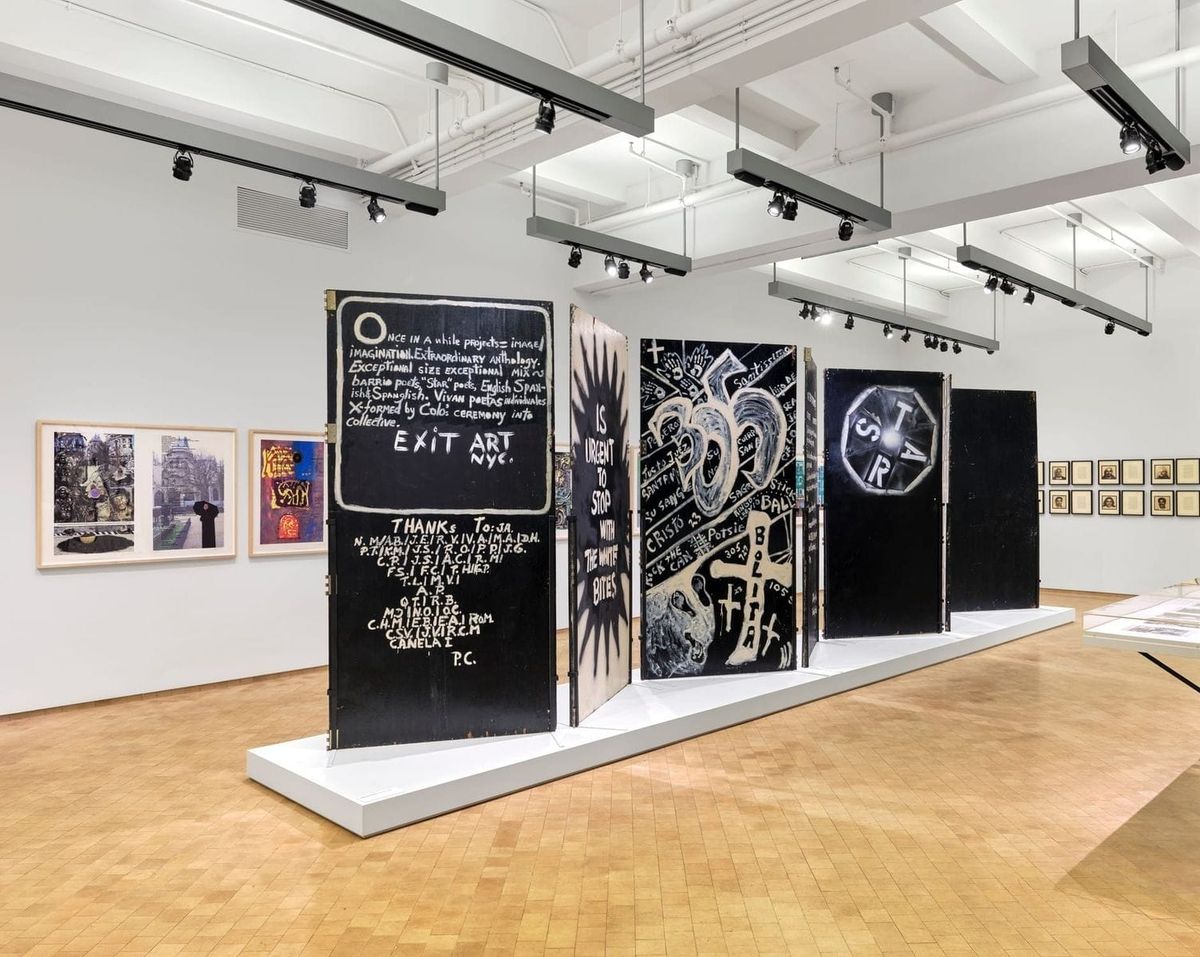
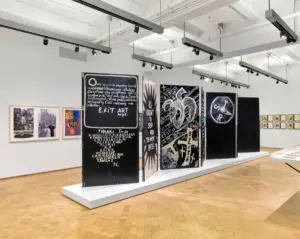
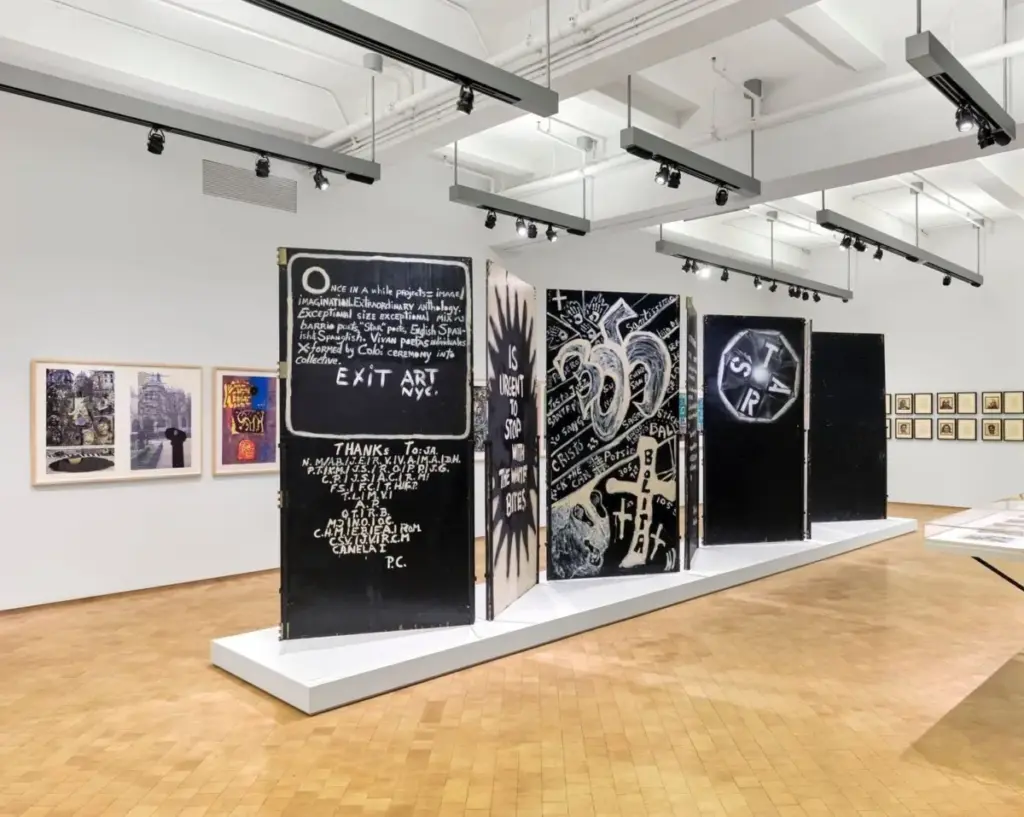
Now, four decades after that fleeting outdoor installation, El Museo del Barrio is revisiting that historic moment with a focused and deeply resonant exhibition titled Octopus and Others: Acts of Collaboration & Poetics. At the heart of this new presentation are seven surviving panels from Colo’s original 1982 public sculpture. Restaged within the museum galleries, these weathered yet potent wooden surfaces serve as the anchor for an exhibition that addresses the porous, highly dynamic boundary between word and image across experimental scenes of production from the 1980s right up to the present day.
The journey through the exhibition begins with a panel authored by Colo himself, setting a philosophical and conceptual tone for everything that follows. His contribution gestures toward the alchemical, almost transcendent possibilities that are unleashed when artists and poets from diverse backgrounds, distances, languages, and generations come together to create something unified. Across the black-coated plywood panel, Colo leaves a handwritten message in stark white paint, a manifesto of sorts that captures the spirit of the original collaboration: “English Spanish $ Spanglish,” he scribbles, before declaring, “Vivas poetas individuales X-formed by Colo’s ceremony into collective.”
This emphasis on the intersection of language, identity, and collective action runs deeply through Colo’s broader artistic legacy. Visitors to the exhibition are also treated to earlier manifestations of his text-and-image explorations, including works like his 1979 piece “Look Outside Your World.” Originally created as part of his renowned series of Photopoems and later published in the 1983 portfolio Photogenics: Photopoems / Acting as Behavior, these duotone prints derived from original monoprints further illuminate Colo’s fascination with how photographic imagery and poetic text can collide to challenge viewers’ perceptions of reality, politics, and geography.
The revival of Octopus and Others offers contemporary audiences a rare glimpse into a bygone era of New York’s cultural history, when cross-disciplinary solidarity was a survival mechanism and a political statement. By bringing these historical panels back into the public eye, El Museo del Barrio not only honors the enduring legacy of Papo Colo and his expansive network of collaborators, but also reignites a vital conversation about the power of collective creation in shaping cultural discourse. As contemporary artists continue to grapple with the divisions of language, geography, and medium, Colo’s ancient-yet-modern experiment in "Spanglish" solidarity reminds us of the transformative magic that happens when individual voices are woven together into a singular, powerful chorus.