Drive out to the end of Jasmine Lane, a quiet cul-de-sac in Southold, Long Island, and until recently, you would have hit a solid wall of greenery. The property beyond the suburban street was reforested farmland, protected under a strict municipal program that ensured it could never be utilized for anything other than agricultural purposes. This January, however, the neighborhood’s tranquility was upended when local residents discovered that a buyer who had paid $650,000 for the site—though not its underlying development rights—harbored an unnerving plan for the land. The official proposal for a venture dubbed “Rejuvenate Farms” outlined an intensive organic poultry operation where 6,000 pasture-raised hens would rove among six “mobile shelters,” supported by a permanent storage barn for feed and equipment. By spring, the dense rows of native trees meeting the property line had already met the chainsaw, setting off a bitter local conflict that would expose deep fault lines between suburban expectations, agricultural traditions, and the complex shadows of a high-profile family past.
The neighbors, who had long enjoyed the quiet routines of a conventional suburban enclave characterized by two-story colonials and wide, manicured lawns, were instantly appalled by the transformation. “I can’t use my backyard if I’m going to smell chicken manure all day long,” said local resident John Reichert during the first tense public meeting on the project. Quite a few of his neighbors had originally purchased their homes when the subdivision was developed in the early 1990s under a middle-income housing program that set purchase prices below $100,000. Over the decades, they watched those investments appreciate, building stable lives in a peaceful corner of the North Fork. Now, however, some feared the industrial-scale influx of poultry would severely depress property values and make it increasingly difficult to remain in their homes.
A chorus of local residents quickly mobilized, making passionate speeches before the planning board and flooding municipal offices with formal letters. They demanded a comprehensive environmental review to scrutinize potential impacts on groundwater, local stormwater runoff, and overall air quality, while specifically drawing attention to vulnerable populations, including an asthmatic child living in close proximity to the proposed farm boundary. “The Town is morally obligated to protect its citizens’ health and welfare when it is in their power to do so,” Reichert wrote in a formal filing to the town.
Local government officials may have privately sympathized with the homeowners’ plight, but they quickly realized their administrative hands were legally tied. Southold Town has long adhered to New York State’s robust Right to Farm Law, a legislative protection designed to ensure that bona fide farmers maintain the unhindered right to cultivate their land without undue interference from adjacent landowners or suburban users. Despite this legal reality, the crowds that packed local town meetings made it abundantly clear that they intended to interfere, legally or otherwise. “We do not have the authority to simply deny an application because it is controversial,” the chairman of the planning board reminded attendees back in January. Town planner Mara Cerezo later clarified for the public record that the municipal government held the legal right to regulate only two narrow aspects of the farm’s development plans: the prospective impact on local streets and traffic patterns, and the precise physical location of any proposed structures on the parcel.
Consequently, the entire neighborhood battle narrowed down to a fierce turf war over the placement of the project’s storage barn. The developers originally wanted to site the structure right up against the edge of the cul-de-sac, pressing tightly against residential properties like an unwelcome guest taking up the seat immediately next to someone in an empty theater. “It should not be on Jasmine Lane, where there are children who play in the street, ride their bikes, and use scooters,” Reichert pointedly told the local press. The friction escalated in June when Reichert’s visiting daughter spotted temporary chicken coops being erected on the site before official permits had even been filed with the town. She quickly captured the activity on video and posted it online, prompting municipal authorities to act swiftly and issue a formal stop-work order.
To a vocal segment of North Fork residents and agricultural advocates, the intense neighborhood pushback looked like a textbook case of classic NIMBYism—Not In My Back Yard. If local homeowners were unwilling to accept pasture-raised hens, what conceivable type of farm would they ever welcome to their borders, asked Pat Kelly, a skeptical Southold resident. He voiced frustration with the suburban mindset, asking if the community would prefer “more vines for crappy wine and more DWIs on our roads? More ‘vistas’ for octarians?”
Bill Zalakar, the executive director of a nonprofit organization dedicated to supporting Long Island farmers, similarly described the unfolding battle as deeply disturbing in a public letter that drew parallels to a separate, highly contentious fight over an oyster farm located at the opposite end of town. “There is an underlying strand between the two—namely, the public’s failure to recognize that bona fide farm operations have the right to undertake certain practices and activities,” Zalakar wrote.
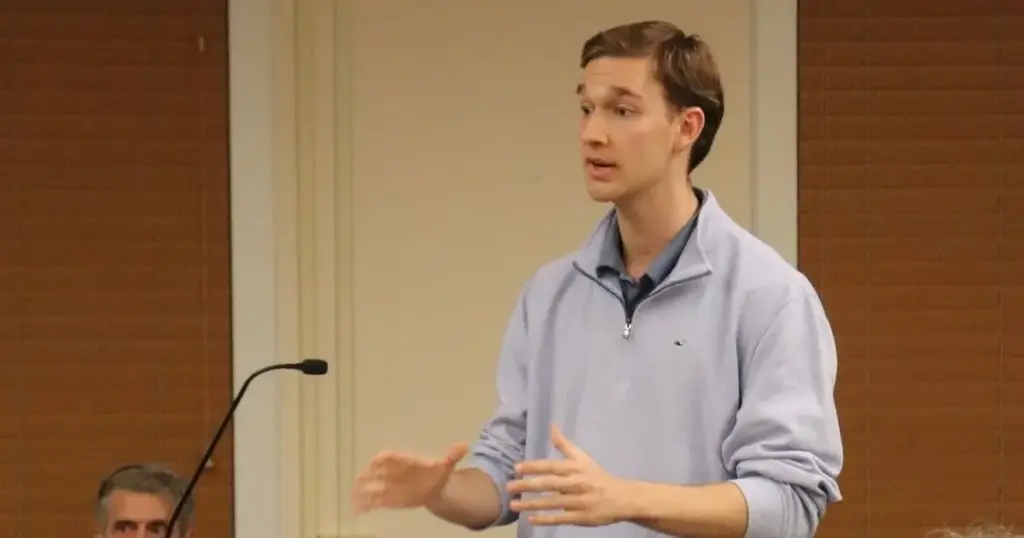
Yet, as the controversy deepened, a fundamental question hung over the proceedings: Just how bona fide of a farm was this venture truly? Public records showed the 16-acre parcel had been acquired by an LLC registered simply to a postal box, and subsequent business plans had been filed by a secondary LLC sharing that exact same address. When the group’s designated “authorized representative” stepped forward to address the planning board in January, he turned out to be a 21-year-old New York University student named Grant Callahan.
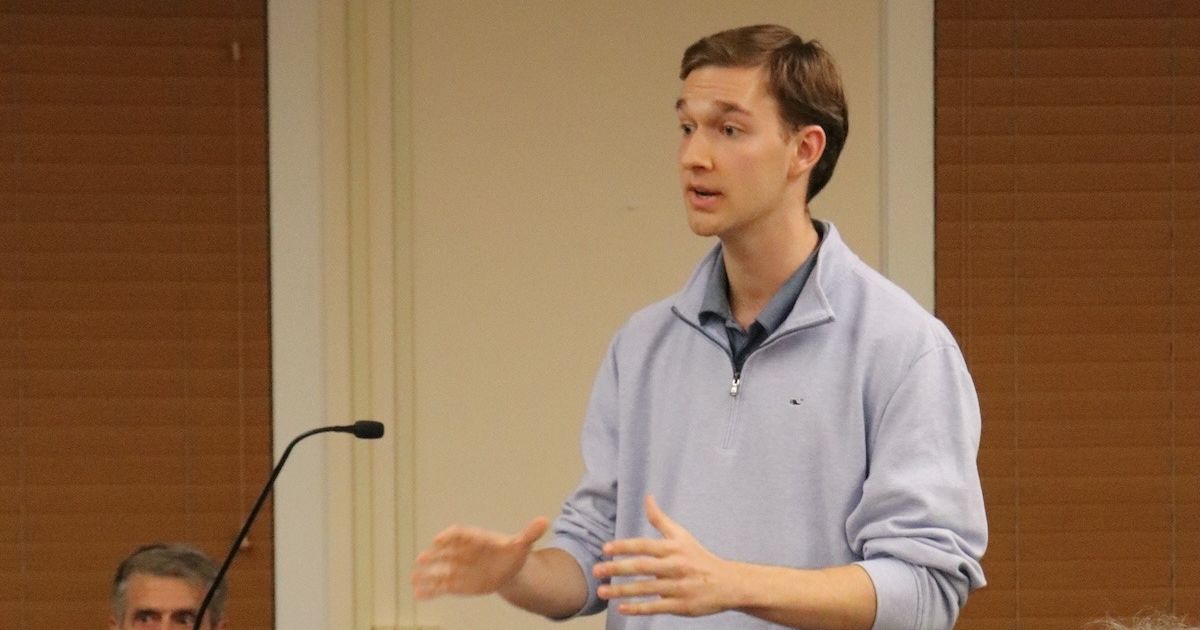
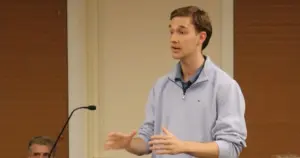
Clean-cut, attired in a powder-blue sweater, and unfailingly articulate, Callahan spoke eloquently about sustainable organic farming techniques and a sincere personal desire to protect the rural landscape. Yet, he cut an inherently unlikely figure as an agrarian entrepreneur. According to his professional profile, he had grown up in the affluent Nassau County suburb of Old Westbury near Great Neck and had focused primarily on real estate studies during his time at college. His digital footprint was sparse, though entirely plausible for a young organic farming enthusiast. He had also co-founded a campus organization called the Human Connection Club, which organizes phone-free excursions and hosts casual meetups featuring board games and Play-Doh. “Just because we’re no longer in middle school or elementary school doesn’t mean we don’t need our recess time,” Callahan once told a national television news reporter. In addition, he threw the hammer and discus for the school’s track team and served as secretary for the campus Young Republicans.
It remained entirely unclear how his path had diverged from campus politics and track meets into commercial poultry farming. Attempts by reporters to reach Callahan directly were unsuccessful, and his LinkedIn profile, which had previously been quoted by local newspapers, was subsequently scrubbed of personal information, leaving only a listing of schools and groups he had joined, including Cornell University’s College of Agriculture and Life Sciences and Land.com, an online marketplace for land buyers and sellers.
Locals naturally wondered how a college student had managed to independently secure the $190,000 down payment required for the land acquisition. Standing at the lectern during public hearings, Callahan frequently lapsed into using the pronoun “we” when discussing the long-term business strategy, fueling widespread speculation among neighbors regarding the hidden backers behind the operation. North Fork attorney Benjamin J. Schwartz reported hearing a town planner casually refer to the initiative as a “father and son” enterprise, and noted that he had spotted the name of Grant’s father featured prominently on the cover page of a submitted project document.
That revelation carried significant local resonance. Grant’s father, Brian Callahan, along with his uncle Adam Manson, had been arrested in 2013 for orchestrating what federal prosecutors formally described as one of the largest Ponzi schemes in Long Island history. The sprawling $118 million operation had bilked countless local investors, most notably wiping out the retirement fund of a Long Island fire department whose members believed their savings were securely held in traditional mutual funds and conservative securities. Instead, federal investigators discovered that the pair had systematically diverted millions to finance luxury cars, sprawling private homes, golf club memberships, and speculative investment properties.
In 2007, Brian Callahan and Manson had purchased majority shares in a prominent beachfront motel in Montauk, intending to convert its 117 rooms into lucrative co-op apartments. When the 2008 financial recession abruptly derailed those plans, they attempted to stave off foreclosure by illicitly injecting $20 million of investor capital into the failing asset. Federal prosecutors eventually froze the family’s bank accounts, auctioned off their seized cars, homes, and real estate portfolios, and ordered Brian Callahan to pay an additional $67.6 million in restitution to his victims. He was roughly seven years into serving a 12-year federal prison sentence when President Biden officially commuted his sentence in late 2024. Subsequent attempts to reach members of the Callahan family for comment via phone, email, through Grant Callahan’s retained legal counsel, and through the NYU press office went unanswered.
The saga took another sharp turn at a town meeting in September, when the Southold town attorney announced that the municipality was officially demanding that the LLC disclose the true identities of all individuals behind the farming application, signaling an impending court battle to compel full transparency.
The announcement followed a surprising tactical pivot communicated by Grant Callahan’s defense attorney, who revealed that the developers were completely scrapping the contentious chicken farming proposal. Instead, the legal representative stated, the applicants intended to “utilize the property as an organic produce farm focused on fruits and/or vegetables with an associated storage barn,” asserting that the dramatic adjustment would effectively address the primary environmental and odor concerns previously raised by surrounding homeowners.
Given that the town government still maintains virtually no regulatory authority over agricultural land use beyond the physical siting of the storage barn, local residents remain deeply skeptical of the sudden concession. John Reichert views the new agricultural pivot as little more than a strategic maneuver designed to defuse local outrage. “I think he’s just letting things cool down,” Reichert told the local press. “Then he’s going to zap us with a chicken farm.”