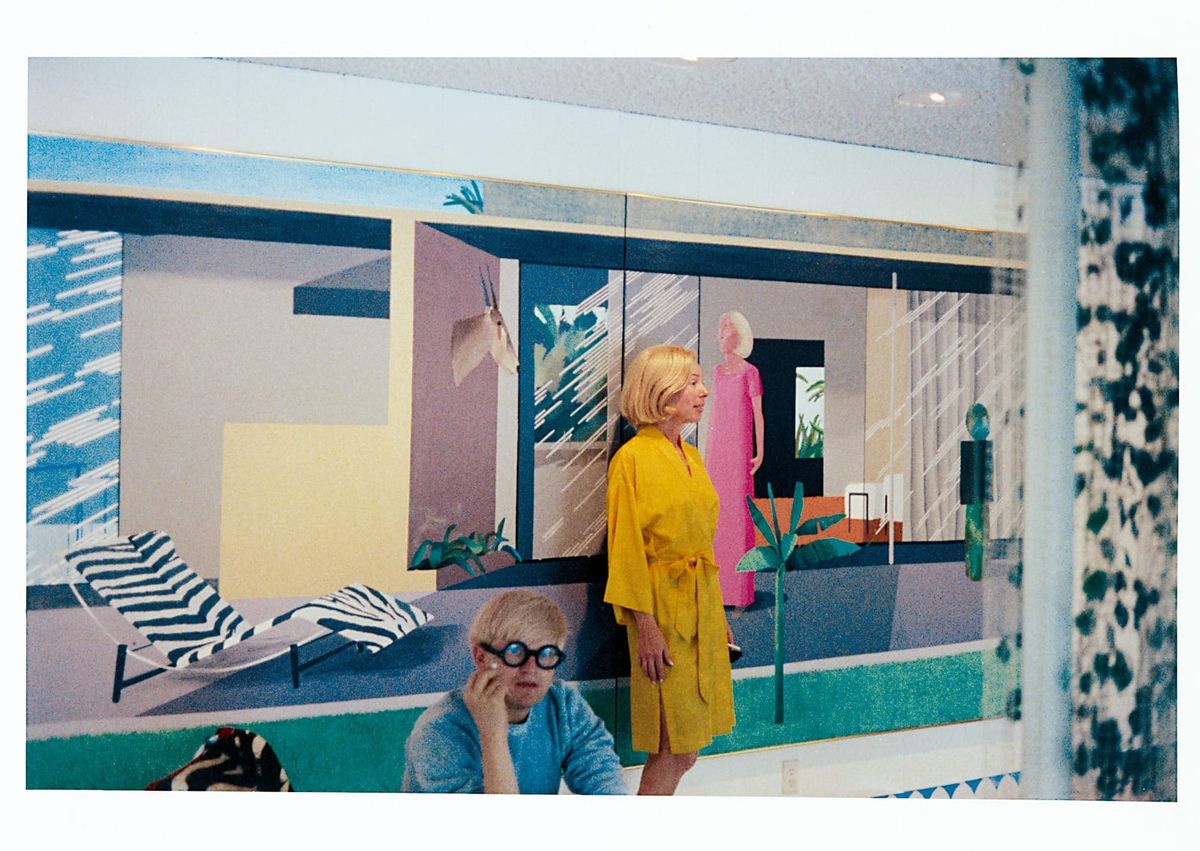
In the sun-drenched summer of 1966, British artist David Hockney set to work on a canvas that would eventually cement itself as a defining image of modern art: “Beverly Hills Housewife.” The monumental painting served as a vibrant, enduring portrait of the prominent arts patron Betty Freeman. Captured standing on her lush garden patio, Freeman is framed against the sleek lines of her modernist home, bound by crisp, geometric strips of brilliant blue sky and manicured green lawn. Around her, a curated collection of mid-century status symbols populates the space—including a striking William Turnbull sculpture, an exotic zebra-skin lounge chair designed by Le Corbusier, and a dramatically mounted antelope head. Yet, despite these striking objects, the undeniable focal point of the composition is Freeman herself, clad in a brilliant, arresting pink dress as she gazes wistfully and enigmatically beyond the strict confines of the canvas.
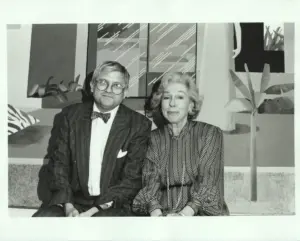
That iconic painting now serves as the rich launching pad for critic and novelist James Cahill’s latest literary and art-historical exploration. In his newly released book, The Beverly Hills Housewife: Hockney’s Californian Muse and the World Beyond the Pool, Cahill uses the painting to expound upon the deeply intertwined lives of both the artist and his muse. Beyond a mere biography, the book functions as a fragmentary, evocative snapshot of Los Angeles during the culturally seismic 1960s. Cahill navigates his subject matter by bouncing fluidly between formal artistic analysis of Hockney’s brushwork, historical anecdotes from the era, and broader cultural inferences about the societal shifts happening at the time. He zigzags through his narrative much like a driver crossing the sprawling expanses of Los Angeles without a map, taking scenic routes through the intellectual and social geography of Southern California. While some of these literary detours prove less directly relevant to the central narrative than others, they nonetheless stand as diverting, delightful pit stops on a thoroughly engrossing journey celebrating a profound friendship between two complex individuals. Together, Hockney and Freeman played formative, behind-the-scenes roles in shaping the artistic and cultural landscape of Los Angeles, turning the city into a global destination for contemporary thought and creativity.
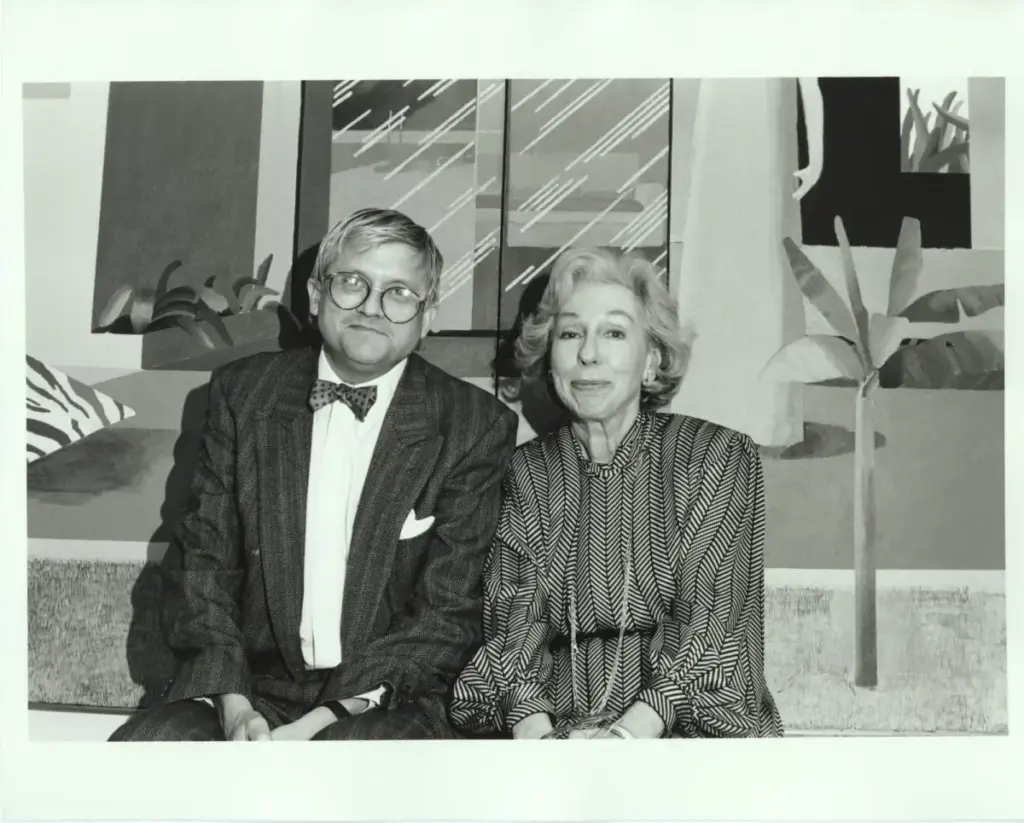
The relationship between Hockney and Freeman captured a specific zeitgeist in American culture, bridging the gap between European expatriate sensibilities and the wide-open, optimistic expanses of the American West. When Hockney first arrived in Los Angeles from England, he was immediately captivated by the intense light, the architectural modernity, and the pervasive culture of leisure, most notably symbolized by backyard swimming pools. Freeman, already established as a formidable force within the Los Angeles arts community, became both a patron and an integral part of this vibrant new world. Her Beverly Hills home was not merely a residence, but a cultural salon where musicians, artists, writers, and thinkers would converge. By immortalizing her in 1966, Hockney did more than paint a portrait of a wealthy socialite; he captured the psychological aura of a specific class and era, freezing a fleeting moment of California modernism in time.
Cahill’s book embraces the sprawling nature of this cultural ecosystem, attempting to map out the complex networks of patronage, friendship, and avant-garde experimentation that defined the era. The author examines how Freeman’s intense dedication to contemporary music and the visual arts made her a central node in Los Angeles’s burgeoning cultural network. She was not just a passive collector of beautiful objects, but an active participant who directly supported the creation of new works. Her home functioned as a sanctuary for creative minds, and Hockney’s painting immortalized the architecture of that sanctuary alongside its inhabitant. Through meticulous close-reading of the artwork, Cahill unpacks the subtle psychological undercurrents of the portrait. The bright pink of Freeman’s dress clashes playfully with the muted earth tones and cool blues of the modernist architecture, creating a visual tension that reflects the internal life of a woman standing at the intersection of immense privilege and deep artistic engagement.
As Cahill traces the trajectories of Hockney and Freeman through the decades following the creation of "Beverly Hills Housewife," the book paints a broader portrait of a city undergoing rapid transformation. The Los Angeles of the 1960s was a place reinventing itself in real-time, shedding older conservative notions in favor of a bold, sun-soaked modernism that embraced experimentation across all artistic mediums. Hockney’s eye for the city’s unique geometry—its swimming pools, sprinkler systems, stark shadows, and architectural clean lines—helped codify how the rest of the world viewed Southern California. Meanwhile, figures like Freeman provided the institutional and financial backbone necessary for these avant-garde ideas to take root and flourish.

In The Beverly Hills Housewife, Cahill successfully resurrects this dynamic era without resorting to dry academic cataloging. Instead, he leans into the atmospheric qualities of the time and place, treating the friendship between the painter and his patron as a lens through which to view a broader cultural awakening. The book acknowledges the eccentricities and contradictions of the Los Angeles art scene, avoiding simple hagiography in favor of a nuanced, multi-faceted exploration of how art and patronage intersect. By keeping the iconic 1966 painting at the beating heart of the narrative, Cahill ensures that the physical reality of the artwork remains anchored to the human stories that inspired it. Ultimately, the book offers readers a chance to step onto that sunlit Beverly Hills patio alongside Betty Freeman, looking out past the modernist lines and the blue California sky into a world shaped by two extraordinary figures whose cultural legacy continues to resonate today.