As households across the country continue to navigate fluctuating energy markets and rising household expenditures, industry experts and environmental analysts are increasingly pointing toward fundamental building upgrades as a primary defense against escalating costs. Among the various home improvement options available to property owners today, cavity wall insulation is emerging as one of the most practical and financially advantageous investments for reducing domestic energy consumption and improving overall residential comfort.
Unlike traditional insulation methods that focus on roof spaces or external cladding, cavity wall insulation directly addresses the structural core of many modern and semi-modern buildings. The technique involves filling the narrow structural gap—known as the cavity—that typically sits between a home’s interior and exterior masonry walls, which generally measures between 50mm and 100mm in width. By introducing a specialized thermal barrier into this empty space, homeowners can effectively halt the continuous dissipation of household heat, establishing a robust defense against thermal loss that pays dividends across all seasons.
Recent industry data highlights the profound impact of this thermal upgrade. According to comprehensive studies, installing appropriate cavity wall insulation can decrease a household’s heating consumption by up to 25%. For the average property owner, this reduction translates into substantial financial relief, transforming a standard home improvement project into a strategic long-term financial investment with measurable returns.
What is Cavity Wall Insulation?
At its core, cavity wall insulation is a targeted thermal management strategy designed to eliminate the invisible heat loss that occurs through exterior walls. The empty space, or cavity, found in standard double-brick or brick-and-block construction houses is a natural conduit for thermal transfer unless properly treated. Filling this gap creates a continuous insulating blanket that keeps living spaces significantly warmer during harsh winter months while similarly preventing excessive solar gain and heat retention during the height of summer.
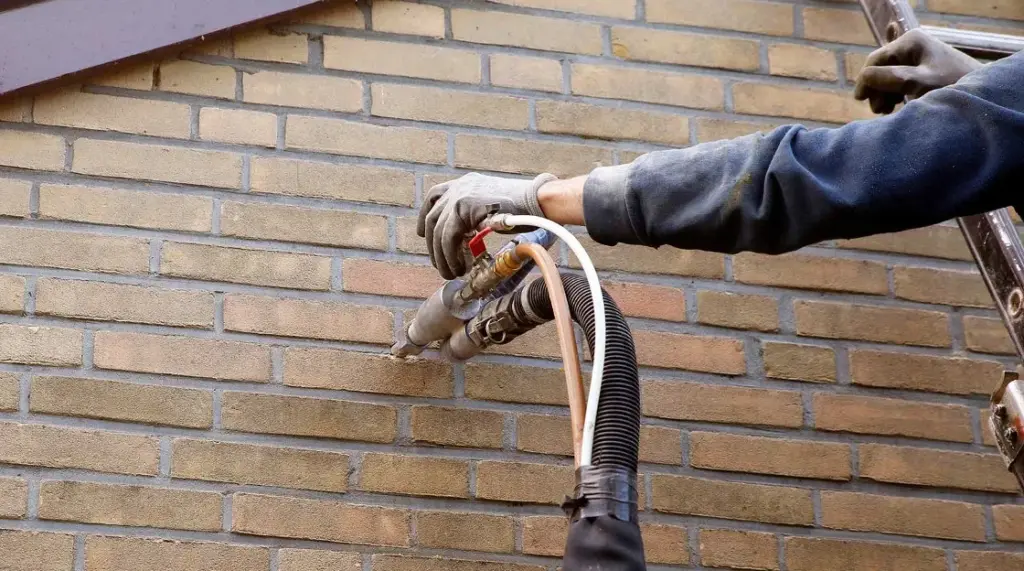
Property specialists generally categorize the installation techniques into two primary methods: blown insulation and injected insulation. The blown insulation process utilizes specialized pneumatic equipment to propel lightweight insulating materials, such as specially treated mineral wool or expanding polystyrene beads, directly into the cavity spaces. Alternatively, the injected insulation method requires technicians to systematically drill small, carefully measured access holes into the exterior mortar joints before pumping the thermal material inward via high-pressure application systems. Both methodologies have proven highly effective and can be deployed across a wide variety of standard residential properties without requiring major architectural alterations.
Benefits of Cavity Wall Insulation
The advantages of sealing a building’s thermal envelope extend far beyond simple temperature regulation, offering homeowners a multifaceted array of financial, environmental, and structural benefits.
Reduced Energy Bills
The most immediate and tangible advantage for most homeowners is the dramatic decrease in monthly and annual utility expenditures. Because properly insulated walls retain heat far more efficiently, central heating systems do not need to work nearly as hard or run nearly as long to maintain a comfortable indoor climate.
According to data compiled by the Energy Saving Trust, effective cavity wall insulation can yield annual savings ranging from £180 to £690 on typical heating bills. When projected across the expected lifespan of the insulation materials—which routinely approaches 25 years—these cumulative savings represent a massive financial windfall for families seeking relief from ongoing cost-of-living pressures.
Increased Comfort
Beyond purely financial metrics, insulation fundamentally alters the day-to-day living experience within a home. Properties lacking adequate wall insulation often suffer from cold perimeter walls, persistent indoor drafts, and localized cold spots that make certain rooms unpleasant during colder months. By neutralizing these thermal imbalances, cavity wall insulation stabilizes indoor temperatures, creating a more consistent, comfortable, and livable environment throughout the entire household year-round.
Reduced Carbon Footprint
As national and international communities intensify their efforts to combat climate change, individual households are increasingly examining their personal environmental impact. Because heating residential properties accounts for a significant portion of domestic carbon emissions, lowering overall energy consumption via insulation represents an immediate and passive way to reduce a household’s carbon footprint. By decreasing the volume of fossil fuels or electricity required to heat interior spaces, property owners make a lasting, positive contribution to broader environmental sustainability goals.
Increased Property Value
Home improvements that enhance a building’s energy performance ratings are becoming increasingly attractive in contemporary real estate markets. Prospective homebuyers routinely prioritize energy efficiency, lower projected utility costs, and modern thermal ratings when evaluating potential purchases. Consequently, certified cavity wall insulation functions as a valuable selling point that can bolster overall property valuation and accelerate the resale process when the time comes to place a home on the market.

The Cost of Cavity Wall Insulation
While the long-term financial arguments for insulation are clear, homeowners must initially navigate the upfront capital outlay required for professional installation. The total cost of the project is naturally variable, depending heavily on factors such as the physical dimensions and layout of the property, the specific type of insulation material selected, and the complexity of the installation technique required.
On average, homeowners can expect to invest between £900 and £1,200 for a standard semi-detached house. While this initial figure represents a notable financial commitment, industry analysts emphasize that it must be viewed as a capital investment rather than a standard expense. When balanced against annual heating bill reductions and subsequent boosts to property value, the installation costs generally amortize rapidly over time.
How to Know if Your Home Needs Cavity Wall Insulation
Crucially, not every residential building is physically compatible with cavity wall insulation. Older historical properties built before the widespread adoption of cavity construction typically feature solid walls with no internal gap to fill. Conversely, some properties may possess cavities that are excessively narrow, structurally compromised, or subject to severe moisture penetration issues that preclude standard filling techniques.
To determine whether a specific property is a viable candidate, homeowners are strongly advised to consult a qualified, professional insulation contractor. Certified specialists possess the diagnostic equipment and expertise required to conduct a thorough physical survey of the building fabric, assessing wall construction types, anchor tie conditions, and exposure levels to recommend the most appropriate intervention. Furthermore, homeowners of properties constructed after the 1990s will often find that their homes were built with insulation already integrated into the walls as part of modern building regulations.
The Installation Process of Cavity Wall Insulation
Because the installation of cavity wall insulation involves specialized diagnostic equipment, structural knowledge, and precise application techniques, it is firmly positioned as a professional service rather than a viable do-it-yourself weekend project. Reputable contractors manage the entire process from initial assessment to final clean-up, ensuring that the thermal material is distributed evenly throughout the structure without bridging moisture barriers or creating internal voids.
Selecting an established, credible provider is paramount to ensuring the longevity and safety of the installation. Organizations such as Dyson Energy Services, which has operated within the UK residential energy-saving sector since 1982, illustrate the level of institutional expertise and specialized training required to execute complex thermal installations safely and effectively across diverse housing stocks.
How to Choose the Right Insulation Material
Property owners evaluating insulation options must weigh several technical and environmental factors when selecting the ideal material for their building. The primary choices—mineral wool, expanding polystyrene beads, and specialized thermal foams—each offer distinct physical properties, thermal resistance values, and cost profiles.
Material selection is often dictated by the specific microclimate and architectural orientation of the property. For instance, buildings situated in exposed coastal regions or areas experiencing unusually high levels of wind-driven rain may require specialized water-repellent foam or treated bead systems to prevent moisture bridging across the cavity wall. Professional surveyors assist homeowners in navigating these technical nuances to match the optimal product with their specific structural requirements.
Maintenance and Upkeep of Cavity Wall Insulation
Once successfully installed, cavity wall insulation is remarkably low-maintenance, functioning passively within the building envelope for decades without requiring active mechanical upkeep. However, property owners should remain vigilant regarding general structural maintenance.
The appearance of internal damp patches, persistent condensation, or localized mold growth on exterior walls can occasionally indicate a localized failure in the building’s weatherproofing, compromised cavity trays, or moisture bridging within the insulated gap. If such warning signs emerge, homeowners should immediately arrange for a professional inspection by an accredited insulation specialist to diagnose and rectify the underlying issue before structural damage occurs.
Ultimately, cavity wall insulation stands out as a proven, highly effective mechanism for modern homeowners seeking tangible relief from high energy costs while simultaneously upgrading domestic comfort and environmental sustainability. By understanding the structural requirements, financial commitments, and long-term benefits associated with the process, property owners can make informed decisions that enhance the value and efficiency of their homes for decades to come.