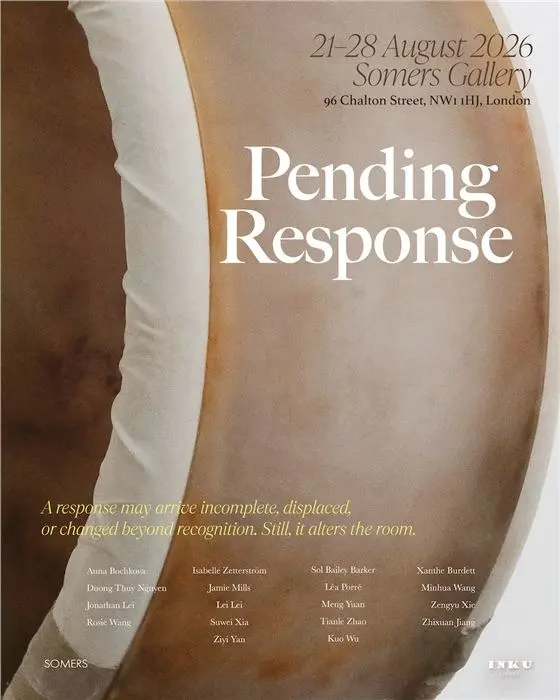
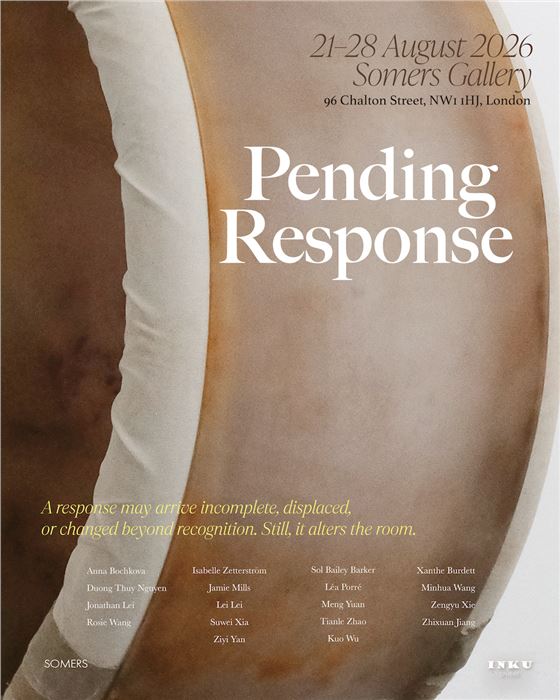
In the sweltering heat of a London summer, a quiet sanctuary emerged at the Somers Gallery. Titled Pending Response, the exhibition served as a meditative intervention in the frenetic pace of contemporary life, bringing together the works of 18 diverse artists to interrogate the nature of time, stillness, and the profound capacity for patience. Curated by Shuning Liu in collaboration with the contemporary arts platform INKU Sphere, the exhibition invited visitors to pause and inhabit the space of the "in-between"—the moments where life is held in suspension, waiting for a signal that may or may not arrive.
The exhibition, which ran from August 21 to 28, 2026, transformed the Somers Gallery’s intimate, white-cube aesthetic into a site of profound reflection. By stripping away the noise of the city, the gallery created an environment where the physical and the metaphysical could converge.
Materializing Time: Sculpture and Tactile Stillness
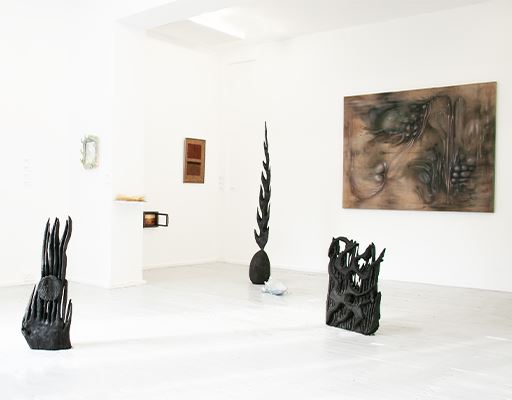
Upon entering the gallery, the visitor is immediately confronted with the full scope of the exhibition. The space, quaint and carefully organized, acts as a vessel for the works on display. Among the most striking contributions are the sculptures by Jamie Mills, whose practice is deeply rooted in the connection between material and gesture.
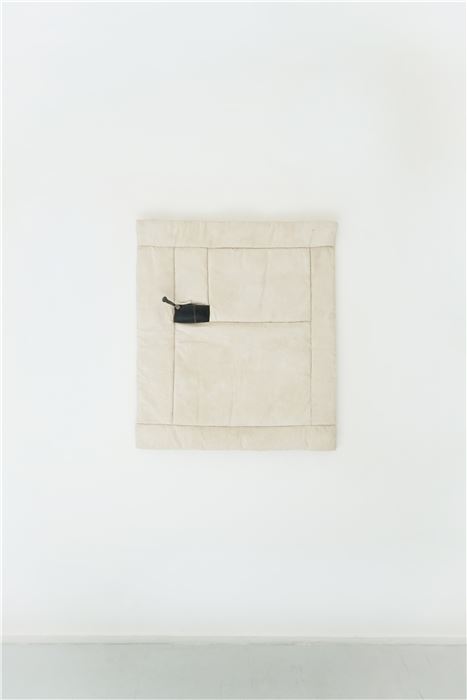
Mounted on a semi-pillar, Mills’ The Runner (2026) initially appears as a simple textile composition—a blanket-like object with a blue rubber stencil protruding from its surface. However, a closer inspection reveals a complex, multi-layered construction. Crafted from wood, copper, cotton, wool fibers, chalk distemper, rubber, thread, beeswax, and plant resin, the piece is a testament to the artist’s interest in the mechanics of movement. At its core, The Runner features a rubber pumping device, sealed by a valve and inhibited by bone fragments. This internal blockage acts as a physical metaphor for the compression of movement, suggesting that time is not merely a flowing river, but something that can be dammed, held, and redirected.
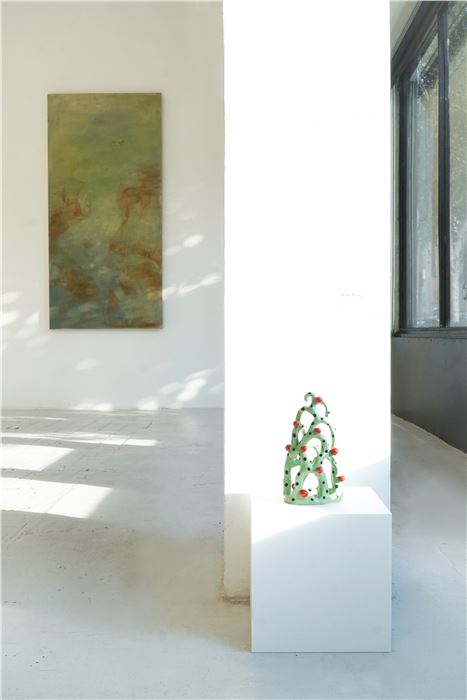
This theme of stasis is echoed in the work of Edinburgh-based ceramicist Rosie Wang. Her piece, Staying Still 08 – Cactus (2026), occupies a low pedestal, drawing the viewer’s eye downward. The ceramic object, characterized by its hilly, organic form, is decorated with black dots and red floral accents. Wang, known for her ability to transform everyday objects into conduits for human connection, presents the cactus as a being existing in a state of endurance. In this context, the plant is not thriving, but waiting—counting the seconds in a dry, unwelcoming environment, embodying the tension of a life that is perpetually on the brink of change.
Mills further explores the industrial landscape of waiting with The Hermit (2026). The work repurposes a discarded industrial conveyor belt, reconfiguring it into a structure that evokes a gymnastic springboard or a clinical medical device. Composed of wire, resin, bone, and chalk, the piece sits heavy and grounded. While a conveyor belt is designed for the endless, fluid motion of manufacturing, Mills’ intervention forces it to contemplate its own weight. By stripping the object of its primary function, the artist creates an atmosphere where perceived movement is trapped within a still form, challenging the viewer to consider the exhaustion inherent in our constant push for progress.
Sound, Spatial Image-Making, and Performance
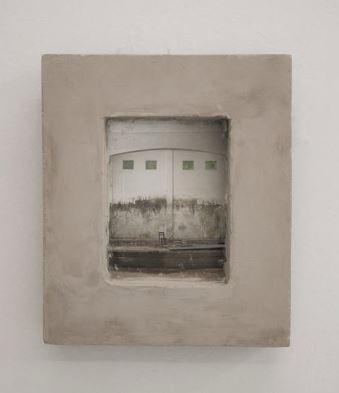
Moving deeper into the gallery, the exhibition expands into a multimedia exploration involving a wide array of European and Asian artists. Jonathan Lei’s photography offers a stark, poignant perspective on absence. His work, Awaiting (2026), depicts a solitary wooden chair placed before a concrete building. The composition is defined by the building’s vaulted, convex-curved roof and a series of four fixed, symmetrical windows. The monochromatic tone emphasizes the peeling paint and the surrounding debris, forcing the viewer to confront a haunting uncertainty: has someone just departed this space, or are they yet to arrive? The chair becomes a protagonist of silence, standing in for the human presence that is conspicuously missing.
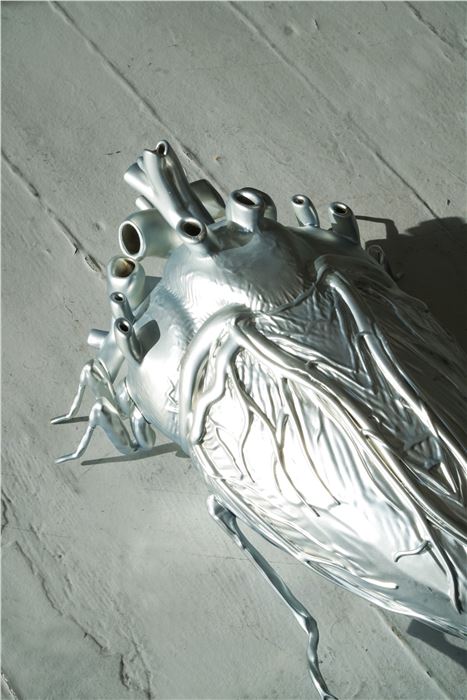
The interplay between organic life and the technological future is addressed by Zhengyu Xie in Pending Organ: Heart Cicada (2026). This free-standing sculpture, created from electroplated resin, captures the form of a cicada—a creature synonymous with the cycles of nature—through a lens of metallic advancement. It serves as a bridge between the biological rhythms of the past and the cold, unyielding nature of a technological future, leaving the viewer to wonder what "organs" we might carry forward into the unknown.
The exhibition’s commitment to exploring "listening as a way to hold time" reached its zenith during the performance of Kuo Wu’s Infinite Forms, Woven by the Waves of the Heart (2026). On August 22, the gallery was filled to capacity as participants sat cross-legged, bathed in the glow of the setting sun. Using sound bowls, a se kong, and a traditional gong, Wu created a sonic landscape that allowed the audience to experience time not as a linear progression, but as a space to be inhabited. The reverberative materials ensured that the sound lingered in the air long after the physical action ceased, turning the act of listening into a form of collective patience.
Curatorial Curation and Spatial Dynamics
The spatial arrangement of the gallery was crucial to the exhibition’s success. Zhixuan Jiang’s Pending Review (2026) utilized iron and acrylic 35mm film photography to construct doorways that seem to open into parallel dimensions. Her work explores the intersection of the visible and the intangible, particularly in relation to public housing and the themes of displacement and detachment. By framing the world through the lens of a window, Jiang questions what we truly see when we look at our surroundings.
Nearby, Ziyi Yan’s Enfolding (2026) uses a wooden enclosure filled with gauze, cotton, wire, and paper pulp to explore the body as a membrane. For Yan, the boundaries of the self are as fragile as the materials she uses, suggesting that our intimacy and identity are constantly being reconfigured by the pressure of our environment. This focus on the domestic and the archival is rounded out by Duong Thuy Nguyen’s Family Homes (2023), an aluminum-bound book made of rice paper that reconfigures the artist’s own academic thesis through Dadaist methodologies, treating history as a malleable material.
The visual dynamic of the exhibition was particularly effective because many of the works appeared to be site-specific responses to the concept of "pending." The recurrence of the word in several titles was not a limitation, but rather a thematic anchor that pushed the collective of artists to explore the limits of their respective practices.
Ultimately, Pending Response functioned as a call to action—or perhaps more accurately, a call to inaction. It invited the viewer to pause, contemplate, and listen to the internal voice that is so often drowned out by the noise of modern existence. By treating waiting as a destination rather than a hurdle, the exhibition offered a necessary refuge from the anxieties of the "fear of missing out" and the relentless demand for productivity.
The Somers Gallery, located in the historic Somers Town neighborhood, has spent over a decade establishing itself as a vital stage for contemporary art, with a particular focus on bridging the gap between Latin American artists and the wider global art community. Pending Response marked a departure from this usual programming, acting as one of three exhibitions focused on cross-regional connections. By inviting artists from both Asia and the West to explore the universal theme of patience, the gallery demonstrated that even in a world obsessed with speed, there is significant value in learning how to watch one’s own stride. For those who found themselves in the gallery during those final days of August, the exhibition served as a quiet reminder: sometimes, the most profound response is to simply wait.