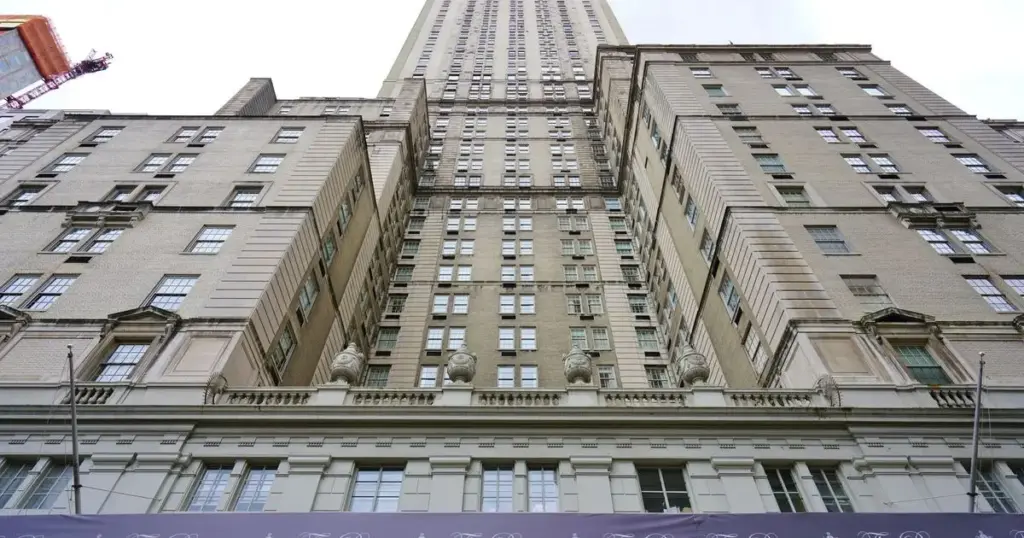
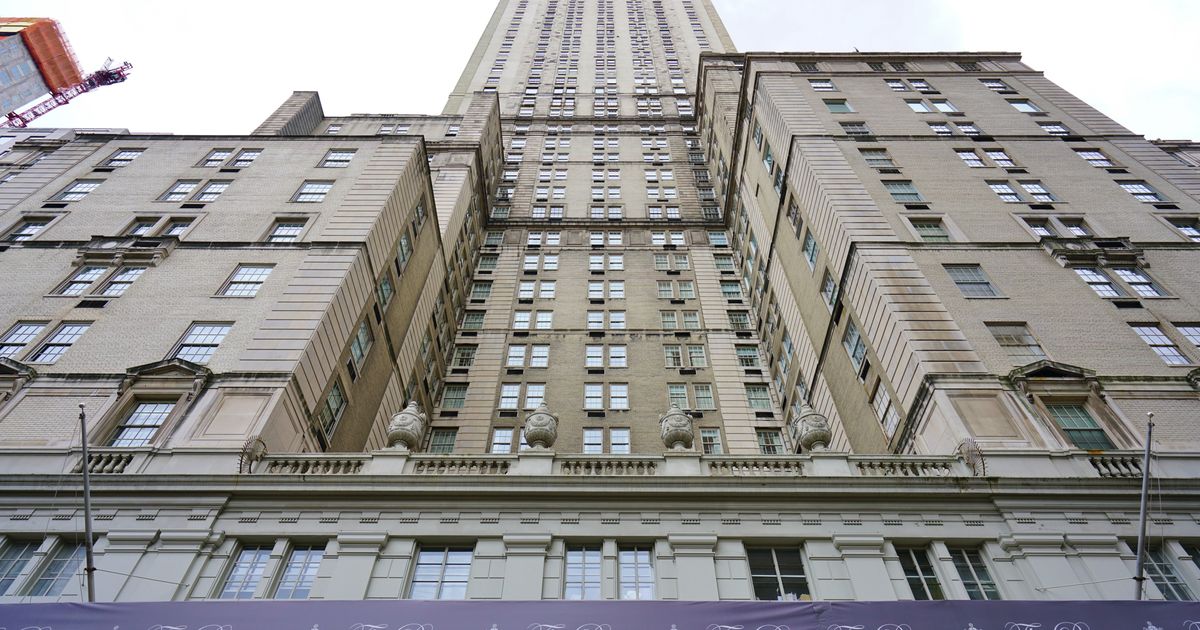
For more than half a century, The Pierre has stood as an unshakeable monument to Manhattan society, a place where generations of the wealthy and famous have rubbed shoulders with international royalty, Hollywood luminaries, and renowned fashion designers. Ever since it first opened its doors in 1930, the landmark hotel and co-op overlooking Central Park has anchored the New York society pages. Coco Chanel and Audrey Hepburn once slept within its walls, Elizabeth Taylor and Aristotle Onassis maintained residences there, and Auguste Escoffier, celebrated as the father of modern French cooking, famously served his signature dishes in its walnut-paneled dining room. Countless debutantes and society brides have waltzed beneath its Corinthian-columned ballroom ceilings, preserving its reputation as a citadel of old-world luxury.
Yet, in recent years, the elegant mansard-roofed building has generated headlines for a far less genteel reason: a bitter, high-stakes internal war over a potential $2 billion sale of the entire property to a prominent Saudi family, the Khashoggis. The proposed transaction would unlock a massive financial windfall for many, and potentially most, of the co-op’s wealthy shareholders while simultaneously funding desperately needed infrastructure repairs. However, it would also force every single resident out of their homes, obliterating a storied community regardless of whether individual owners want to sell. While Manhattan co-op board battles are notoriously vicious, particularly in elite buildings where residents wield immense wealth and power, few disputes in the city’s real estate history have carried consequences quite this profound.
A definitive co-op shareholder vote on the sale is expected to take place later this fall, but the deep fractures within the building have already prompted some residents to abandon ship. In a sign of the escalating tensions, former Disney CEO Michael Eisner—who owns two apartments at The Pierre and previously clashed with the co-op board over a disruptive frozen-pipe fiasco—recently laid out $10 million to purchase a new apartment at the nearby Sherry Netherland. The prospect of handsome cash payouts has been aggressively dangled before shareholders to secure votes in favor of the sale, a tactical maneuver that has deeply rankled a significant portion of the residents. The owners at The Pierre already number among the wealthiest individuals on the planet, rendering purely financial arguments unpersuasive to many who view the building not as a financial asset, but as a sanctuary. As legendary musician and longtime resident Art Garfunkel reportedly remarked during the annual board meeting last fall, summarizing the sentiment of the opposition: “You’re just talking about money. But this is our home. I love The Pierre just as it is.”
Beneath the glittering historic facade, the physical reality of the building has grown increasingly distressed. Even though shareholders pay monthly maintenance fees running into the tens of thousands of dollars, the storied structure is now decidedly down at heel, plagued by frayed carpets, peeling finishes, and creaky, frequently malfunctioning elevators. At this juncture, virtually every core system—from the aging plumbing infrastructure to the worn-out upholstery throughout the common areas—is in desperate need of replacement.
Taj Hotels, which has operated the building since taking over in 2005, initially invested $100 million in renovations but has been widely accused of letting maintenance slide in recent years. Furthermore, Taj has reported losing millions of dollars annually while running the property, a financial strain similarly experienced by its predecessor, the Four Seasons. The decline has not gone unnoticed by those who remember the building’s golden era. Irwin Winkler, the 95-year-old co-producer of Raging Bull who has lived in the building for decades, minced no words in a scathing letter sent to the board last year. Noting that the hotel was once a "proud edifice" when he moved in 43 years ago, Winkler lamented that the lobby had become "shabby" and the furniture "second rate."
For residents accustomed to a lifestyle of effortless privilege, the deteriorating infrastructure has created daily indignities. In recent years, individuals who have not had to make their own beds since childhood have found themselves forced to climb flights of stairs just to reach their homes. In October 2023, the crisis reached a head when two elevators simultaneously went out of service, trapping at least one resident inside and prompting a flurry of complaints. One frustrated occupant griped to the press that they, too, had been forced to use the dirty service stairs because the wait for the remaining functional elevators had simply become too long.
Shortly before selling her grand triplex penthouse apartment, Barbara Zweig—the widow of famed Wall Street financier Martin Zweig—expressed her exasperation in a blistering group email. She recounted walking down to the lobby to break a $100 bill only to find the front desk completely unmanned. Writing that she could not imagine booking what purported to be a luxury hotel only to encounter empty concierge and security areas alongside broken elevators, Zweig underscored the deepening operational crisis. She ultimately sold her prized penthouse to Howard Lutnick, then-CEO of Cantor Fitzgerald and now the U.S. Secretary of Commerce.
The mounting grievances came to a dramatic head at the tumultuous shareholders’ meeting in the fall of 2023, where Lutnick, as the building’s largest shareholder, aggressively demanded sweeping operational changes. Early the following year, the board informed shareholders that it had retained real-estate firm Newmark to consult with Taj Hotels regarding potential strategies for improving the physical condition and daily management of the property. However, that mandate shifted over the course of the year toward exploring an outright sale of the entire building after the board concluded that Taj was unwilling to commit the massive capital expenditures required to modernize the landmark.
The unique ownership structure of The Pierre dates back to 1958, when oil tycoon Jean Paul Getty, who then owned the hotel, decided to convert a portion of the 1930 building—specifically 75 rooms—into a residential co-op. Similar conversions had recently taken place at nearby properties like Hampshire House on Central Park South and the Sherry Netherland on Fifth Avenue. Getty’s plan maintained approximately 200 hotel rooms under a leasing agreement with the newly formed co-op, guaranteeing shareholders an unprecedented tier of white-glove service for their private apartments. Residents were granted daily housekeeping, 24-hour room service, and dedicated concierges to handle everything from theater tickets to personal shopping appointments.
As a long-time resident remarked, summarizing the appeal of the arrangement, they had not made their own bed since childhood. Naturally, the common charges required to maintain this level of hyper-personalized service have always been astronomical. A decade ago, the monthly maintenance on Zweig’s triplex penthouse alone stood at $48,000, a figure that included the wages for a dedicated two-person housekeeping staff assigned exclusively to the unit.
The mechanics of the potential sale began moving swiftly in May 2024. According to industry reports, Lutnick traveled to Paris to meet with the Arnault family, owners of the ultra-luxury Cheval Blanc hotel group, to gauge their interest in purchasing the property. He subsequently traveled to London to hold discussions with the Khashoggi family and representatives from the Dorchester Collection, a luxury hotel operator owned by Hassanal Bolkiah, the Sultan of Brunei. Approximately a week after those talks, Motasem Khashoggi, chairman and principal owner of the Khashoggi Holding Company, texted Lutnick to confirm their serious interest, reportedly asking if Lutnick could assist in securing an internship for his son—a request Lutnick indicated he could accommodate.
From there, formal negotiations commenced among the Dorchester Collection, which would step in to manage the transformed property; the Khashoggi family; and Newmark. The involvement of Newmark raised eyebrows among some shareholders, who noted that the real-estate firm is owned by Cantor Fitzgerald, a connection they claim was never properly disclosed when the board initially contracted the company.
Although Lutnick has since stepped away from his executive role at Cantor Fitzgerald and recused himself from active negotiations following his appointment to the Trump administration, his motivations in orchestrating the deal continue to draw intense scrutiny from fellow residents. Lutnick purchased the iconic triplex penthouse for $44 million in 2017—securing a massive discount off its initial asking price and making him the single largest shareholder in the building. Yet, he never actually moved in, and the residence has remained in need of substantial renovation following storm damage sustained several years ago.
Since becoming Secretary of Commerce, Lutnick has expanded his real estate portfolio to include a $25 mansion in Washington, D.C., alongside an Upper West Side townhouse, a Hamptons estate, and a condominium north of Miami Beach. If the sale to the Khashoggis ultimately goes through, financial analysts estimate Lutnick’s payout could reach between $90 million and $100 million. While that figure falls just short of the ambitious $125 million asking price Barbara Zweig initially and unsuccessfully sought for the penthouse, it represents a staggering return that far exceeds traditional market valuations.
Decades ago, Adnan Khashoggi was globally recognized as one of the world’s most prominent arms dealers, controlling vast holding companies that included numerous international luxury hotels. In more recent years, however, the family has maintained a much lower profile, remaining largely absent from high-profile global business ventures, major real estate developments, or active roles in the hospitality sector. According to recent investigative reports, the Khashoggis are today primarily known for their immense generational wealth, with one of their most publicized recent transactions being a $37 million pharmaceutical investment in Syria.

Compounding the controversy for some residents is the family’s association with past geopolitical scandals. In 2018, family member and journalist Jamal Khashoggi was murdered and dismembered inside the Saudi consulate in Istanbul, an assassination that U.S. intelligence reports concluded was carried out on the direct orders of Saudi Crown Prince and Prime Minister Mohammed bin Salman. According to reports, MbS would provide the primary financial backing for the acquisition of The Pierre. The Dorchester Collection, by contrast, operates an extensive and widely respected portfolio of ultra-luxury hotels and residences, including the Beverly Hills Hotel, Le Meurice in Paris, and its historic namesake, the Dorchester in London.
If the transaction moves forward, shareholders stand to receive an enormous financial payout, with industry sources estimating returns at four or five times their initial investment. However, the human cost of the transformation would be absolute. Every resident would be required to vacate the premises, and the approximately 400 dedicated staff members who keep The Pierre running would lose their jobs. While the labor union would negotiate a severance package for the employees, many have worked within the building for decades and note that finding comparable positions in the hospitality industry will be difficult.
Under the likely post-sale scenario, the new owners would convert the building into a hybrid hotel and condominium model, theoretically allowing former residents the opportunity to repurchase units once extensive renovations are complete. Yet, many current shareholders are already in their 80s, have painstakingly customized their apartments to match their personal tastes, and cherish the intimate community culture and familiar staff just as they are.
While residential co-ops were the preferred vehicle for luxury real estate conversions in Manhattan during the 1950s, modern market dynamics favor condominiums, which consistently trade at significantly higher valuations than co-ops. Prominent historical precedents exist: both the Plaza Hotel and the Waldorf Astoria underwent similar transformations in the mid-2000s and early 2020s respectively, successfully converting into luxury condominiums with operating hotels occupying their lower floors.
Today, The Pierre’s shareholder registry reads like a roll call of global corporate, media, and cultural royalty. Alongside Michael Eisner, current and recent residents include Shari Redstone, media heiress and former chairman of Paramount; tech billionaire Larry Ellison, co-founder of Oracle and current owner of Paramount; fashion designer Tory Burch; musician Art Garfunkel; Princess Firyal of Jordan; Hollywood producer Irwin Winkler; Commerce Secretary Howard Lutnick; and media heir Austin Hearst.
Amid the escalating chaos, Tory Burch has stepped forward as the de facto leader of the opposition, organizing resistance efforts and filing legal challenges aimed at compelling the board to disclose full transparency regarding the terms of the proposed sale. "I don’t need a shiny new hotel," Burch reportedly declared during a contentious shareholder meeting this summer. Even so, because The Pierre serves as a secondary, tertiary, or even quaternary residence for many of its ultra-wealthy owners, a significant faction remains warmly receptive to the prospect of a lucrative exit.
To finalize the transaction, at least two-thirds of the building’s shares must be cast in favor of the deal, empowering the board to execute the sale with residents receiving payouts strictly proportional to their shareholdings. While the wholesale sale of an entire residential co-op is an exceedingly rare event in New York real estate, precedent does exist. In 2019, shareholders at 417 Park Avenue, a historic prewar co-op designed by Emery Roth, famously voted to sell their building for $185 million to a developer who subsequently demolished it.
Even so, the prospect remains so uncommon that when early rumors first began circulating that The Pierre’s board was quietly exploring a buyout, the co-op’s long-standing legal counsel reportedly attempted to soothe nervous residents by offering absolute reassurance: "You can’t sell a co-op. Never happening here."