As November firmly settles into downtown Milwaukee, Wisconsin, the landscape undergoes its annual dramatic transformation. Located in USDA Hardiness Zone 6a, the city’s bustling urban streets are now largely devoid of the vibrant summer flowers that defined the warmer months. Fallen leaves pile high against historic architectural facades, and countless perennials begin their necessary journey into winter dormancy. Yet, despite the fading warmth, the late-autumn season offers a distinct, quiet beauty for those willing to pause and observe. For one local resident and dog owner, daily neighborhood strolls reveal a resilient urban ecosystem where several standout residential gardens continue to command attention, showcasing the enduring appeal of thoughtful landscape design even in the face of approaching winter.
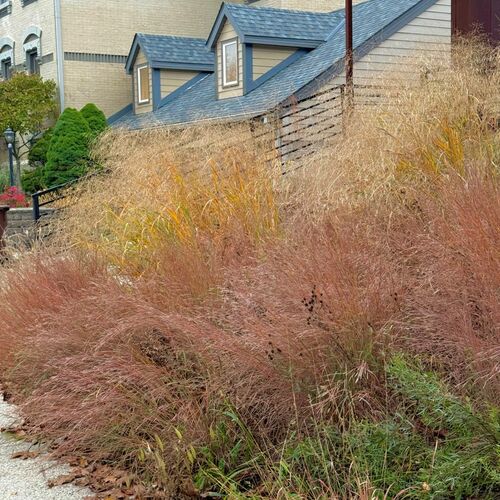
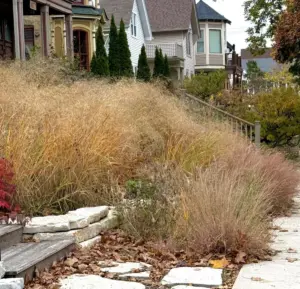
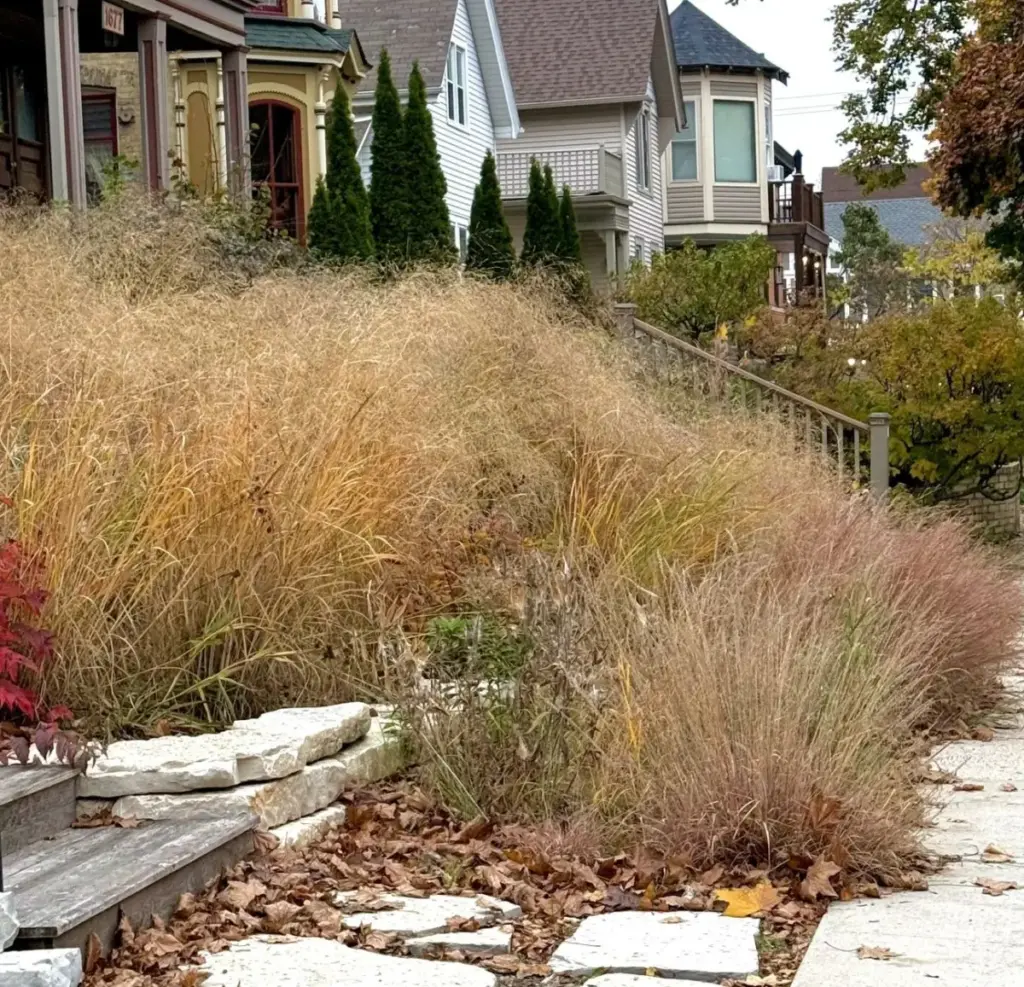
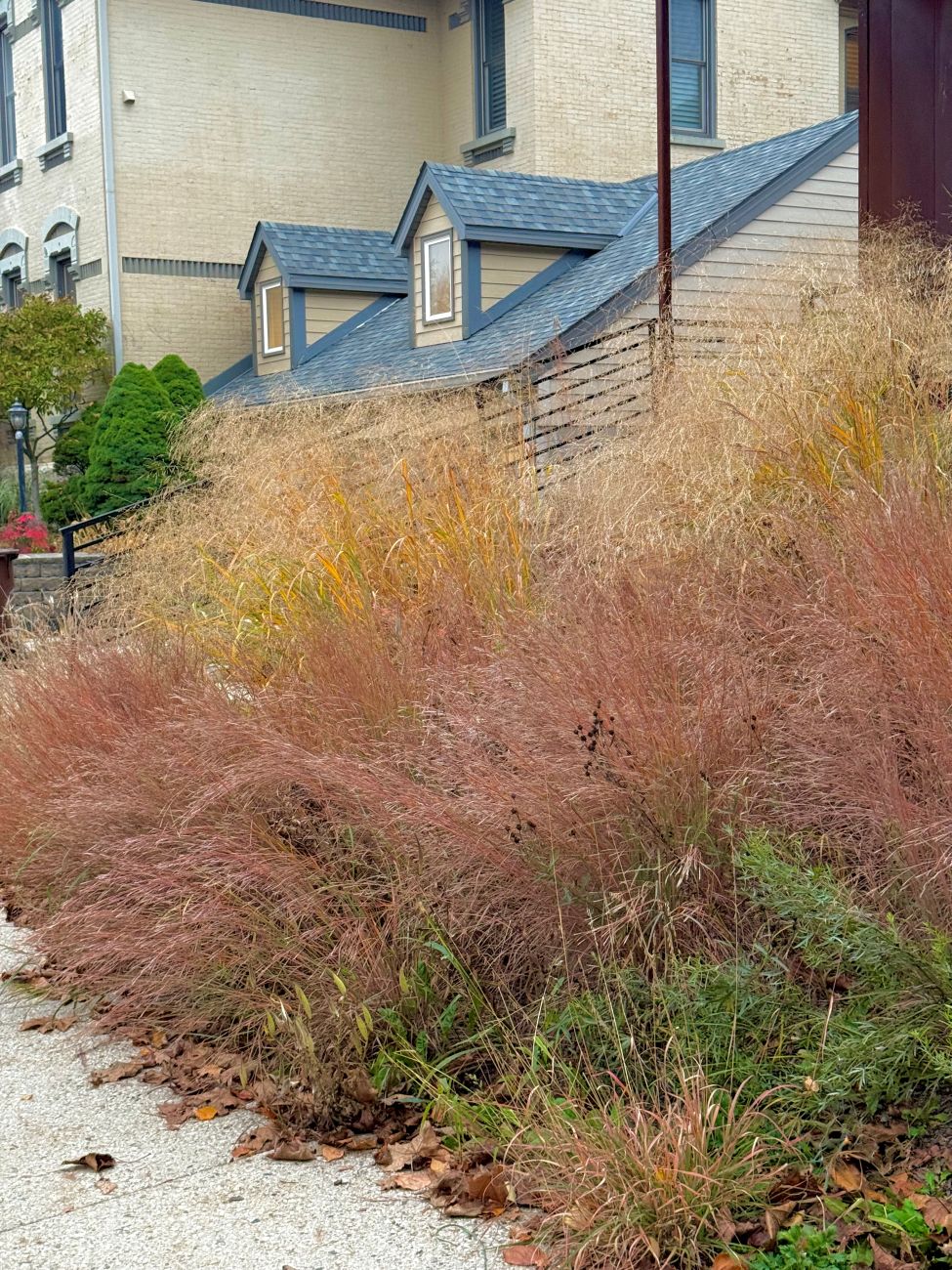
Setting out on a familiar route through the historic downtown neighborhood, the walk begins with a striking, prairie-inspired urban garden that serves as a focal point for the block. During the peak of summer, this densely planted landscape hums with the energetic activity of local pollinators, making it a favorite fixture for pedestrians and dog walkers alike. As November advances, however, the character of the space shifts dramatically, allowing large sweeps of native and ornamental grasses to take center stage. Expansive drifts of switchgrass (Panicum virgatum, Zones 4–9) and little bluestem (Schizachyrium scoparium, Zones 3–9) dominate the view, utilizing their height and texture to make a powerful visual statement when planted en masse.
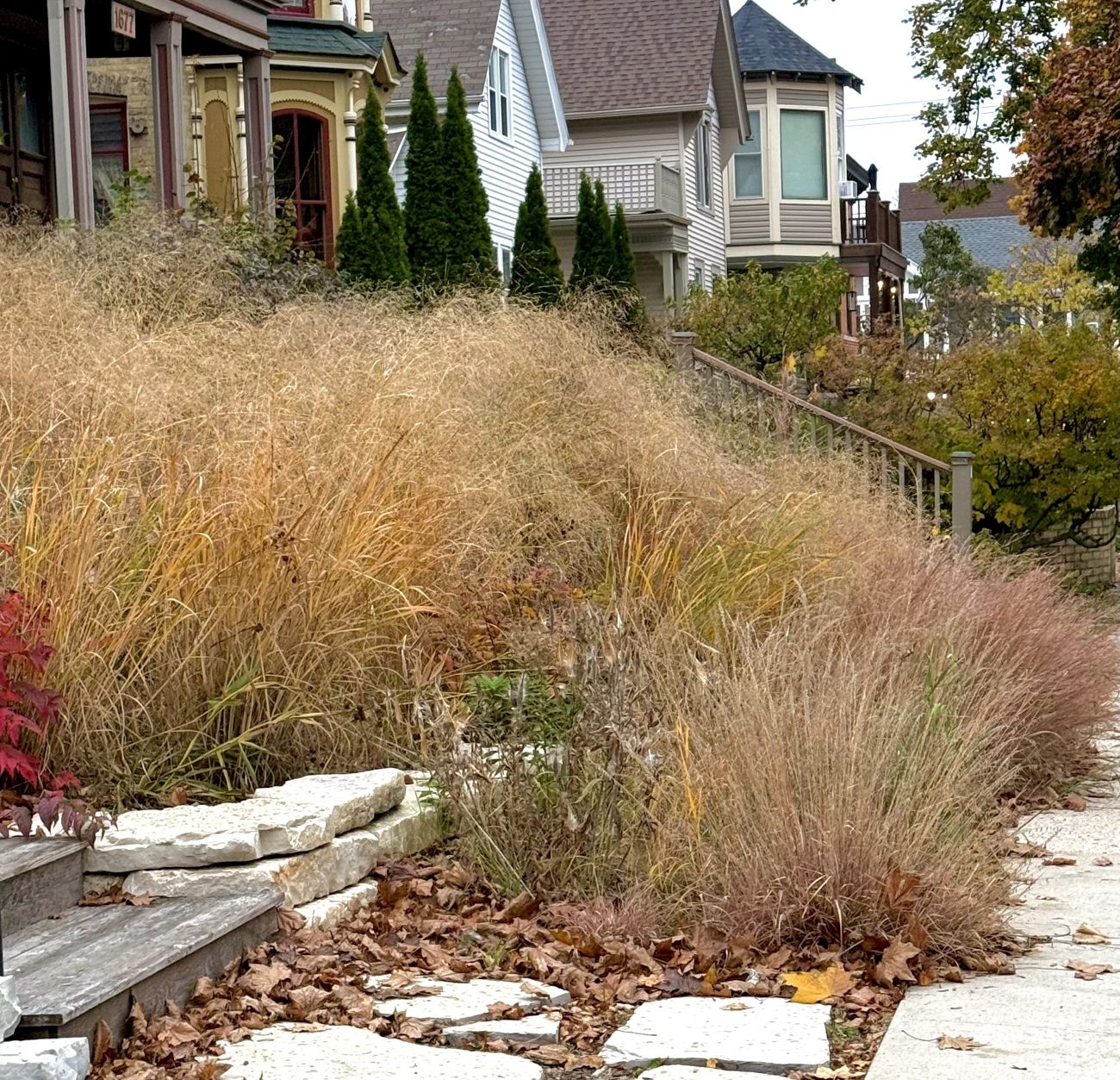
Approaching the property from an alternate angle reveals the shifting color palette of the little bluestem, where prominent pinkish-copper tones catch the weak late-autumn sunlight. The meticulous landscape design refuses to confine itself to the traditional boundaries of the front yard, spilling seamlessly across the sidewalk and out into the public curb strip. This intentional extension integrates the urban planting directly into the neighborhood infrastructure, ensuring that the small garden remains an impossible-to-miss landmark for anyone navigating the downtown streets.
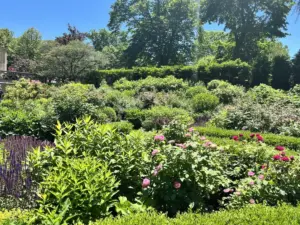
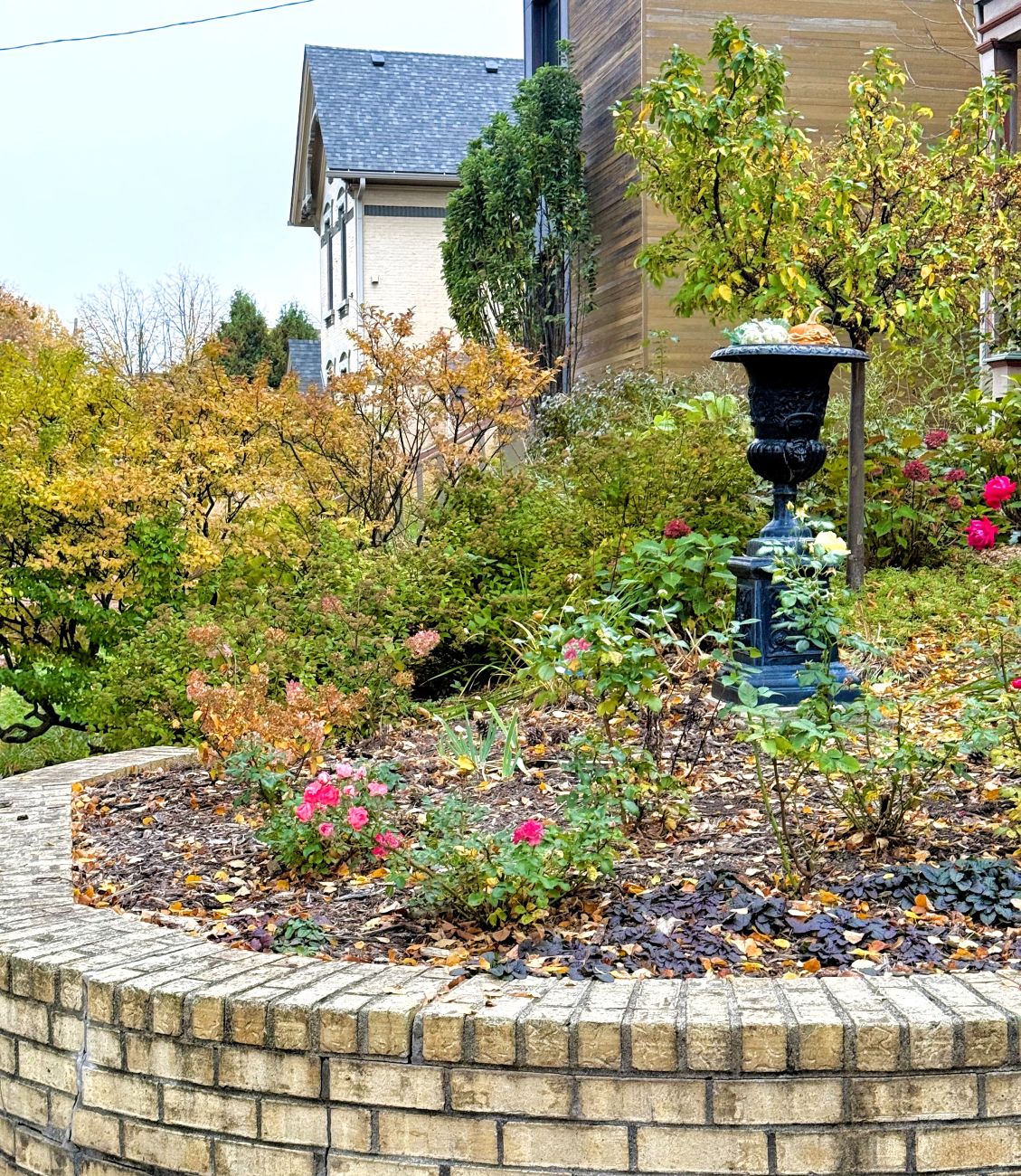
Just a few houses down the block lies another architectural and horticultural inspiration, demonstrating a masterclass in year-round landscape interest. The entire residential yard is designed with meticulous elegance, ensuring that structural and visual appeal persists regardless of the calendar month. While temporary seasonal gaps during the warmer months are typically filled with vibrant annuals, the arrival of November fails to extinguish the yard’s vitality. Surprising late-season resilience is on full display as hardy roses continue to produce sporadic blooms alongside hydrangeas making a final, determined effort to remain relevant. A classic decorative urn positioned in the background, thoughtfully accented with a crisp seasonal pumpkin, provides a charming touch that bridges the gap between autumn harvest traditions and the impending winter freeze.
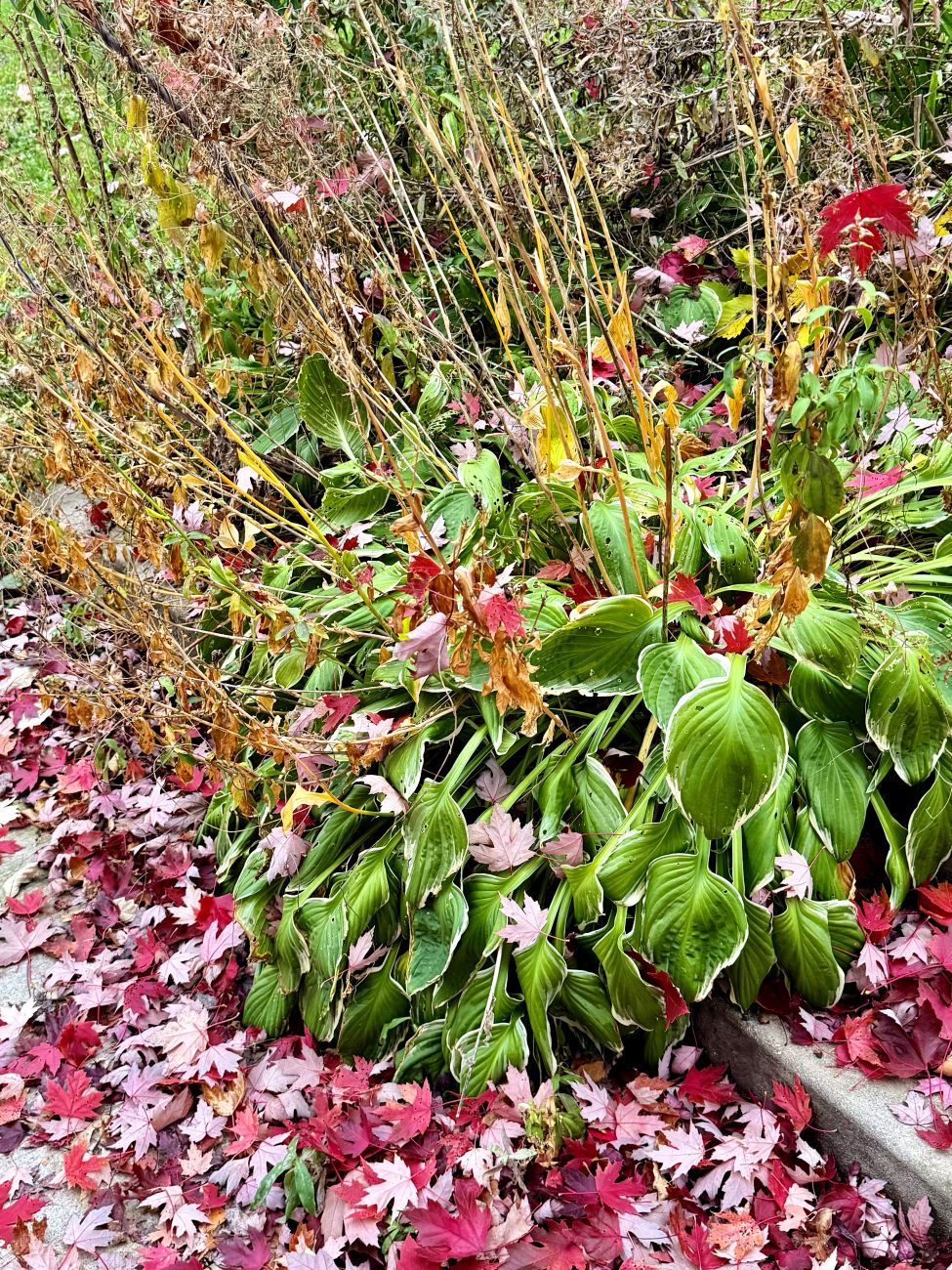
Continuing down the sidewalk, the walk passes a more relaxed, naturalistic garden style that challenges conventional notions of urban landscape maintenance. To an untrained eye, the scene might appear unkempt or messy, but it embodies the exact brand of autumnal disorder that true nature enthusiasts celebrate. Mature hostas (Hosta cvs., Zones 3–9) spill in luxuriant waves over concrete front steps, becoming artfully intertwined with a blanket of fallen red maple leaves. This unforced union of deciduous detritus and dormant foliage highlights the aesthetic value of letting nature take its course as the growing season winds down.
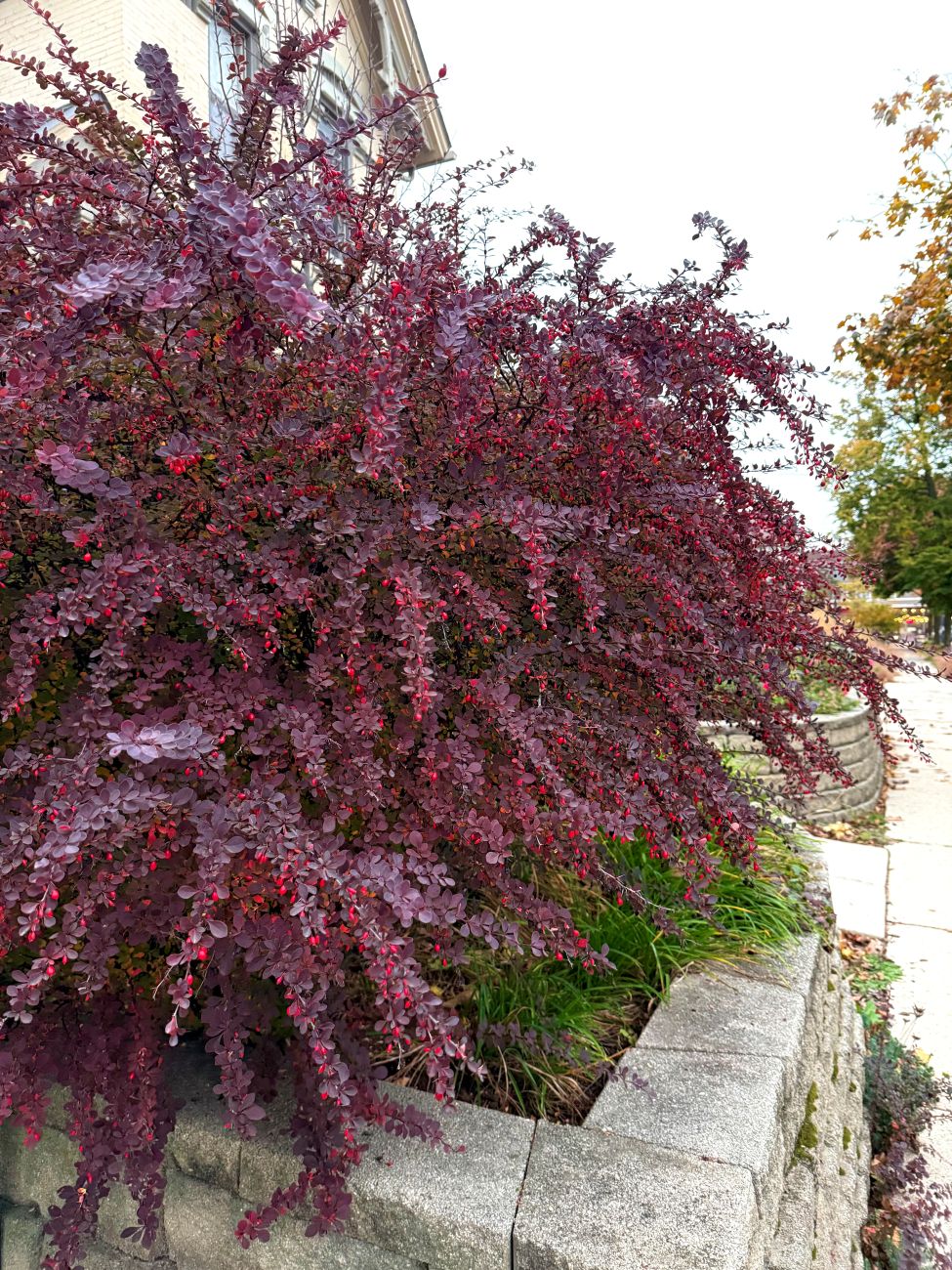
Amidst the celebrated decay of autumn, however, vigilance remains necessary regarding invasive plant species that persist in urban environments. A deep burgundy shrub laden with bright red berries immediately catches the eye, serving as a cautionary reminder of ecological concerns in Wisconsin. The specimen is identified as Japanese barberry (Berberis thunbergii, Zones 4–8), a notorious invasive shrub that poses significant threats to local native woodlands and ecosystems. Horticultural experts consistently advise homeowners who appreciate the rich color and dense growth habit of barberry to seek out responsible, native alternatives. Suitable regional substitutes include resilient options such as chokeberry, fothergilla, Virginia sweetspire, summersweet, and inkberry, all of which offer compelling landscape aesthetics without the environmental drawbacks.
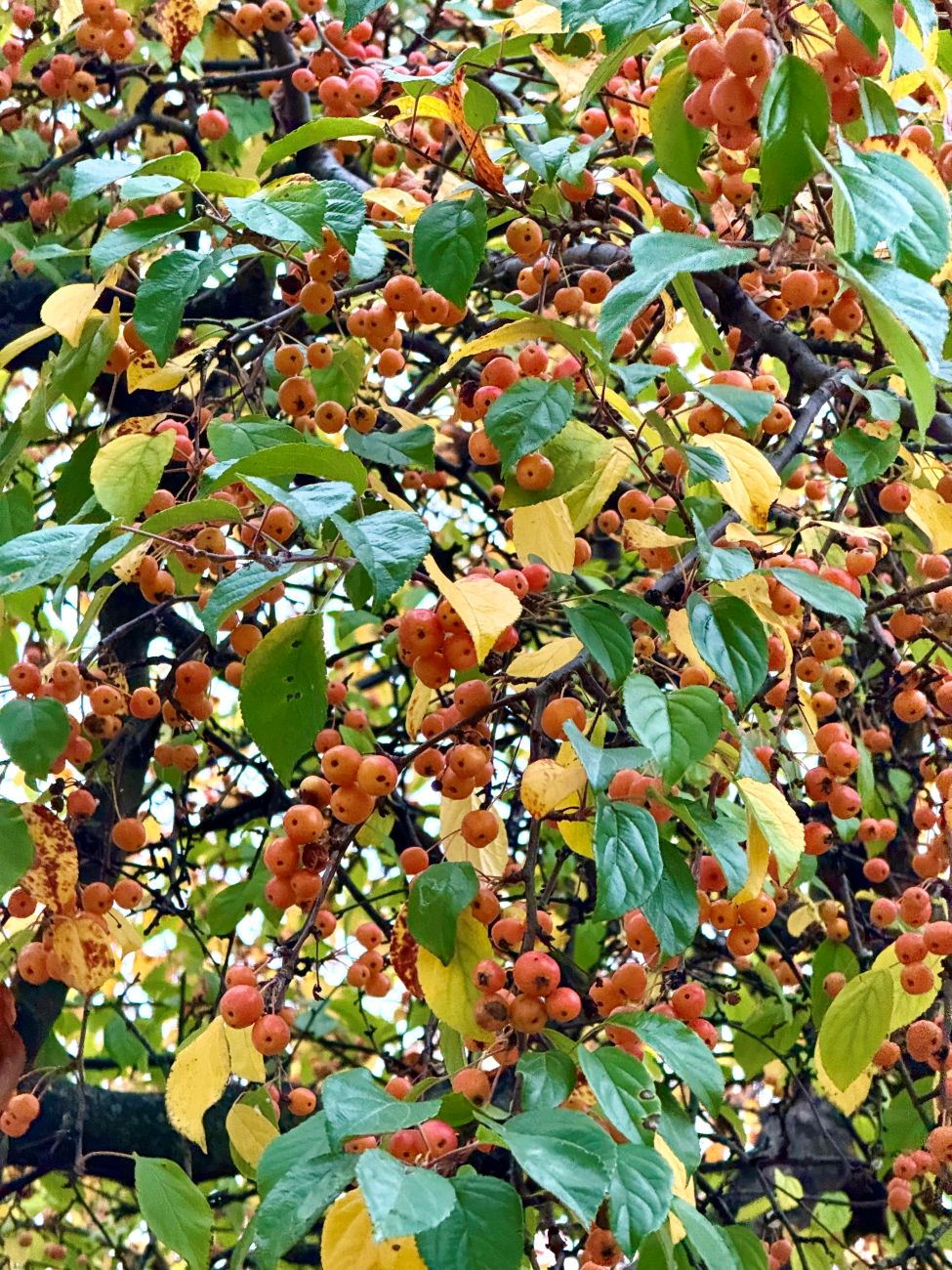
Shifting the focus back to beneficial plantings, a magnificent Siberian crab apple (Malus baccata, Zones 2–7) stands out as a major source of urban color. The tree is densely cloaked in clusters of warm orange fruit, providing a striking visual anchor in a landscape where traditional summer blossoms have long since vanished. As seasonal flora fades entirely from view, heavy-fruiting trees and shrubs step into the breach, delivering vital pops of color that enrich the neighborhood’s visual tapestry throughout the late-fall months.
Further along the route, another exemplary instance of urban space reclamation appears as a front garden extends boldly past the property line into the neglected curb strip. These narrow ribbons of land situated between the sidewalk and the street are historically overlooked, frequently left as barren turf or compacted dirt. Yet, as this Milwaukee neighborhood demonstrates, such spaces harbor immense potential for creative landscape interventions. When thoughtfully planned, curb strips can be successfully transformed into miniature perennial gardens, thriving pollinator waystations, or biodiverse bee lawns that enhance both neighborhood aesthetics and ecological health.
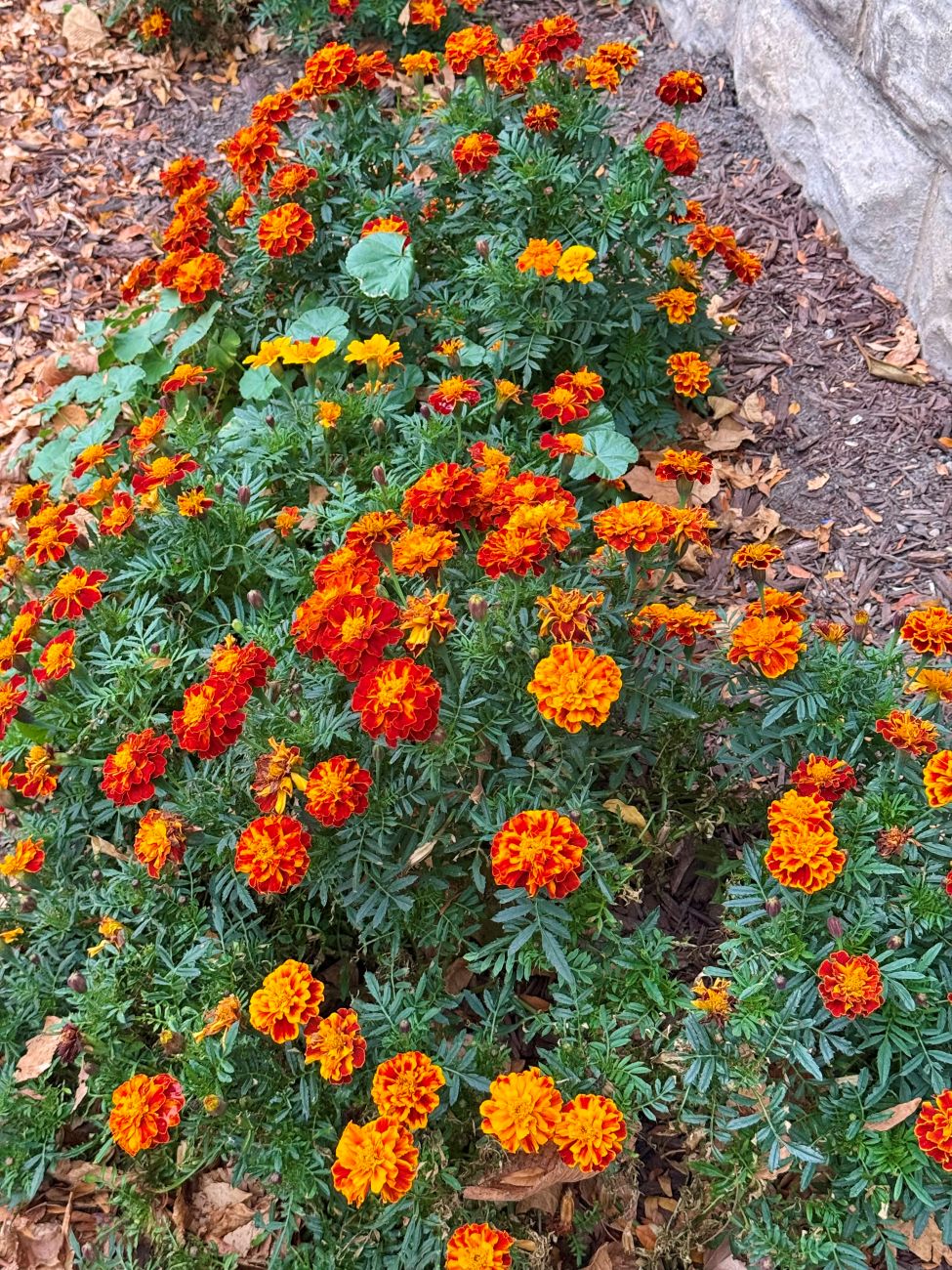
Adding a final splash of traditional color to the streetscape, a well-tended border of marigolds (Tagetes cvs., annual) defies the dropping temperatures, continuing to look remarkably fresh despite the advancing calendar. These resilient annuals underscore the capacity of certain cultivated plants to extend their peak performance deep into the autumn season, offering a cheerful contrast to the muted earth tones dominating the surrounding architecture.
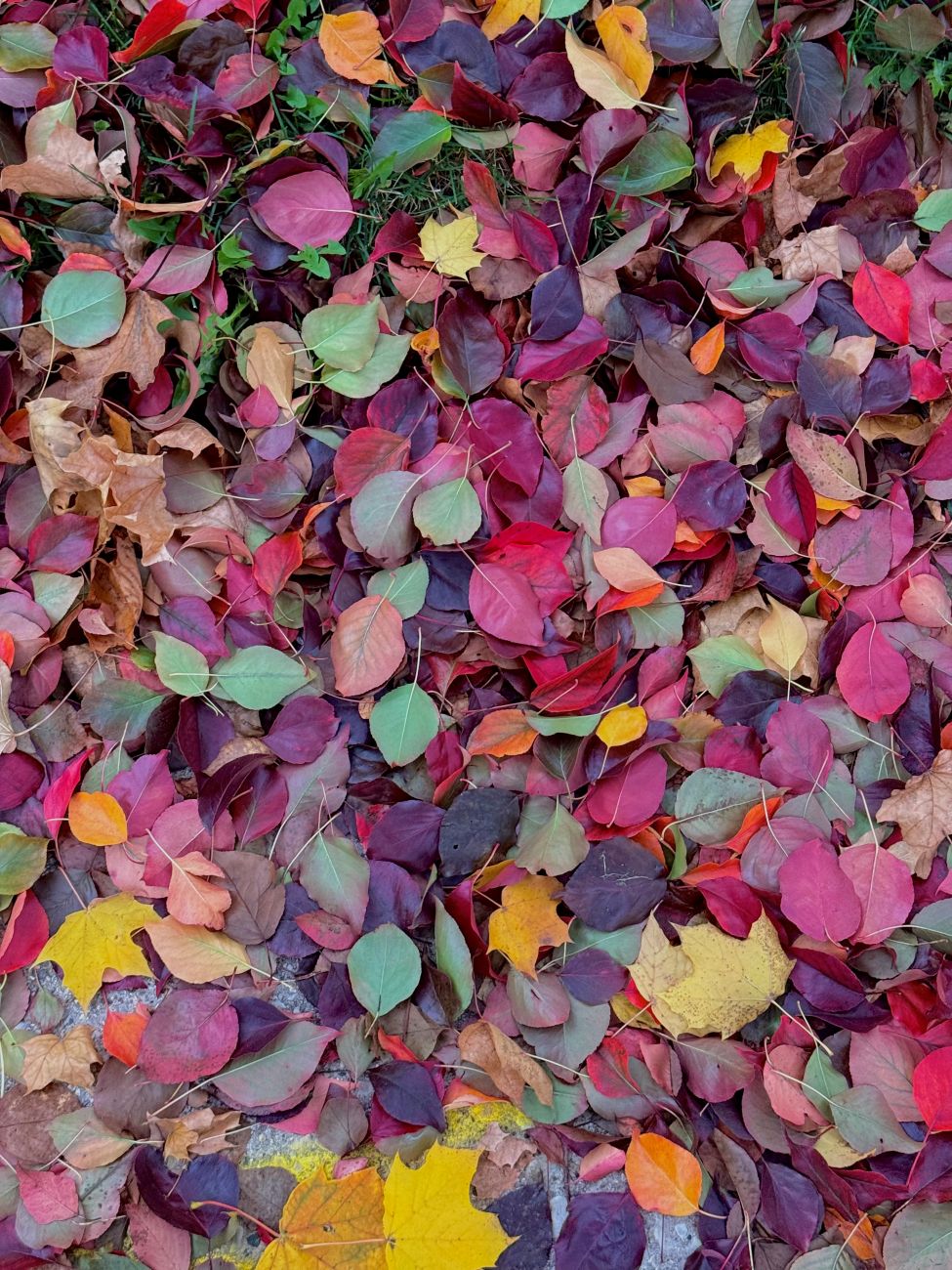
Underpinning many of these successful urban yards is a growing horticultural movement centered around ecological stewardship, perfectly encapsulated by the seasonal advice to leave the fallen leaves. Far from being mere yard waste requiring immediate cleanup, accumulated leaves provide essential overwintering habitat for a wide array of beneficial insects and native pollinators. Allowing even a portion of these leaves to remain undisturbed in garden beds ensures that local wildlife possesses a secure refuge to weather the harsh winter months until spring temperatures return.
This immersive afternoon walk through downtown Milwaukee serves as both a celebration of regional late-fall horticulture and a poignant personal milestone. While these neighborhood observations typically unfold as part of a familiar routine in a beloved backyard setting, that private sanctuary has already been packed away for transport. In just a few short weeks, a relocation to the state of Georgia will mark the beginning of a brand-new chapter. Though leaving behind the historic streets, familiar faces, and resilient cold-climate gardens of Wisconsin presents a bittersweet transition, anticipation builds for the discovery of unfamiliar plant species, novel garden designs, and entirely new southern landscapes waiting to be explored.