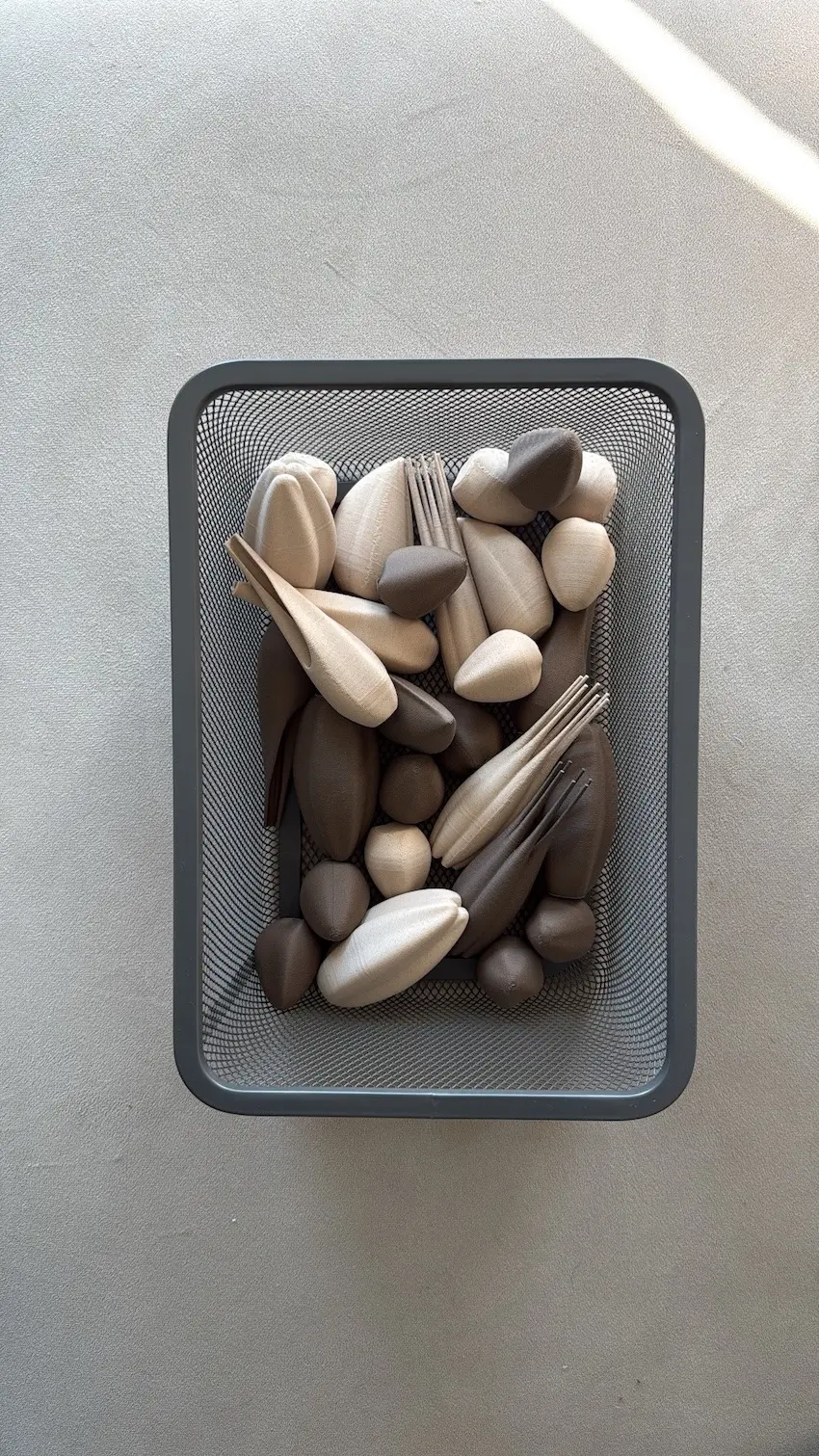
Industrial designer Lucy Aboonour has introduced Flora, a meticulously engineered tactile chess set designed to be recognized, grasped, and maneuvered primarily through touch rather than sight. The project, which was developed over an extensive four-year period of observational research conducted across New York City parks and local chess clubs, directly addresses common ergonomic shortcomings frequently found in contemporary minimalist chess sets. In many modern designs, extreme visual abstraction often impedes rapid piece identification and comfortable tactile handling during fast-paced competitive play, a problem that Aboonour set out to solve through human-centric industrial design.
The inception of the Flora chess set stemmed from rigorous field studies observing how players interact with their pieces under various competitive pressures. Aboonour noted that traditional designs rely heavily on visual cues, which can slow down players who prefer to keep their eyes fixed on the broader tactical landscape of the board rather than individual pieces. Furthermore, contemporary minimalist sets often prioritize visual aesthetics over haptic feedback, resulting in pieces that are difficult to distinguish by touch alone or prone to tipping over during rapid movements. By shifting the primary mode of interaction from sight to touch, the Flora chess set offers a fluid, intuitive gameplay experience that enhances both speed and tactile satisfaction.
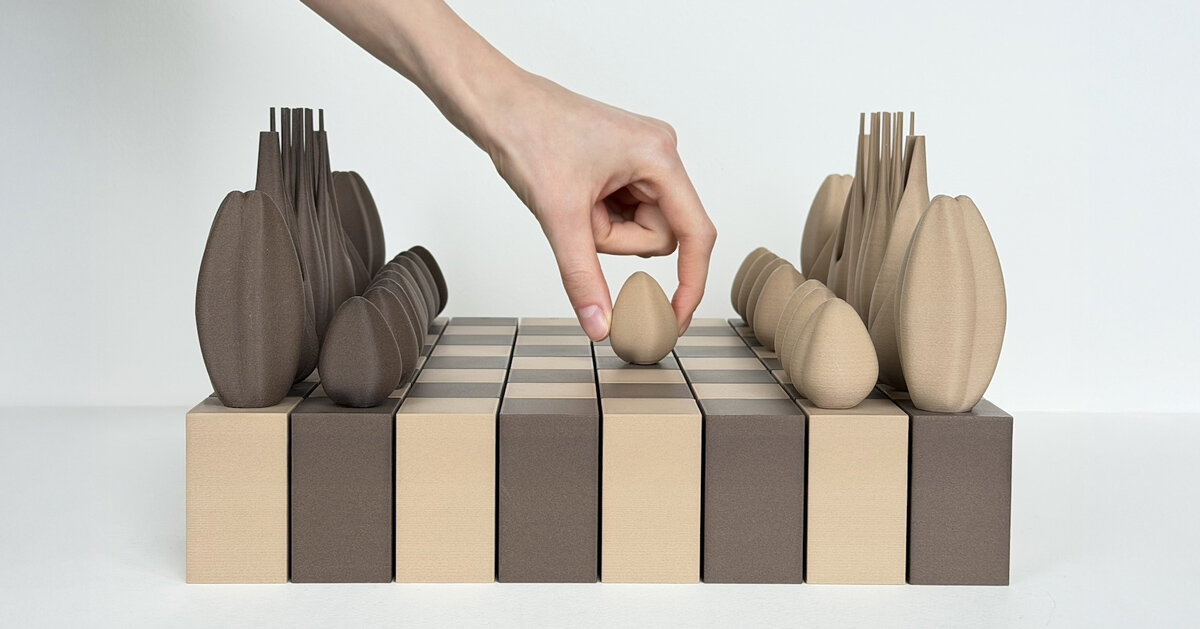
CONVEX OAK AND WALNUT PROFILES INTEGRATE PINCH-GRIP CONTOURS
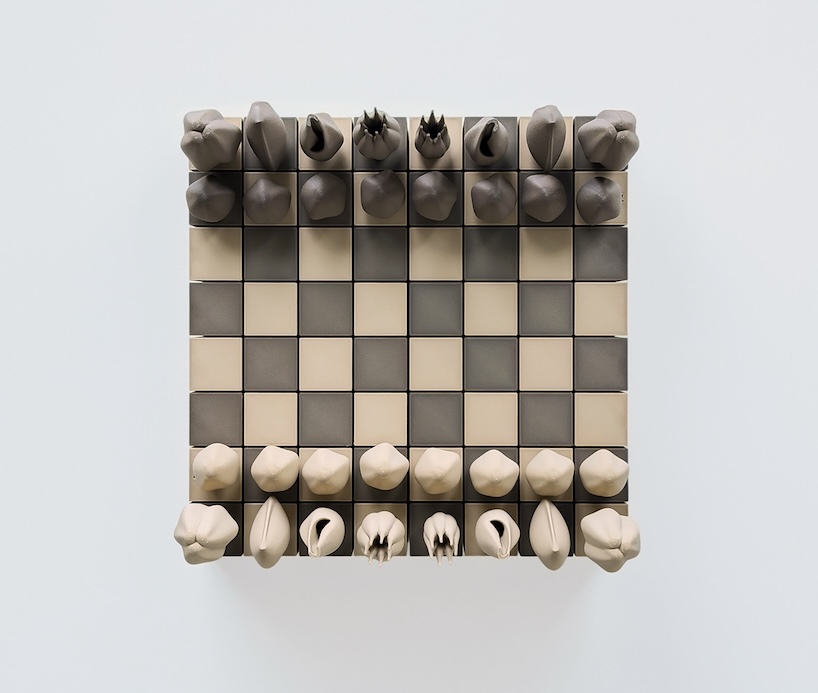
At the heart of the Flora design are its six distinct piece typologies, each carefully engineered with a wide footprint, a tapered silhouette, and a weighted base configured with an intentionally low center of gravity to prevent tipping during aggressive moves. The geometric profiles of the pieces incorporate convex curvatures that have been specifically calibrated for a two-finger pinch grip. This thoughtful shaping distributes fingertip pressure evenly, maintaining hand stability and precision during quick, high-stakes tactical maneuvers.
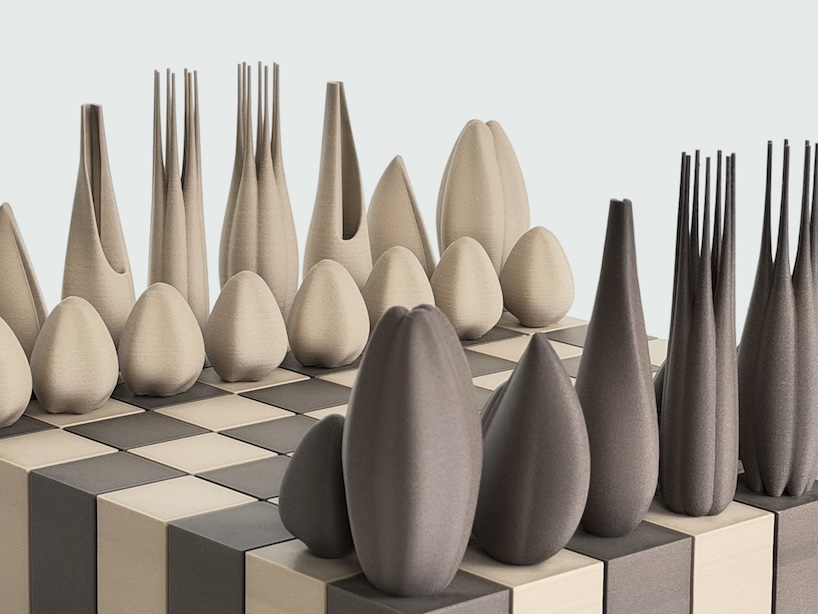
The development of these ergonomic contours was an iterative process that spanned from 2021 to 2025. Aboonour utilized advanced 3D printed prototyping using recycled PLA and wood composites to test various proportions, weights, and tactile responses. These early prototypes allowed for continuous refinement through hands-on testing in real-world playing environments. Once the optimal geometries were established, the final production sets were milled from contrasting American white oak and American walnut, combining natural warmth, durability, and a sophisticated visual contrast that complements the innovative haptic design.
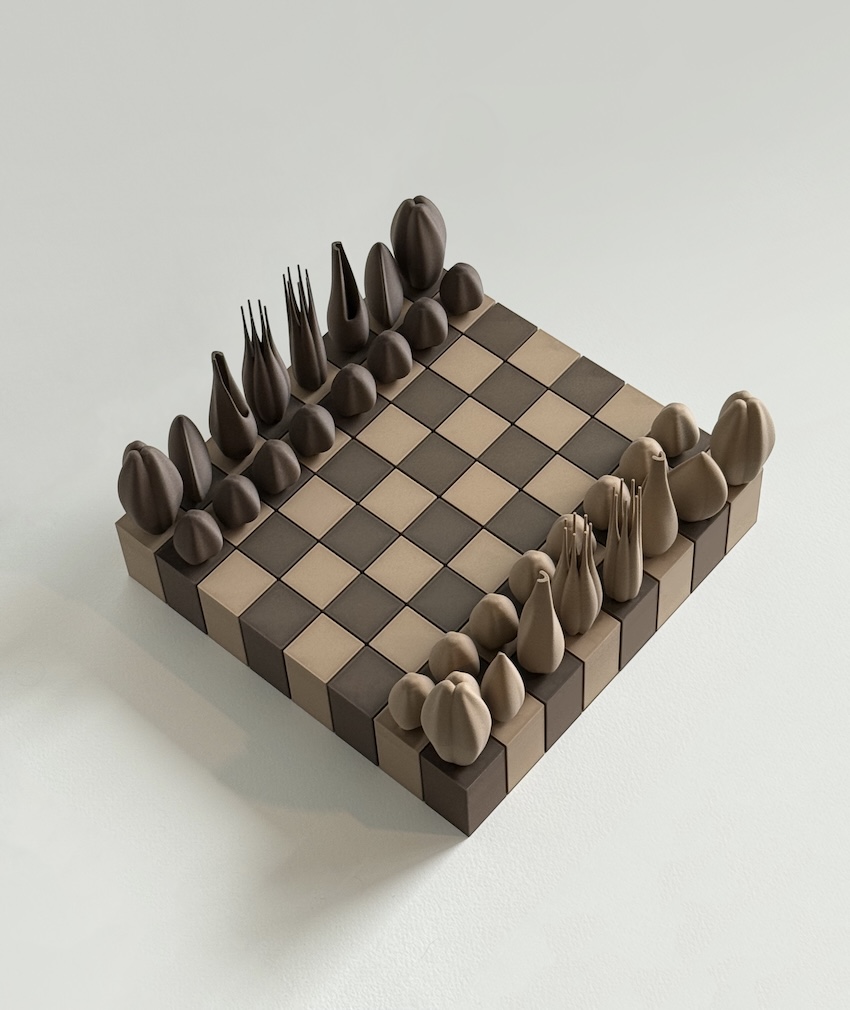
The implications of Lucy Aboonour’s ergonomic research extend far beyond terrestrial gameplay on traditional boards. As part of her broader design inquiry, Aboonour has examined how tactile recognition, haptic feedback, and grip dynamics perform in microgravity environments. This forward-looking aspect of the research considers potential applications for hand-operated interfaces, tools, and instrumentation utilized on orbital stations, where astronauts often rely on tactile cues and specialized grips when operating equipment in weightless conditions. By bridging the gap between traditional board games and advanced ergonomic science, the Flora chess set demonstrates how tactile feedback can be optimized across diverse physical environments.