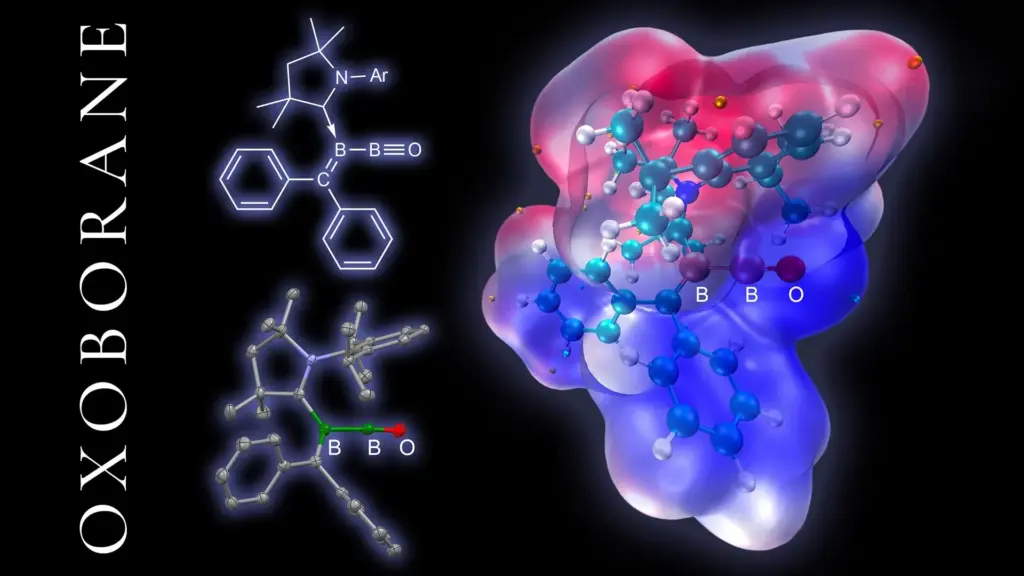
For more than sixty years, a stubborn fundamental challenge in main-group chemistry has quietly frustrated research groups around the world. The target of their frustration was a class of unusual molecules known as oxoboranes—compounds featuring a delicate and highly reactive triple bond between boron and oxygen. Long dismissed by the scientific community as inherently too unstable to exist outside of fleeting, extreme conditions, these elusive entities have finally been produced, isolated, and brought into the laboratory light.
A team of chemists at the University of Würzburg in Germany has successfully achieved what generations of researchers could not. Led by Professor Holger Braunschweig, the research group discovered a surprisingly straightforward methodology to synthesize and stabilize oxoboranes under ordinary laboratory conditions. Their landmark findings, which bridge a significant gap in our understanding of chemical bonding, were published in the prestigious journal Nature Chemistry. The breakthrough was bolstered by crucial theoretical and computational support from a research team led by Professor Ashwini K. Phukan at Tezpur University in India, creating a truly global collaborative effort to unlock one of the periodic table’s persistent secrets.
Solving a 60-Year Chemistry Challenge
To understand the magnitude of the Würzburg team’s achievement, one must look closely at the unique nature of boron. Situated in the first row of the p-block on the periodic table, boron is an element known for its electronic versatility, yet it notoriously resists forming multiple bonds, particularly triple bonds—a chemical connection where two atoms share three pairs of electrons. For over fifteen years, Professor Braunschweig has made the mastery of these unusual bonds a primary focus of his laboratory, steadily pushing the boundaries of what was thought chemically possible.
The road to this latest discovery was paved with several monumental milestones. Back in 2012, Braunschweig’s laboratory made international waves by reporting the synthesis of the very first stable molecule containing a triple bond between two boron atoms. That achievement was followed by another major breakthrough, when the team successfully produced the first neutral molecule featuring a stable triple bond between boron and carbon.
Despite these advances, a glaring vacancy remained among the first-row elements of the p-block. While chemists had successfully forged multiple bonds between various other elements, stable organic oxoboranes—defined by their characteristic triple bond between boron and oxygen—remained completely out of reach.
The global pursuit of oxoboranes dates back at least to the early 1960s. Over the ensuing decades, generations of organic and inorganic chemists chased the elusive compounds. Under extreme, highly specialized conditions, researchers occasionally managed to briefly detect and trap oxoboranes, while other experiments offered tantalizing indirect evidence of their transient existence. Chemists also managed to synthesize various related derivatives that hinted at the core structure’s properties. However, obtaining a truly stable, isolable example that could be bottled, examined, and thoroughly studied remained the holy grail of this specific branch of chemistry—an unsolved puzzle that many in the field eventually came to regard as an impossible dream.
An Unexpected Reaction Produces Elusive Molecules
The long-awaited turning point did not emerge from a targeted, linear campaign to finally conquer the oxoborane problem. Instead, like many of the most important breakthroughs in the history of science, it materialized from an unexpected observation during experiments that initially appeared to be heading down an entirely different scientific path.
Two doctoral students at the University of Würzburg, Lukas Lubczyk and Christian Markl, were independently investigating complex chemical reactions involving a specialized class of compounds known as diboracumulenes. They were reacting these compounds with various ketones—ubiquitous chemical agents commonly relied upon throughout standard organic synthesis.
As the experiments progressed, both researchers independently noticed something highly unusual occurring within their reaction vessels. Rather than yielding only the predictable outcomes dictated by standard organic chemistry textbooks, the reactions consistently generated distinctive, vibrant orange or yellow solids. In the realm of chemistry, unexpected color shifts are frequently the first macroscopic sign that a novel molecular architecture is forming.
Reflecting on the serendipitous moment, Lukas Lubczyk noted the sheer surprise of the laboratory observations. The discovery, he explained, was a pleasant shock, adding that he never anticipated the diboracumulene would react in such a manner, let alone interact successfully with multiple different, simple substrates. When Christian Markl independently approached him with a matching compound, both students realized they had stumbled onto a major phenomenon.
What made these results uniquely remarkable was the revelation that oxoboranes were emerging as the primary products of these reactions. Given the historical difficulty of forcing these bonds to form and remain intact, several other chemical pathways had initially seemed far more likely. Yet, after more than sixty years of failed attempts to deliberately isolate such molecules, the researchers demonstrated that they could form spontaneously and unexpectedly from relatively simple, accessible starting materials.
Professor Braunschweig candidly described just how stunned the research community was when the results were fully analyzed. He noted that nearly everybody working in the field had long since given up on oxoboranes, operating under the widespread consensus that they were simply too unstable to ever be isolated and handled in a standard laboratory setting. Consequently, seeing them spontaneously form during these routine reactions—and persist long enough to be thoroughly studied and characterized—left the Würzburg team entirely astonished.
A New Path to Rare Chemical Compounds
Armed with this newly uncovered synthetic method, the scientists quickly set out to test its versatility. They successfully prepared not just one, but three different oxoboranes using the technique. The fact that the approach proved successful across multiple distinct compounds indicates that this is not an isolated fluke, but rather a robust chemical pathway. It suggests the potential to unlock a much wider, previously inaccessible range of these difficult-to-isolate molecules for future study.
The research team is currently hard at work investigating the broader horizons of their technique. Beyond synthesizing additional variations of oxoboranes, the scientists harbor hopes of determining whether similar strategic approaches might be adapted to create other elusive compounds involving various other challenging elements scattered across the periodic table.
This breakthrough does far more than simply close the book on a sixty-year-old debate in chemical literature. It serves as a compelling reminder of how unexpected chemical reactivity can continually rewrite the boundaries of what is possible, opening doors to realms of molecular architecture that researchers once believed were permanently closed.
International Research Collaboration and Funding
The successful culmination of this decades-long scientific quest was made possible through a robust international partnership. The experimental work conducted by Professor Holger Braunschweig’s team at the University of Würzburg was deeply complemented by theoretical and computational chemistry carried out by the research group led by Professor Ashwini K. Phukan at Tezpur University in India. By modeling the electronic structures and reaction pathways, the Indian research team provided critical insights that helped validate and explain the experimental observations.
Financial support for the extensive research endeavors was provided by several major scientific funding bodies, including the German Research Foundation, known as the DFG, and the German Academic Exchange Service, or DAAD. Additionally, the collaborative efforts were supported by the Department of Science and Technology of India, underscoring the vital role that cross-border academic partnerships continue to play in driving fundamental scientific discovery forward.