You have finally found an apartment within your budget in a city where affordable housing feels like a myth. You hand over the first month’s rent and a steep security deposit, fill up a moving truck with all of your belongings, and arrive eagerly at your new front door. Then reality sets in: the key does not turn in the lock, the lights inside are off, and the "broker" who promised you the keys has completely vanished into thin air.
According to a sweeping criminal indictment secured by the Queens District Attorney’s Office, more than a dozen unsuspecting home-seekers were allegedly duped by a 35-year-old Long Island man operating a sophisticated rental scheme that spanned more than a year. The operation highlights the immense vulnerabilities renters face in one of the most competitive housing markets in modern history.
"This defendant took advantage of those seeking housing by purporting to be a real-estate agent and renting out properties that did not belong to him," Queens District Attorney Melinda Katz said in a statement detailing the charges. "The unsuspecting tenants gave him payments and signed phony leases that left them without their money and housing."
The playbook executed by the defendant, Rajat Verma of Franklin Square, was remarkably twisted, according to investigators with the district attorney’s office. Between September 2022 and November 2023, Verma allegedly targeted various apartments across Queens and Brooklyn. He would apply to rent these apartments through legitimate channels, but when it came time to pay, he would hand over fraudulent checks to the actual landlords in exchange for the keys.
During the crucial window of time it took for the landlords to process the transactions, discover the checks were bad, and realize they had been conned, Verma allegedly pivoted. He posed as a licensed real-estate broker and advertised the very same apartments online. To avoid detection, he operated under roughly a dozen different aliases, adopting false personas such as "Bobby Gupta," "Dave Mair," and "Samir" to interact with prospective subtenants and clients.
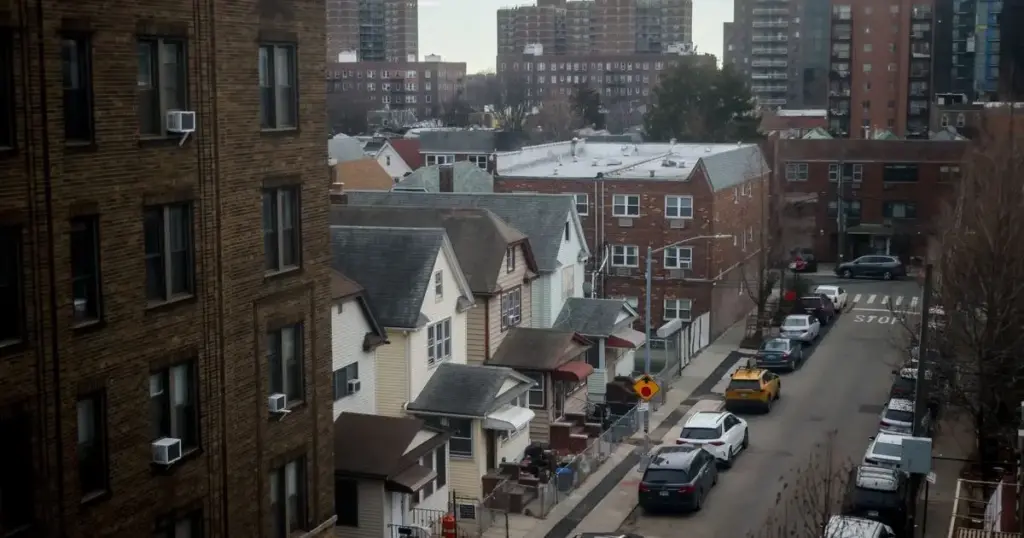
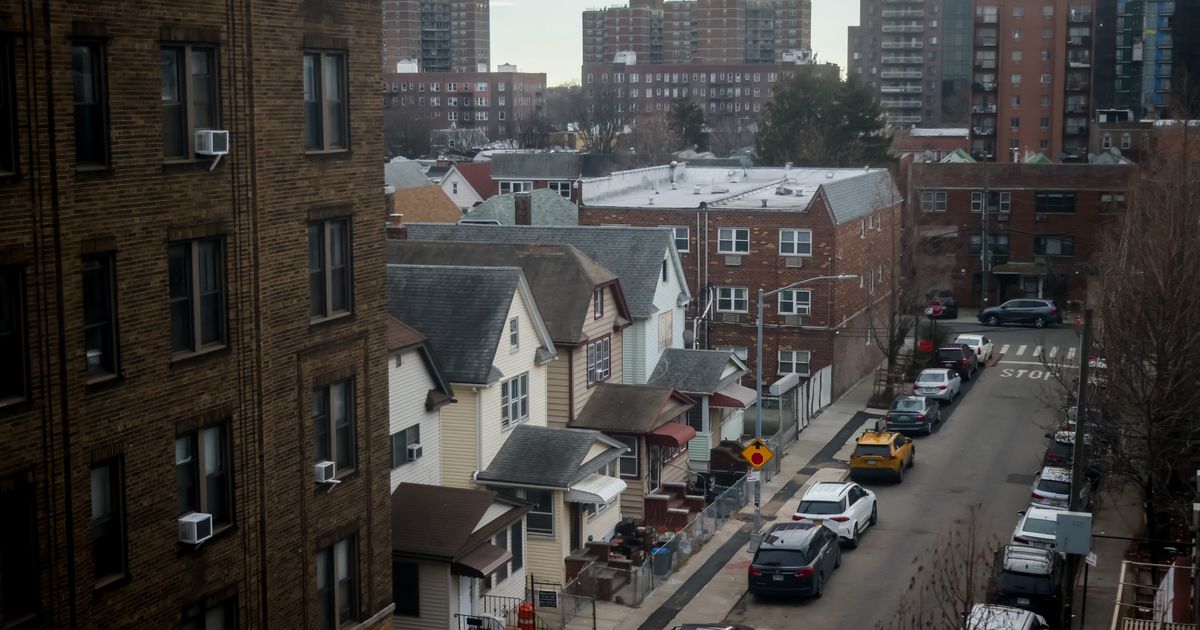
Investigators found that at least 15 people fell for the listings, which spanned eight different apartments across diverse neighborhoods stretching from Maspeth and College Point in Queens down to Bay Ridge in Brooklyn. These victims paid Verma thousands of dollars in aggregate, receiving physical keys to what they firmly believed would be their new homes.
Verma apparently showed little concern for how quickly his victims might discover the truth. In some instances, the keys he handed over simply did not work in the locks. In an even more jarring case highlighted by the district attorney’s office, a tenant arrived at an apartment they had already paid for, only to discover that a completely different family—who had also been allegedly conned by Verma—was already living inside.
In total, prosecutors say Verma defrauded would-be tenants out of $61,625 in security deposits and other upfront rental fees. He is now facing up to seven years in prison if convicted on a laundry list of serious charges that include fraud, identity theft, and grand larceny.
Meanwhile, legal representation for Verma has pushed back against the accusations. Joseph Grasso, an attorney representing Verma, firmly denied the allegations during court proceedings, describing his client as a "devoted husband, father, and family man who resides with and helps care for his elderly parents."
While Verma’s alleged scheme stands out as one of the more structurally involved rental cons investigated by local authorities in recent memory, law enforcement officials emphasize that housing scams of this nature are far from a rarity in New York City.
The city’s real-estate landscape provides a uniquely fertile breeding ground for criminal opportunists. With the citywide residential vacancy rate hovering at a historic low of roughly 1.4 percent and market-rate rents consistently shattering previous records, it is effectively open season for housing scammers looking to exploit desperate renters who feel they must move quickly to secure any roof over their heads.
The mechanics of these schemes often vary, but the emotional and financial toll on victims remains consistently devastating. Just last year, a man named Nicholas Fuelling successfully scammed 17 people out of roughly $50,000 by advertising a $3,200-a-month sublease for a single bedroom in a Hell’s Kitchen apartment he had been renting. None of the prospective subtenants were ever able to move into the unit, and several were reportedly left effectively homeless by the sudden disruption. Fuelling subsequently pleaded guilty to grand larceny and fraud charges.
In another high-profile case prosecuted over the summer, a man named Juan Valoy pleaded guilty to a sprawling scheme that involved masquerading as a legitimate real-estate broker. Valoy stole over $100,000 in security deposits and upfront fees from nearly two dozen apartment hunters across Manhattan and the Bronx before authorities finally caught up with him, resulting in a prison sentence.

"The real-estate market is tight, and opportunity breeds fertile ground for fraud," Manhattan District Attorney Alvin Bragg warned during an interview with Crain’s New York, discussing the rise of sophisticated housing crimes. "We see people who are quite good at fraud and exploiting a moment."
Despite the prevalence of these sophisticated operations, housing advocates and legal experts note that there are tangible steps prospective renters can take to protect themselves before handing over hard-earned cash. The New York Department of State maintains a publicly accessible online database containing records for every licensed real-estate broker operating across the state. Verifying credentials through official channels is a critical baseline defense against impostors.
Additionally, industry professionals recommend conducting independent background searches and utilizing online mapping tools to confirm that the person advertising the property actually owns it or possesses the legal authority to sublease it.
"With a lot of these scam artists, you probably would figure out or find out about them once you looked, so verifying who you’re dealing with is super important," a real-estate attorney told Gothamist in an interview regarding rental fraud prevention. "If something seems sketchy, go with your gut."
Authorities in Queens continue to investigate the full scope of Verma’s operations and are encouraging anyone with additional information regarding the case to contact the Queens District Attorney’s Office or send tips directly to local investigative channels.