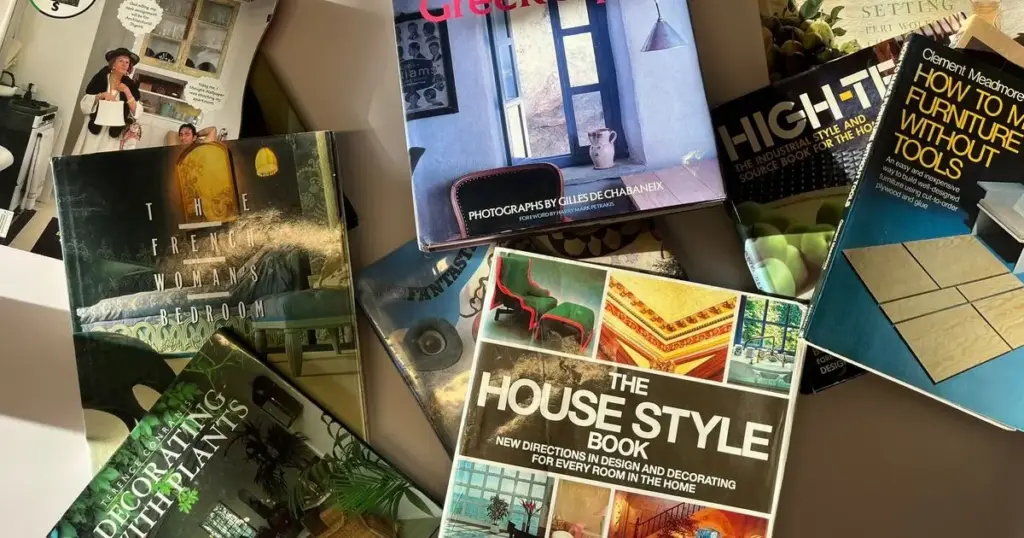
David Michon, the founder and editor of the Substack and print magazine For Scale—a publication dedicated to “the supreme potential of interior décor” that has earned a reputation in the design world as being equal parts opinionated, subversive, and joyfully weird—is taking his distinct design philosophy off the screen and into the physical realm. Partnering with Santa & Cole, the renowned makers of the essential Bib Luz bookshelf lamp, Michon has curated a weeklong pop-up interiors bookshop housed at Park at Kims in Nolita, offering a sharp corrective to the homogenous design literature found in traditional retail spaces.
The inspiration for the pop-up struck Michon during a bleak February blizzard in New York City. Seeking brief meteorological and spiritual shelter while walking between meetings, he stepped into the McNally Jackson bookstore on Prince Street, an experience that quickly soured into a quiet rage. Staring at the shop’s dedicated “interior design” section, he was confronted by a wall of roughly 150 near-identical monographs, many sharing the exact same title conventions heavily featuring the word “curated.”
To Michon, this manufactured aesthetic bore no resemblance to reality. Nobody who genuinely cares about décor maintains a bookshelf that looks like a pristine corporate mood board. Real décor bookshelves possess a distinct range, erratic classifications, and thoroughly blurry edges. A genuine design shelf, in his view, is far more eclectic, featuring out-of-print books on quilts, obscure texts on medieval tablescapes, cultural theories exploring the evolution of taste, vintage magazines, unexpected treatises on ikebana, and even a physical DVD copy of Whit Stillman’s film Metropolitan.
Seeking to bring this messy, authentic vision of a domestic library to life, Michon collaborated with Geoff Snack, the founder of the specialized bookshop Wrong Answer, located inside the USM showroom in Soho. To fill the shelves of the pop-up, Michon enlisted a roster of his favorite interior design figures—including Rosa Park of Francis Gallery, Kelly Wright of Yuns, Trang Tran of Salon 94, Andu Masebo, Levi Di Marco, Landslide Books, the Italo Book Club, Peter Staples of Blue Green Works, and Sophie Lou Jacobsen—asking each to contribute selections of their personal favorite titles. The project then sourced affordable, accessible copies of these recommended works to populate custom USM shelving units built specifically for the pop-up space.
Reflecting on the motivations behind the project, Michon and Snack sat down to discuss the current state of décor publishing, the enduring allure of physical ephemera, and the sharp cultural divide between the messy reality of how people live and the highly sanitized ways interior design is packaged for public consumption today.
The conversation quickly turned to the physical condition of collecting old books and magazines. While many casual buyers or interior stylists treat books as uncracked, pristine props meant merely to telegraph taste from a coffee table, both editors expressed a deep appreciation for the physical evidence of use. For Snack, navigating the market requires balancing two opposing forces. While he personally gravitates toward the rich patina of old books and magazines that bear the physical scars of an active life, he acknowledges a strict hierarchy of wear. Minor edge-grit on pages and subtle yellowing represent a “good patina” that tells a story, whereas missing pieces of a dust jacket held together by yellowed tape cross the line into “bad patina.” Because many customers understandably request pristine copies, Snack must carefully curate a delicate middle ground between historical wear and clean preservation.
A central economic and cultural paradox of the trade is the historic difficulty of finding quality, inexpensive interiors books. Despite being out of print or hard to track down, these affordable titles fly off the shelves at Snack’s shop. Michon attributes this widespread appeal to a deep-seated psychological impulse: the ultimate fantasy of imagining one’s home as a radically unique, uncompromised expression of personal identity. Whether it functions as a genuine blueprint for living or merely as a low-stakes mind experiment exploring alternative versions of the self, these books tap into a potent domestic aspiration.
Among the treasures featured in the pop-up are rare 1980s issues of Ottagono, chosen by Formas. The Italian architectural and design magazine immediately caught Michon’s attention, prompting quick requests from eager buyers attempting to place items on hold despite the shop’s strict policies. Snack noted that Italian publishers have historically produced some of the most vital, eccentric design periodicals—including Domus, Casa, and the provocative zines produced by Archigram and Ettore Sottsass. Unlike permanent monographs, magazines are fundamentally liberating because they are not weighed down by the burden of being definitive or historically correct. Instead, they function as immediate, honest snapshots of movements that were actively and rapidly evolving in real time.
This spontaneous, snapshot-like quality explains why so many classic décor books of past decades were actually compiled from the pages of magazines like Architectural Digest or the New York Times. Michon, whose own Substack and print magazine frequently challenge contemporary industry standards, noted that his writing style purposefully attempts to mirror the fluid pace, intonation, and unpredictable tangents of spoken conversation rather than relying on dry, academic formalism. Both editors agreed that while people genuinely love to read about art and design, the traditional publishing industry has frequently made the genre unnecessarily tedious and rigid.
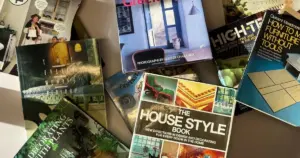
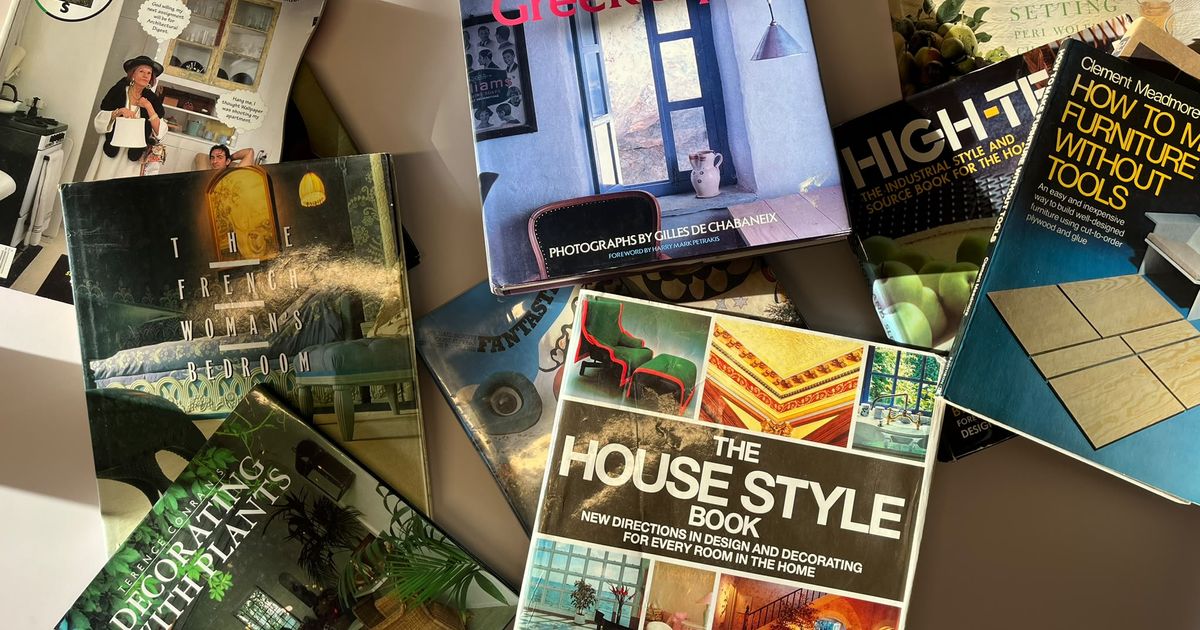
Examining older formats, the conversation highlighted the unmatched charisma of foundational works like High-Tech, co-authored by Suzanne Slesin. Celebrated as an indispensable fixture on countless designers’ shelves, the book stands out for its forensic, highly practical, and multidimensional approach, weaving together local shop owners, specific sourcing details, detailed histories, and intimate residential spaces. It represents a style of searching-and-sorting rather than mere curation—a philosophy shared by other boundary-pushing surveys like Underground Interiors.
Photography within interiors publishing has undergone a similarly drastic transformation over the decades. Michon pointed to the era of Paige Rense, who helmed Architectural Digest from 1975 to 2010. Rense possessed a famously distinct editorial vision, famously favoring moody nighttime photography—a technique virtually absent from modern design publications—and refusing to send armies of stylists and editors to sanitize a shoot into a predictable uniform. She frequently championed photographers like Jaime Ardiles-Arce, whose work retains an effortless, atmospheric coolness that far outstrips contemporary visual trends.
Snack observed that the pre-internet era naturally allowed design trends to evolve and mature at a much slower pace. Today, the relentless digital ecosystem pushes publications and decorators alike to rapidly optimize for immediate online trends, stripping the inherent unpredictability and eccentricity out of interior decorating. However, counter-movements are beginning to emerge, with a new generation of photographers—such as Width Over Ears—treating visual documentation not as a vehicle for the hegemonic neutrals dominating contemporary media, but as an intimate extension of a project’s specific mood and original intent.
The desire for genuine editorial voyeurism over self-aggrandizing author branding is another casualty of modern publishing. Books like The Frenchwoman’s Bedroom, edited by Jacqueline Kennedy Onassis, offered a deeply voyeuristic, observational look into real domestic spaces without requiring the author to perform as a lifestyle personality. Aside from legendary publications like Nest—whose enigmatic and brilliant founder successfully kept the spotlight firmly fixed on the subjects rather than himself—few modern outlets dare to maintain true editorial anonymity.
The pop-up bookshop, titled “One Week of Very Good Books on Interiors,” marks a brief physical manifestation of these ideals. Jointly hosted by For Scale and Santa & Cole at Park at Kims in Nolita, the temporary retail experiment concludes its run, closing its doors to the public.