Introduction
The art world is a stage where high-brow cultural preservation constantly collides with modern viral absurdity. From public gatherings attempting the impossible—such as trying to shove a 110-ton piece of monumental sculpture seven inches to the left—to solemn farewells of legendary arts lawyers and radical pioneers, the cultural landscape remains as unpredictable as ever. Add to this mix the dramatic return of long-lost Old Master masterpieces, high-stakes museum burglaries in France, financial and legal crises hitting prominent commercial galleries, and a high-profile debate over the future housing of the world’s most famous painting, and it becomes clear that the global arts community is experiencing a season of profound transition, controversy, and spectacle.
This comprehensive news round-up examines the major headlines, institutional developments, and bizarre viral moments shaping the international art scene, offering an in-depth look at the stories driving conversations from Chicago and New York to Paris, Washington, D.C., and Gotha, Germany.
The Headlines
Whose Bean Calling? The Viral Quest to Shift Cloud Gate
In the digital age, internet culture and public art frequently intersect in wildly unexpected ways. Such was the case on a recent Sunday afternoon in Chicago’s Millennium Park, where hundreds of people converged to answer a strange, viral call to action: "Push the Bean!"
The exuberant crowd was gathered for one specific purpose—to attempt to physically push Anish Kapoor’s iconic, mirror-polished stainless steel sculpture, Cloud Gate, affectionately and popularly known across the globe as "the Bean," exactly seven inches to the left of its current permanent installation site, as reported by CBS News.
The tongue-in-cheek event was fueled by a whimsical internet legend—and a remarkably convenient excuse for a large-scale public gathering—claiming that a man was trapped deep inside the hollow interior of the massive sculpture. According to the lore, the only way to finally free him from his metallic confinement would be for a united public to give the structure a collective nudge.
Videos capturing the spectacle quickly went viral across various social media platforms. The footage showed throngs of eager citizens with outstretched hands pressing against the sweeping, reflective curves of the 110-ton monolith. Predictably, their efforts were entirely unsuccessful in moving the heavy landmark. Compounding the mathematical impossibility of the task, many participants attempted to push the sculpture using only a single hand while holding their smartphones high in the air with the other to record the moment. As internet commentators quickly pointed out, recording with one hand while trying to move a 110-ton art installation arguably cut their collective chances of mechanical success in half. It raised the eternal philosophical question of the modern era: If a massive public sculpture moves seven inches, but there is no one there to film and subsequently post it on social media, did it actually move at all?
For those genuinely concerned about the welfare of downtown Chicago urban legends, local authorities have repeatedly stepped in to clarify the reality of the situation. City Council member Brendan Reilly has long confirmed—through official statements and public reminders—that there is, in fact, no man trapped inside the Bean. City officials and local representatives have politely, yet firmly, asked the public to stop calling his office regarding the fictional captive, though the viral charm of the event proves that public affection for Kapoor’s reflective landmark remains as robust and playful as ever.
In Memoriam: Remembering Michael Ward Stout and Fred Forest
The international arts community is mourning the loss of two towering figures who shaped the modern legal, intellectual, and conceptual dimensions of visual culture: prominent attorney Michael Ward Stout and pioneering French video and Net artist Fred Forest.
Michael Ward Stout, an influential lawyer who managed the estate and foundation of iconic pop and portrait artist Robert Mapplethorpe and legally represented the legendary Surrealist master Salvador Dalí, has died at the age of 83, as reported by The New York Times. Stout’s career sat at the vital intersection of high-stakes legal counsel and avant-garde cultural production. Throughout his distinguished career, he expertly handled complex artist licensing agreements, high-value contracts, and international museum exhibitions. His stellar client roster also famously included the estates of Jean-Michel Basquiat and esteemed art dealer Barbara Gladstone, making him one of the most trusted and formidable legal architects in the contemporary art market.
Meanwhile, the conceptual art world is bidding farewell to French video artist Fred Forest, who has died at the age of 93, according to reports from Le Monde. Forest was renowned for his groundbreaking contributions to "sociological art" and "Net art," utilizing early video technology and mass media systems to critique and engage with societal structures. Fittingly for a conceptual artist whose entire career questioned institutional boundaries and traditional authorial norms, Forest orchestrated his own final artistic statement.
In a message distributed to the press and public by his son, Adrien, the artist announced his own death with characteristic wit and philosophical detachment. "Thanks to the affectionate complicity of my son Adrien, I have the pleasure of announcing my own death," the statement read. "Lying in this hole dug in the earth at Anserville [north of Paris], I will now have all the time to reflect calmly on what I will be doing tomorrow, my friends…" The message was signed simply by Fred Forest, leaving behind a legacy of pioneering digital experiments and critical interventions that were celebrated in major retrospectives mounted by the Centre Pompidou in both 2017 and 2024.
The Digest: Around the Art World
The broader art ecosystem continues to experience sweeping developments, ranging from the dramatic recovery of lost masterpieces to museum security breaches, real estate battles, architectural controversies, and socially conscious exhibitions.
After being lost to the public eye for more than 80 years, two rare oil studies by Flemish Baroque master Peter Paul Rubens are finally returning home. The newly recovered works will join three other paintings by the artist to form a special exhibition at the Ducal Museum in Gotha, Germany. Remarkably, these sketches had been foundational parts of the museum’s historic collections for centuries before vanishing during the tumultuous upheavals of the mid-20th century, marking a triumphant homecoming for the institution, as detailed by The Art Newspaper.
In France, law enforcement and judicial investigators have made significant breakthroughs in combatting cultural heritage theft. French authorities have successfully arrested and charged four individuals in connection with a pair of high-profile museum heists. The suspects are linked to the brazen July thefts of valuable jewelry from the Musée Lalique, as well as the targeted robbery of ancient, irreplaceable coins from the Archaeology Centre in Montans, according to local reporting by Le Monde.
Commercial galleries are also facing severe financial pressures. Following recent investigative reports highlighting profound operational strains, prominent New York gallery The Hole is now facing intense legal fallout. The gallery is currently the subject of multiple lawsuits regarding unpaid back rent and unfulfilled financial obligations to exhibiting artists and gallery workers. Court records and reports from Artnet News indicate that the gallery is facing imminent eviction from its iconic Bowery exhibition space and is reportedly over $102,000 in arrears for unpaid rent and accumulated late charges.
In the realm of civic architecture and public monuments, tensions flared in the nation’s capital last week. More than 50 protesters gathered in Washington, D.C., to stage a vocal demonstration opposing a controversial planned triumphal arch project associated with former President Donald Trump, drawing sharp critiques from preservationists, urban planners, and community activists alike, as covered by Hyperallergic.
On a more contemplative and institutional note, the Grand Rapids Art Museum is currently staging a monumental and deeply moving survey examining the intersection of mass incarceration, human rights, and creative expression. The exhibition showcases powerful works created by or focusing on individuals who have experienced incarceration within the United States legal system. Among the centerpieces of the exhibition is a staggering 1,000-piece ceramic installation by artist Julie Green, meticulously featuring painted plates that depict the final meal choices requested by individuals sitting on death row. The exhibition also highlights intricate, quilted appliquéd works created by artist Gary Tyler, who spent decades wrongfully imprisoned after being convicted as a minor at the age of seventeen, offering museumgoers a poignant meditation on justice, resilience, and artistic survival through ARTnews.
The Kicker: The Lonely Mona Lisa
Will the world’s most famous smile feel profoundly lonelier if she is physically separated from her historic home and placed in a gallery entirely by herself?
For Louvre President Christophe Leribault, the prospect is decidedly triste (sad), even though relocating Leonardo da Vinci’s masterpiece forms a cornerstone of the museum’s ambitious, over $1-billion renovation and master plan—a massive undertaking for which Leribault is currently actively fundraising.
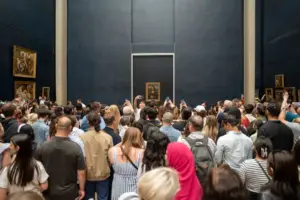
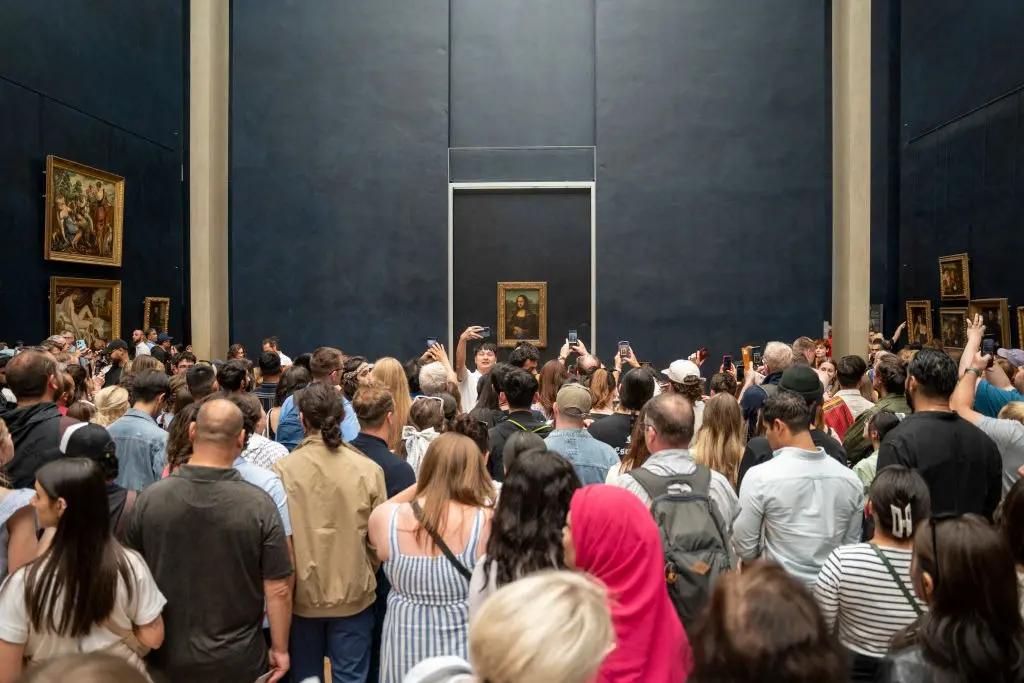
In a candid interview with The Wall Street Journal, Leribault discussed the multifaceted crises and logistical challenges facing the world’s most visited museum. He explained that moving the Mona Lisa out of her crowded, current gallery space into a dedicated, isolated room is viewed as an absolute administrative necessity to effectively manage and control the ceaseless, overwhelming throngs of tourists. However, Leribault admitted that the architectural maneuver carries an emotional and art-historical cost.
Isolating the painting, he noted, "is sad" because it "will separate the Mona Lisa from the other Leonardo da Vinci paintings," stripping away the contextual dialogue between her enigmatic expression and the artist’s broader output.
For the time being, despite ongoing debates, labor tensions, and planned protests, the Louvre remains fully accessible to the global public. Visitors stepping into the historic galleries can still attempt to catch a fleeting, coveted glimpse of the Mona Lisa, enjoying her presence while she remains in the company of Da Vinci’s other masterworks—and surrounded, as always, by an enthusiastic sea of selfie-wielding tourists documenting every second of the encounter.