Fungi occupy an unusually compelling and multifaceted place in the human imagination, bridging the gaps between empirical science, ancient folklore, children’s literature, and cutting-edge contemporary art. Across history, their intricate underground networks and sudden, ephemeral appearance above ground have continually drawn the focus of scientists, architects, and designers alike. Their deep appeal stems not only from an extraordinary biological diversity, but also from the profound questions they raise regarding our understanding of intelligence, complex ecological relationships, and humanity’s actual standing within the wider natural world.
For writer and curator Francesca Gavin, the surging contemporary fascination with mushrooms mirrors a much broader cultural hunger for alternative perspectives on the modern world. In a recent interview, Gavin noted that contemporary society finds itself navigating an era defined by an accelerating technological presence and severe climate breakdown. In such uncertain times, she suggests, the idea that knowledge and meaning might organically emerge straight from nature holds immense appeal.
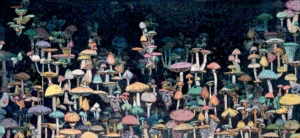
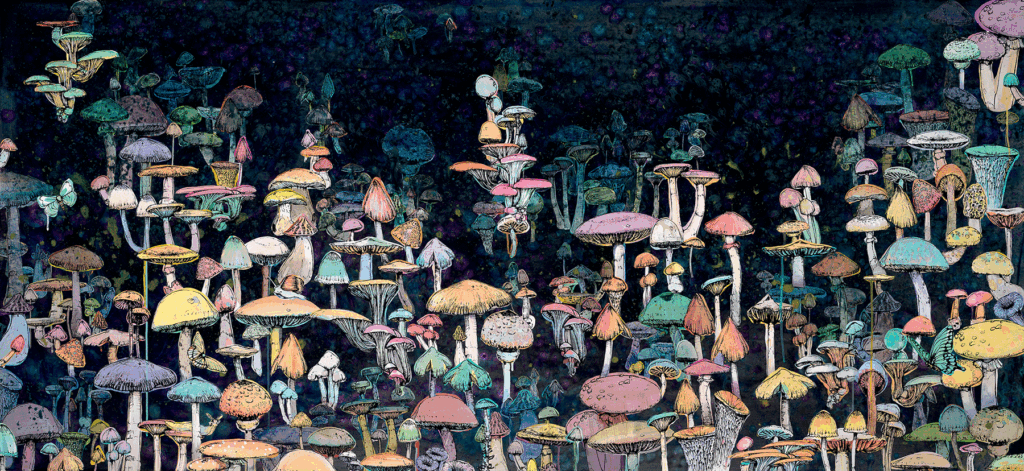
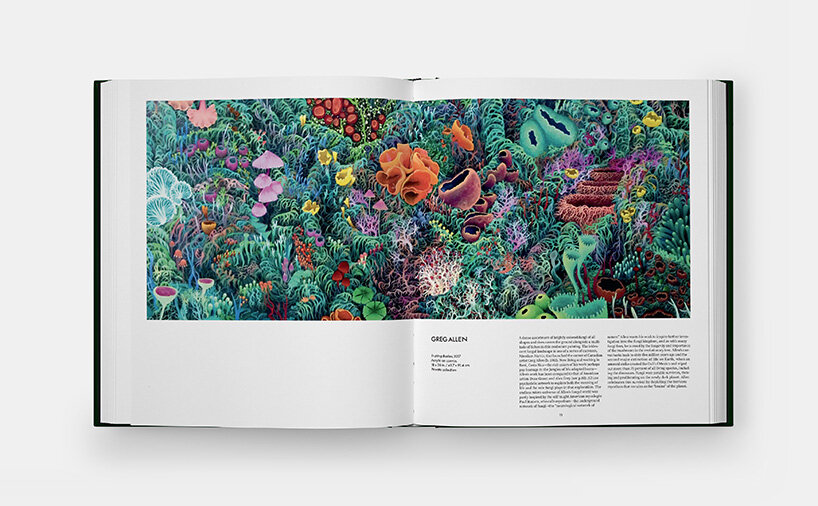
These concepts form the intellectual bedrock of Fungi: The World of Mushrooms, a comprehensive visual survey published by Phaidon. Spanning 232 pages, the volume curates more than 200 images intersecting art, design, fashion, film, and natural history. The book meticulously tracks how fungal forms and ecological associations have migrated across vastly different cultural frameworks, transitioning fluidly from historical botanical illustrations and scientific archives into striking contemporary artworks and everyday objects.
Tracing Mushrooms Across Art, Design, and Material Innovation
As an experienced curator, Francesca Gavin has spearheaded three major exhibitions dedicated to exploring the presence of mushrooms in contemporary art and design, staging prominent presentations at London’s Somerset House and the Fundação de Serralves in Porto. This extensive research process illuminated just how drastically cultural perceptions of fungi have evolved over time. These shifts have consistently been guided by advancing scientific discoveries as well as changing human associations with spirituality, medicine, decay, and the subconscious imagination.
Before the rapid expansion of rigorous scientific inquiry during the eighteenth century, fungi were frequently viewed across many parts of Europe as ominous harbingers of death and decay. However, their subsequent integration into nineteenth-century children’s literature and visual culture initiated a dramatic transformation in how they were represented. People began to view fungi and mycelium through lenses of beauty, discovery, magic, playfulness, weirdness, and psychedelia—a perceptual shift that has ultimately paved the way for mycelium’s integration into modern discussions surrounding architecture and sustainable material innovation.
The Phaidon publication brings together a diverse array of works demonstrating how mushrooms weave through various cultural layers. Pieces by celebrated artists such as Marc Chagall, Hilma af Klint, Andy Warhol, and Takashi Murakami appear alongside historical artifacts, meticulous scientific plates, vintage children’s book illustrations, and artifacts from popular culture. These thoughtful pairings illustrate how mushrooms have continuously stimulated both empirical study and unbridled artistic imagination, leaving their mark on everyday life, dreams, and the deepest recesses of the human psyche.
From Botanical Illustration to Contemporary Design
The cultural reception of mushrooms has never been monolithic, varying wildly across history and geographic boundaries. Gavin highlights the long-standing history of fungi within traditional medicine and spiritual practices across regions of Asia, South America, and Russia. Elsewhere, as previously noted, they bore heavy symbolic ties to rot and mortality until the popularization of amateur botany and expanding scientific frameworks fundamentally altered public perception.
The introduction of mushrooms into nineteenth-century children’s literature helped establish them as familiar, whimsical fixtures within imagined landscapes. In Gavin’s words, the past 140 years have marked an intense blossoming where mushrooms have broken free from strict botanical illustration to permeate nearly every corner of visual culture, inspiring everything from psychedelic prints and sculptures to innovative furniture design and experimental materials.
This incredible range is vividly reflected in the diverse roster of artists featured in Gavin’s research, whose methods oscillate smoothly between the ordinary and the uncanny. While the standard edible mushroom remains a familiar subject for traditional still-life painting, other creators probe the more unsettling dimensions of fungi, including their links to altered states of perception and the fine line dividing visual beauty from environmental toxicity.
For instance, photographer Takeshi Homma captures specimens collected within the radioactive, toxic aftermath of Fukushima. These subjects initially present themselves as remarkably pristine and perfect, yet their sinister context forces a much more complex reading of what is visually apparent.
Other creators lean heavily into the boundless imaginative possibilities of fungi. Seana Gavin constructs elaborate collages where mushrooms acquire anthropomorphic, human-like traits, while Max Hooper Schneider builds intricate sculptural caves populated by iridescent, fungal-inspired growths. Even historical figures like Victor Hugo engaged with the motif, utilizing a gothic, looming mushroom painting to cultivate an atmosphere of deep uncertainty. These dualities allow mushrooms to function simultaneously as comforting items of food and everyday life, and as strange, mysterious, or psychedelic anomalies.
Mycelium, Materiality, and Alternative Intelligence
Beyond the realm of pure aesthetics, fungi have assumed a central role in contemporary architectural and industrial design dialogues, largely due to the unique properties of mycelium—the sprawling, thread-like network through which fungi grow and thrive. Researchers, architects, and product designers are actively investigating mycelium-based composites as viable alternatives for construction, packaging, and interior products, while visual artists draw profound inspiration from the symbiotic relationships fungi form with trees and other organisms.
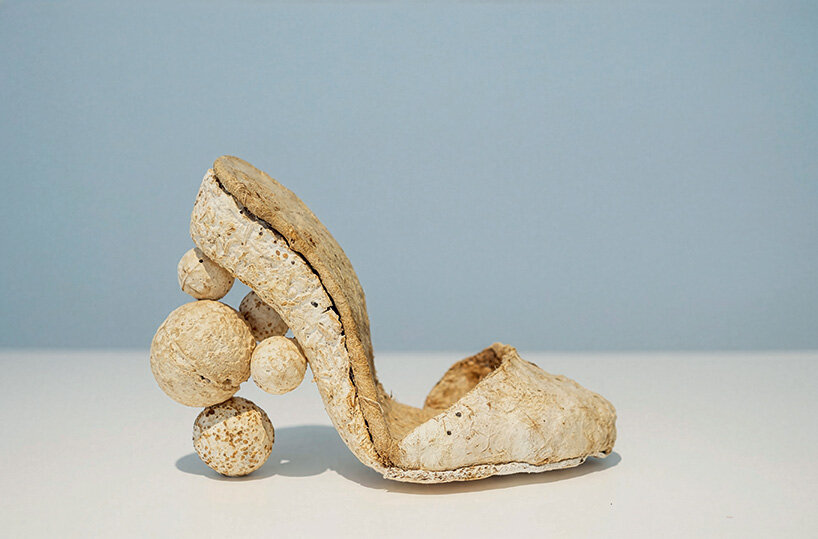
Architect and designer Mae Ling Lokko serves as a prime example, utilizing mycelium-based bricks to test the structural and conceptual limits of fungal materials in building practices. For Gavin, such projects highlight how working with fungi encourages designers to frame coexistence as an urgent material and philosophical question.
However, Gavin draws a sharp line between practical material experimentation and the broader, more symbolic influence of fungi on creative production. While their ecological integration with forest ecosystems is genuinely fascinating, their utility for many artists lies primarily in aesthetic inspiration, material exploration, and conceptual metaphor.
This expanding interest in fungal networks frequently spills over into broader debates regarding non-human intelligence and communication. Rigorous scientific inquiry into fungal behavior has compelled researchers and philosophers to challenge long-held assumptions that true intelligence must adhere exclusively to forms recognizable by humans. Pointing to the foundational work of thinkers like Paul Stamets, Tobias Rees, and Merlin Sheldrake, Gavin emphasizes that the deeply anthropocentric viewpoint—the arrogant assumption that humanity stands alone as the sole intelligent life form on Earth—is looking increasingly incorrect.
Looking Beyond the Idea That Fungi Will Fix Everything
As mycelium-based biomaterials continue to generate immense excitement across architecture and design as viable substitutes for conventional plastics and single-use packaging, fungi are frequently heralded as a green panacea. Their potential is undeniably significant, yet Gavin remains cautious, warning against the trap of confusing material experimentation with a comprehensive solution to systemic ecological crises.
The mere fact that a natural organism can inspire eco-friendly alternatives to resource-heavy manufacturing does not mean it can single-handedly undo the massive cumulative consequences of global human consumption. Gavin asserts that the notion that fungi will fix everything is ultimately naive and that mushrooms will simply refuse to operate on human terms.
Instead, Gavin advocates for a balanced approach: actively investigating the genuine possibilities that fungi offer while maintaining a clear-eyed perspective on their inherent limitations. Finding alternative forms of plastic, packaging, and construction materials remains a fascinating and hopeful endeavor, but these material innovations must not distract from broader societal needs.
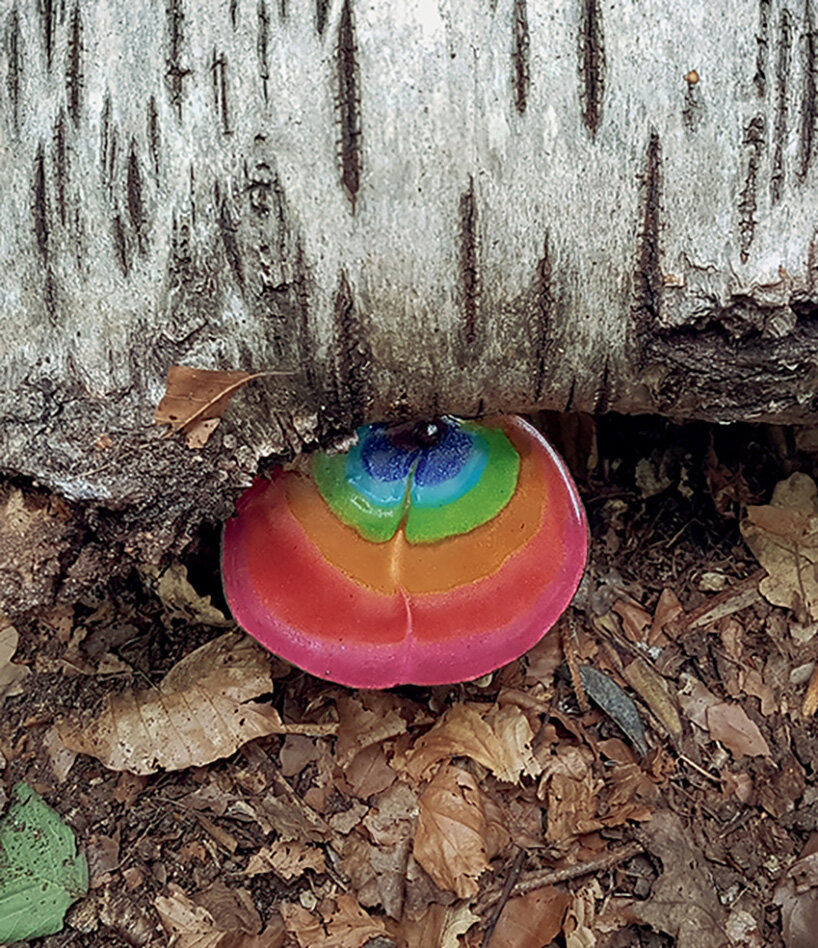
New materials can certainly prompt a much-needed reassessment of how products are manufactured and eventually discarded, just as artistic interpretations can help render abstract ecological concepts accessible to wider audiences. However, neither approach eliminates the fundamental necessity for rigorous political decisions, systematic shifts in consumption, and a deep structural reevaluation of everyday life. Gavin suggests that if mushrooms serve as a catalyst to get people excited about rethinking how they inhabit the earth, the endeavor is entirely worthwhile, even if fungi cannot replace the hard social and political work required to enact lasting change.
Pentagram’s Hypha and the Form of Growth
By drawing sustained attention to organisms that thrive entirely through complex, reciprocal relationships with their environments, fungi offer a powerful mechanism for questioning the long-standing human assumption that nature exists primarily as a passive resource for human exploitation. They encourage a vital shift in perspective, moving us away from viewing the natural world as an external entity and toward recognizing that human life is inextricably embedded within much larger, interdependent ecological systems.
This philosophical pivot is vividly reflected in projects like Hypha, an innovative typeface developed through a collaborative effort between Pentagram, Counterpoint Studio, and Rosie Emery. Taking direct inspiration from the organic growth patterns of mushrooms, the project translates complex biological processes into an experimental visual language. It explores how ideas derived from natural systems can directly inform the structural development of designed objects. Gavin points to Hypha as a brilliant example of how biological inspiration can seamlessly bridge disciplines, generating ideas rooted as much in process and relationship as in static form.
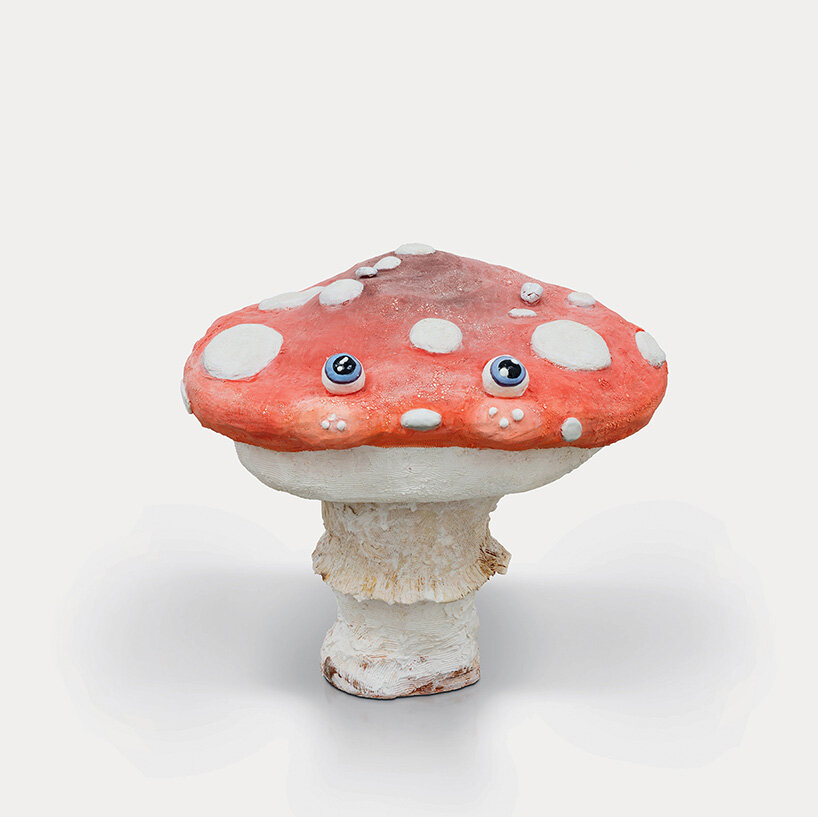
Nevertheless, Gavin consistently resists casting fungi as a simple blueprint or ideological roadmap for human societal organization. The complex questions raised by non-human intelligence and ecological interdependence cannot be neatly resolved through a single design intervention or clever metaphor. Humanity must urgently reconsider its relationship with the planet, but that ongoing process demands structural decisions that extend far beyond the boundaries of creative disciplines. As Gavin notes, an organism living quietly beneath the forest floor and releasing spores into the wind cannot serve as a convenient replacement for confronting difficult questions of public policy, civic engagement, and lifestyle.
The Enduring Appeal of the Unfamiliar
Gavin’s deep-seated engagement with fungi originated in the visual arts, fueled by an enduring curiosity about why generations of artists continually returned to the subject. One of her earliest artistic touchstones was John Tenniel’s iconic illustrations for Lewis Carroll’s Alice’s Adventures in Wonderland, where towering mushrooms help transform the natural world into a disorienting, unfamiliar landscape. That potent blend of the ordinary and the fantastical remains central to the enduring allure of fungi within contemporary creative practices.
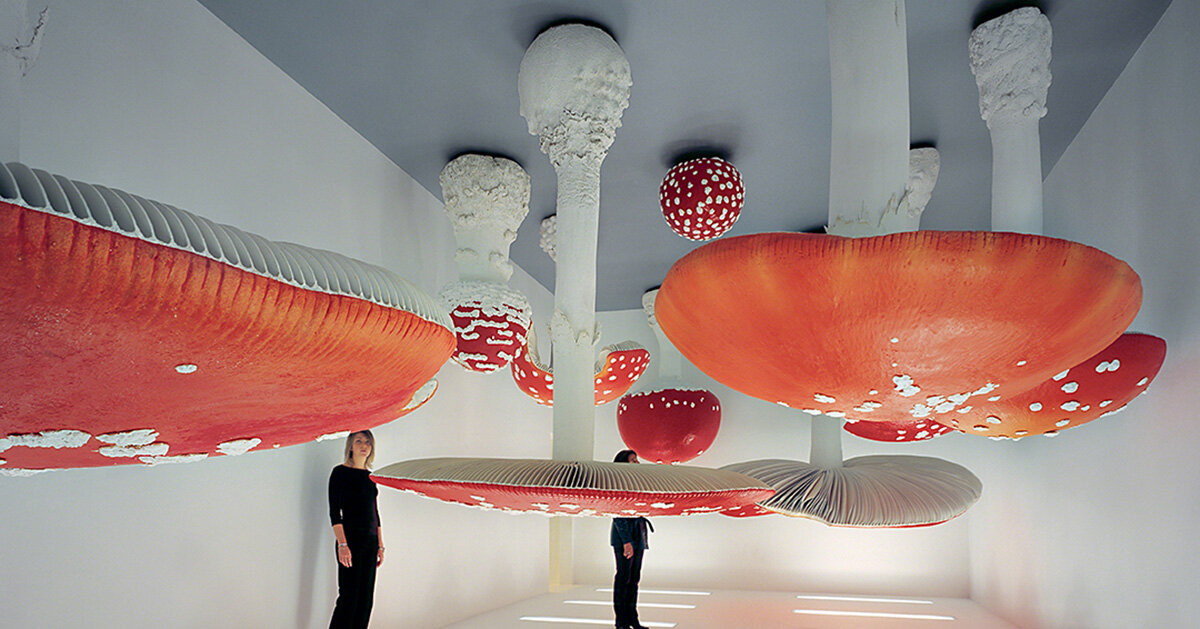
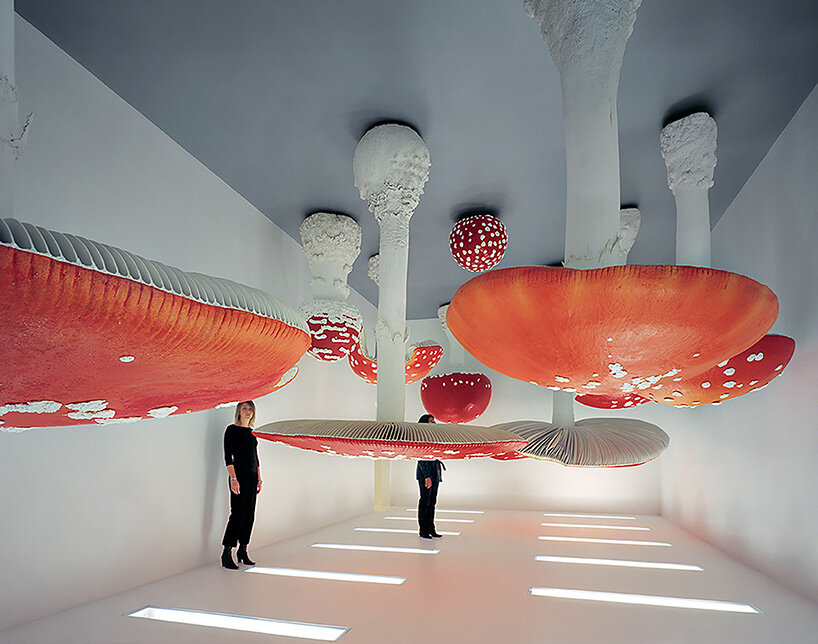
Among more recent milestones, Gavin highlights Carsten Höller’s arresting upside-down mushroom installation at Fondazione Prada in Milan. She characterizes the work as a masterclass combining childlike awe, psychedelic surrealism, rigorous technical experimentation, and sheer aesthetic pleasure, perfectly demonstrating how fungi can inspire art that is simultaneously playful, unsettling, and visually magnetic. This remarkable variety is precisely what Fungi: The World of Mushrooms captures by bringing disparate artworks, historical objects, scientific plates, and popular culture into a unified dialogue.
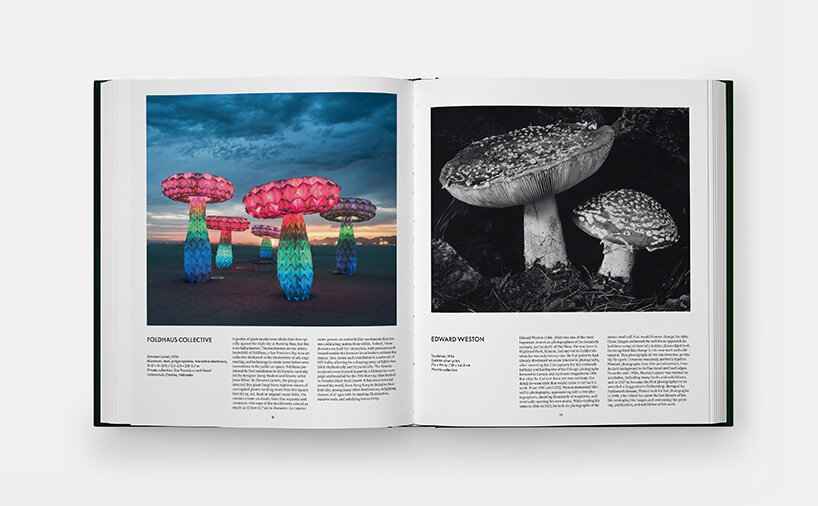
Ultimately, for Francesca Gavin, fungi serve as a humbling reminder that nature exists far beyond the boundaries of human utility or desire. While they continue to spark brilliant innovations in art, design, and architecture, their ultimate significance far transcends any practical service they might render to human industry. As Gavin succinctly concludes, when all is said and done, and humanity has long since disappeared, fungi are still going to be here.