Western Red Cedar has long occupied a privileged position in the building and woodworking industries. Admired universally for its natural beauty, exceptional longevity, and remarkable resistance to decay, moisture, and insects, the premium wood species remains a gold standard for architects, contractors, and discerning homeowners alike. However, as the demands of modern construction evolve—driven by a heightened emphasis on material efficiency, structural reliability, and sustainable sourcing—builders are continuously seeking innovative ways to maximize the potential of high-grade timber without compromising on performance or visual appeal.
Among the most significant developments in this sector is the growing adoption of finger-jointed Western Red Cedar. By utilizing an advanced precision-milling technique, manufacturers are now able to take shorter, high-quality cedar pieces and join them together to form longer, exceptionally stable boards. The resulting material successfully bridges the gap between traditional craftsmanship and modern engineering efficiency, delivering a product that maintains the warm, organic character of real cedar while offering superior dimensional consistency and a drastic reduction in raw material waste.
What Is Finger-Jointed Western Red Cedar?
At its core, finger-jointing is a sophisticated woodworking process designed to optimize timber resources. Shorter lengths of premium-grade cedar are precision-cut with complementary, interlocking configurations—often described as "fingers"—at their ends. A high-performance, durable adhesive is then applied, and the pieces are bonded together under controlled pressure to create long, continuous boards.
This meticulous manufacturing technique transforms what might otherwise be discarded offcuts into high-value, structurally sound lumber. Once the boards are finished, sanded, and painted or stained, the joints become virtually indistinguishable from solid wood. The result is a seamless product that performs exceptionally well across a wide variety of architectural applications, functioning reliably in both interior and exterior settings.
Why Finger-Jointed Cedar Matters in Sustainable Building
The environmental and practical implications of finger-jointing extend far beyond simple manufacturing efficiency. Western Red Cedar possesses innate natural attributes that make it uniquely suited for outdoor use, including natural chemical extractives that deter insects and resist rot. Crucially, these inherent biological defenses are entirely preserved during the finger-jointing process.
By optimizing shorter sections of timber that would traditionally be relegated to secondary uses or waste, manufacturers can deliver longer, stronger, and more uniform material to the market. This approach aligns directly with contemporary sustainable building practices. As the construction industry faces increasing pressure to minimize its environmental footprint and improve resource management, finger-jointed cedar represents a forward-thinking solution that respects the value of slow-growth timber while meeting the rigorous demands of modern project timelines.
Key Advantages for Builders and Architects
The widespread transition toward finger-jointed Western Red Cedar is supported by a series of distinct performance advantages that benefit both large-scale commercial contractors and residential builders.
First and foremost is enhanced strength and structural stability. Natural solid wood is susceptible to the stresses of environmental changes, which can lead to bowing, twisting, or cracking over time. Finger-jointing significantly mitigates these vulnerabilities. The interlocking finger design and industrial adhesives help distribute mechanical stress more evenly across the length of the board. This structural reliability makes finger-jointed cedar an ideal choice for applications that require long, straight lines that will remain true over decades of exposure to the elements.
Cost efficiency represents another major driver of its popularity. Because the production method makes intelligent use of shorter cedar sections, material waste is kept to an absolute minimum. This optimization translates into a more cost-effective product for consumers and contractors alike, particularly for projects that require painted applications, extensive trim work, or large-scale siding installations.
Furthermore, the manufacturing process ensures a high degree of dimensional consistency. Each board is crafted to precise, uniform specifications, providing a level of predictability that installation crews deeply appreciate. Uniformity reduces the time spent sorting through lumber on the job site, minimizes on-site cutting errors, and ensures tighter, cleaner joints during assembly.
Despite being manufactured from joined segments, the material retains the full natural resistance to decay that has made Western Red Cedar famous for generations. It continues to repel moisture, withstand heavy rainfall, and resist insect damage, ensuring long-term durability when utilized for outdoor structures, architectural siding, and detailed trim work.
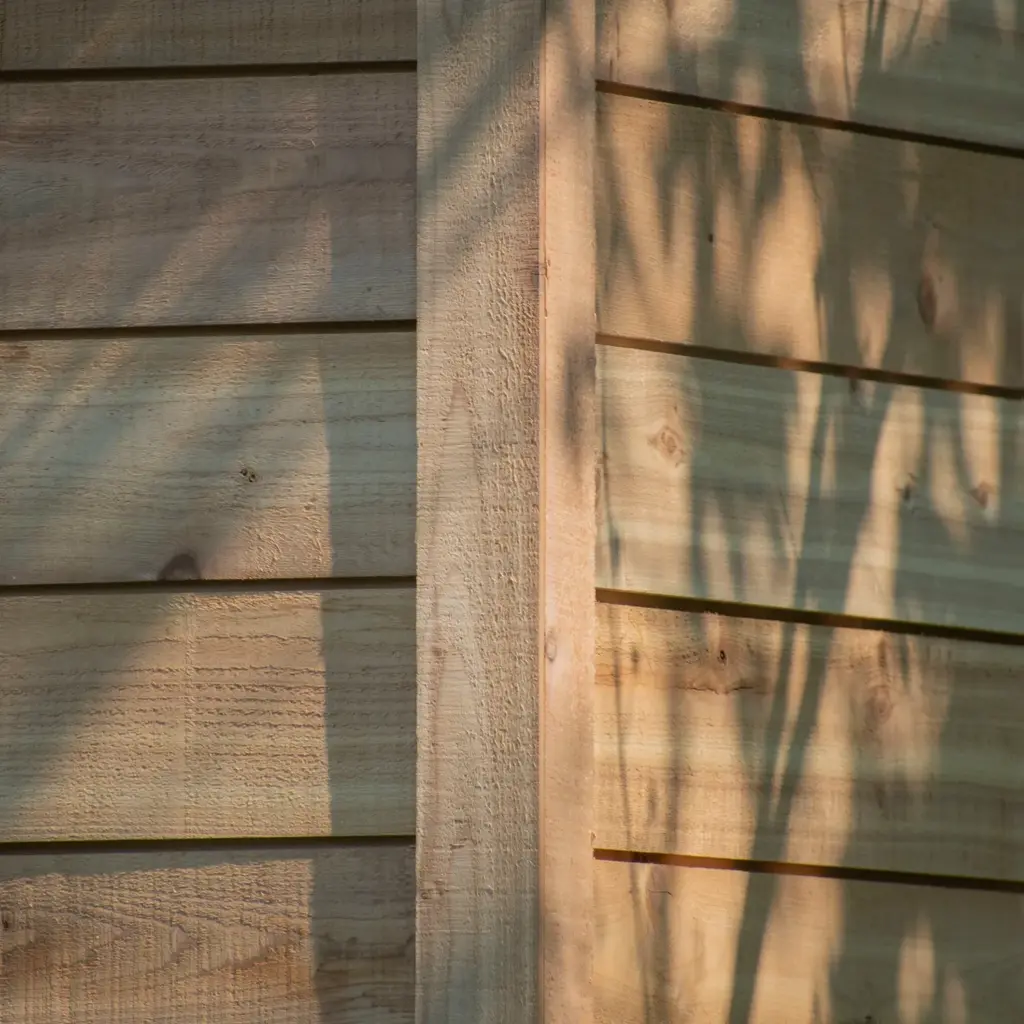
Aesthetically, the material loses none of the charm associated with traditional cedar. Its signature reddish-brown coloration imparts a sense of warmth and sophistication to any design. When left to weather naturally outdoors, it gracefully transitions into a refined silver-gray patina, offering timeless visual appeal that complements both traditional vernacular architecture and sleek, modern designs.
The versatility of finger-jointed Western Red Cedar further cements its status as a preferred building material. It is regularly specified across a diverse range of project types, including residential siding, exterior trim, pergolas, gazebos, fencing components, and custom architectural builds. Its high adaptability allows it to integrate smoothly into rustic mountain cabins, contemporary urban homes, and historic restoration projects alike, proving that innovation and tradition can successfully coexist in modern construction.
As the industry continues to prioritize materials that offer a balance of environmental responsibility, visual elegance, and long-term durability, sustainably harvested Western Red Cedar products—particularly those enhanced through advanced manufacturing techniques like finger-jointing—will undoubtedly remain a cornerstone of quality building design.