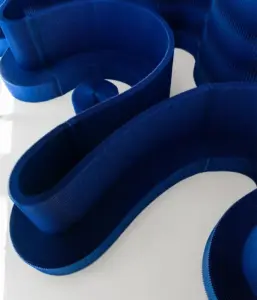
Designers Stephanie Forsythe and Todd MacAllen, founders of the Vancouver-based studio molo, have expanded their acclaimed soft collection with the introduction of the sloped softwall in two nuanced shades of blue: glacier blue and deep blue. Known for exploring paper as a robust, sculptural medium for over two decades, the studio’s latest release debuts alongside a landmark sustainable manufacturing partnership with historic Bavarian mill Gmund Paper.
For more than thirty years, molo has challenged rigid definitions of architecture and interior design through flexible, modular systems. The new blue paper partitions continue this trajectory, offering architects, interior designers, and spatial planners dynamic tools to shape environments intuitively. Rather than prescribing fixed layouts, the studio’s flexible partitions, benches, and tables provide abstract layers that can accommodate gatherings, quiet pauses, artistic performances, and everyday spatial transitions.
The introduction of the sloped softwalls in glacier and deep blue highlights molo’s ongoing commitment to iterative material development. By collaborating with Gmund Paper—a German mill operating along the Mangfall River for nearly two centuries—molo has engineered bespoke, fire-retardant, and recyclable papers that satisfy stringent technical requirements while honoring the poetic sensibilities of the soft collection.
Introducing Sloped Softwall in Deep Blue and Glacier Blue
At the core of molo’s design philosophy is the belief that furniture and partitions should not dictate human behavior, but rather invite participation. The studio’s signature softwall utilizes a pliable, cellular honeycomb structure that allows it to expand in length up to one hundred times its compressed, flat form. These individual units link together magnetically in sequence, forming fluid interior architectures that replace waste-intensive traditional construction methods with lightweight, sustainable alternatives.
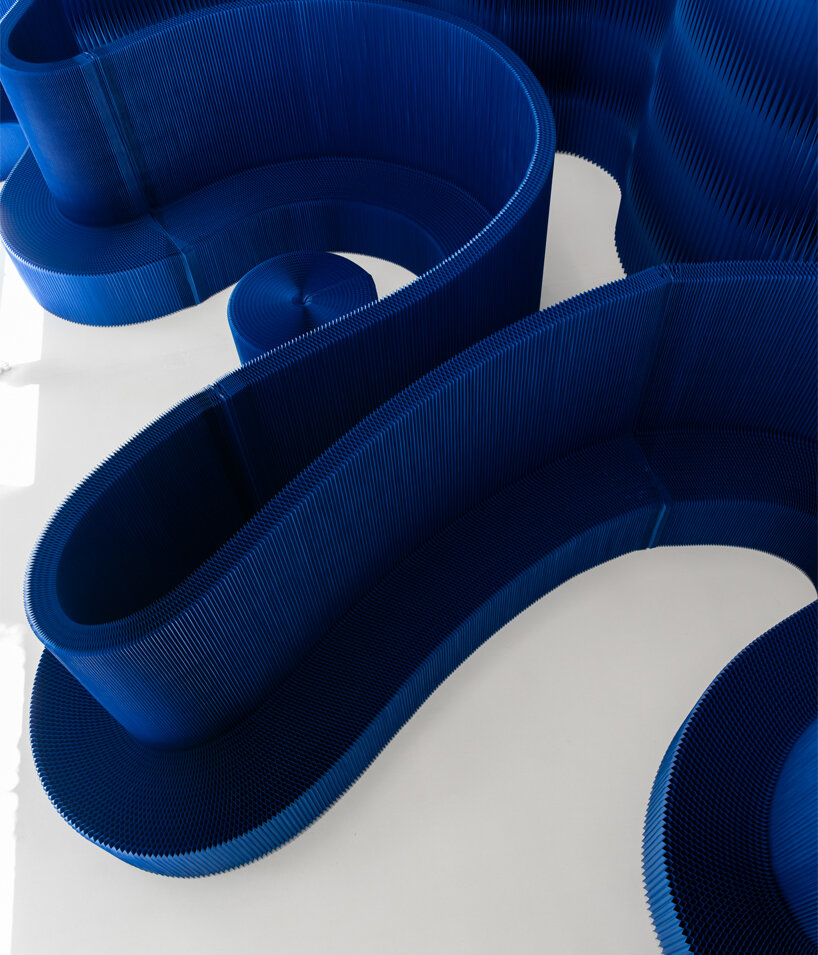
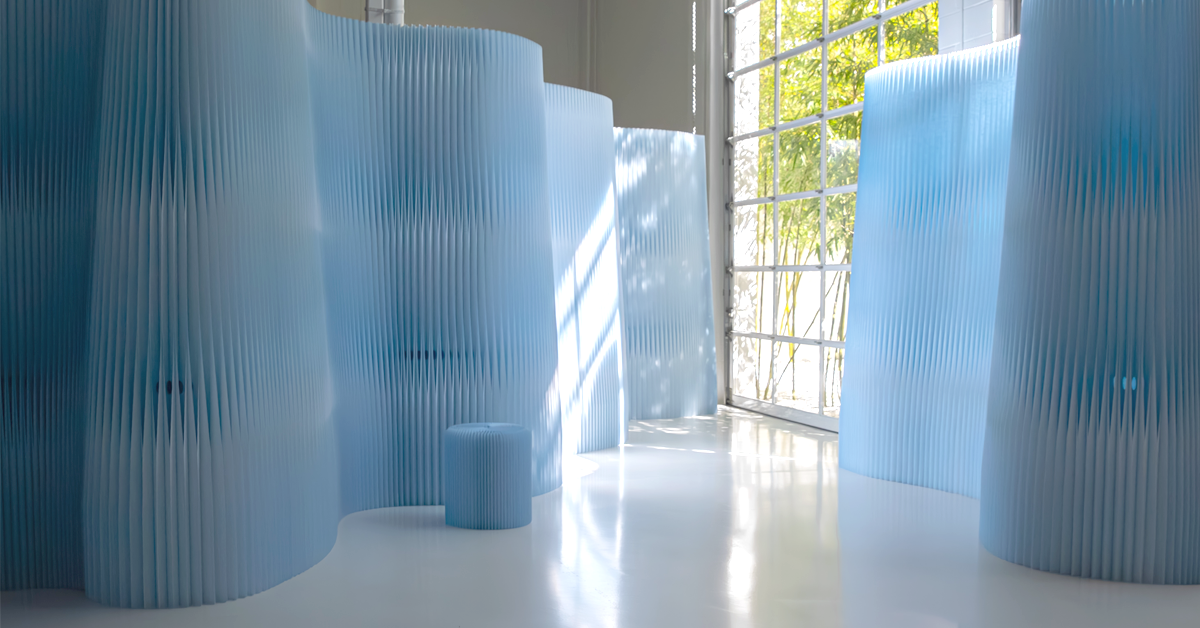
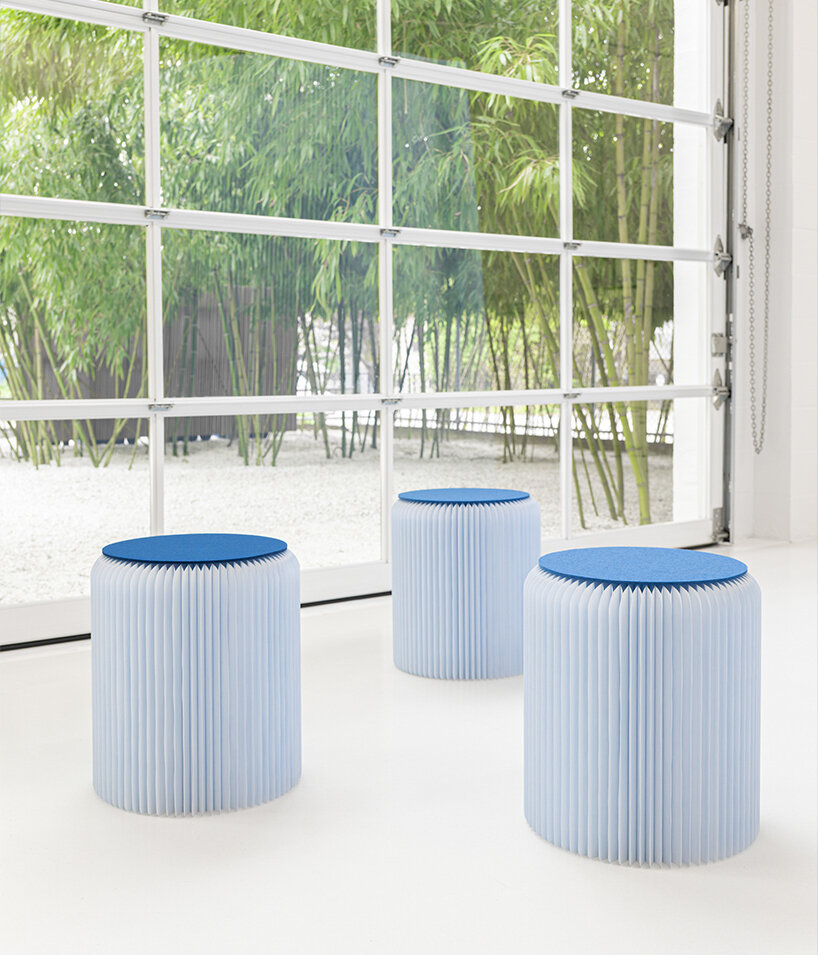
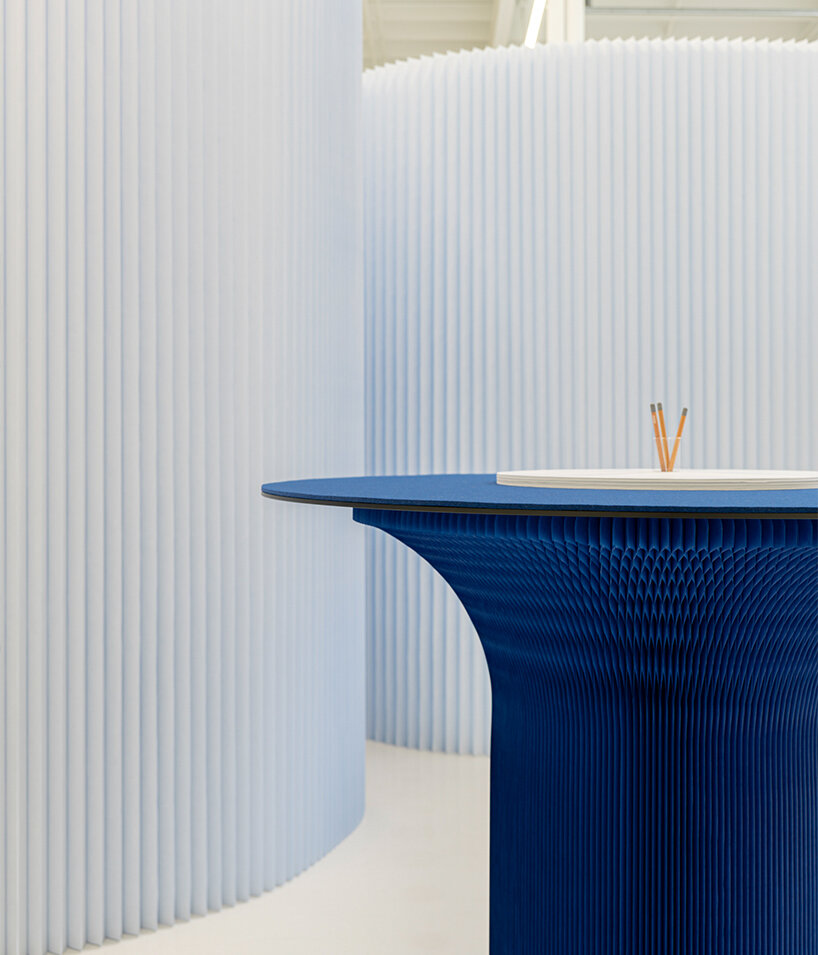
The newly released sloped softwall introduces fresh atmospheric qualities to this established modular system. The translucent glacier blue paper partition is designed to evoke the pale blue sky of a clear, sunny day. When viewed at a microscale, delicate puffs of paper fiber recall wispy clouds caught in direct sunlight. As natural light passes through the cell-like structure, the wall glows with the luminous, ethereal quality of a deep glacier crevasse.
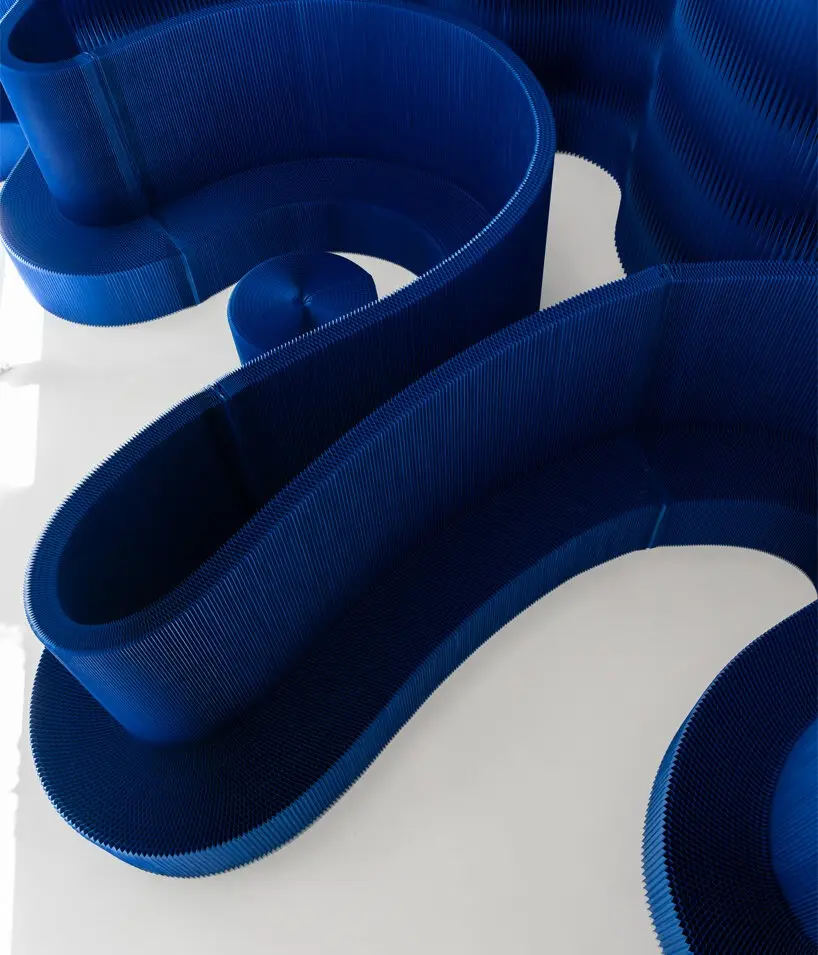
In contrast, the opaque deep blue offers a saturated, rich aesthetic developed from molo’s earlier blue paper iterations, engineered specifically for enhanced lightfastness. When expanded into the pleated, undulating geometries of the sloped softwall, the deep blue paper evokes the ocean surface caught by the wind, creating facets that alternately absorb and reflect light. The material captures shifting reflections of nearby windows and the open sky while casting shadowy, contemplative depths into the surrounding interior landscape.
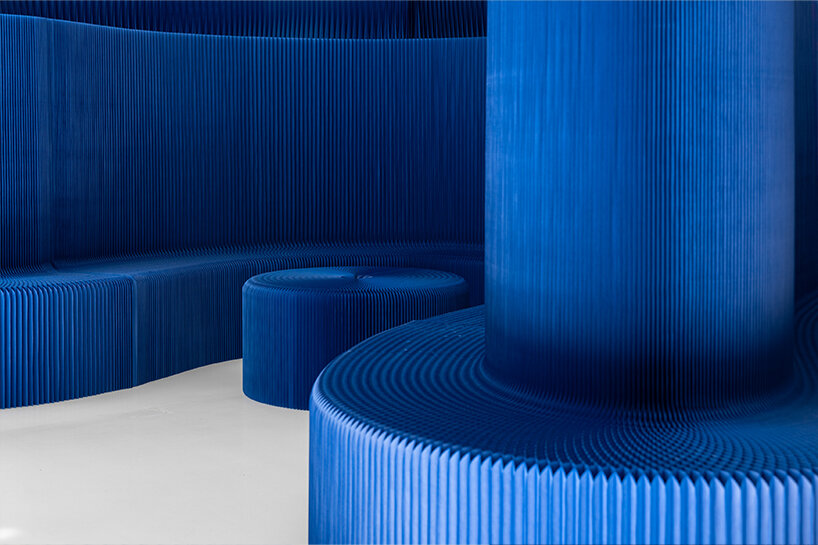
These expressive visual qualities are complemented by the functional performance of the honeycomb geometry, which inherently provides acoustic dampening, tactile texture, and sophisticated light management. The soft collection elements—ranging from the sloped softwall and softwall plus softblock systems to softseating stools, cantilever tables, and undulating benchwalls—work in concert to map out fluid interior pathways and functional zones.
A Partnership with Gmund Paper
The collaboration between molo and Gmund Paper bridges contemporary Canadian spatial design with centuries-old European papermaking heritage. Stephanie Forsythe and Todd MacAllen first met in 1994 while studying architecture at Dalhousie University, where they initiated foundational investigations into materials, spatial flexibility, and sustainability. Between 1994 and 2003, the duo built an award-winning portfolio through international design competitions and built architectural projects before officially establishing molo in Vancouver in 2003.
Over the subsequent three decades, molo earned international renown, accumulating more than 35 patents, prestigious accolades such as the Danish INDEX Award, and permanent acquisitions in major museum collections, including the Museum of Modern Art in New York and the Cooper Hewitt Smithsonian Design Museum. Driven by a desire to introduce new colorways and elevate the environmental standards of their materials, the designers sought out Gmund Paper to co-develop custom paper formulations for the soft collection.
Located on the banks of the Mangfall River in Germany, Gmund Paper operates as a pioneer in sustainable manufacturing. The mill’s production facility is entirely hydropowered, with 75 percent of its energy generated directly by its own turbines driven by the neighboring waterway. For Gmund, the partnership represents a meaningful extension of its historic papermaking practice into the realm of interior architecture and spatial design.
Working in close collaboration with Forsythe and MacAllen, Gmund’s technicians developed bespoke papers that are not only fire-retardant and fully recyclable, but entirely free of harmful chemical components. The pigments utilized for molo’s blue collection are eco-friendly, and the resulting paper is FSC-certified. The specialized paper is manufactured on machinery that has operated for over 140 years, carefully upgraded with modern technical innovations including lasers, robotics, and an advanced ozone-based water purification plant. This rigorous production framework ensures high quality, robust environmental protection, and zero solid waste sent to landfills during the creation of molo’s paper systems.
Through this synthesis of historic craftsmanship, advanced sustainable engineering, and poetic spatial vision, molo’s new glacier and deep blue softwalls reinforce the studio’s position at the forefront of sustainable interior architecture, offering designers versatile, light-responsive tools for shaping modern environments.