As the global architecture and design community navigates a complex landscape of environmental challenges, historical reckonings, and technological evolution, cultural institutions worldwide are presenting a rich calendar of upcoming and ongoing exhibitions, events, and competitions. From major retrospectives honoring mid-century visionaries and industrial documentarians to forward-looking explorations of climate adaptation and digital futures, this season offers profound insights into how spatial practices shape our past, present, and future.
Kicking off the fall season, Finland’s Design Museum is presenting its main exhibition dedicated to the celebrated creative partnership of Antti and Vuokko Nurmesniemi. Antti, an esteemed interior designer, and Vuokko, a pioneering textile artist, left an indelible mark on the development of the Finnish design industry during the late 20th century. Working both independently and collaboratively across the interconnected disciplines of architecture, fashion, and interior design, the couple established a design language characterized by functional elegance and bold aesthetic experimentation. Their enduring legacy continues to influence contemporary approaches to Nordic craft and industrial design, making this comprehensive showcase a vital examination of a golden era in Scandinavian creativity.
In Rhinebeck, New York, T Space Gallery is turning its focus to the experimental lineage of architectural publishing through a special exhibition titled Pamphlet Architecture 37: Visions and Experiments in Architecture. Founded in 1978 by visionary architect Stephen Holl, the Pamphlet Architecture series was conceived as an alternative, experimental medium to promote the radical and unconventional work of emerging designers. Over its remarkable history, the publication has launched the careers of numerous luminaries who would later shape the global built environment, historically featuring groundbreaking contributions from architects such as Zaha Hadid, Lars Lerup, and Mark Mack.
Celebrating 37 distinct issues and more than four decades of continuous production, the exhibition displays the compelling work of the five finalists from Pamphlet’s 2021 open call. The call challenged applicants to imagine entirely new architectural paradigms suited for a shifting social and political consciousness. Beyond showcasing these contemporary experimental proposals, the exhibition offers a comprehensive historical overview of the publication’s storied trajectory, serving as a heartfelt tribute to late publisher Kevin Lippert, who passed away in the spring.
Ongoing Exhibitions
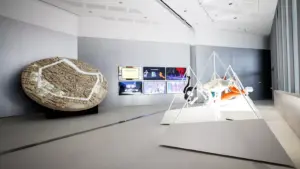
In Seoul, South Korea, Zaha Hadid Architects (ZHA) is further cementing its prominent footprint in virtual and digital worlds with a major ongoing exhibition at the Dongdaemun Design Plaza (DDP) museum. Titled Meta-Horizons: The Future Now, the exhibition follows closely on the heels of the firm’s high-profile unveiling of its metaverse city, Liberland. Located fittingly within the iconic DDP museum building—which was itself designed by ZHA and completed in 2014—the exhibition delves deeply into the immense potential of advanced architectural technologies. By examining tools such as immersive virtual reality and artificial intelligence-based design through the lens of ZHA’s expansive portfolio, the exhibition invites visitors to reconsider the physical boundaries of architecture. The presentation is further enriched by striking digital installations created by renowned new-media artist Refik Anadol, highlighting the fertile intersection between computational data and spatial design.
Meanwhile, in the United States capital, the National Building Museum is hosting Justice is Beauty: The Work of MASS Design Group. This extensive exhibition offers an in-depth look at the Boston- and Kigali-based firm’s portfolio, encompassing rigorous research projects, unbuilt proposals, and realized buildings that collectively advance the architecture of health and social justice. The exhibition is thoughtfully paired with The Gun Violence Memorial Project, a powerful collaborative installation conceived by artist Hank Willis Thomas in partnership with the Everytown for Gun Safety Support Fund. The moving memorial comprises four distinct glass-brick houses embedded with personal mementos and tokens representing individual lives tragically lost to gun violence, underscoring the profound social responsibilities inherent in spatial design.
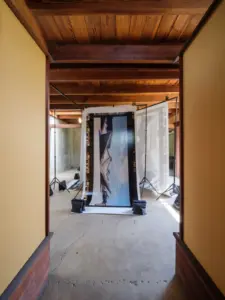
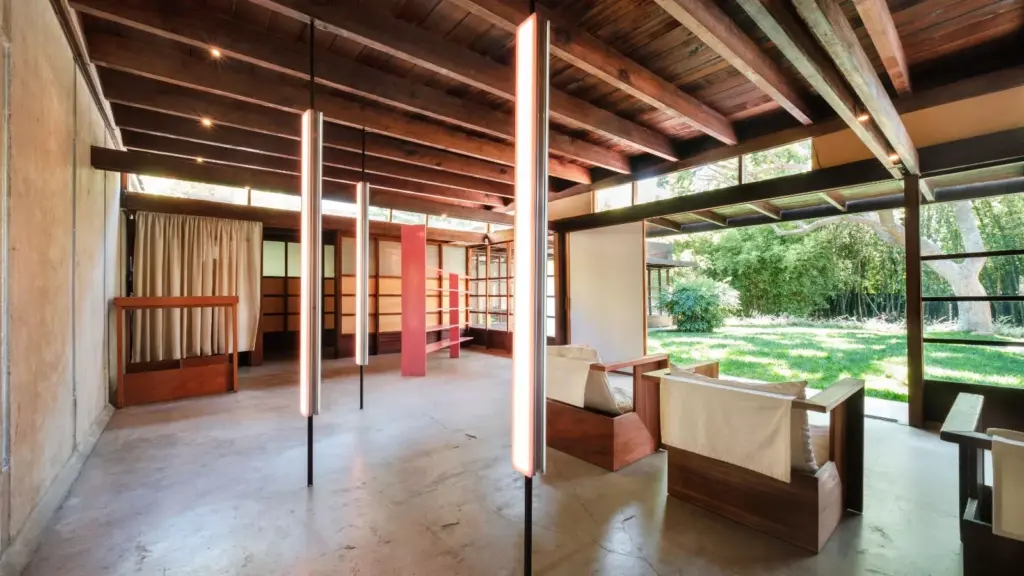
On the West Coast, Los Angeles is marking a major architectural milestone with the exhibition Schindler House: 100 Years in the Making at the MAK Center for Art and Architecture. Originally constructed in 1922, R.M. Schindler’s iconic West Hollywood residence has experienced countless iterations and lifetimes over its century-long history. The visionary architect originally built the dwelling as a radical experiment in communal living for himself, his wife Pauline, and their close friends Clyde and Marian Chace. Since 1994, the residence has served as the permanent headquarters of the MAK Center, functioning as an independent satellite of the MAK museum in Vienna. To commemorate the centenary of the structure, MAK has mounted a gentle, nuanced timeline exhibition exploring the physical making and unmaking of the house. Curated by MAK Center Director Jia Yi Gu alongside architectural historians Gary Riichirō Fox and Sarah Hearne, the exhibition juxtaposes historical archival materials with contemporary artistic contributions by a diverse group of creators, including Carmen Argote, Fiona Connor, Julian Hoeber, and Peter Shire.
In Europe, the MAK Exhibition Hall in Vienna is currently presenting Missing Link: Strategies of a Viennese Architecture Group (1970-1980). Offering the first comprehensive museum retrospective of the avant-garde architecture collective, the exhibition highlights the work of Angela Hareiter, Otto Kapfinger, and Adolf Krischanitz. Founded in 1970, Missing Link sought to deliberately break free from conventional academic and professional constraints, exploring the broader socio-cultural dimensions of architecture. Their diverse body of work ranges from provocative utopian proposals for collective living arrangements to detailed research studies analyzing the complex urban networks of Vienna.
Shifting focus to the urban public realm in the United Kingdom, London’s Building Centre is hosting The Garden of Privatised Delights. Originally commissioned by the British Council for the Venice Architecture Biennale and curated by Unscene Architecture, the exhibition critically examines the contentious rise of privately-owned public spaces across the UK. The show issues a timely call for innovative design approaches to reconcile the ongoing conflict between private commercial interests and the broader public good. To explore these themes, a collective of British architecture firms—including the Decorators, Studio Polpo, and vPPR Architects—presents seven distinct, inclusive architectural reimaginings of privatized urban spaces.
In New York City, the Metropolitan Museum of Art is presenting a landmark retrospective dedicated to the legendary German photography duo Bernd and Hilla Becher. Featuring over 200 works, the exhibition marks the first major posthumous survey of the artists, who achieved international renown for their meticulous, typology-based documentation of disappearing industrial architecture across Europe and North America during the postwar era. Their rigorous, systematic photographic approach profoundly influenced generations of conceptual artists and photographers worldwide.
Continuing outdoors in New York City, the Public Art Fund has mounted Black Atlantic throughout Brooklyn Bridge Park. Situated in a historic maritime harbor that once served as a vital shipping link connecting the Americas to Europe and Africa, the exhibition features ambitious, site-specific public artworks by contemporary artists Hugh Hayden, Leilah Babirye, Dozie Kanu, Tau Lewis, and Kiyan Williams. Taking its thematic cue from cultural theorist Paul Gilroy’s influential 1993 book, the exhibition explores the deep-seated impact of transatlantic networks on the African diaspora, with participating artists weaving global histories and personal identities into large-scale fabrications set against the city skyline.
Events
As the exhibition calendar unfolds, professional organizations and cultural institutions are also convening symposia and public tours to foster critical dialogue within the design fields. In Dallas, Texas, The Cultural Landscape Foundation is preparing to host the Oberlander Prize Forum II: Landscape Activism on October 28, 2022. The upcoming conference will bring together a distinguished assembly of design professionals, historians, and critics to examine the transformative impact of activist methodologies within contemporary landscape architecture and environmental design, highlighting the influential practices of figures such as Julie Bargmann of D.I.R.T. Studio and the prominent design firm OLIN.
In Austin, Texas, the American Institute of Architects (AIA) is bringing back its popular AIA Austin Homes Tour on October 22 and 23, 2022. Marking its first in-person presentation since 2019, the annual event offers architecture enthusiasts a series of self-guided tours showcasing innovative new residential designs crafted by local architectural practices. This year’s featured studios include prominent regional firms such as Lake|Flato, Studio Steinbomer, and Furman + Keil Architects, celebrating the vibrant contemporary residential architecture of Central Texas.
Looking toward the end of autumn, Berlin will host Driving the Human: Seven Prototypes for Eco-social Renewal from November 25 to 27, 2022. The upcoming three-year festival represents the culmination of an intensive period of transdisciplinary collaboration, research, and design aimed at addressing the multifaceted realities of the climate crisis. The event centers around seven realized prototypes that respond to complex contemporary scenarios, investigating speculative solutions ranging from the application of artificial intelligence to innovative human-bacteria collaborations designed to mitigate environmental degradation.
Competitions
Amidst these discussions on ecological and social futures, design competitions continue to solicit visionary proposals for pressing urban dilemmas. In Miami, Florida, the organization Arch Out Loud is currently inviting design proposals for an international competition titled Miami Floating Housing. As the coastal city grapples with the intertwined crises of severe housing affordability and accelerating sea-level rise—a phenomenon increasingly recognized as climate gentrification—the competition asks designers to envision sustainable, floating residential typologies situated within Biscayne Bay.