Tokyo’s bustling urban landscape is a place of perpetual motion, where high-speed trains, subterranean subways, and endless streams of pedestrians define the rhythm of daily life. Yet, amidst the hyper-modernity of the Japanese capital, layers of history frequently lie just beneath the surface, waiting to be acknowledged. A new architectural intervention by Yosuke Sagoshi Atelier brings this historical consciousness to the forefront. Titled "Ikebukuro Living Furniture – Tram Stop," the project reimagines a vital fragment of the city’s past, anchoring it firmly in the contemporary public realm through thoughtful spatial design and material sensitivity.
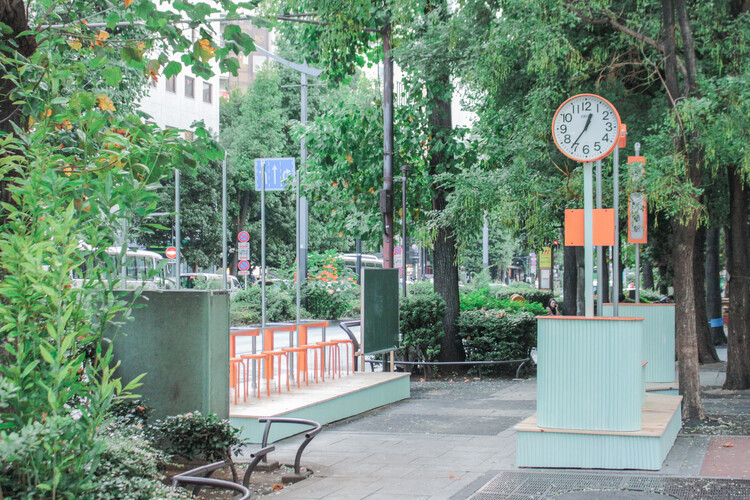
The project takes its cue from the rich transit heritage of Ikebukuro, one of Tokyo’s major commercial and transportation hubs. The broad avenue extending from Ikebukuro Station toward Marunouchi was once traversed by the historic Toden streetcars, or trams, which served as a primary lifeline for commuters and residents alike. In an earlier era, a prominent tram terminal sat directly in front of the bustling station, acting as a gateway for travelers moving through the city. From this central point, transit lines extended outward toward key destinations such as Ueno and Sukiyabashi, weaving a dense web of connectivity across the metropolis.
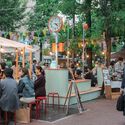
For contemporary urbanites, the presence of these streetcar lines exists largely in archival photographs and collective memory. However, the spatial imprint of that transit era continues to shape the physical dimensions of the avenue. Yosuke Sagoshi Atelier’s design serves as a physical medium to evoke the stories and human interactions that once defined the site. By framing the tram stop not merely as a utilitarian waiting area, but as an integrated piece of urban furniture, the architects bridge the gap between historical narrative and modern placemaking.
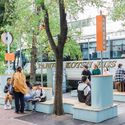
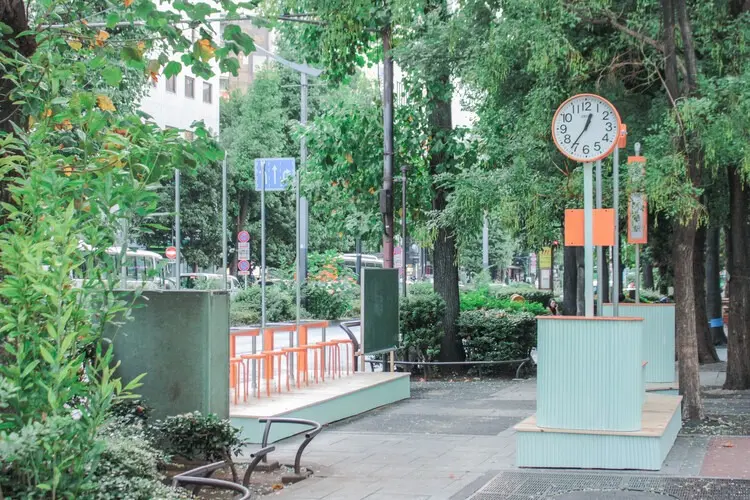
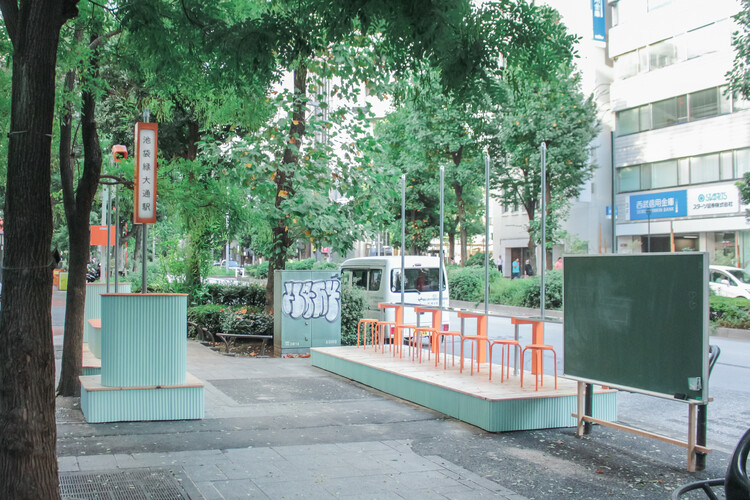
The concept of "living furniture" suggests a blurring of boundaries between domestic comfort and public infrastructure. Instead of treating transit stops as transient, highly institutional spaces designed solely for quick arrivals and departures, the Yosuke Sagoshi Atelier project introduces a sense of domestic scale and intimacy to the public sidewalk. Through carefully considered architectural elements, the structure invites lingering, contemplation, and casual engagement, echoing the ways people might gather in a living room rather than a sterile transit platform.

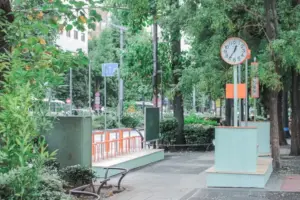
Captured through the lens of photographer Sara Miyata, the project reveals a quiet dialogue between the heavy infrastructure of the modern city and the tactile warmth of the intervention. The design elements utilize materials that soften the hard edges of the surrounding asphalt and concrete, creating a welcoming micro-environment for passersby and waiting commuters. The careful integration of seating, structural frames, and spatial enclosure encourages individuals to pause, sit, and observe the dynamic flow of contemporary Ikebukuro.
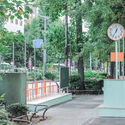
Urban historians and design critics note that interventions of this scale play a crucial role in humanizing large metropolitan areas. As cities continue to densify and prioritize high-efficiency transit systems, the emotional and historical connection to the streetscape is often lost in the pursuit of speed. By acknowledging the vanished Toden tram lines, Yosuke Sagoshi Atelier invites citizens to reflect on the layers of urban transformation that have shaped their daily commutes. One can only imagine the myriad stories, chance encounters, and daily farewells that must have unfolded at the original Ikebukuro tram stops decades ago. This installation does not attempt to recreate the past literally; rather, it provides a contemporary vessel for the continuation of urban life and storytelling along the very same corridor.
The completion of the "Ikebukuro Living Furniture – Tram Stop" adds a meaningful layer to Tokyo’s ongoing architectural discourse regarding public space, micro-infrastructure, and historical memory. By transforming a routine transit stop into a thoughtful civic amenity, Yosuke Sagoshi Atelier has successfully demonstrated how architecture can honor the ghosts of a city’s transportation past while actively enriching the daily experiences of its present inhabitants.