Every October, as Halloween approaches, black cats inevitably resurface in the cultural consciousness as ubiquitous emblems of witchcraft, bad luck, and the supernatural. Their sinister reputations are deep-seated, stretching back centuries into the collective European imagination. Starting in the Middle Ages, superstitious populations increasingly associated felines with heresy and sexual transgression. This perceived affinity with dark forces intensified dramatically during the 16th-century witch trials in England, most notably in the cases involving Elizabeth Francis and Agnes Waterhouse, whose notorious cat, Sathan, became a chilling focal point for early modern anxieties between 1565 and 1579. For generations, the black cat was cast out as a harbinger of misfortune and an accomplice to the occult.
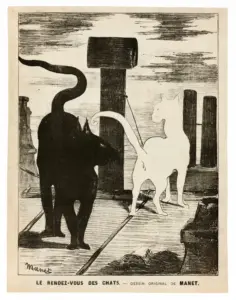
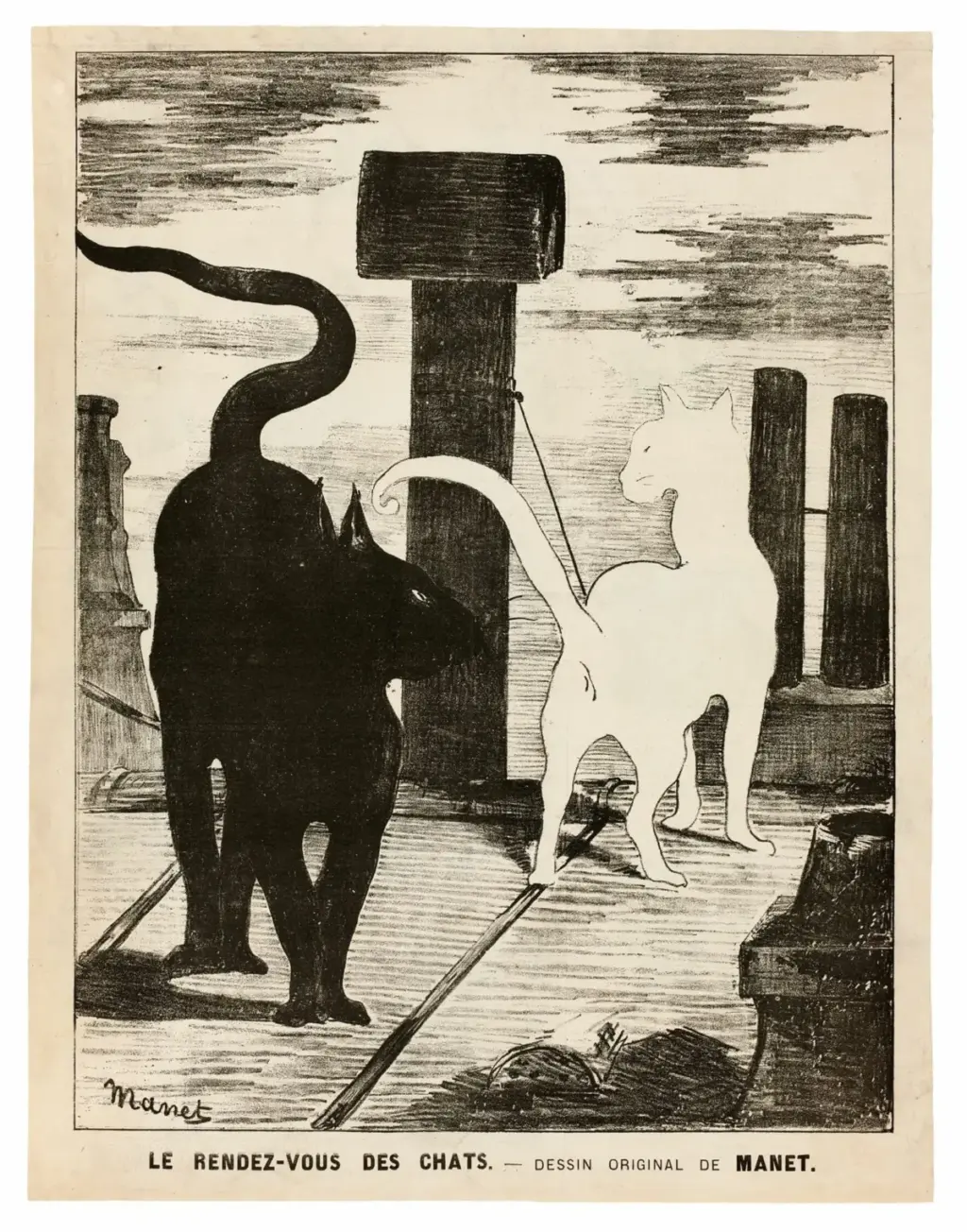
However, the cultural trajectory of the feline shifted dramatically in the wake of the Enlightenment. During the 19th century, French artists, poets, and writers began a deliberate process of cultural reclamation, transforming the mysterious, devilish, and taboo qualities previously foisted onto felines into traits of high desirability. This evolution occurred alongside the rise of a new bourgeois pet-keeping culture, where the act of caring for domestic animals became closely linked with societal progress, humanitarianism, and intellectual enlightenment. Within this shifting urban landscape, bohemian artists and avant-garde intellectuals began incorporating black cats into their poetry, prose, and visual art.
No longer viewed merely through the lens of rural superstition, the black cat emerged in 19th-century Paris as a powerful symbol of independence and nonconformity. It reflected rapidly changing attitudes toward individualism, personal liberty, and self-expression against the backdrop of massive industrialization and urbanization. French writer and diplomat François-René de Chateaubriand captured this evolving sentiment when he described the cat’s modern independence in remarkably favorable terms. He wrote, “What I like about the cat is his character, independent and almost heartlessness […] The cat lives alone, he has no need of society.” These inherited qualities of unapologetic autonomy, subtle eroticism, and quiet defiance soon became deeply synonymous with the burgeoning visual language of modern art.
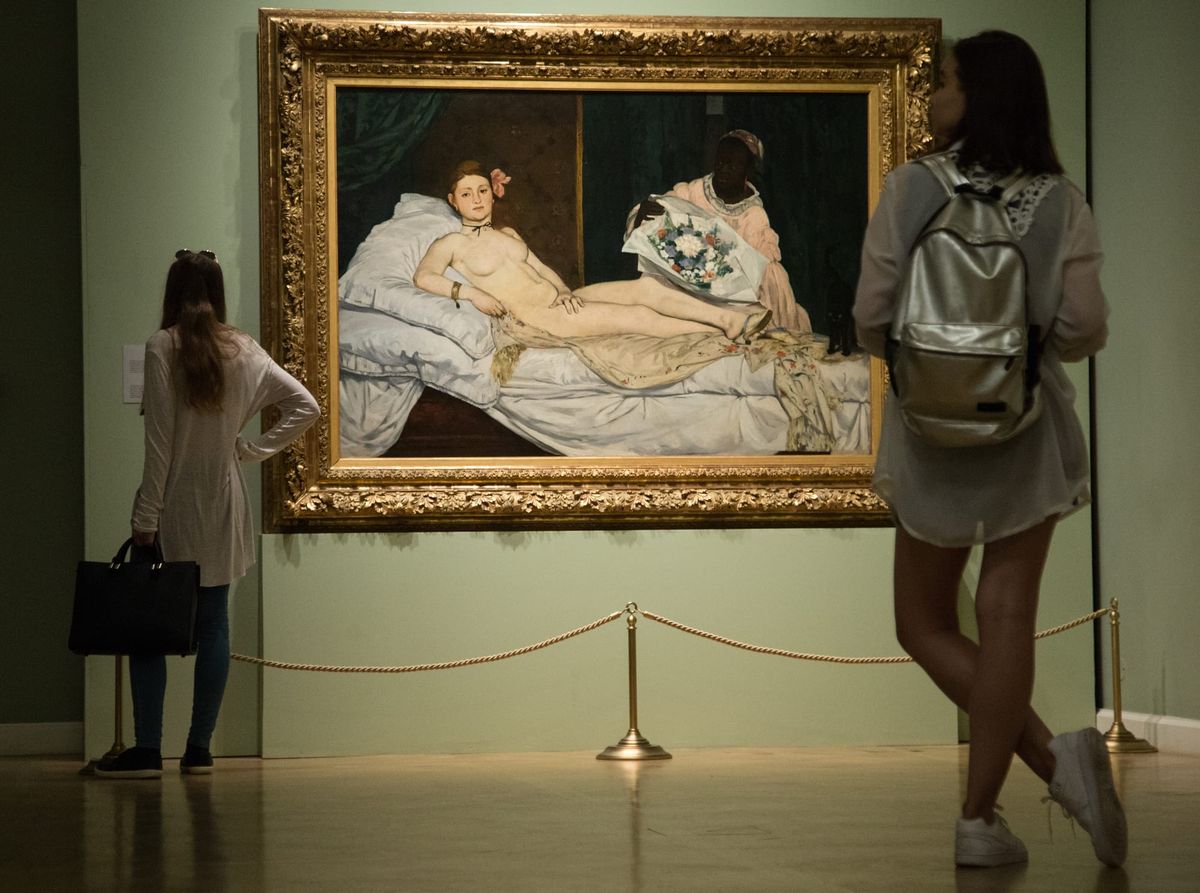
Nowhere is this radical transformation more apparent than in Édouard Manet’s masterwork “Olympia,” painted in 1863. Art historians, most notably T.J. Clark, have long hailed the canvas as a foundational monument of modern art. In creating the composition, Manet consciously updated Titian’s Renaissance classic “Venus of Urbino” from 1534, replacing the traditional mythological setting and idealized classical figures with a stark, unblinking depiction of a contemporary Parisian prostitute, her Black maid, and an alert black cat.

When the painting was finally exhibited at the Paris Salon in 1865, it provoked immediate and profound outrage among conservative critics and the bourgeois public alike. The painting’s uncompromising subject matter, combined with Manet’s revolutionary use of flattened pictorial forms, bold and unmodulated color contrasts, and a stark application of black tones, represented a definitive and aggressive rejection of the rigid academic conventions championed by the artistic establishment.
Conservative critics quickly latched onto the wiry black cat perched at the edge of the bed as a primary target for their derision. With its arched back and luminous, glowing eyes, the feline seemed to many contemporary viewers to physically embody the painting’s perceived vulgarity, echoing and emphasizing the provocative posture of the central figure. Rather than serving as a comforting domestic pet, Manet’s black cat stood as an active participant in an artistic revolution, helping to cement the animal’s new identity as an enduring emblem of urban life, creative freedom, and the birth of modernism.